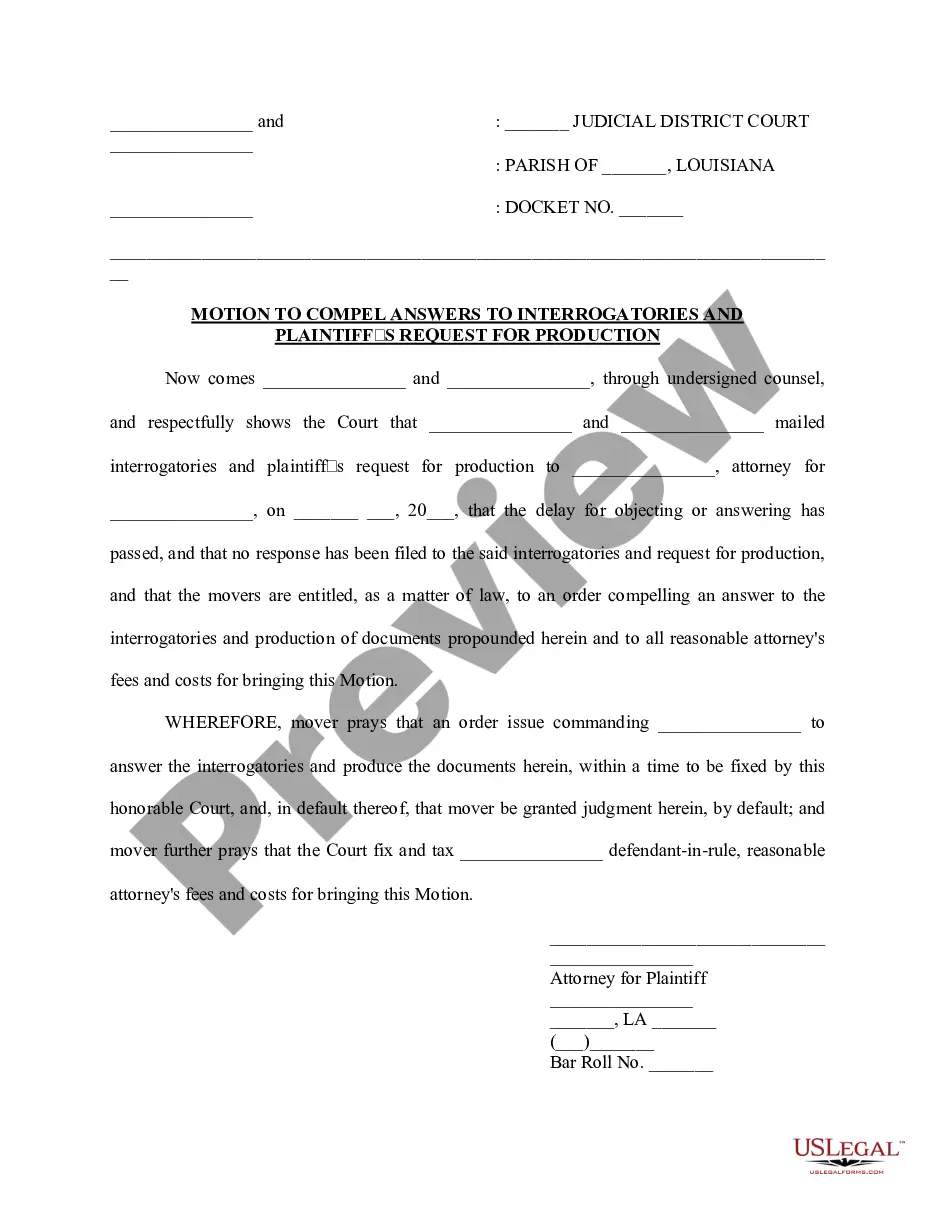
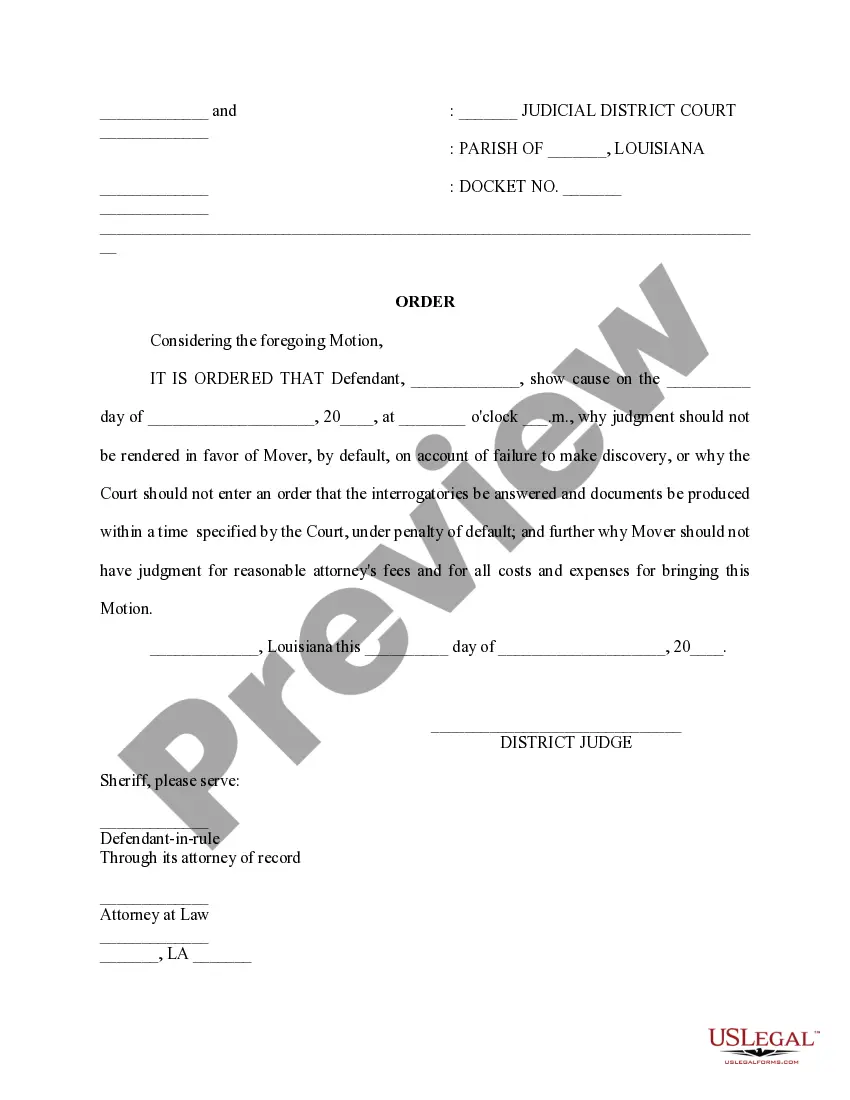
Motion To Compel Louisiana For Discovery
Description
Get your form ready online
Our built-in tools help you complete, sign, share, and store your documents in one place.
Make edits, fill in missing information, and update formatting in US Legal Forms—just like you would in MS Word.
Download a copy, print it, send it by email, or mail it via USPS—whatever works best for your next step.
Sign and collect signatures with our SignNow integration. Send to multiple recipients, set reminders, and more. Go Premium to unlock E-Sign.
If this form requires notarization, complete it online through a secure video call—no need to meet a notary in person or wait for an appointment.
We protect your documents and personal data by following strict security and privacy standards.

Make edits, fill in missing information, and update formatting in US Legal Forms—just like you would in MS Word.

Download a copy, print it, send it by email, or mail it via USPS—whatever works best for your next step.

Sign and collect signatures with our SignNow integration. Send to multiple recipients, set reminders, and more. Go Premium to unlock E-Sign.

If this form requires notarization, complete it online through a secure video call—no need to meet a notary in person or wait for an appointment.

We protect your documents and personal data by following strict security and privacy standards.
Looking for another form?
Form popularity
FAQ
In Louisiana, you generally have 30 days to respond to discovery requests, such as interrogatories or requests for production. It is essential to adhere to this timeline to avoid potential complications in your case. If you feel the need to compel responses, a motion to compel Louisiana for discovery may be necessary, ensuring you receive the information required.
To file a motion for discovery in Louisiana, you must prepare a motion that outlines your request for the specific information or documents you need. This motion should comply with Louisiana's procedural rules and include a statement of good faith, indicating attempts to resolve the issue before filing. Utilizing a service like US Legal Forms can simplify the process, helping you draft an effective motion to compel Louisiana for discovery.
The 90 day rule in Louisiana refers to the timeframe within which parties must complete discovery following the initiation of a case. Generally, this means that all discovery should be completed within 90 days before the trial date. Understanding this rule is crucial when considering a motion to compel Louisiana for discovery, as it impacts your readiness for trial.
Yes, Louisiana has established rules for discovery as part of its civil litigation process. These rules set the framework for how parties exchange information and documents before trial. When you pursue a motion to compel Louisiana for discovery, you ensure compliance with these rules, helping you gather necessary evidence for your case.
A motion to compel in Louisiana explicitly requests the court to enforce discovery rights when a party does not comply with requests for information. This legal action seeks to remove barriers to accessing needed evidence, ensuring fairness in the legal process. Using a motion to compel can significantly enhance your ability to build a strong case, making it a vital tool in litigation.
The three types of exceptions in Louisiana include dilatory exceptions, peremptory exceptions, and incidental exceptions. Dilatory exceptions challenge the form of the lawsuit, while peremptory exceptions address substantive issues that may defeat a claim. Incidental exceptions may raise related claims or defenses during the proceedings. Understanding these exceptions can help you mount a robust defense or support your motion to compel.
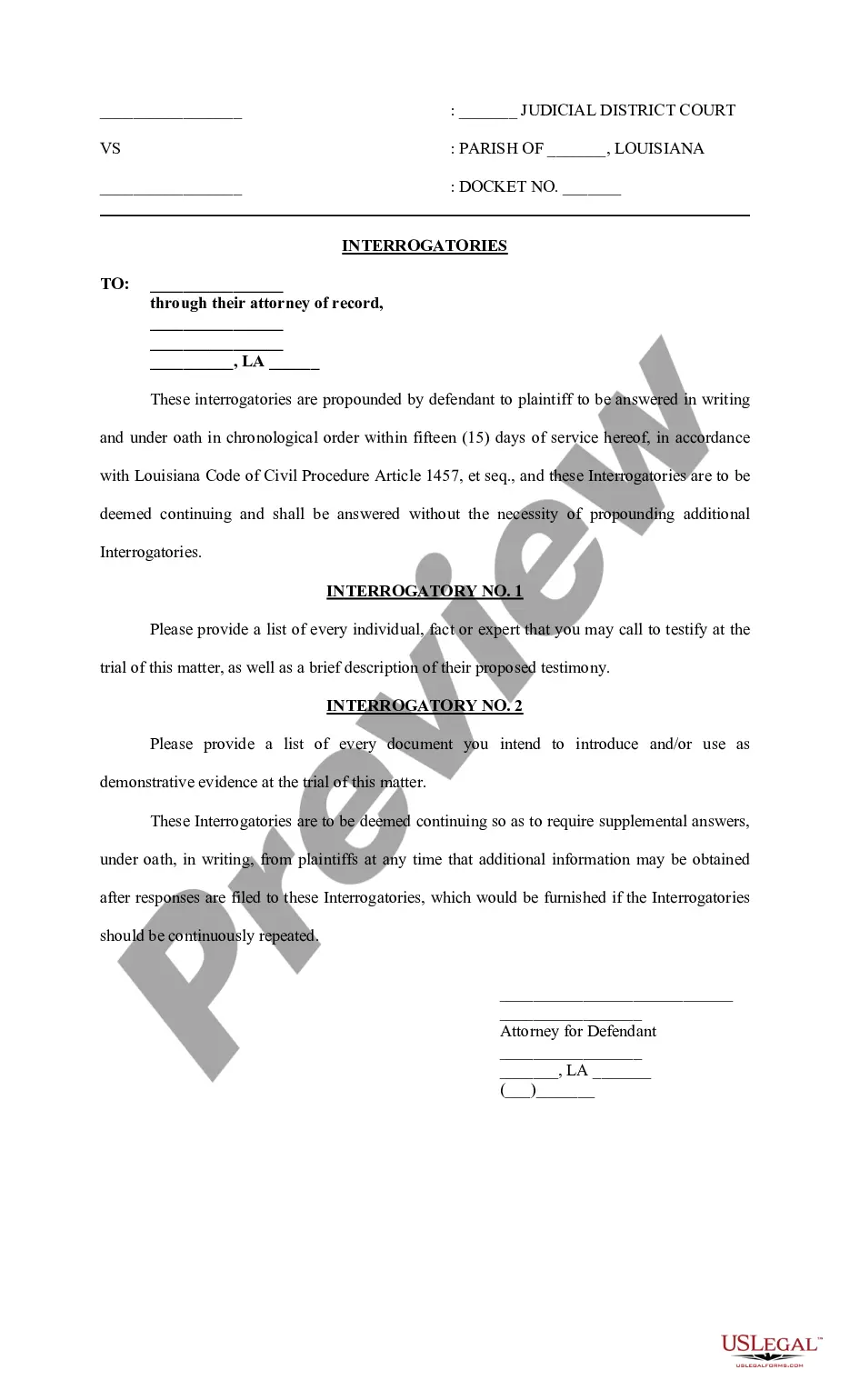
Article 1423 outlines the procedures involved in the discovery process within civil cases in Louisiana. This article sets the framework for obtaining evidence through various means, including written interrogatories, requests for production of documents, and depositions. Familiarity with this article can empower you to better manage the discovery phase of your case.
To file a motion for discovery in Louisiana, you must prepare the necessary legal documents, clearly stating the reasons for your request. You will need to submit these documents to the appropriate court where your case is pending, and you may also need to serve them to the opposing party. If you are unsure how to navigate this process, consider using USLegalForms, which offers resources and templates to assist you.
The discovery rule in Louisiana governs how parties exchange information relevant to their case prior to trial. It allows each party to request documents, interrogatories, and admissions to build their arguments. This rule is crucial in achieving a fair trial by ensuring that all relevant information is available to both sides.
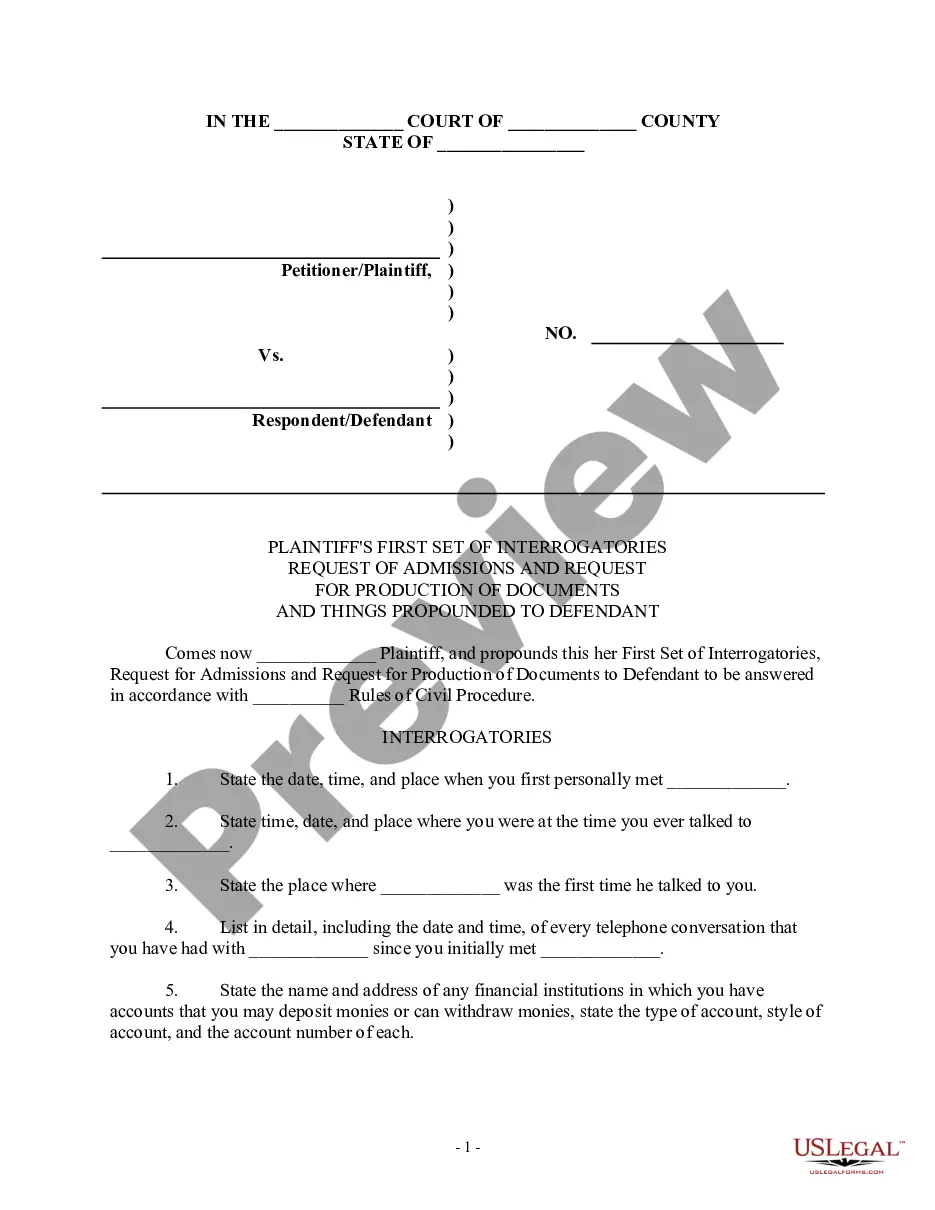
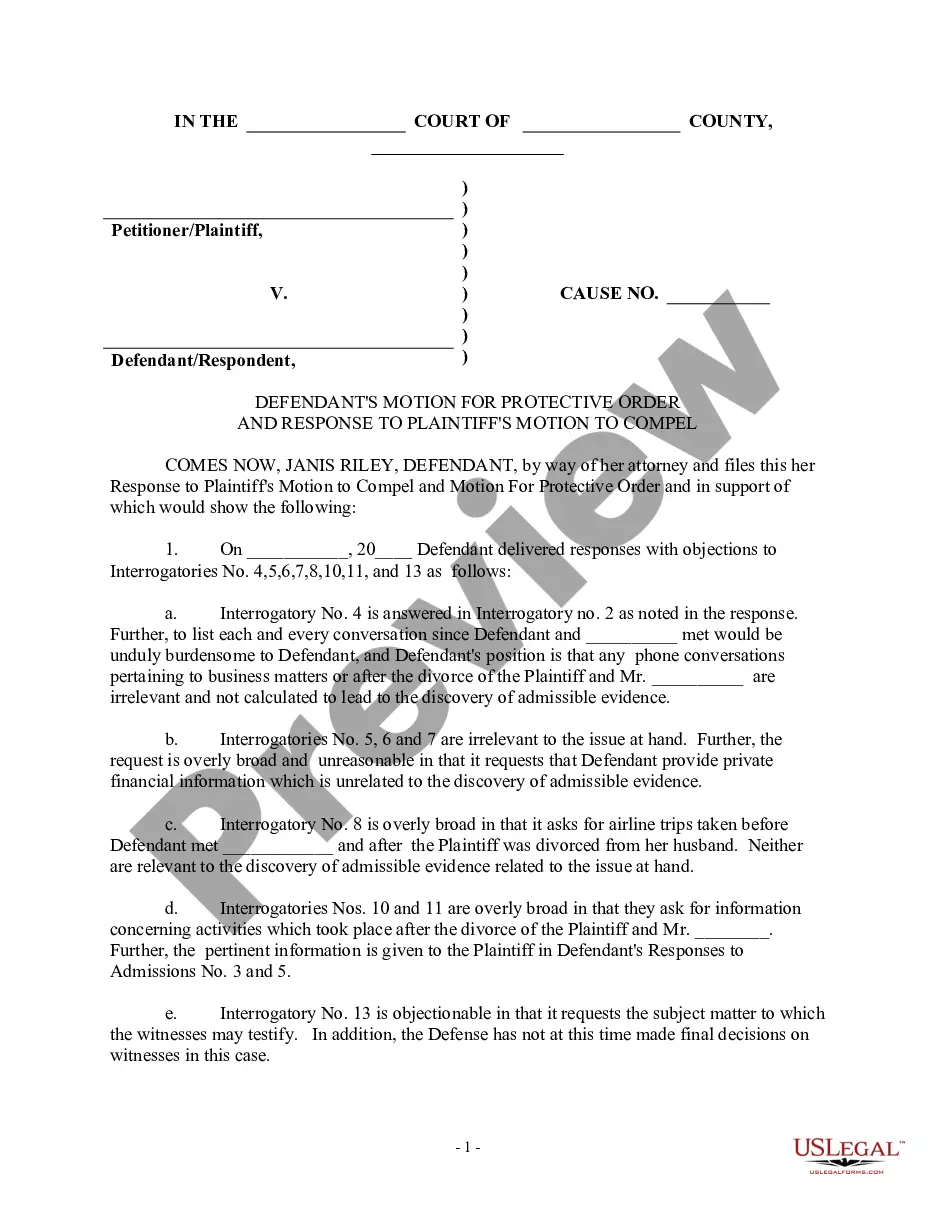
A motion to compel discovery in Louisiana is a legal request filed by a party to seek the court's intervention when another party fails to provide requested evidence during the discovery process. This motion prompts the court to order the non-compliant party to fulfill their obligation and produce the necessary documents or information. Understanding how to properly file this motion can help you ensure that your rights to evidence are protected.
