Louisiana Divorce Property With A Foreigner
Description
Get your form ready online
Our built-in tools help you complete, sign, share, and store your documents in one place.
Make edits, fill in missing information, and update formatting in US Legal Forms—just like you would in MS Word.
Download a copy, print it, send it by email, or mail it via USPS—whatever works best for your next step.
Sign and collect signatures with our SignNow integration. Send to multiple recipients, set reminders, and more. Go Premium to unlock E-Sign.
If this form requires notarization, complete it online through a secure video call—no need to meet a notary in person or wait for an appointment.
We protect your documents and personal data by following strict security and privacy standards.

Make edits, fill in missing information, and update formatting in US Legal Forms—just like you would in MS Word.

Download a copy, print it, send it by email, or mail it via USPS—whatever works best for your next step.

Sign and collect signatures with our SignNow integration. Send to multiple recipients, set reminders, and more. Go Premium to unlock E-Sign.

If this form requires notarization, complete it online through a secure video call—no need to meet a notary in person or wait for an appointment.

We protect your documents and personal data by following strict security and privacy standards.
Looking for another form?



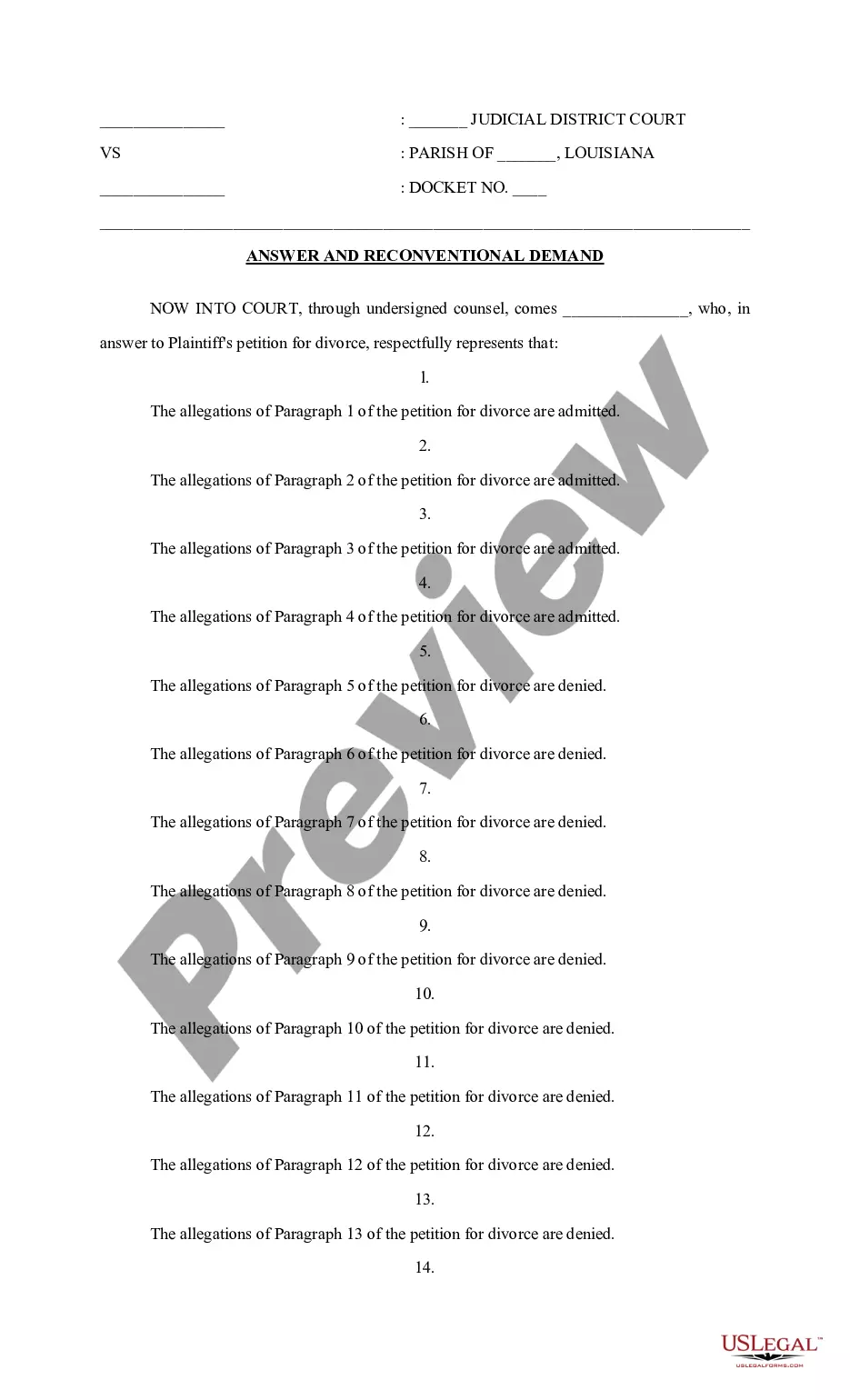
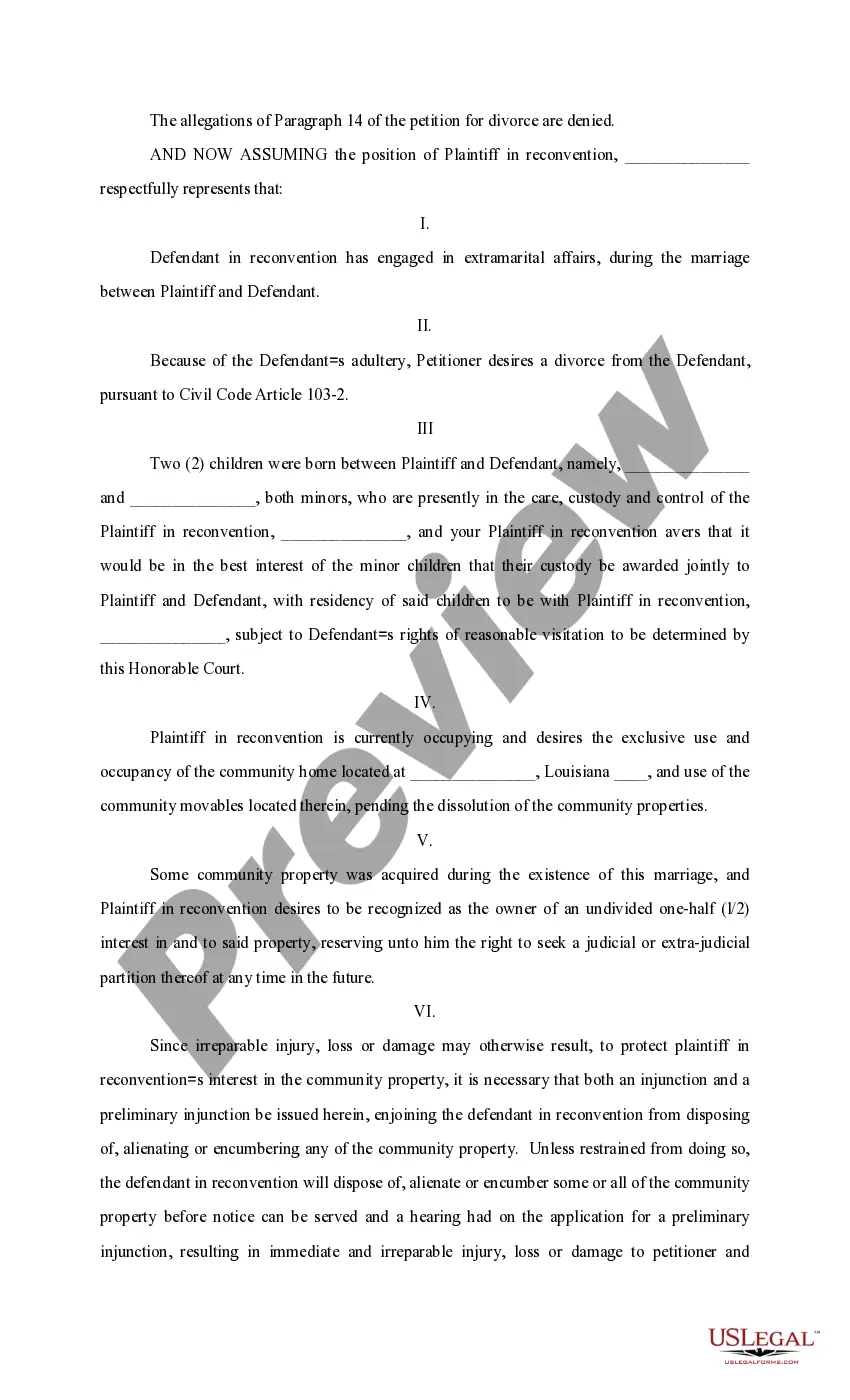
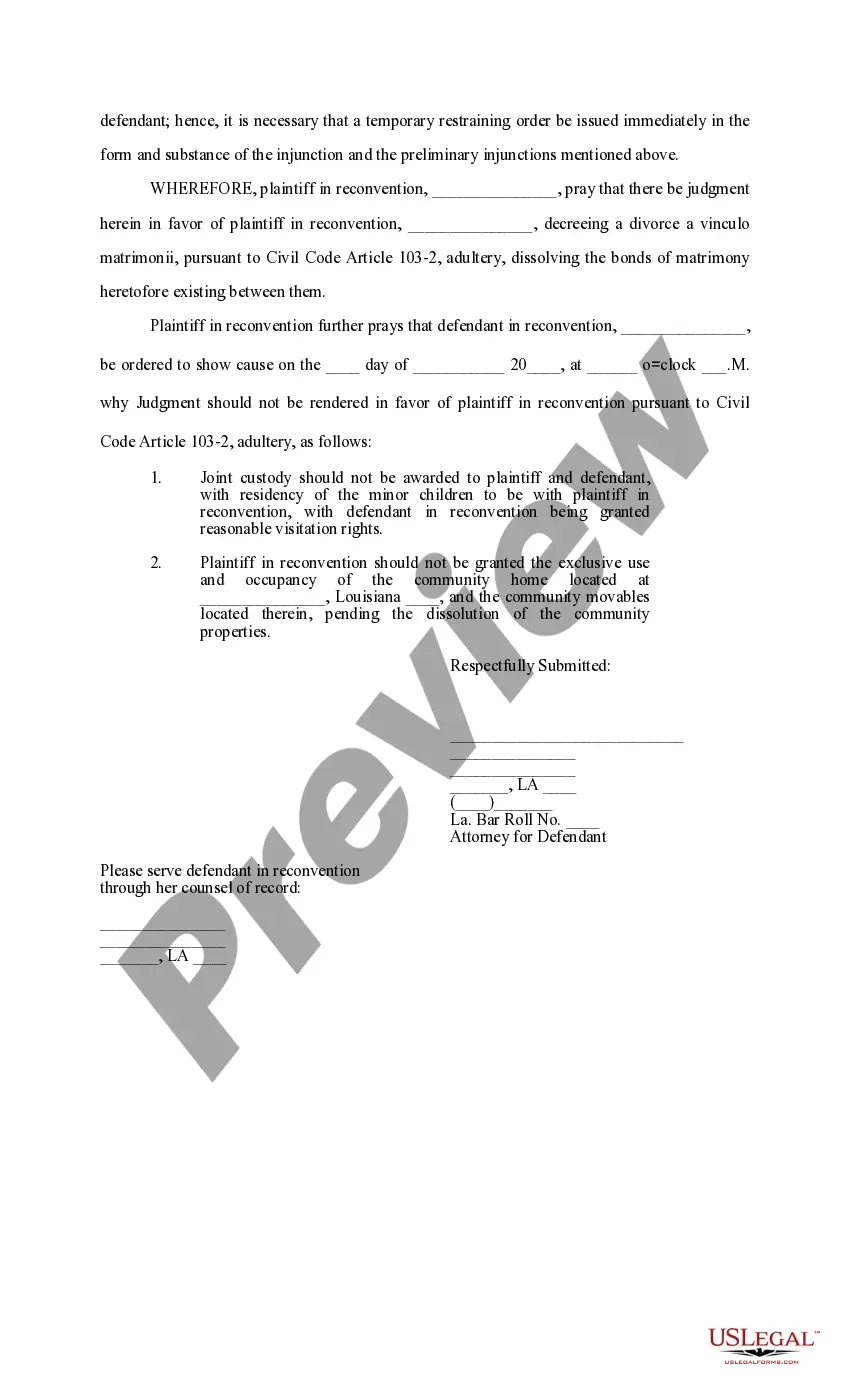
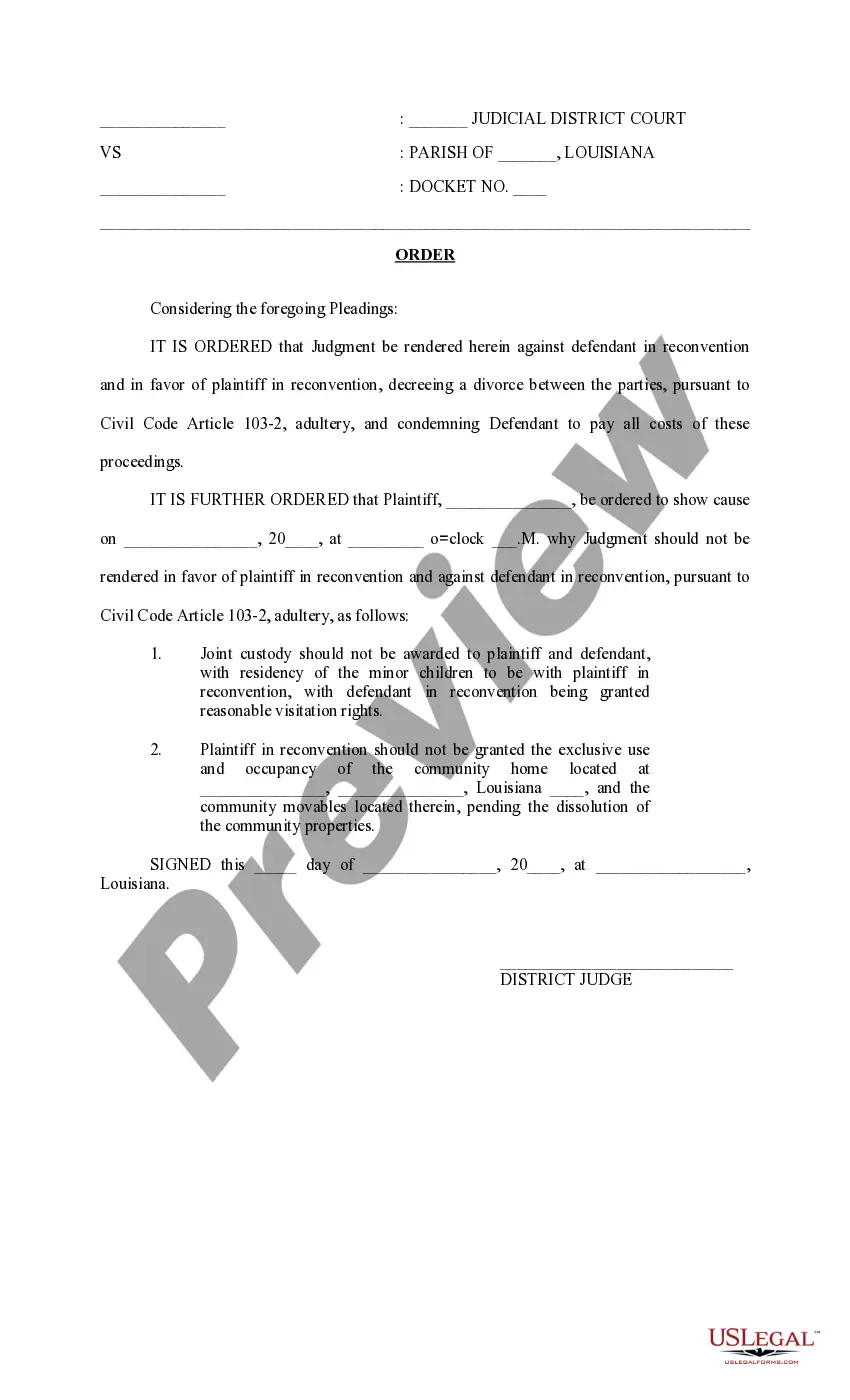
How to fill out Louisiana Answers To Allegations Of Divorce Petition And Reconventional Demand Regarding Custody, Community Property And Restraining Order?
- Log in to your US Legal Forms account if you're a returning user. Ensure your subscription is active before proceeding to download the necessary document.
- For first-time users, review the form descriptions and preview modes to find the correct document that aligns with your jurisdiction's requirements.
- If needed, utilize the Search feature to locate alternative templates that suit your case.
- Select the document you wish to purchase by clicking the Buy Now button and choose the appropriate subscription plan.
- Complete your purchase by entering your payment details or using your PayPal account for a seamless transaction.
- Download the chosen form and save it for future reference, accessible anytime through your profile's My Forms section.
Using US Legal Forms streamlines the process of obtaining the necessary documentation, ensuring everything is accurate and legally compliant.
Get started today and simplify your legal journey with US Legal Forms—your trusted partner for legal document completion.
Form popularity
FAQ
Certain assets may be considered untouchable in a divorce, commonly known as separate property. This often includes personal gifts, inherited property, and assets owned before marriage. Understanding these distinctions is vital, especially when dealing with Louisiana divorce property with a foreigner, to ensure your rights are upheld throughout the divorce proceedings.
Yes, vehicles are generally considered community property if they are acquired during the marriage. This means both spouses may have rights to the vehicle’s value or usage. Ensuring proper documentation and understanding your rights regarding Louisiana divorce property with a foreigner can help in making informed decisions during the divorce process.
If you divorce a foreign husband, the complexities of property division may arise, especially regarding Louisiana divorce property with a foreigner. While Louisiana law typically applies, international laws may also impact asset division. Consulting with a knowledgeable attorney can help navigate these complexities and ensure your rights are protected.
In Louisiana, a wife is entitled to half of the community property acquired during the marriage. This includes assets such as homes, savings, and vehicles. Additionally, she may be entitled to alimony, depending on the circumstances. It’s essential to understand how Louisiana divorce property with a foreigner impacts these entitlements, especially in complex cases.
Certain assets are classified as separate property in Louisiana. Gifts, inheritances, or property owned prior to marriage are typically not community property. Additionally, any assets or income earned after separation may not fall under community property laws. Familiarizing yourself with these distinctions is crucial when dealing with Louisiana divorce property with a foreigner.
In a Louisiana divorce, the division of a car follows the rules of community property. Generally, assets acquired during the marriage are split equitably between spouses. If both spouses have a claim to the vehicle, negotiation or mediation often helps in deciding who keeps it. Understanding Louisiana divorce property with a foreigner can provide valuable insights into your options.
In Louisiana, the ownership of a vehicle in one spouse's name does not automatically mean they can take it away during a divorce. If the vehicle was acquired during the marriage, it may qualify as community property. This means you could have a claim to its value or a right to keep the car. Consulting with an expert in Louisiana divorce property with a foreigner can help clarify your rights.
Your financial responsibility for an immigrant spouse typically ends when the divorce is finalized. However, if they were dependent on your income for immigration purposes, they may retain certain rights for a longer period. Understanding how these obligations might relate to Louisiana divorce property with a foreigner is critical. Legal resources, including USLegalForms, can provide guidance on the specific nuances of your responsibilities post-divorce.
Divorcing a foreign spouse can involve additional complexities compared to a domestic divorce. You'll need to consider not only the legal process but also the implications on the foreign spouse's immigration status and property rights. In Louisiana, understanding the intricate laws regarding divorce property with a foreigner is essential. USLegalForms can offer invaluable assistance in navigating these matters and ensuring a smooth process.
Yes, it is possible to file for divorce in a state where you do not reside, but specific conditions must be met. Typically, one spouse must have a legal connection to that state, such as owning property or having previously lived there. This could apply to cases involving Louisiana divorce property with a foreigner, where the laws of Louisiana might be favorable. Using resources like USLegalForms can provide clarity on filing requirements and procedures.