Tenant Landlord Failure For Rent
Description


Get your form ready online
Our built-in tools help you complete, sign, share, and store your documents in one place.
Make edits, fill in missing information, and update formatting in US Legal Forms—just like you would in MS Word.
Download a copy, print it, send it by email, or mail it via USPS—whatever works best for your next step.
Sign and collect signatures with our SignNow integration. Send to multiple recipients, set reminders, and more. Go Premium to unlock E-Sign.
If this form requires notarization, complete it online through a secure video call—no need to meet a notary in person or wait for an appointment.
We protect your documents and personal data by following strict security and privacy standards.

Make edits, fill in missing information, and update formatting in US Legal Forms—just like you would in MS Word.

Download a copy, print it, send it by email, or mail it via USPS—whatever works best for your next step.

Sign and collect signatures with our SignNow integration. Send to multiple recipients, set reminders, and more. Go Premium to unlock E-Sign.

If this form requires notarization, complete it online through a secure video call—no need to meet a notary in person or wait for an appointment.

We protect your documents and personal data by following strict security and privacy standards.
Looking for another form?






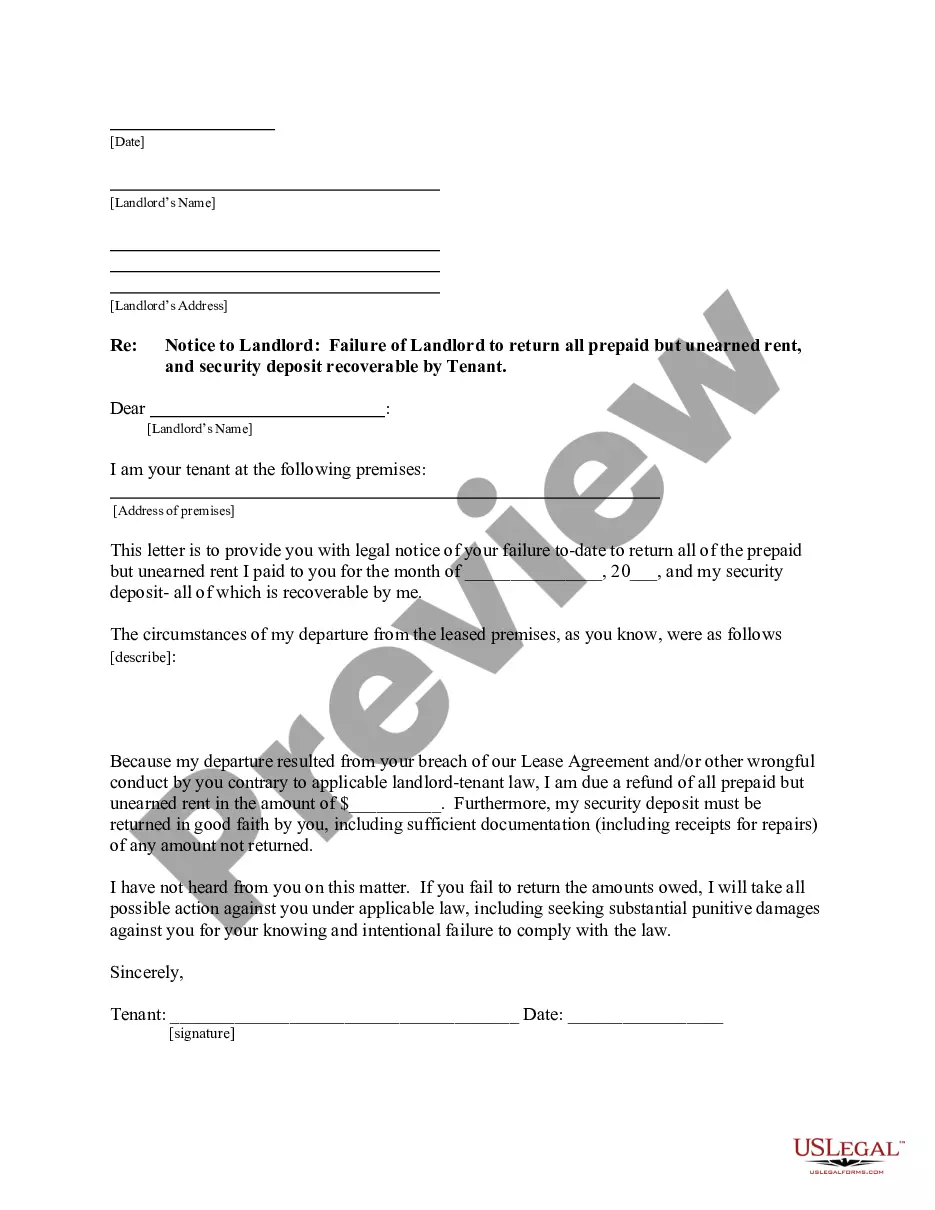
How to fill out Louisiana Letter From Tenant To Landlord For Failure Of Landlord To Return All Prepaid And Unearned Rent And Security Recoverable By Tenant?
- If you're a returning user, log in to your account and download the required form template by selecting the Download button. Ensure your subscription is active; if not, renew it according to your plan.
- For new users, start by reviewing the Preview mode and form descriptions. Verify that you have selected a template that suits your needs and complies with your local jurisdiction.
- If you need a different template, utilize the Search tab to find the appropriate one. Once identified, proceed to the next step.
- Purchase the document by clicking the Buy Now button and selecting a subscription plan that fits your requirements. Registration is necessary for library access.
- Complete your purchase by providing your credit card information or using your PayPal account to finalize the subscription.
- Download the form and save it on your device. You can access it anytime through the My Forms section of your profile.
US Legal Forms is an invaluable resource for individuals and attorneys alike, offering a robust collection of over 85,000 legal forms. This extensive library ensures that you can find the precise documents needed for your tenant-landlord disputes.
Don’t hesitate to empower yourself with the right legal tools today. Start your journey with US Legal Forms and ensure your documents are precise and legally sound!
Form popularity
FAQ
To write a letter to a tenant for nonpayment of rent, begin with a clear statement of the rent owed and the due dates that have passed. Use a formal tone and reference the lease agreement, outlining the consequences of continued non-payment. Encourage the tenant to communicate their situation and propose possible solutions, as this shows a willingness to work together and can help mitigate situations of tenant landlord failure for rent.
When writing a letter to someone who is not paying rent, clearly state the amount due and the time frame of non-payment. Maintain a respectful tone and remind them of the terms of the lease agreement. Encourage open communication and offer to discuss their situation, which can aid in resolving the issue effectively. This approach can be vital in minimizing conflict and addressing tenant landlord failure for rent constructively.
To write a demand letter for unpaid rent, begin by clearly stating the details of the lease agreement, including the amount of rent due and the payment schedule. Next, express the landlord's intent to take action if the payment is not made by a specified date. It's essential to remain professional and factual, avoiding emotional language. This letter serves as a critical step in the tenant landlord failure for rent process, as it documents your efforts before any legal action.
To settle disputes between tenants, encourage open communication and a willingness to compromise. Establishing a clear set of house rules can prevent misunderstandings and conflicts. When disagreements persist, mediation services or documents from uslegalforms can facilitate a resolution, helping all parties reach a satisfactory agreement without escalating tensions.
When communicating with your landlord, avoid making accusations or threats, as these can escalate conflicts. Steer clear of statements that dismiss their responsibilities, especially regarding tenant landlord failure for rent issues. Instead, focus on discussing the facts calmly and respectfully to promote a more constructive dialogue about any concerns you have.
In Indiana, renters have the right to safe and habitable housing, meaning landlords must ensure properties meet basic health and safety standards. Additionally, tenants are entitled to a rental agreement that outlines the terms of their tenancy. If a landlord fails to address necessary repairs or situations that can lead to tenant landlord failure for rent, renters can file complaints or seek legal remedies.
As a renter in North Carolina, you have the right to a habitable living environment, privacy, and fair treatment under the law. You can challenge landlord actions that violate these rights, particularly in cases of tenant landlord failure for rent. It is crucial to stay informed about your rights, and platforms like USLegalForms can assist you in addressing any issues effectively and legally.
Landlords in North Carolina are generally not responsible for normal wear and tear or tenant-caused damages. They also do not owe responsibilities for issues that arise from tenant negligence or failure to report maintenance needs promptly. Understanding these boundaries can help tenants navigate potential misunderstandings and identify cases of tenant landlord failure for rent.
Landlord harassment in North Carolina includes actions that create a hostile living environment, such as excessive calls, unwarranted property inspections, or intimidation tactics. Such behaviors can disrupt a tenant's peace and potentially qualify as tenant landlord failures for rent. If you feel your landlord is harassing you, it's advisable to document these incidents and consult legal services to assess your rights.
In North Carolina, uninhabitable living situations may involve severe issues such as a lack of heat, plumbing problems, or pest infestations. If the property does not meet basic safety and health standards, landlords may face accusations of tenant landlord failure for rent. Tenants should know that they have the right to safe living conditions, and can pursue legal action if their situation does not improve.