Interrogatories For Child Custody Case
Description


Get your form ready online
Our built-in tools help you complete, sign, share, and store your documents in one place.
Make edits, fill in missing information, and update formatting in US Legal Forms—just like you would in MS Word.
Download a copy, print it, send it by email, or mail it via USPS—whatever works best for your next step.
Sign and collect signatures with our SignNow integration. Send to multiple recipients, set reminders, and more. Go Premium to unlock E-Sign.
If this form requires notarization, complete it online through a secure video call—no need to meet a notary in person or wait for an appointment.
We protect your documents and personal data by following strict security and privacy standards.

Make edits, fill in missing information, and update formatting in US Legal Forms—just like you would in MS Word.

Download a copy, print it, send it by email, or mail it via USPS—whatever works best for your next step.

Sign and collect signatures with our SignNow integration. Send to multiple recipients, set reminders, and more. Go Premium to unlock E-Sign.

If this form requires notarization, complete it online through a secure video call—no need to meet a notary in person or wait for an appointment.

We protect your documents and personal data by following strict security and privacy standards.
Looking for another form?

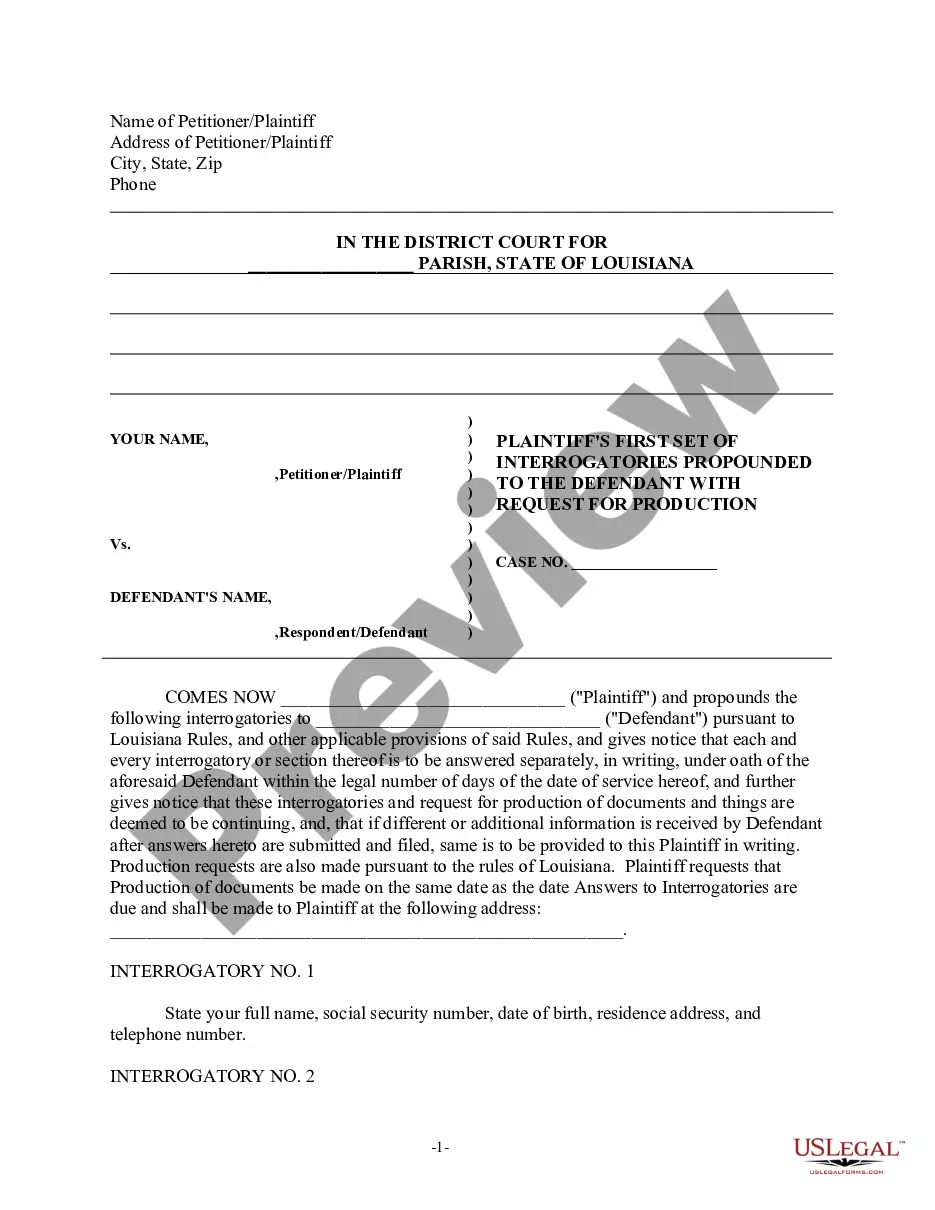
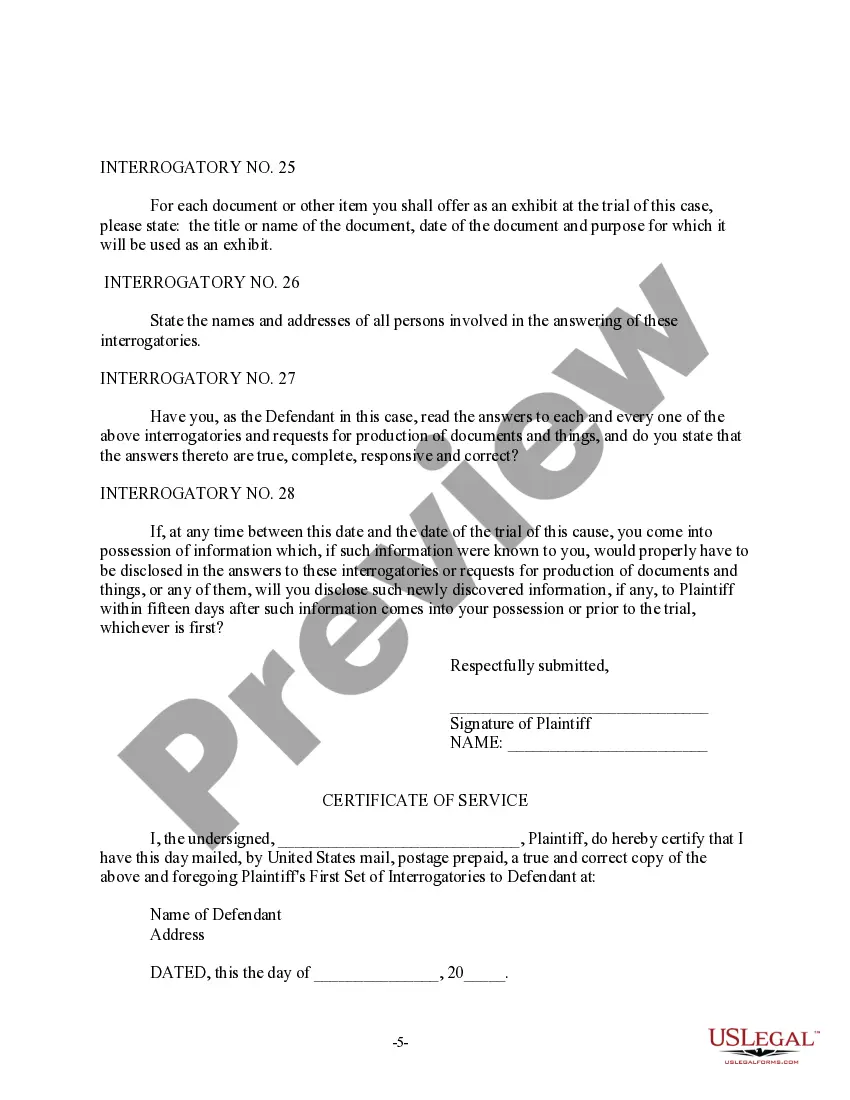
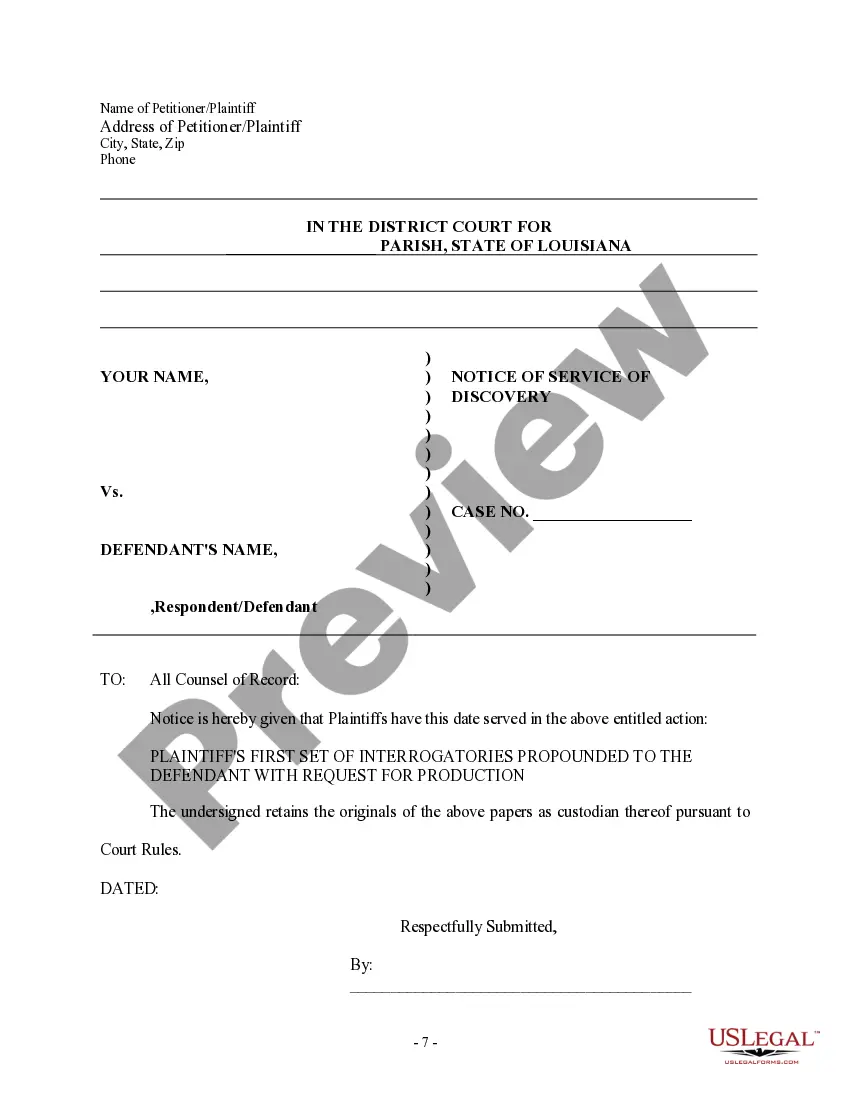
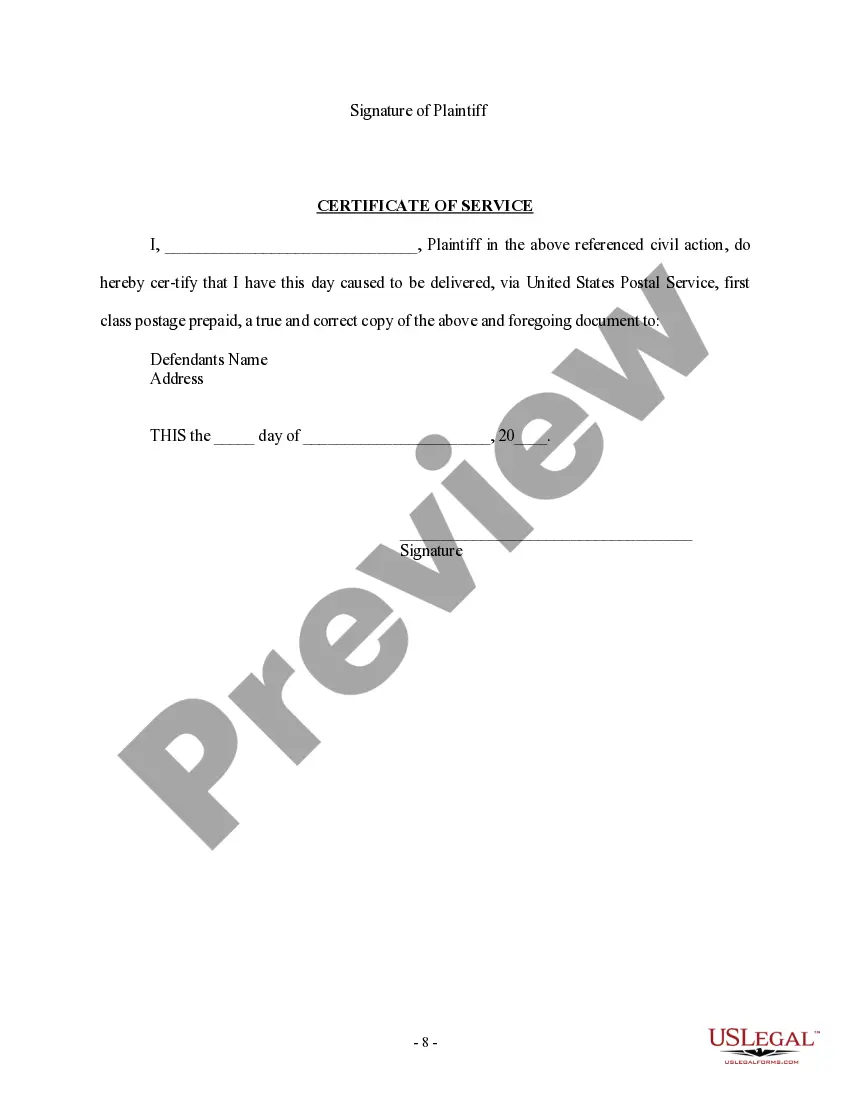
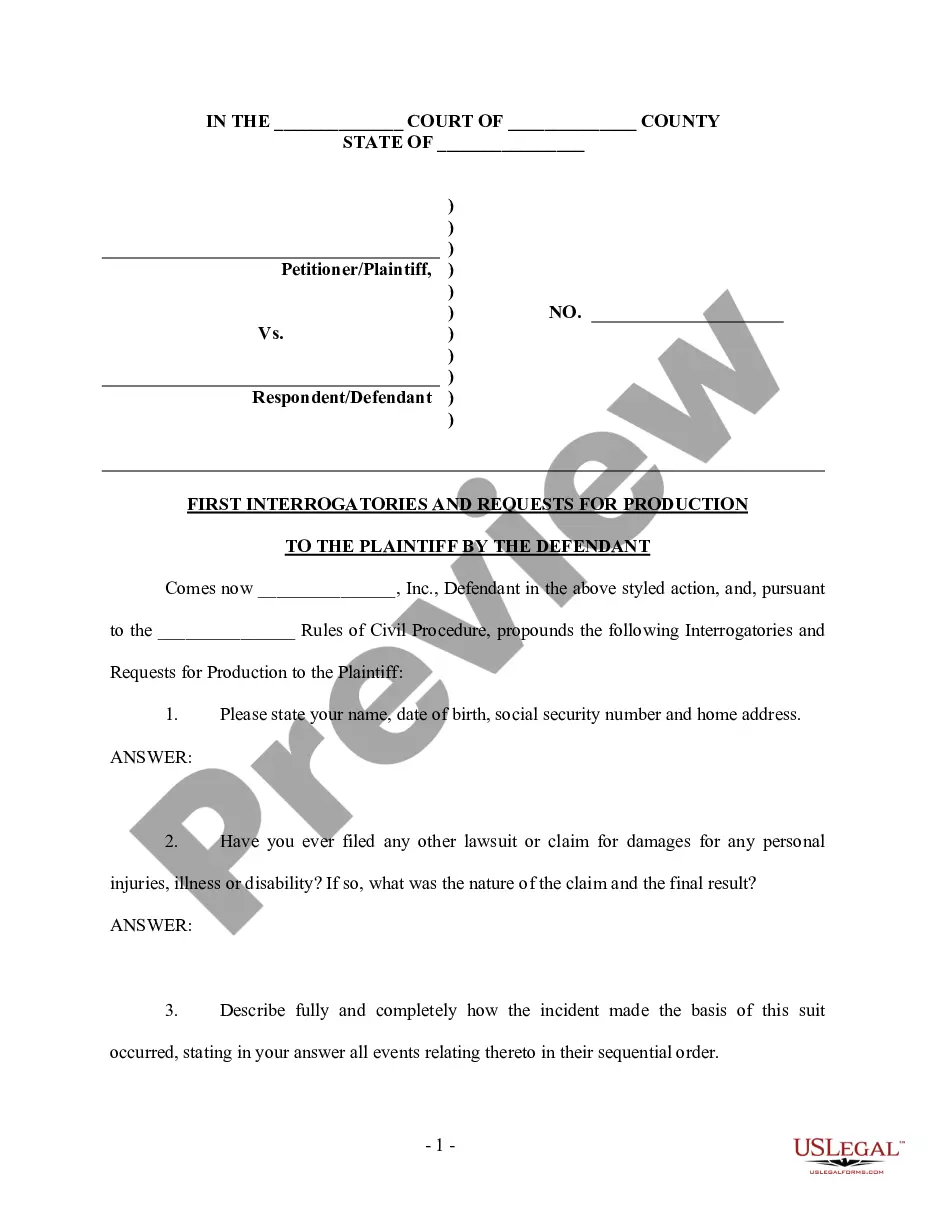
How to fill out Louisiana Discovery Interrogatories From Plaintiff To Defendant With Production Requests?
The Interrogatories For Child Custody Case presented on this page is a reusable legal template crafted by expert attorneys in compliance with federal and local laws.
For over 25 years, US Legal Forms has supported individuals, organizations, and lawyers with more than 85,000 validated, state-specific documents for any commercial and personal scenario. It’s the fastest, simplest, and most dependable way to acquire the forms you require, as the service ensures the utmost level of data protection and anti-malware safeguards.
Register for US Legal Forms to gain access to validated legal templates for all of life's situations at your fingertips.
- Search for the document you need and review it.
- Examine the file you sought and preview it or assess the form description to confirm it meets your needs. If it doesn’t, utilize the search bar to find the right one. Hit Buy Now when you have located the template you require.
- Register and Log In.
- Choose the pricing option that fits you and set up an account. Use PayPal or a credit card for a quick payment. If you possess an account already, Log In and verify your subscription to continue.
- Obtain the editable template.
- Choose the format you prefer for your Interrogatories For Child Custody Case (PDF, Word, RTF) and download the document to your device.
- Fill out and sign the documents.
- Print the template to finish it manually. Alternatively, use an online multifunctional PDF editor to swiftly and accurately complete and sign your form with an eSignature.
- Retrieve your documents again.
- Utilize the same document again whenever necessary. Access the My documents tab in your profile to redownload any forms you have previously downloaded.
Form popularity
FAQ
Read each question (interrogatory) very carefully. Answer only the question that is asked, and avoid the temptation to over-explain your answer. If the question contains several parts, you may break your answer into parts as well. It is also possible that you might object to the question.
You can use interrogatories to find out facts about a case but they cannot be used for questions that draw a legal conclusion.
Generally, interrogatories are objectionable if they seek information that is not within the scope of discovery as defined in Maryland Rule 402 or Federal Rule 26(b). These are typically requests that are not relevant, unduly burdensome, broad, vague, privileged. or protected by the work product doctrine.
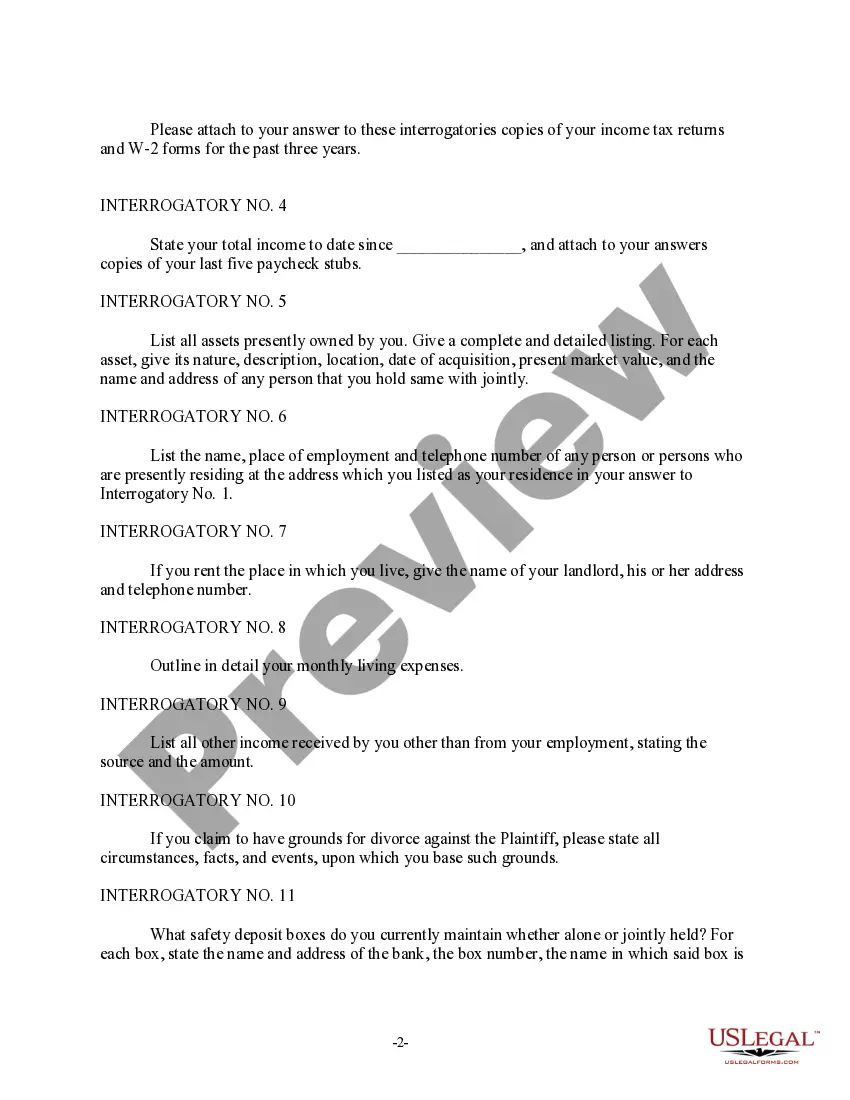
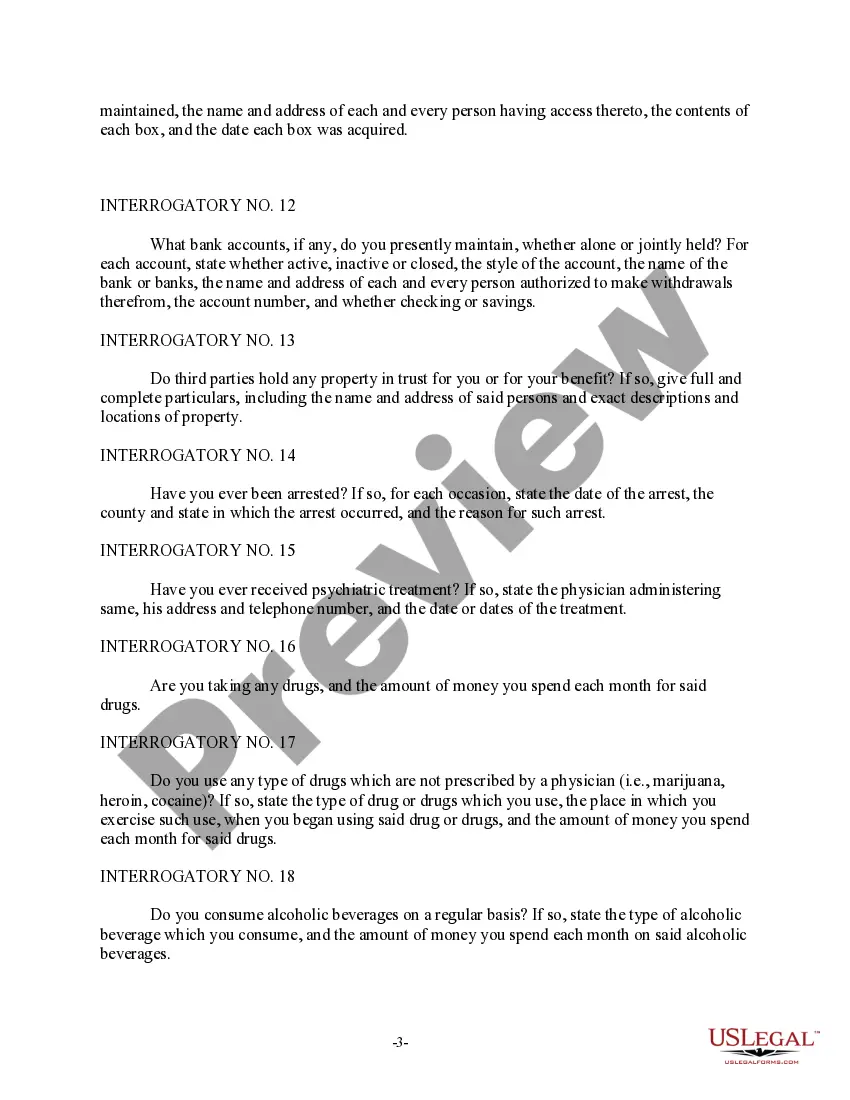
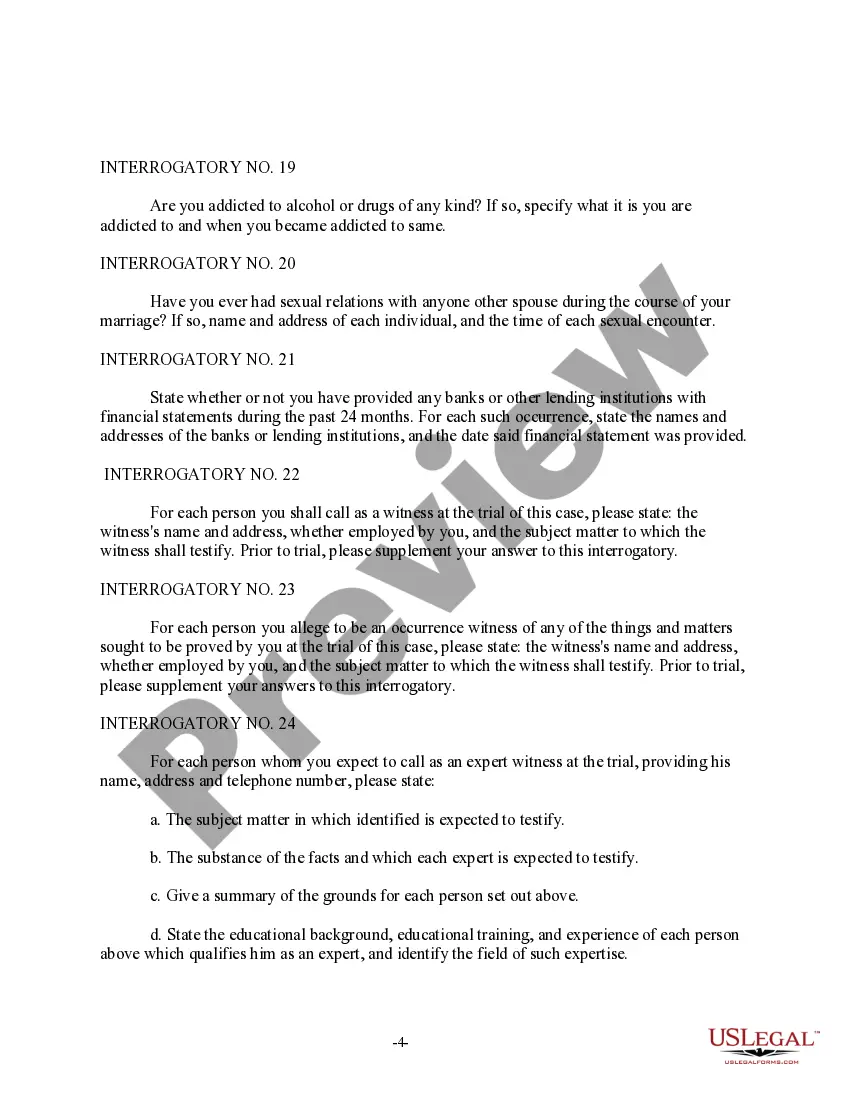
For example, divorce case where custody is at issue and there has been domestic violence will likely have questions centering upon that domestic abuse. A custody case will likely include Interrogatories addressing proposed physical care and visitation schedules, and how each party intends to care for the child.
How to Write Draft Interrogatories Brainstorm questions to ask the non-party related to the issues in the case. Identify relevant documents, witnesses, or other evidence that will be needed to answer the interrogatories. Draft the interrogatories in written form. Ensure the interrogatories are clear, concise and specific.