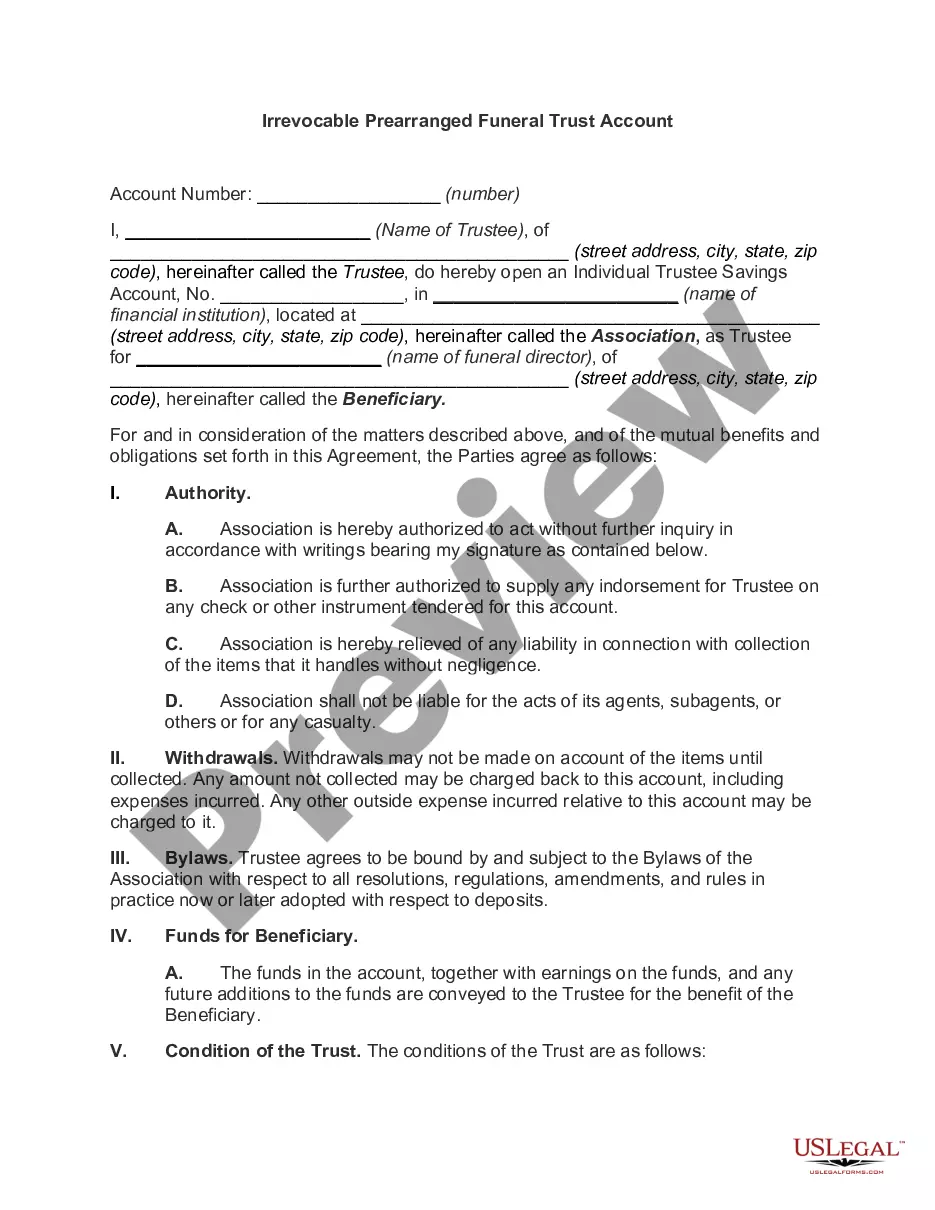
Trust Account With Bank
Description


Get your form ready online
Our built-in tools help you complete, sign, share, and store your documents in one place.
Make edits, fill in missing information, and update formatting in US Legal Forms—just like you would in MS Word.
Download a copy, print it, send it by email, or mail it via USPS—whatever works best for your next step.
Sign and collect signatures with our SignNow integration. Send to multiple recipients, set reminders, and more. Go Premium to unlock E-Sign.
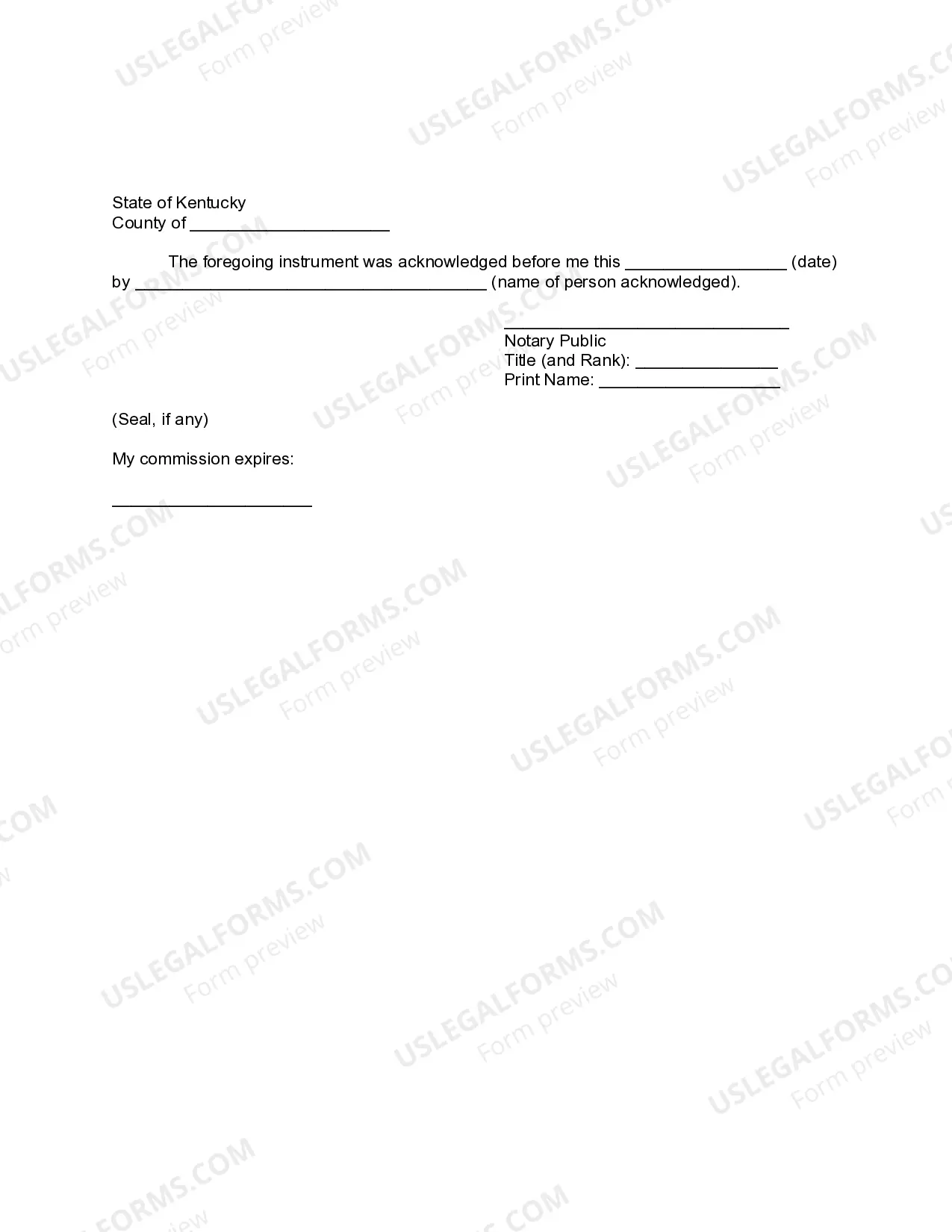
If this form requires notarization, complete it online through a secure video call—no need to meet a notary in person or wait for an appointment.
We protect your documents and personal data by following strict security and privacy standards.

Make edits, fill in missing information, and update formatting in US Legal Forms—just like you would in MS Word.

Download a copy, print it, send it by email, or mail it via USPS—whatever works best for your next step.

Sign and collect signatures with our SignNow integration. Send to multiple recipients, set reminders, and more. Go Premium to unlock E-Sign.

If this form requires notarization, complete it online through a secure video call—no need to meet a notary in person or wait for an appointment.

We protect your documents and personal data by following strict security and privacy standards.
Looking for another form?





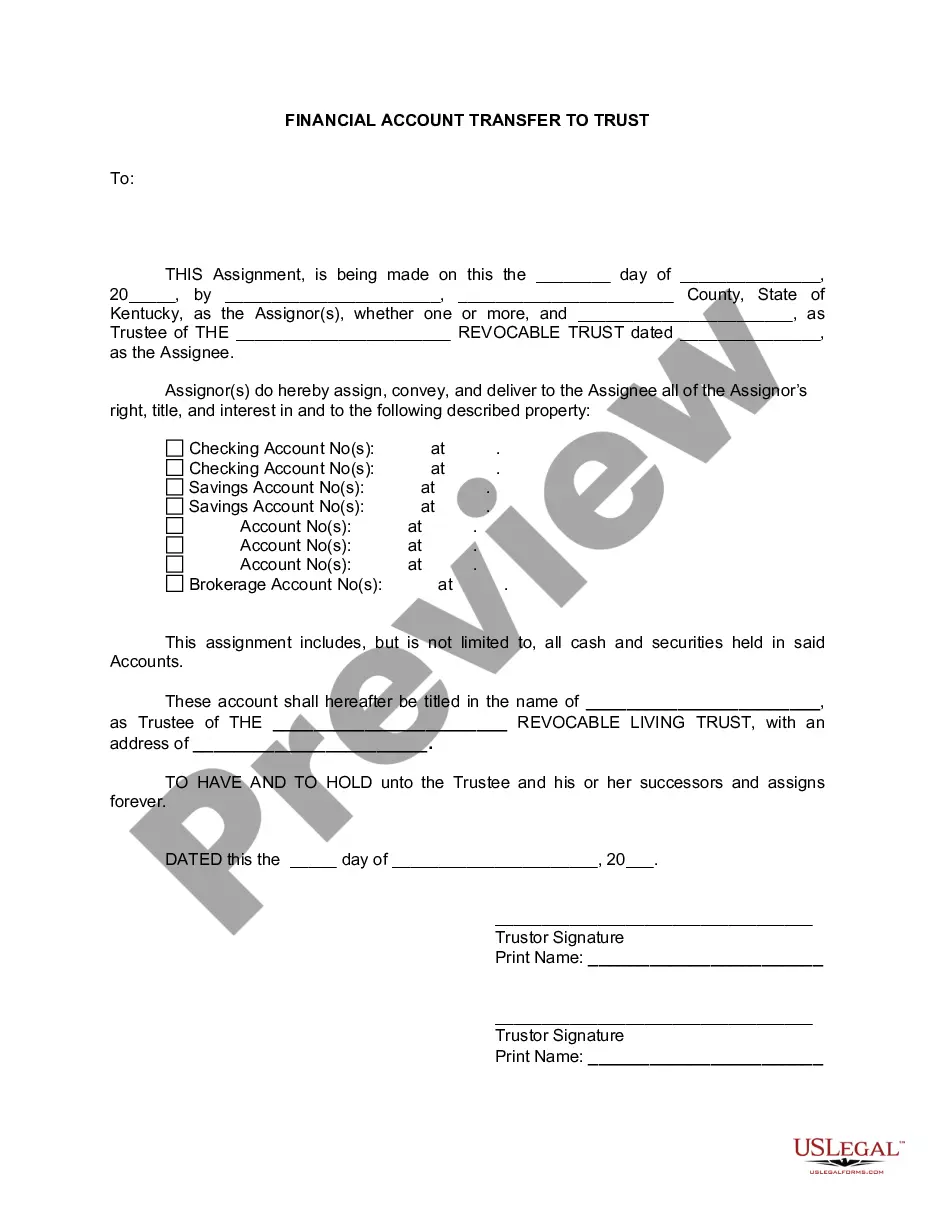
How to fill out Kentucky Financial Account Transfer To Living Trust?
- Log in to your US Legal Forms account if you're an existing user. Ensure your subscription is active to download required templates.
- For first-time users, start by checking the Preview mode and form descriptions. This helps verify you have the correct document for your jurisdiction.
- If adjustments are needed, use the Search tab to find additional templates that better fit your requirements.
- Select the template you want. Click on the Buy Now button and choose a subscription plan that suits you. You must create an account to access the form library.
- Complete your purchase by providing payment details through your credit card or PayPal.
- Download the necessary legal form to your device. You can access it anytime in the My Forms section of your profile.
Utilizing US Legal Forms not only simplifies your document preparation but also guarantees that all forms are compliant and correctly filled out.
Get started today and take advantage of this invaluable resource to make your trust account setup seamless and efficient!
Form popularity
FAQ
To open a bank account for a trust, start by choosing a bank that offers trust accounts. Gather necessary documents, such as the trust agreement and identification for the trustee. After obtaining these documents, take them to the bank, where a representative will assist you in completing the account setup with the trust account with the bank.
Yes, you can open a bank account in the name of a trust. In fact, establishing a trust account with a bank is a common practice for managing trust assets. When doing so, make sure you have all required documents, including the trust agreement, to prove the trust's existence and authority.
The best bank to open a trust account often depends on your specific needs and preferences. However, many financial institutions offer dedicated services for trust accounts, providing them with specialized support and features. It’s advisable to compare fees, interest rates, and services offered to find the bank that aligns best with your trust's objectives.
To create a bank account for a trust, you need to gather essential documents, including the trust agreement and your tax identification number. Once you have your paperwork ready, visit a bank that offers trust accounts. The bank representative will guide you through the process of setting up your trust account with the bank, ensuring you meet all necessary requirements.
A key downside of putting assets in a trust is the potential loss of control over those assets, as they are managed according to the trust's terms. This might restrict your ability to access funds or make alterations freely. Furthermore, it can complicate financial management and ownership verification. Before proceeding, evaluate how the trust account with bank fits into your financial landscape.
To list bank accounts in a trust, you first need to officially establish your trust with the necessary legal documentation. Once this is done, contact your bank and ask to add the trust as a payee or account holder. This action will transform your personal accounts into trust accounts with bank designation, allowing for proper management and direct control by the trustee.
The biggest mistake parents make when setting up a trust fund is failing to regularly update the trust as their circumstances change. Life events such as births, deaths, and changes in financial status may necessitate revisions to beneficiaries or terms. Additionally, inadequate communication with heirs can lead to conflicts. Properly managing the trust account with bank ensures smooth operations and intentions are clear.
The downfall of having a trust often lies in the complexity and potential for misunderstandings among beneficiaries. Mismanagement of the trust results from unclear instructions or lack of communication. Trusts can also be challenged legally, leading to increased costs and disputes if not set up correctly. A well-structured trust account with bank can mitigate these issues.
It can be beneficial for your parents to put their assets in a trust, as it may help avoid probate and facilitate smoother asset distribution. A trust also provides protection against potential creditors and can help manage their wealth efficiently. However, they should consider their specific financial situation and consult with a legal expert to ensure it aligns with their goals.
To put your bank account in a trust, you need to establish a trust document that outlines the terms and beneficiaries. Next, contact your bank to notify them of this change. Most banks will require you to complete a form to officially transfer your trust account with bank designation. This ensures that the account is managed according to the specifications of the trust.