Ky Trust For Life
Description



Get your form ready online
Our built-in tools help you complete, sign, share, and store your documents in one place.
Make edits, fill in missing information, and update formatting in US Legal Forms—just like you would in MS Word.
Download a copy, print it, send it by email, or mail it via USPS—whatever works best for your next step.
Sign and collect signatures with our SignNow integration. Send to multiple recipients, set reminders, and more. Go Premium to unlock E-Sign.
If this form requires notarization, complete it online through a secure video call—no need to meet a notary in person or wait for an appointment.
We protect your documents and personal data by following strict security and privacy standards.

Make edits, fill in missing information, and update formatting in US Legal Forms—just like you would in MS Word.

Download a copy, print it, send it by email, or mail it via USPS—whatever works best for your next step.

Sign and collect signatures with our SignNow integration. Send to multiple recipients, set reminders, and more. Go Premium to unlock E-Sign.

If this form requires notarization, complete it online through a secure video call—no need to meet a notary in person or wait for an appointment.

We protect your documents and personal data by following strict security and privacy standards.
Looking for another form?








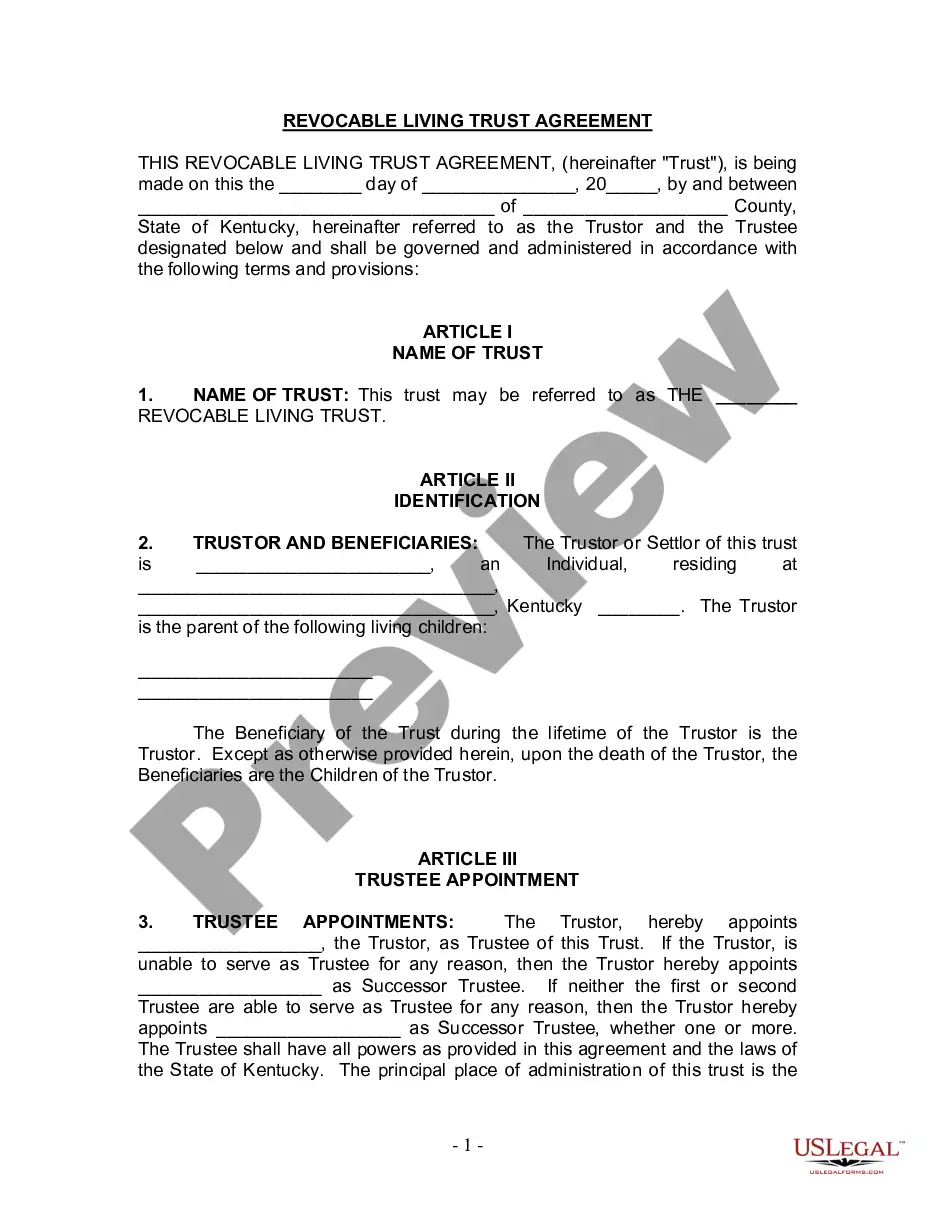
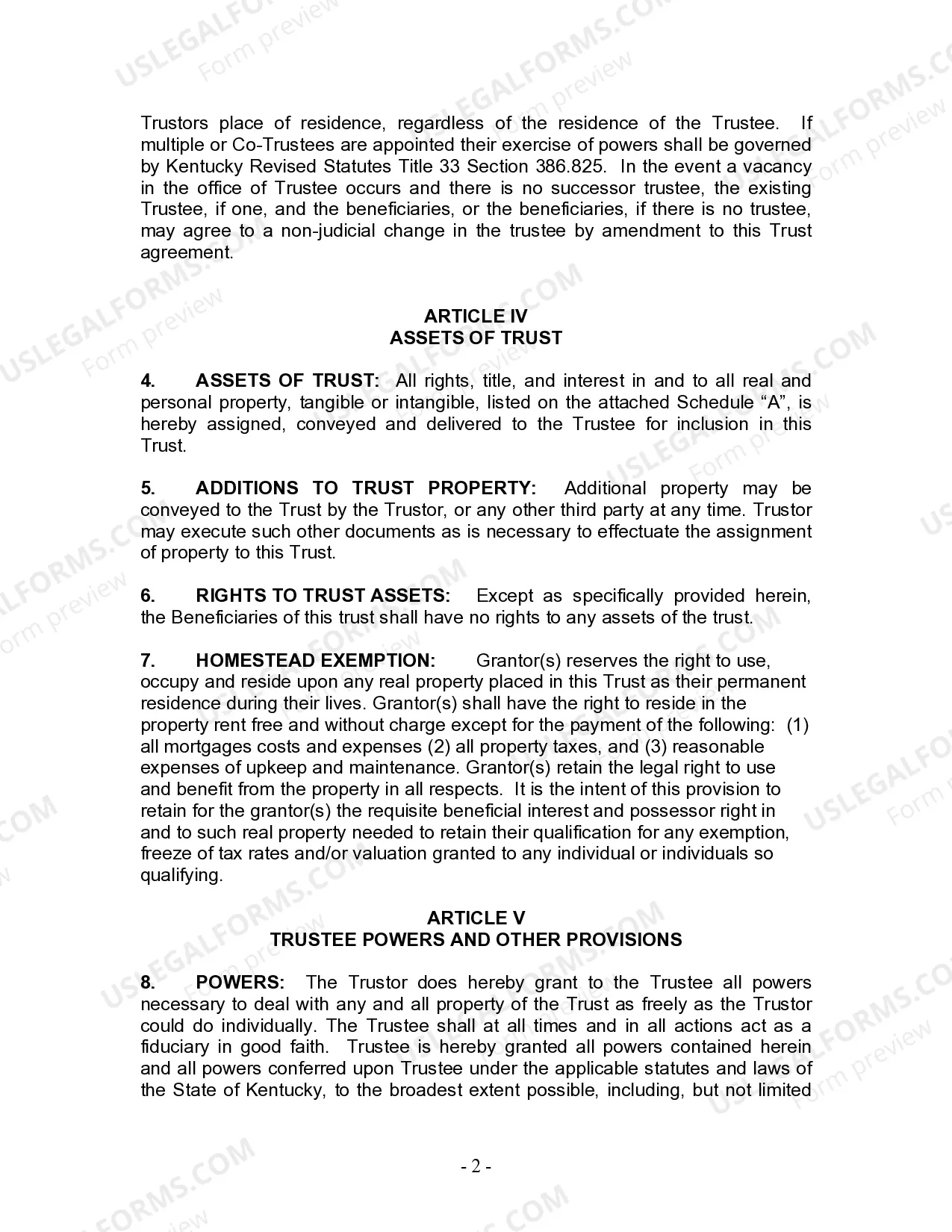
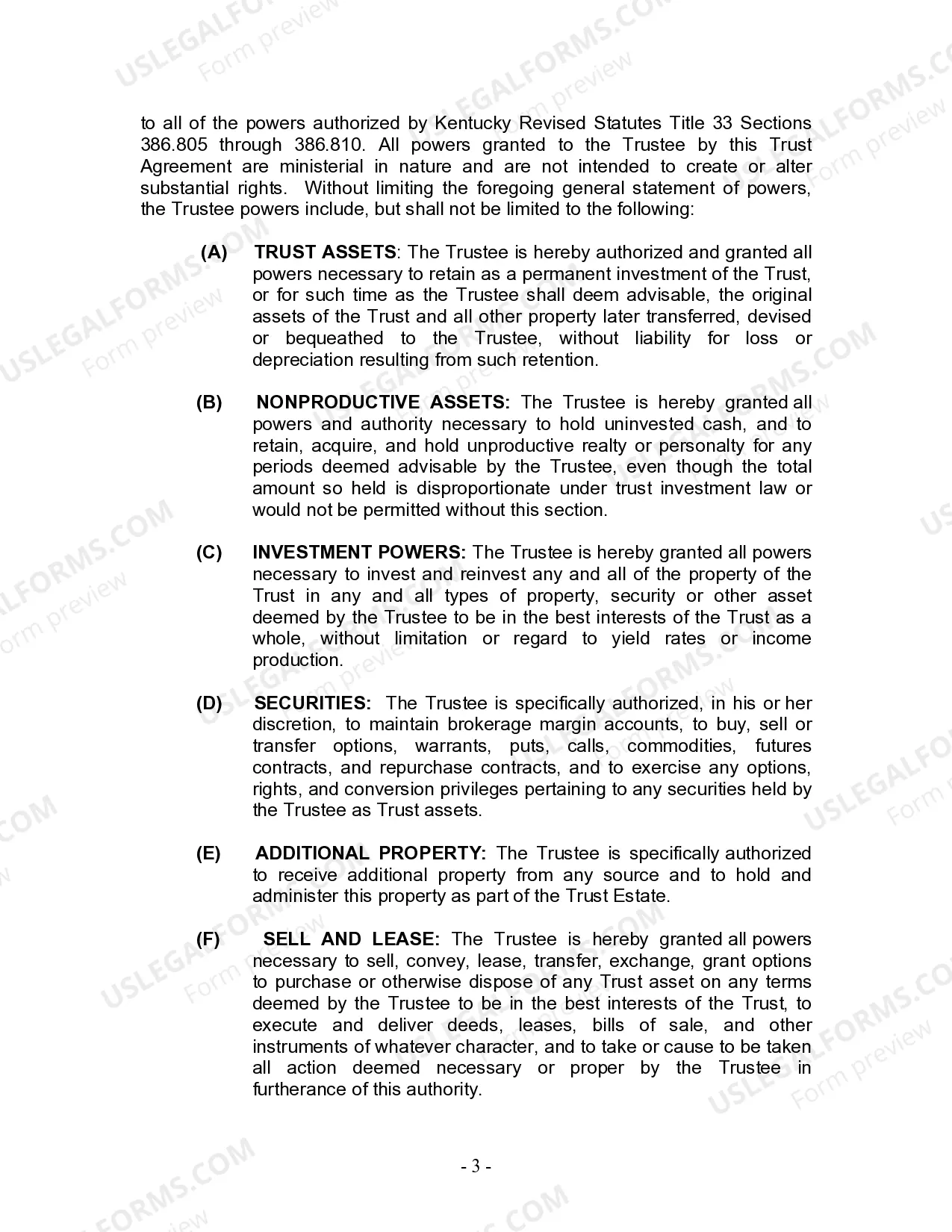
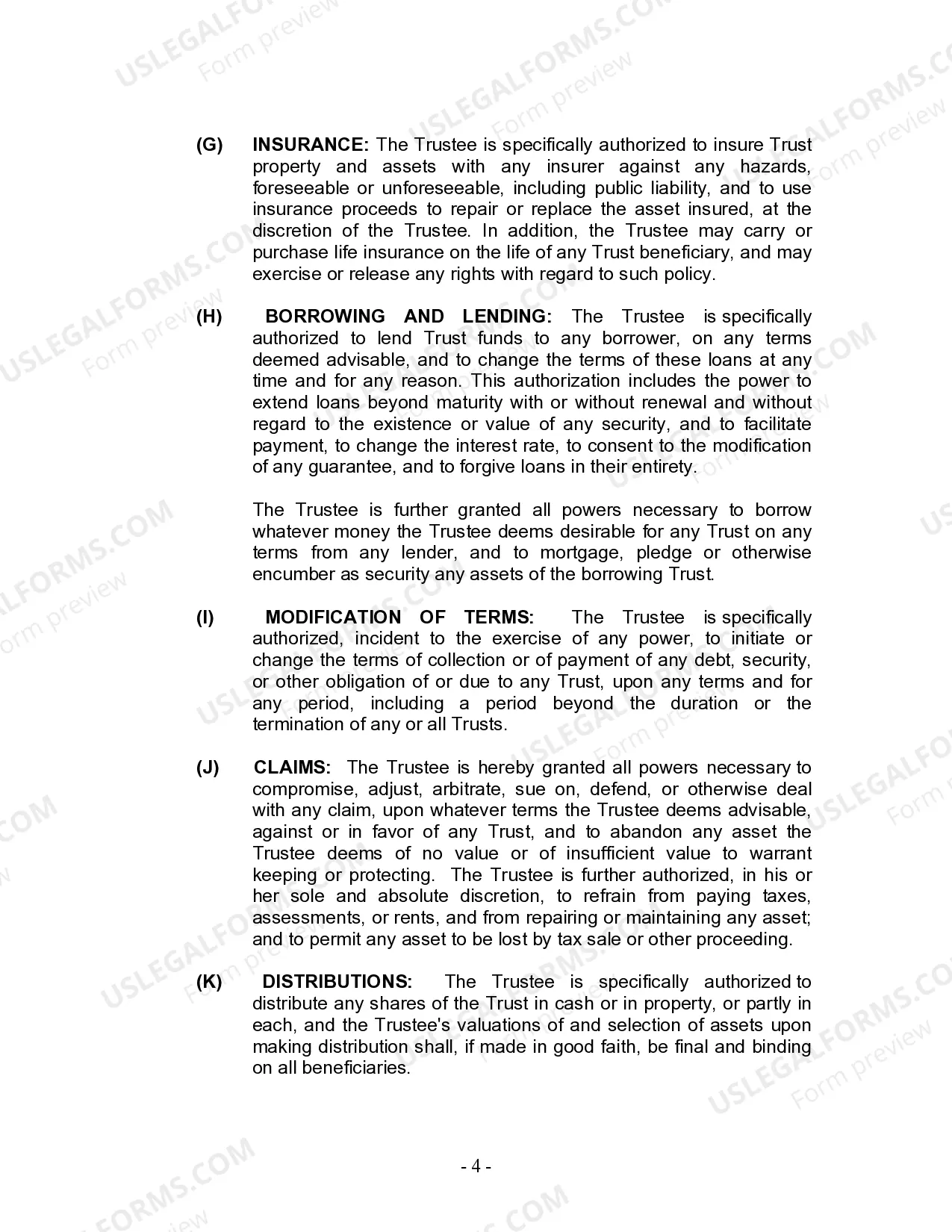
How to fill out Kentucky Living Trust For Individual, Who Is Single, Divorced Or Widow (or Widower) With Children?
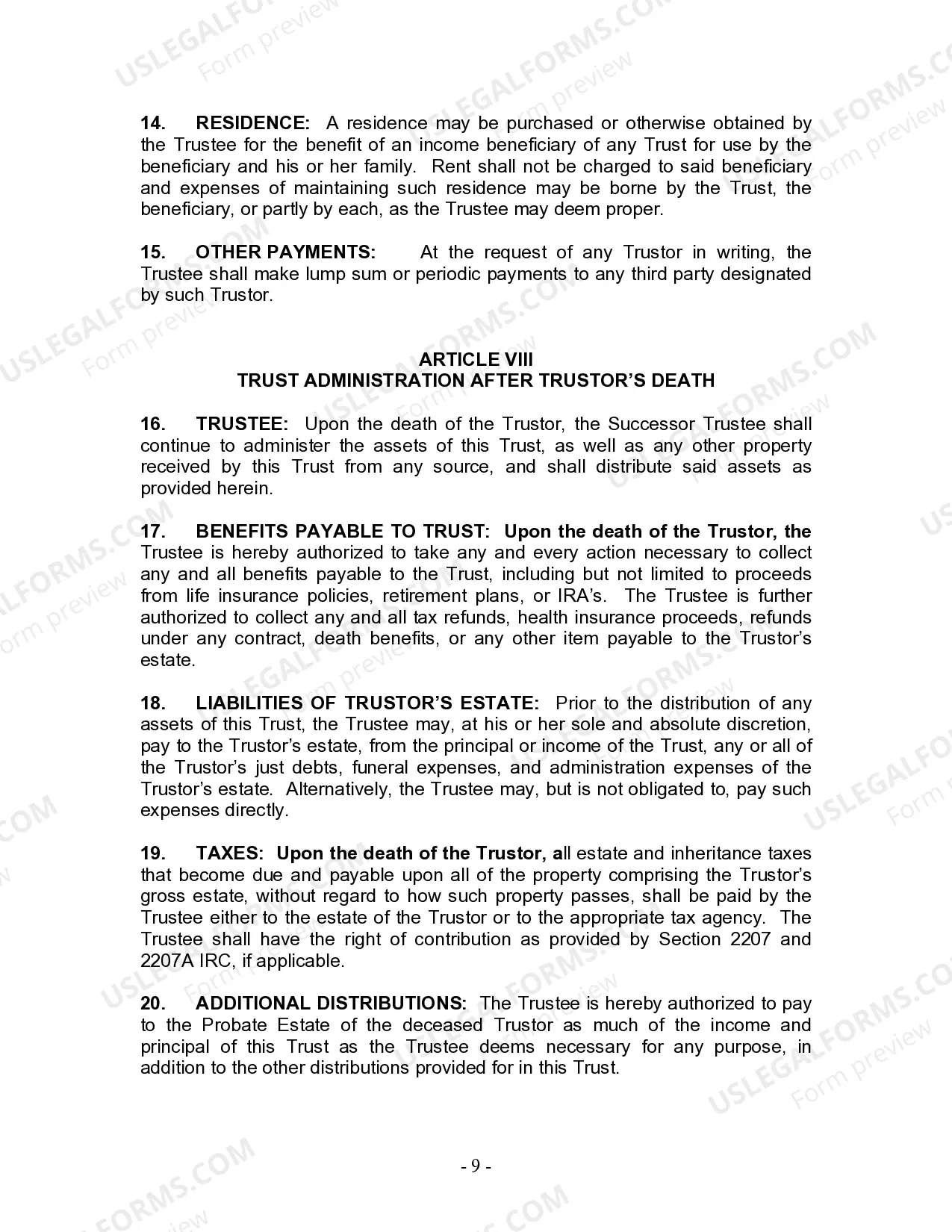
It’s clear that you cannot become a legal specialist right away, nor can you rapidly learn how to draft a Ky Trust For Life without having a specialized background.
Preparing legal documents is a lengthy process that requires specific training and competencies. So why not entrust the creation of the Ky Trust For Life to the experts.
With US Legal Forms, which boasts one of the most comprehensive legal template collections, you can find anything ranging from court documents to office communication templates.
You can regain access to your forms anytime from the My documents tab. If you are a returning client, you can simply Log In and locate and download the template from the same tab.
Regardless of the reason for your documents—whether they are financial, legal, or personal—our website has everything you need. Give US Legal Forms a try now!
- Begin by finding the form you need using the search bar at the top of the page.
- If available, preview it and review the accompanying description to see if the Ky Trust For Life is what you are looking for.
- If you need another template, start your search again.
- Create a free account and choose a subscription plan to acquire the template.
- Click Buy now. After your purchase is complete, you can download the Ky Trust For Life, complete it, print it, and send or mail it to the appropriate individuals or organizations.
Form popularity
FAQ
If you wish to remove yourself from the organ donor list in Kentucky, you can do so by contacting your local Department of Motor Vehicles (DMV) or the registry where you signed up. They may require you to provide personal identification and some details regarding your earlier registration. It's important to handle this promptly to ensure your current wishes are respected and aligned with the principles of the Ky trust for life.
To update or remove your name: Go to .RegisterMeKY.org. Click ?Change Registration? Log-in with your Driver's License Number and Zip Code of when you first registered. Once in your record, you may edit your information or click ?Not a Donor? to update your decision and no longer be a registered donor.
Is signing up as an organ donor a legally binding decision? Signing up to become an organ donor (as an adult 18 years or older) is considered a first-person authorized advanced directive. In other words, it functions just like a legally binding will. This means it cannot be overridden by family, even after you die.
Risks to the Donor As with any other surgery, there are both short and long term risks involved in living donation. Surgical complications can include pain, infection, blood loss, blood clots, allergic reactions to anesthesia, pneumonia, injury to surrounding tissue or other organs, and even death.
Yes. You can change your donor status at any time. Look for an option such as "updating your status" on your state's site.
Organ donation is only possible when the donor has died in a hospital. Organs need a supply of oxygen-rich blood to remain suitable for transplantation. Donors are put on artificial respiration to keep their heart beating, so that oxygen-rich blood continues to circulate through their body.