Kansas In Property With Name
Description

Get your form ready online
Our built-in tools help you complete, sign, share, and store your documents in one place.
Make edits, fill in missing information, and update formatting in US Legal Forms—just like you would in MS Word.
Download a copy, print it, send it by email, or mail it via USPS—whatever works best for your next step.
Sign and collect signatures with our SignNow integration. Send to multiple recipients, set reminders, and more. Go Premium to unlock E-Sign.
If this form requires notarization, complete it online through a secure video call—no need to meet a notary in person or wait for an appointment.
We protect your documents and personal data by following strict security and privacy standards.

Make edits, fill in missing information, and update formatting in US Legal Forms—just like you would in MS Word.

Download a copy, print it, send it by email, or mail it via USPS—whatever works best for your next step.

Sign and collect signatures with our SignNow integration. Send to multiple recipients, set reminders, and more. Go Premium to unlock E-Sign.

If this form requires notarization, complete it online through a secure video call—no need to meet a notary in person or wait for an appointment.

We protect your documents and personal data by following strict security and privacy standards.
Looking for another form?
How to fill out Agreement And Declaration Of Equitable Interest In Kansas Real Property?
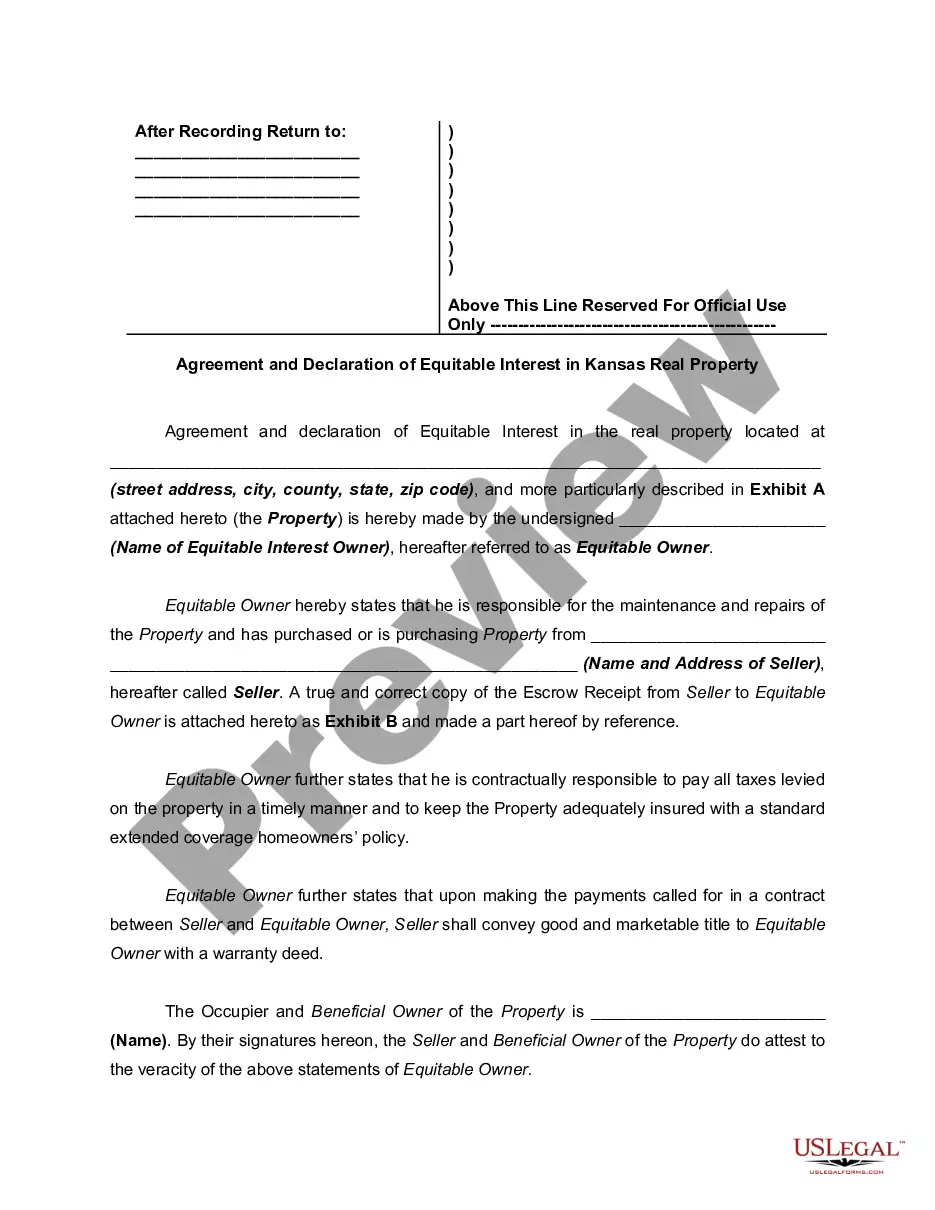
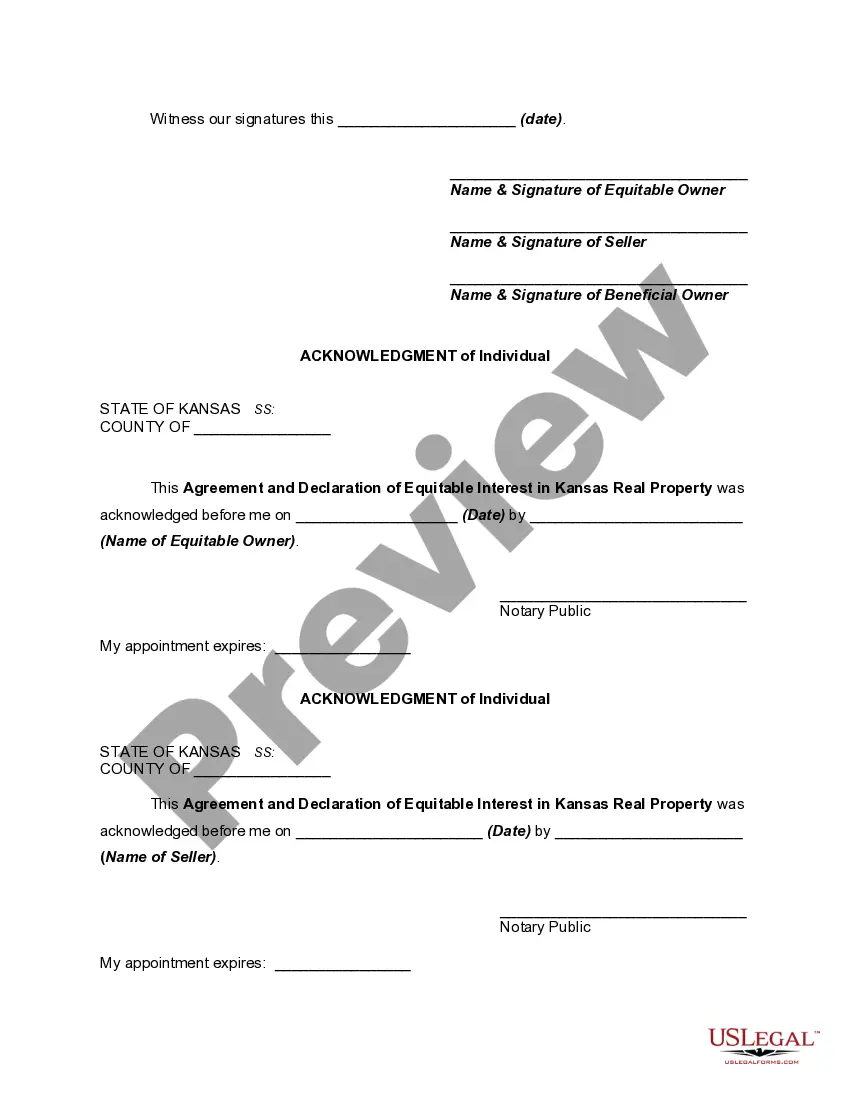
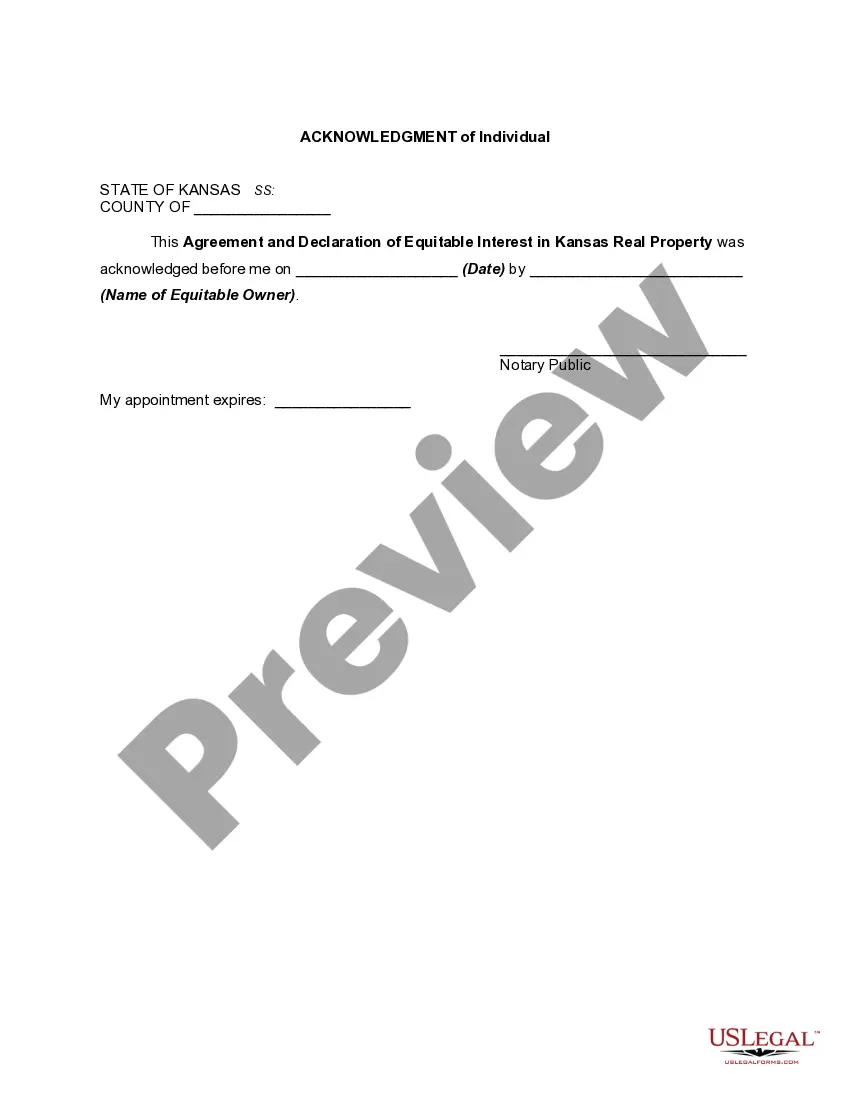
The Kansas In Property With Name displayed on this page is a reusable legal template crafted by expert attorneys in accordance with federal and local regulations.
For over 25 years, US Legal Forms has supplied individuals, businesses, and legal professionals with more than 85,000 verified, state-specific forms for any business and personal circumstance.
Fill out and sign the documentation. Print out the template to complete it manually. Alternatively, use an online multifunctional PDF editor to quickly and accurately fill out and sign your form with a valid signature. Download your documents once more. Reuse the same document whenever necessary. Access the My documents tab in your profile to redownload any previously purchased forms. Sign up for US Legal Forms to have verified legal templates for all of life's circumstances readily available.
- Search for the document you need and review it.
- Browse through the example you looked for and preview it or examine the form description to ensure it meets your requirements. If it doesn't, use the search bar to locate the correct one. Click Buy Now when you have identified the template you require.
- Register and Log In.
- Select the pricing plan that fits you and set up an account. Use PayPal or a credit card to make a swift payment. If you already possess an account, Log In and verify your subscription to continue.
- Obtain the editable template.
- Select the format you desire for your Kansas In Property With Name (PDF, Word, RTF) and download the sample to your device.
Form popularity
FAQ
In Kansas, due diligence for unclaimed property requires businesses to attempt to contact the owner before reporting the property as unclaimed. This includes sending a written notice to the last known address of the owner. Understanding these requirements is vital to comply with state laws. US Legal Forms can assist you in navigating these regulations effectively.
The best evidence to protest property taxes in Kansas includes recent sales data of comparable properties, property appraisals, and photographs that illustrate your property's condition. This documentation can help support your case during the appeal process. For comprehensive support, consider US Legal Forms to access necessary forms and resources.
Filing a lien on property in Kansas involves preparing a lien statement and submitting it to the county clerk. The statement should detail the amount owed, the property description, and the parties involved. You can streamline this process by utilizing US Legal Forms, which provides templates and guidance for filing correctly.
In Kansas, homeowners aged 65 and older may qualify for a property tax exemption or rebate. This benefit can significantly reduce the financial burden of property taxes. It's wise to check with your local tax office to understand eligibility requirements and available programs. US Legal Forms can guide you through the application process.
To place a lien on your property in Kansas, you must file a lien statement with the county clerk in the county where the property is located. This document should include specific details about the debt and the property. By using US Legal Forms, you can access templates to help you prepare the necessary documents accurately and efficiently.
In Kansas, you generally have six months to file a lien after the debt becomes due. This time frame is crucial for ensuring that your claim is valid and enforceable. If you miss this deadline, you may lose your right to collect the debt through a lien. To ensure compliance, consider using resources like US Legal Forms for proper documentation.
To determine who owns a house in Kansas, you can access property records through the local county clerk's office or the county appraiser's website. These resources provide information on property ownership, tax assessments, and property history. For a more user-friendly experience, US Legal Forms offers resources that guide you in obtaining property ownership information efficiently, ensuring you have the data you need.
Yes, Kansas recognizes joint tenancy as a legal way to own property. This means that two or more individuals can own property together, with the right of survivorship. If one owner passes away, their share automatically transfers to the surviving owner(s). Understanding joint tenancy is crucial for estate planning in Kansas, and US Legal Forms can help you create the necessary documents to establish joint ownership.
To find out who owns a property in Kansas, you can start by visiting your local county assessor's office. They maintain records of property ownership and assess property taxes. Additionally, online property databases can provide ownership details, allowing you to search by the property's address or parcel number. If you prefer a more streamlined approach, consider using US Legal Forms, which offers tools to access property records easily.
To add a name to a deed in Kansas, you must prepare a new deed that reflects the change in ownership. This involves drafting the deed, signing it in front of a notary, and then recording it with your county's register of deeds. It is vital to follow the specific legal requirements to ensure the deed is valid. US Legal Forms can guide you through this process, providing you with templates and detailed steps to add a name to a deed in Kansas.