File A Suit For Property Damage
Description
Get your form ready online
Our built-in tools help you complete, sign, share, and store your documents in one place.
Make edits, fill in missing information, and update formatting in US Legal Forms—just like you would in MS Word.
Download a copy, print it, send it by email, or mail it via USPS—whatever works best for your next step.
Sign and collect signatures with our SignNow integration. Send to multiple recipients, set reminders, and more. Go Premium to unlock E-Sign.
If this form requires notarization, complete it online through a secure video call—no need to meet a notary in person or wait for an appointment.
We protect your documents and personal data by following strict security and privacy standards.

Make edits, fill in missing information, and update formatting in US Legal Forms—just like you would in MS Word.

Download a copy, print it, send it by email, or mail it via USPS—whatever works best for your next step.

Sign and collect signatures with our SignNow integration. Send to multiple recipients, set reminders, and more. Go Premium to unlock E-Sign.

If this form requires notarization, complete it online through a secure video call—no need to meet a notary in person or wait for an appointment.

We protect your documents and personal data by following strict security and privacy standards.
Looking for another form?




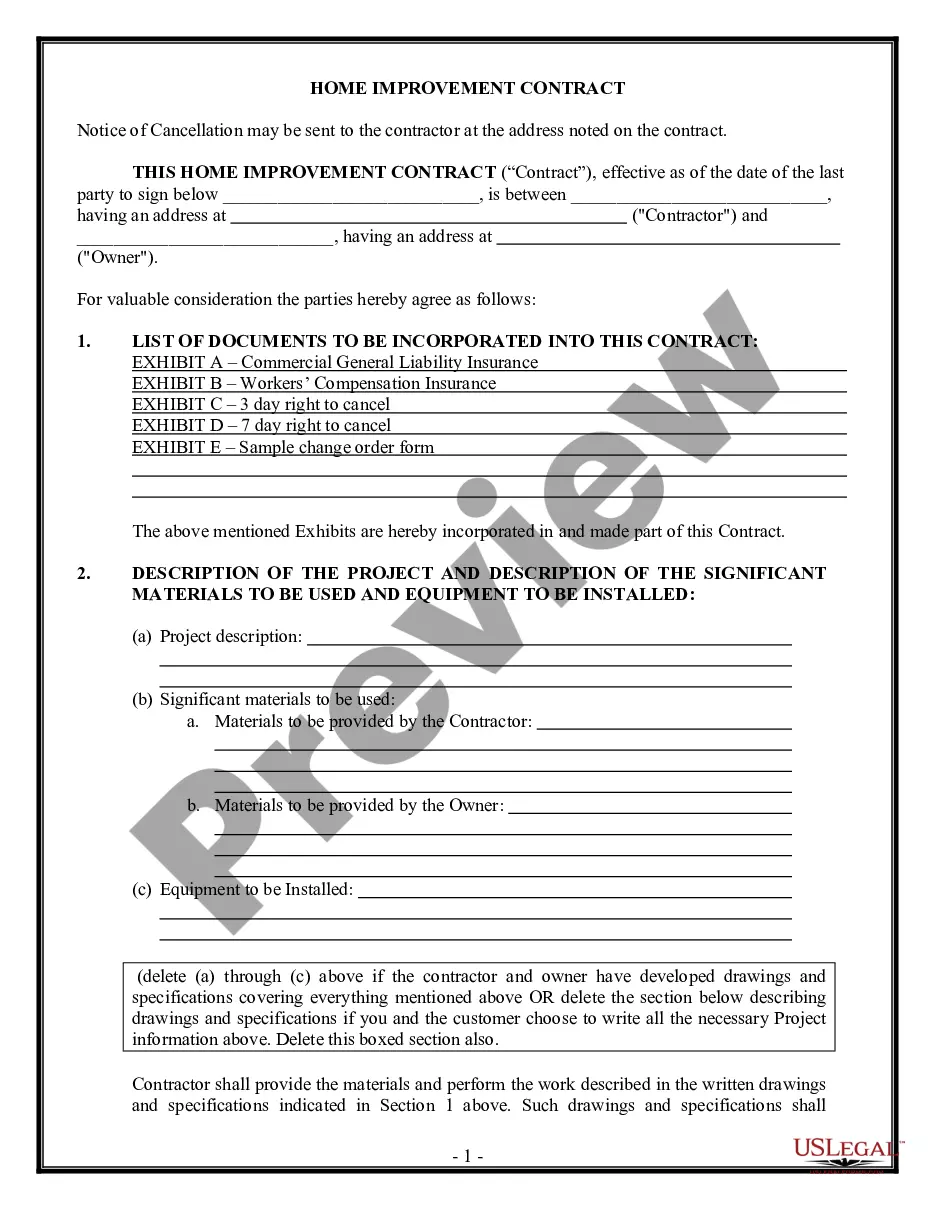



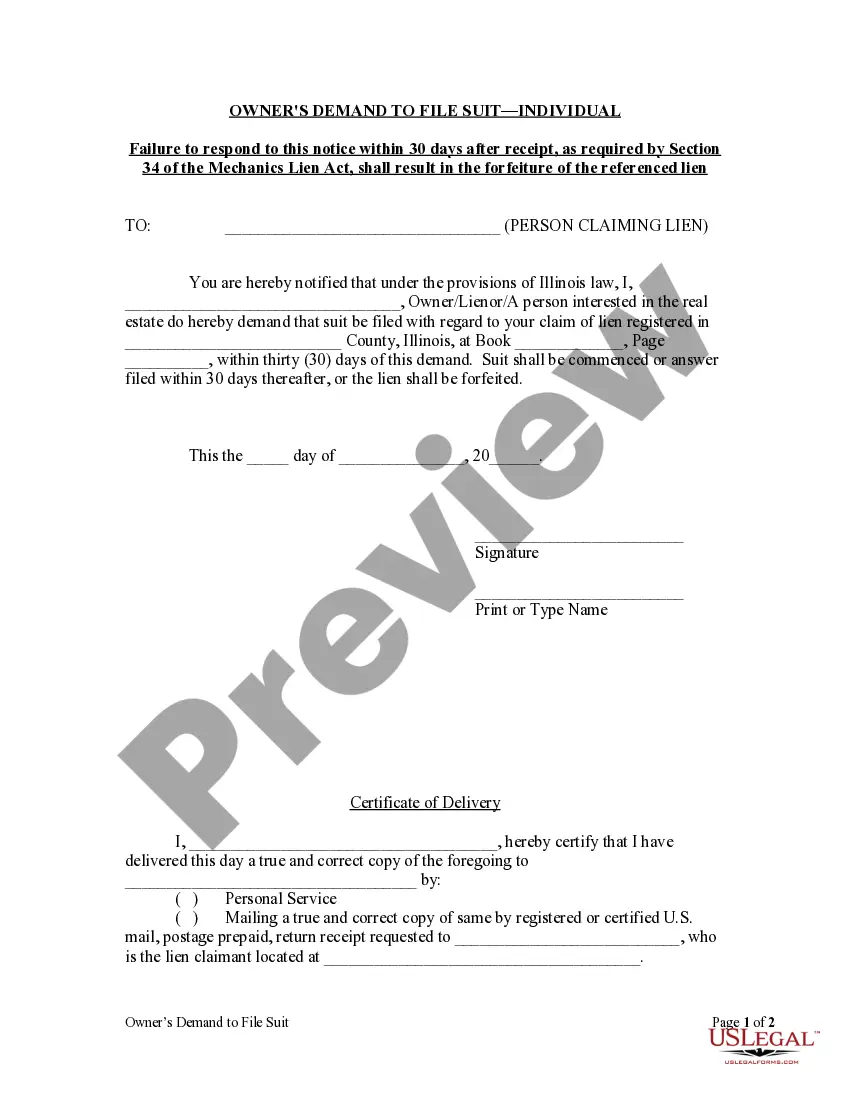
How to fill out Illinois Owner's Demand To File Suit - Mechanics Liens - Individual?
- If you're a returning user, log into your account at US Legal Forms and locate the necessary form template. Click on the Download button to save it on your device, ensuring your subscription is active.
- For first-time users, start by checking the Preview mode and form descriptions to select a template that matches your requirements based on your local jurisdiction.
- If no relevant form is found, utilize the Search function to explore additional templates that might suit your needs better.
- Once you find the appropriate document, click on the Buy Now button. You’ll need to choose a subscription plan and create an account to access the library’s resources.
- Proceed by entering your payment details. You can use a credit card or PayPal to complete your purchase securely.
- After the payment, download your form and save it to your device. You can access it anytime through the My Forms section in your profile.
US Legal Forms empowers both individuals and attorneys by providing a comprehensive and user-friendly library of legal forms.
With over 85,000 fillable and editable legal documents and access to premium experts, ensure your forms are completed accurately and legally. Start today and simplify your legal needs!
Form popularity
FAQ
When writing a property damage claim, be clear and concise. Include your personal information, details of the incident, and a thorough description of the damages. You may state your intention to file a suit for property damage if compensation isn't initially offered. Having a well-prepared claim increases the likelihood of a favorable outcome in your pursuit for justice.
Property damage is usually calculated by assessing the costs of repairs or the replacement value of the damaged items. Insurers may send an adjuster to evaluate the damages and estimate the costs based on fair market value. If you find the assessment unsatisfactory, you might decide to file a suit for property damage to contest it. Accurate documentation is vital during this process.
When filing a homeowners insurance claim, avoid making exaggerated claims or speaking in uncertain terms. Stay factual and don't admit fault, as this may jeopardize your chances of receiving compensation. If you do need to file a suit for property damage, it is crucial to stick to the facts and let any disputes be resolved within the legal framework. Honesty is essential to protect your interests.
To write a property damage report, begin with a brief introduction outlining the incident. Include specific details, such as the date, time, location, and extent of the damage. If you foresee needing to file a suit for property damage, ensure to document everything meticulously, as this report may serve as key evidence in your case. Keeping your report clear and organized will help the process.
When writing a damage claim, start with your name, contact information, and details of the incident. Clearly explain what happened, outline the damage, and specify what compensation you seek. If you plan to file a suit for property damage, mention that in your letter, and include supporting documents to strengthen your request. A comprehensive claim can improve your chances of success.
To file a claim for personal property, first review your insurance policy for coverage details. Then, gather evidence of the damage, including photos and descriptions of the items affected. Contact your insurance provider directly to report the loss, and be prepared to file a suit for property damage if you encounter issues. Using platforms like uslegalforms can guide you through necessary forms and processes.
An example of a damage claim would be a situation where a tree falls on your house during a storm, causing structural damage. You would gather evidence, such as photos of the damage, and document your expenses for repairs. If the other party is at fault, you may wish to explore options to file a suit for property damage to recover your costs. Documenting everything thoroughly helps validate your claim.
To write a letter for property damage, start by clearly stating the purpose of your letter. Include details about the property, the damage, and how it occurred. Be sure to express your intent to file a suit for property damage if necessary and provide any supporting documents or photos to strengthen your case. Remember, a well-structured letter can initiate action and help in the claims process.
The compensation for property damage varies widely based on the extent of the damage and jurisdiction. You could potentially recover costs for repairs, replacement value, and sometimes lost income due to the damage. If you wish to explore your potential compensation, consider filing a suit for property damage to address your specific situation.
The four major classifications of property damage include physical damage, economic loss, loss of use, and emotional distress. Each classification addresses different avenues through which you may experience losses. By recognizing these classifications, you can better prepare to file a suit for property damage and articulate your case.