Life Estate Deed In Illinois
Description


Get your form ready online
Our built-in tools help you complete, sign, share, and store your documents in one place.
Make edits, fill in missing information, and update formatting in US Legal Forms—just like you would in MS Word.
Download a copy, print it, send it by email, or mail it via USPS—whatever works best for your next step.
Sign and collect signatures with our SignNow integration. Send to multiple recipients, set reminders, and more. Go Premium to unlock E-Sign.
If this form requires notarization, complete it online through a secure video call—no need to meet a notary in person or wait for an appointment.
We protect your documents and personal data by following strict security and privacy standards.

Make edits, fill in missing information, and update formatting in US Legal Forms—just like you would in MS Word.

Download a copy, print it, send it by email, or mail it via USPS—whatever works best for your next step.

Sign and collect signatures with our SignNow integration. Send to multiple recipients, set reminders, and more. Go Premium to unlock E-Sign.

If this form requires notarization, complete it online through a secure video call—no need to meet a notary in person or wait for an appointment.

We protect your documents and personal data by following strict security and privacy standards.
Looking for another form?

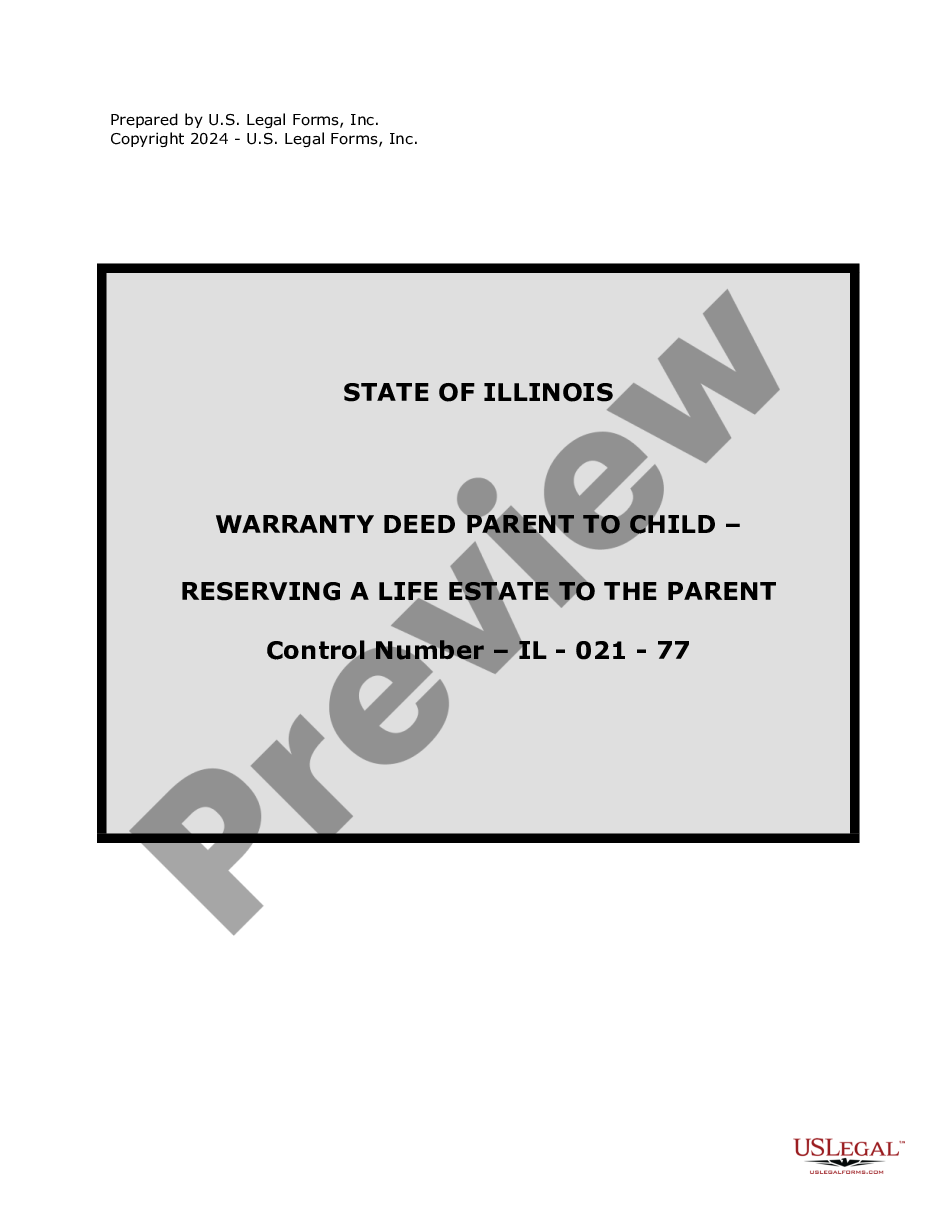
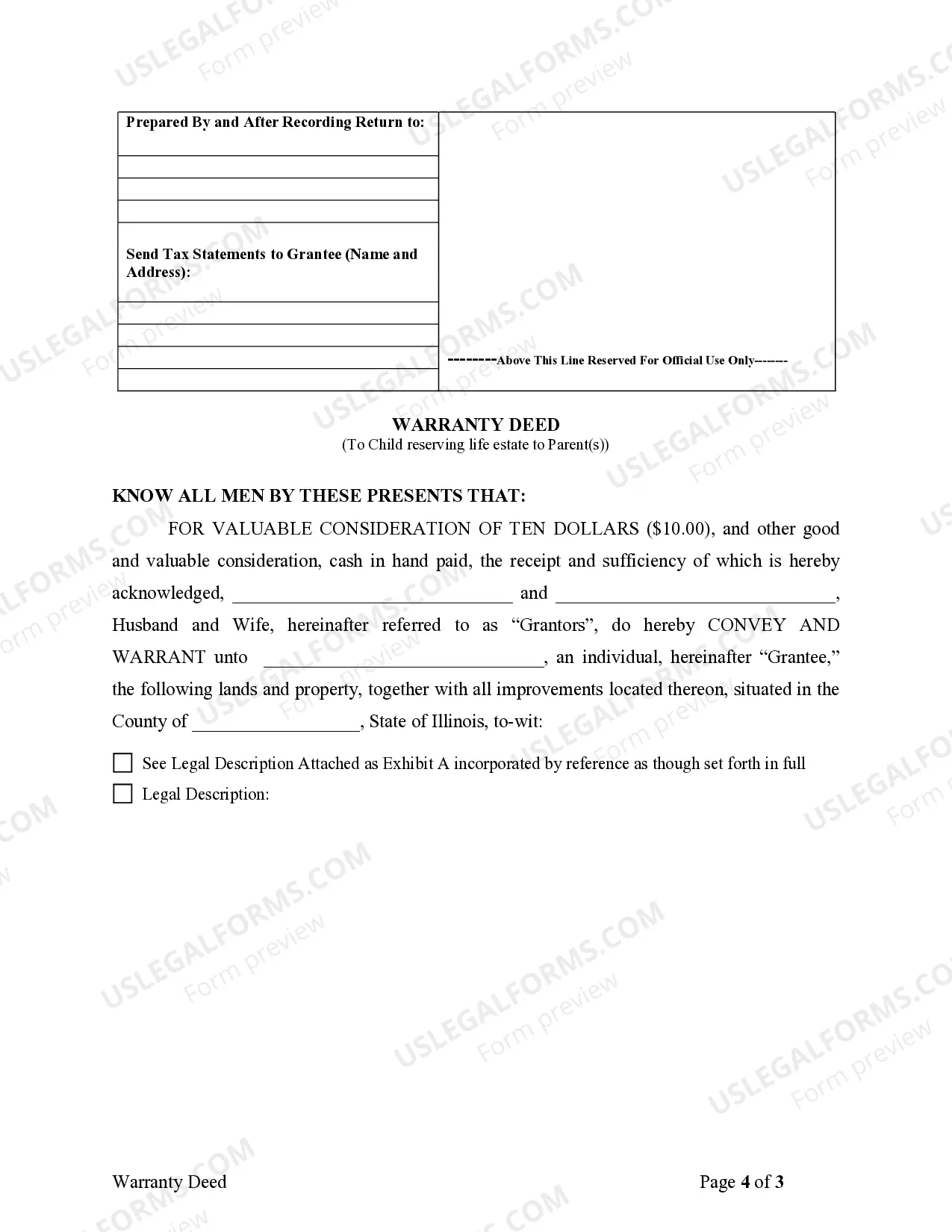
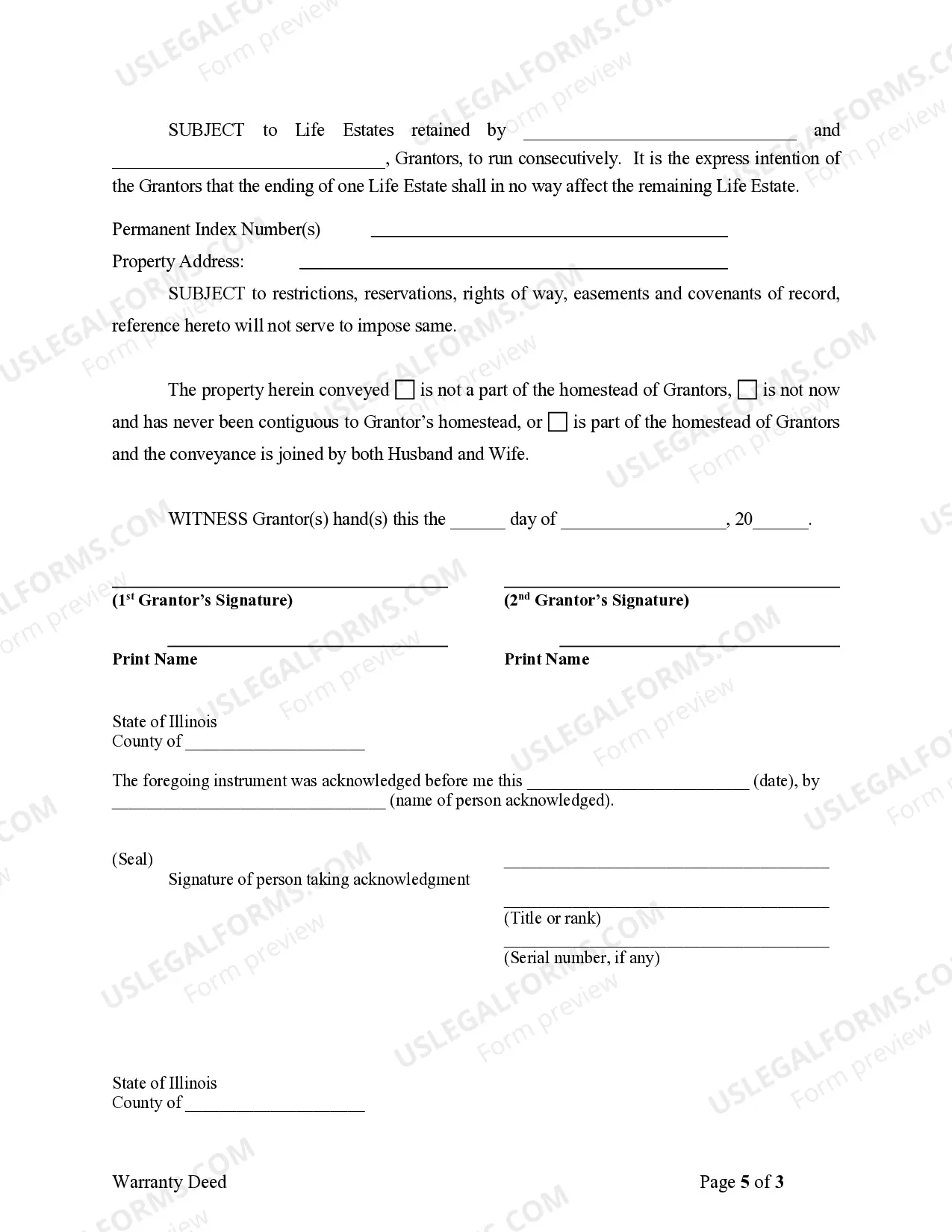
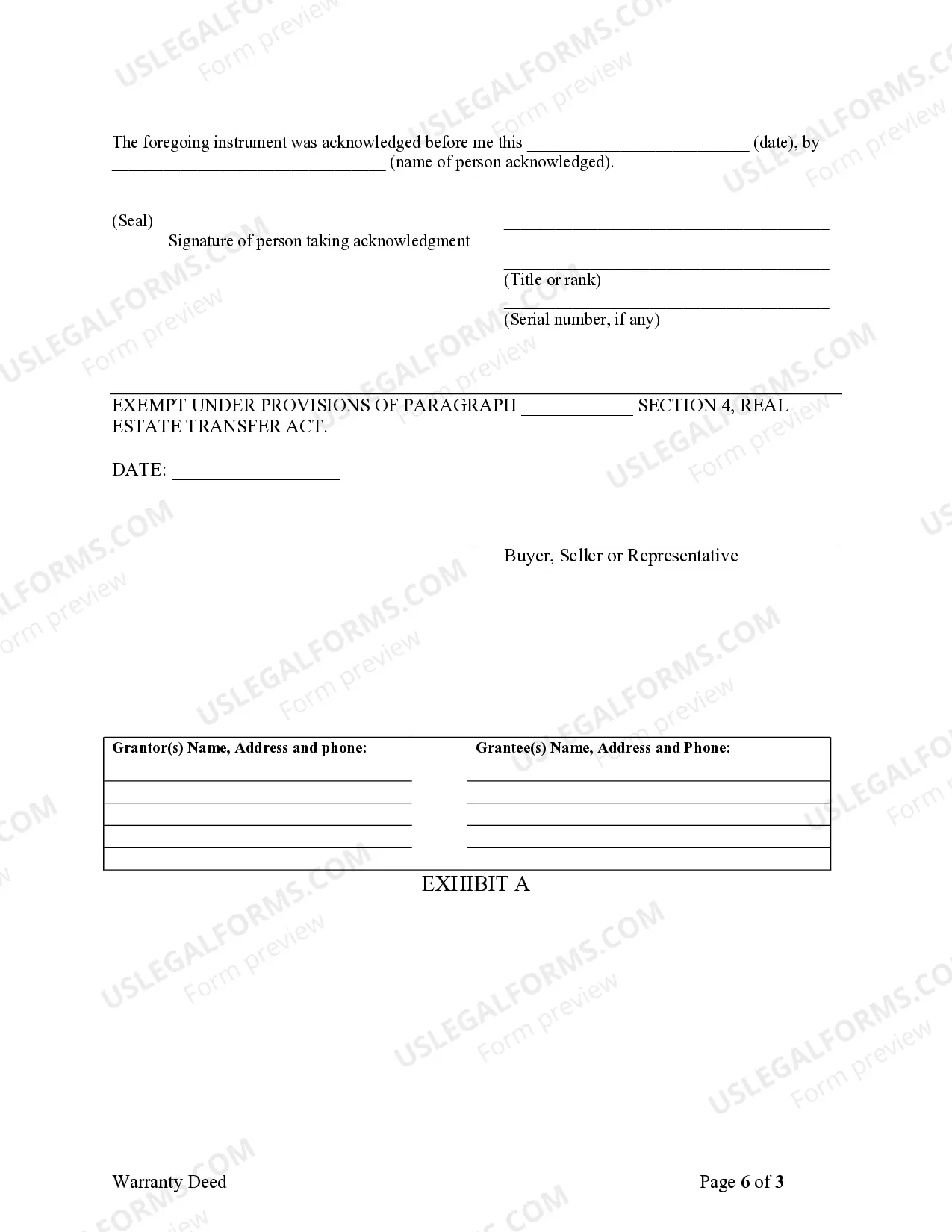
How to fill out Illinois Warranty Deed To Child Reserving A Life Estate In The Parents?
Individuals typically link legal documentation with something intricate that solely a specialist can manage.
In a sense, this is accurate, as composing a Life Estate Deed In Illinois necessitates a comprehensive comprehension of subject specifications, encompassing state and local statutes.
Nevertheless, with US Legal Forms, everything has turned more straightforward: pre-prepared legal templates for any personal and business scenario specific to state regulations are gathered in a single online directory and are now accessible to everyone.
Print your document or upload it to an online editor for quicker completion. All templates in our catalog are reusable: once obtained, they remain saved in your profile. You can access them at any time through the My documents tab. Explore all the benefits of using the US Legal Forms platform. Sign up now!
- Review the page content carefully to ensure it meets your requirements.
- Examine the form description or view it using the Preview option.
- Find another template using the Search bar above if the previous one is not suitable.
- Select Buy Now when you discover the appropriate Life Estate Deed In Illinois.
- Choose a pricing plan that aligns with your needs and budget.
- Create an account or Log In to proceed to the payment page.
- Complete your subscription payment via PayPal or with your credit card.
- Pick the format for your template and hit Download.
Form popularity
FAQ
Transferring property after death in Illinois typically involves executing a transfer on death deed. This deed allows the designated beneficiaries to gain ownership without going through probate. To effectuate the transfer, beneficiaries need to present the death certificate and the recorded deed to the county. For others seeking a streamlined process, UsLegalForms provides valuable resources and solutions to manage these transactions effectively.
To create a valid transfer on death deed in Illinois, you must meet several key requirements. First, the deed must be in writing and signed by the property owner. The deed should also clearly state the intent to transfer the property upon death, along with the names of the beneficiaries. Remember, filing the deed with the county recorder is essential to ensure its effectiveness, making the life estate deed in Illinois a well-structured option.
While a transfer on death deed in Illinois offers benefits like avoiding probate, it has some disadvantages. One major drawback is that it does not provide protection from creditors; if the deceased had outstanding debts, creditors may still claim the property. Additionally, if the property owner needs to sell the property during their lifetime, they must revoke the deed, which adds an extra step. It's crucial to weigh these factors before deciding on the type of deed that best suits your situation.
In Illinois, to transfer a deed after someone has passed away, you will typically need to file a new deed with the local recorder of deeds office. If the property was owned through a life estate deed in Illinois, the process can be simpler as the property automatically transfers to the remainderman upon the death of the life tenant. It's important to gather necessary documents, such as the original life estate deed and the death certificate. Additionally, using platforms like US Legal Forms can help you navigate the paperwork and ensure all requirements are met.
To obtain a transfer on death deed in Illinois, you need to fill out the specific form designed for this purpose and submit it to your local recorder's office. This deed allows you to designate heirs who will receive the property without going through probate. Utilizing platforms like US Legal Forms can provide you with the needed templates and guidance to create a valid transfer on death deed efficiently.
A life estate deed in Illinois is a legal document that establishes a life estate, allowing one person to use a property for their lifetime while designating another individual as the future owner. This deed serves to clarify property intentions and can help avoid disputes later. It is commonly used in estate planning to manage how property is transferred.
A life estate in Illinois allows a property owner to retain use of the property during their lifetime while transferring ownership to another person upon death. This arrangement can protect assets and provide a clear path for inheritance. Essentially, the life tenant has rights to the property but cannot sell or mortgage it without the consent of the future owner.
Yes, Illinois recognizes the concept of a beneficiary deed. This allows property owners to designate a beneficiary who will inherit the property upon the owner's death. It's an effective estate planning tool, similar to a life estate deed in Illinois, as it simplifies the transfer process and circumvents probate.
In Illinois, various professionals can prepare a deed, including attorneys and licensed title companies. While you could draft a life estate deed in Illinois on your own, using an experienced professional can ensure compliance with all legal requirements. This reduces the risk of errors and helps facilitate a smooth property transfer.
In Illinois, a deed generally takes precedence over a will. This means that if you create a life estate deed in Illinois, it will be honored even if a will states otherwise. It’s crucial to ensure that the deed is executed properly to avoid any legal complications. Consulting with a legal professional can provide clarity on this matter.