Georgia Living Trust Without Beneficiaries

Description
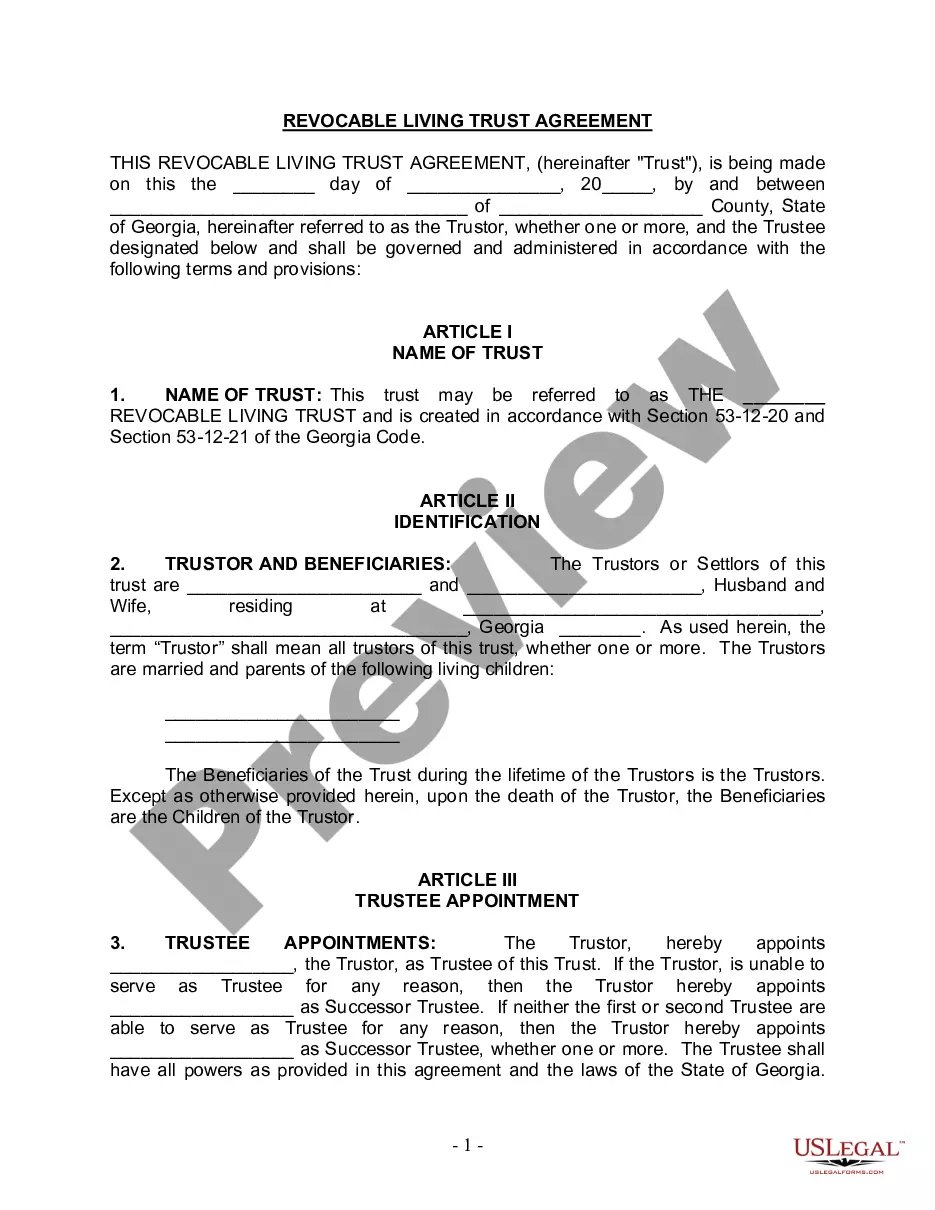
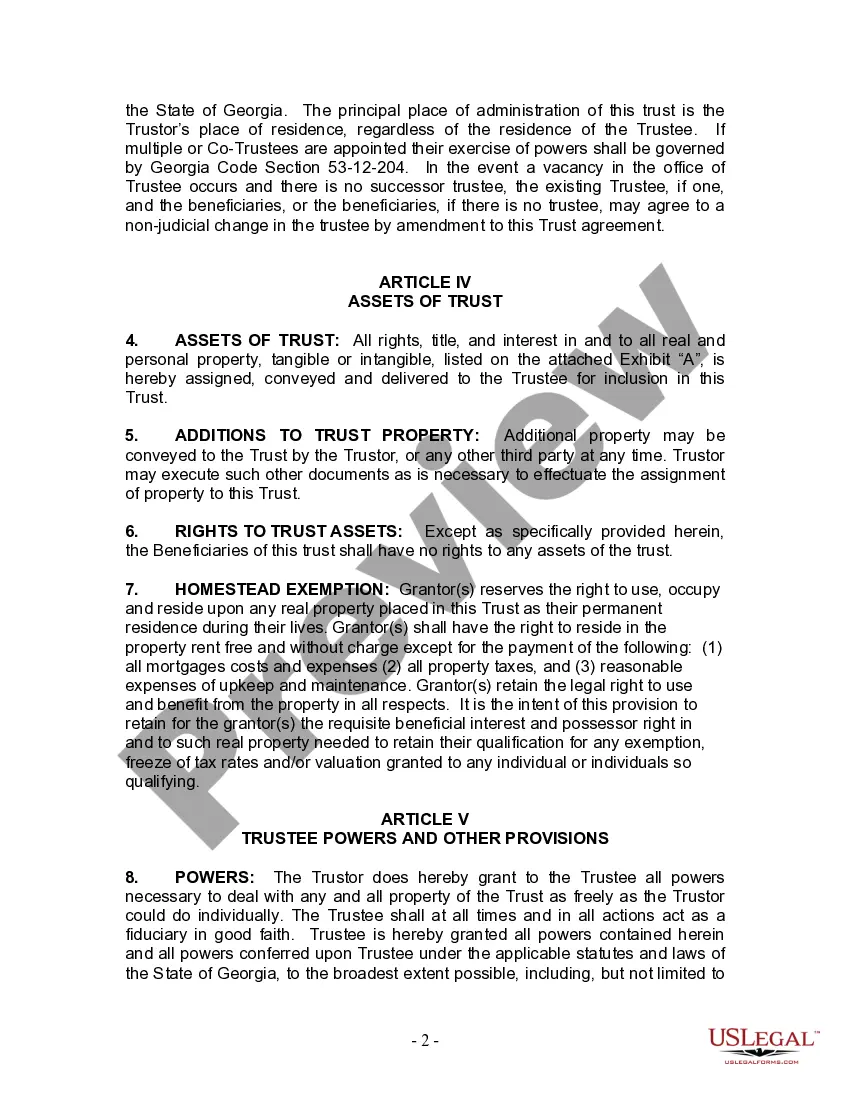
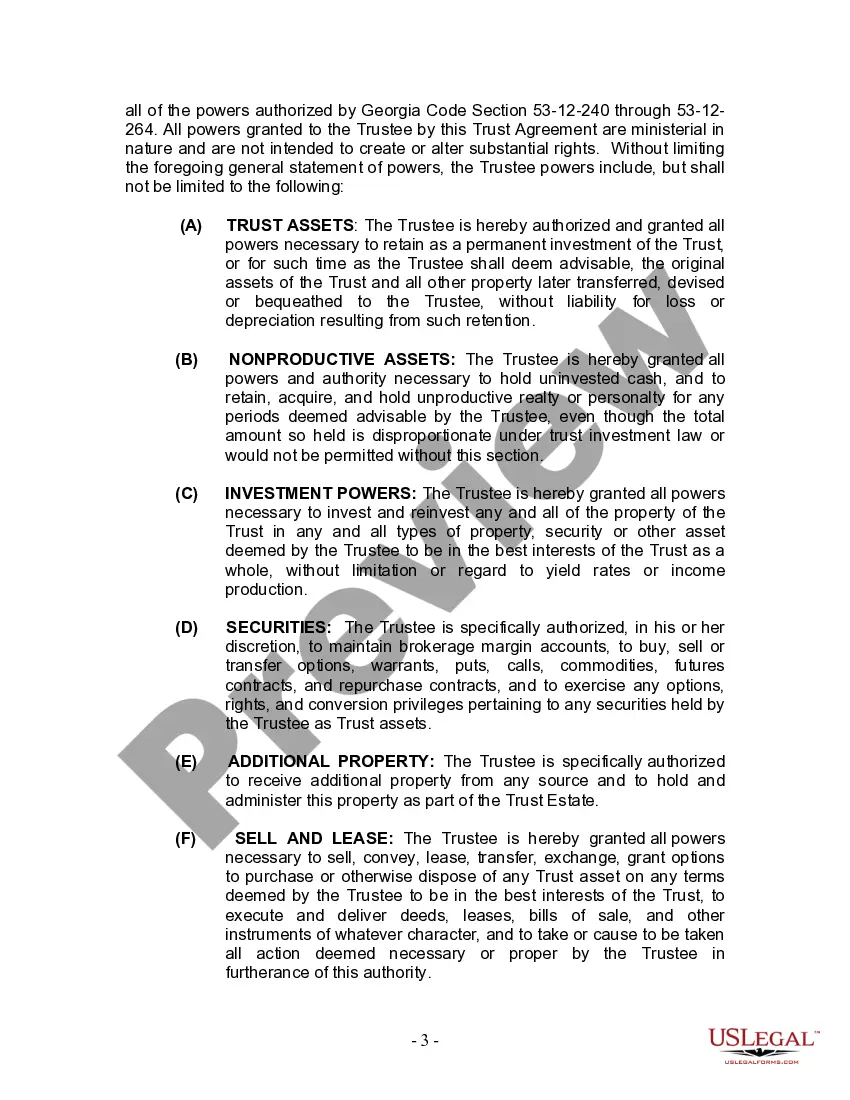
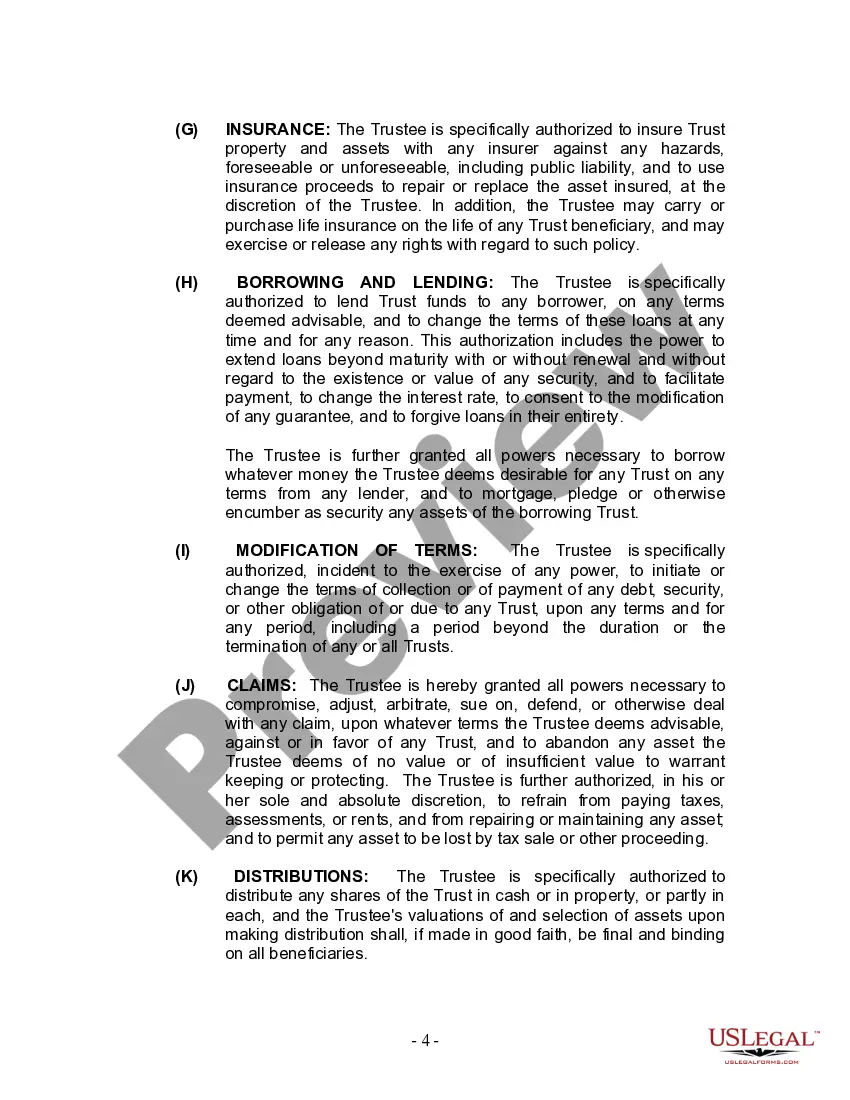
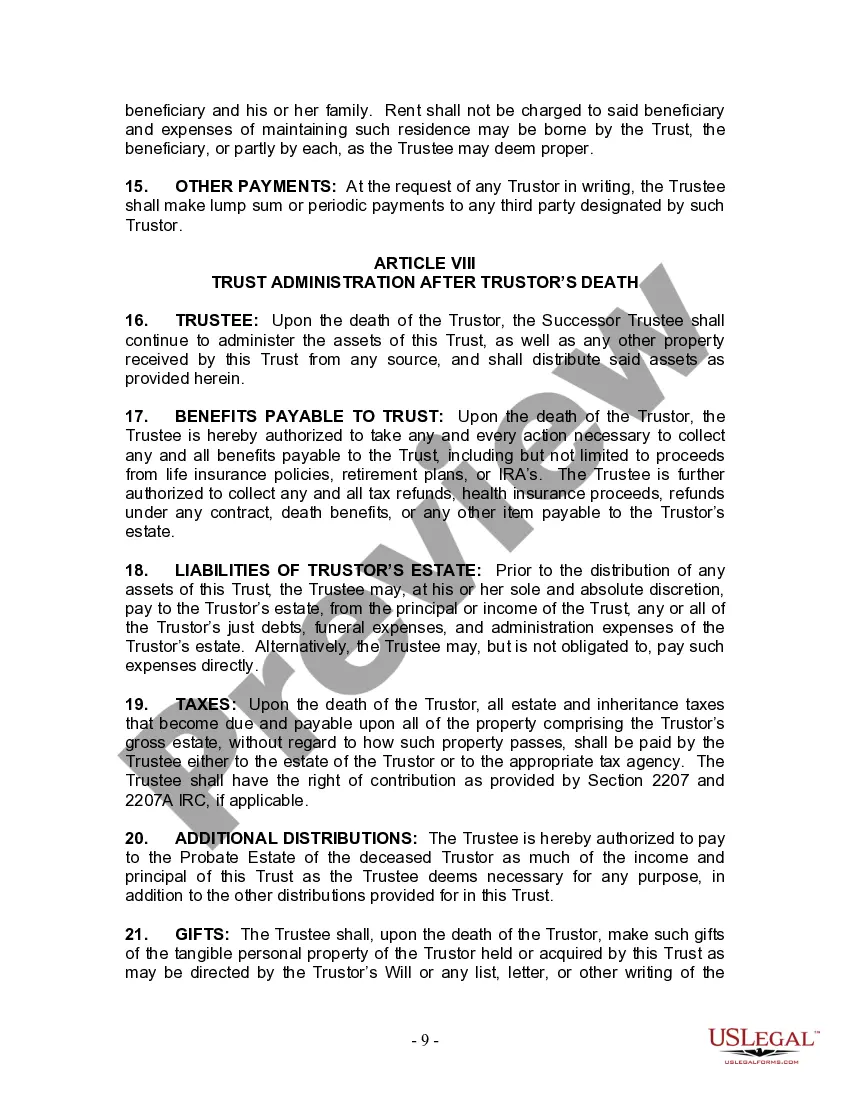



Get your form ready online
Our built-in tools help you complete, sign, share, and store your documents in one place.
Make edits, fill in missing information, and update formatting in US Legal Forms—just like you would in MS Word.
Download a copy, print it, send it by email, or mail it via USPS—whatever works best for your next step.
Sign and collect signatures with our SignNow integration. Send to multiple recipients, set reminders, and more. Go Premium to unlock E-Sign.
If this form requires notarization, complete it online through a secure video call—no need to meet a notary in person or wait for an appointment.
We protect your documents and personal data by following strict security and privacy standards.

Make edits, fill in missing information, and update formatting in US Legal Forms—just like you would in MS Word.

Download a copy, print it, send it by email, or mail it via USPS—whatever works best for your next step.

Sign and collect signatures with our SignNow integration. Send to multiple recipients, set reminders, and more. Go Premium to unlock E-Sign.

If this form requires notarization, complete it online through a secure video call—no need to meet a notary in person or wait for an appointment.

We protect your documents and personal data by following strict security and privacy standards.
Looking for another form?


Form popularity
FAQ
Yes, you can set up a trust without an attorney in Georgia. Many people successfully create a Georgia living trust without beneficiaries using templates from online platforms like US Legal Forms. These resources guide you through the process step-by-step. Just ensure you follow the legal requirements to make your trust valid and enforceable.
If a trust has no beneficiary, the assets typically revert back to the grantor or are distributed according to state laws. In the case of a Georgia living trust without beneficiaries, this situation can complicate the trust’s administration. It's important to address beneficiary designations during the trust creation to avoid unnecessary complications down the road. Consulting platforms like US Legal Forms can help you understand your options fully.
One major mistake parents make when creating a trust fund is failing to name beneficiaries. In situations involving a Georgia living trust without beneficiaries, it can lead to confusion and potential legal issues. Ensuring that you designate beneficiaries from the start is crucial. This step provides clarity and peace of mind for everyone involved.
To file a Georgia living trust without beneficiaries, start by drafting the trust document. You can use online services, such as US Legal Forms, which provide templates to simplify the process. Once you have your document prepared, sign it in front of a notary. Afterward, you may need to fund the trust by transferring assets into it to ensure it operates as intended.
While it is possible to establish a trust without a beneficiary in Georgia, it is not recommended for efficient asset management. A trust without a beneficiary can lead to ambiguity, resulting in the possibility of probate proceedings that delay asset distribution. To ensure your wishes are honored posthumously, assigning beneficiaries is a key step. Consider using US Legal Forms to easily create a properly structured trust that meets your needs.
If no beneficiaries are named in a Georgia living trust, the assets will typically revert to the estate of the trustor. This can initiate the probate process, which is often lengthy and costly. Furthermore, state laws will dictate how the assets get distributed, which may not align with your desired outcomes. To avoid these complications, it’s beneficial to always designate at least one beneficiary.
Legally, you can create a Georgia living trust without naming a beneficiary, but it is not advisable. A trust without a beneficiary can create confusion about the distribution of assets. This might lead to the trust assets being treated as part of your estate, complicating the final wishes you may have intended. Naming a beneficiary helps clarify your intentions.
When a Georgia living trust does not have beneficiaries, the trust assets generally become part of the trustor's estate. This means that the assets may end up going through probate, which can be a lengthy process. Additionally, without designated beneficiaries, the allocation of assets might fall under state law, which could lead to unintended consequences. It's wise to consider naming beneficiaries to avoid these issues.
If a Georgia living trust has no beneficiaries, the trust assets may be redistributed according to state laws or specific terms outlined in the trust document. This situation can lead to complications and confusion regarding the distribution of your assets. It is essential to establish clear terms and consider potential beneficiaries during the creation of your trust. Using a service like US Legal Forms can help you draft your trust properly and clarify your intentions.
Yes, you can set up a Georgia living trust without beneficiaries. Some individuals use trusts for specific purposes, such as managing assets or for charitable giving. It is important to structure the trust correctly to ensure it meets legal requirements. Understanding how to manage such a trust effectively can help you avoid potential complications in the future.