Florida Lease Agreement Laws
Description

Get your form ready online
Our built-in tools help you complete, sign, share, and store your documents in one place.
Make edits, fill in missing information, and update formatting in US Legal Forms—just like you would in MS Word.
Download a copy, print it, send it by email, or mail it via USPS—whatever works best for your next step.
Sign and collect signatures with our SignNow integration. Send to multiple recipients, set reminders, and more. Go Premium to unlock E-Sign.
If this form requires notarization, complete it online through a secure video call—no need to meet a notary in person or wait for an appointment.
We protect your documents and personal data by following strict security and privacy standards.

Make edits, fill in missing information, and update formatting in US Legal Forms—just like you would in MS Word.

Download a copy, print it, send it by email, or mail it via USPS—whatever works best for your next step.

Sign and collect signatures with our SignNow integration. Send to multiple recipients, set reminders, and more. Go Premium to unlock E-Sign.

If this form requires notarization, complete it online through a secure video call—no need to meet a notary in person or wait for an appointment.

We protect your documents and personal data by following strict security and privacy standards.
Looking for another form?










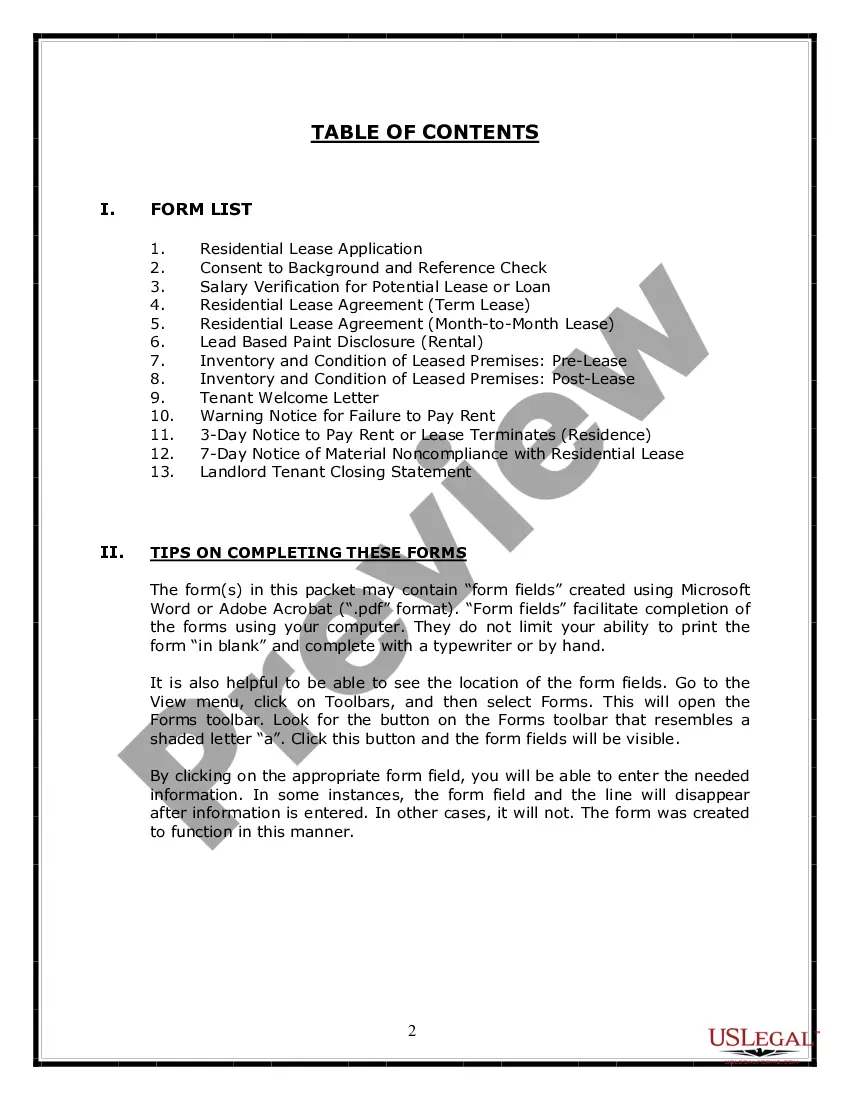
How to fill out Florida Residential Landlord Tenant Rental Lease Forms And Agreements Package?
It’s well-known that you cannot become a legal expert instantly, nor can you quickly learn how to prepare Florida Lease Agreement Laws without a specific skill set.
Drafting legal documents is a lengthy procedure that necessitates certain education and expertise. So, why not entrust the preparation of the Florida Lease Agreement Laws to the experts.
With US Legal Forms, one of the largest collections of legal documents, you can discover everything from court filings to templates for internal business communication.
If you require any other form, you can begin your search anew.
Establish a complimentary account and choose a subscription plan to purchase the template. Select Buy now. Once the payment is finalized, you can download the Florida Lease Agreement Laws, complete it, print it, and send or mail it to the necessary parties or entities.
- We recognize the significance of compliance and adherence to federal and local statutes and regulations.
- That’s why, on our platform, all templates are geographically tailored and current.
- Start off with our website and acquire the form you require in just a few minutes.
- Find the document you need by utilizing the search bar at the top of the page.
- Preview it (if this option is available) and read the accompanying description to see if Florida Lease Agreement Laws is what you need.
Form popularity
FAQ
A lease becomes legally binding in Florida when both parties agree to the terms and sign the document. It should clearly outline the rights and responsibilities of each party, including payment terms and property maintenance obligations. Additionally, compliance with Florida lease agreement laws is crucial for enforceability. Utilizing platforms like USLegalForms can help you draft a binding lease that adheres to legal standards.
To ensure your lease agreement is legal in Florida, it must be in writing if it lasts more than one year. Include essential terms like the names of the parties, property description, rental amount, and duration. Both parties should sign the document to affirm their consent. Following Florida lease agreement laws helps protect your rights as a tenant or landlord, so consider using resources like USLegalForms to create a compliant lease.
If you encounter issues with your landlord, you can file a complaint with the Florida Department of Business and Professional Regulation. This agency oversees property management and landlord-tenant relationships, ensuring compliance with Florida lease agreement laws. Additionally, consider documenting your concerns and reaching out to local housing authorities or legal aid organizations for further assistance. They can guide you on your rights and the proper steps to take.
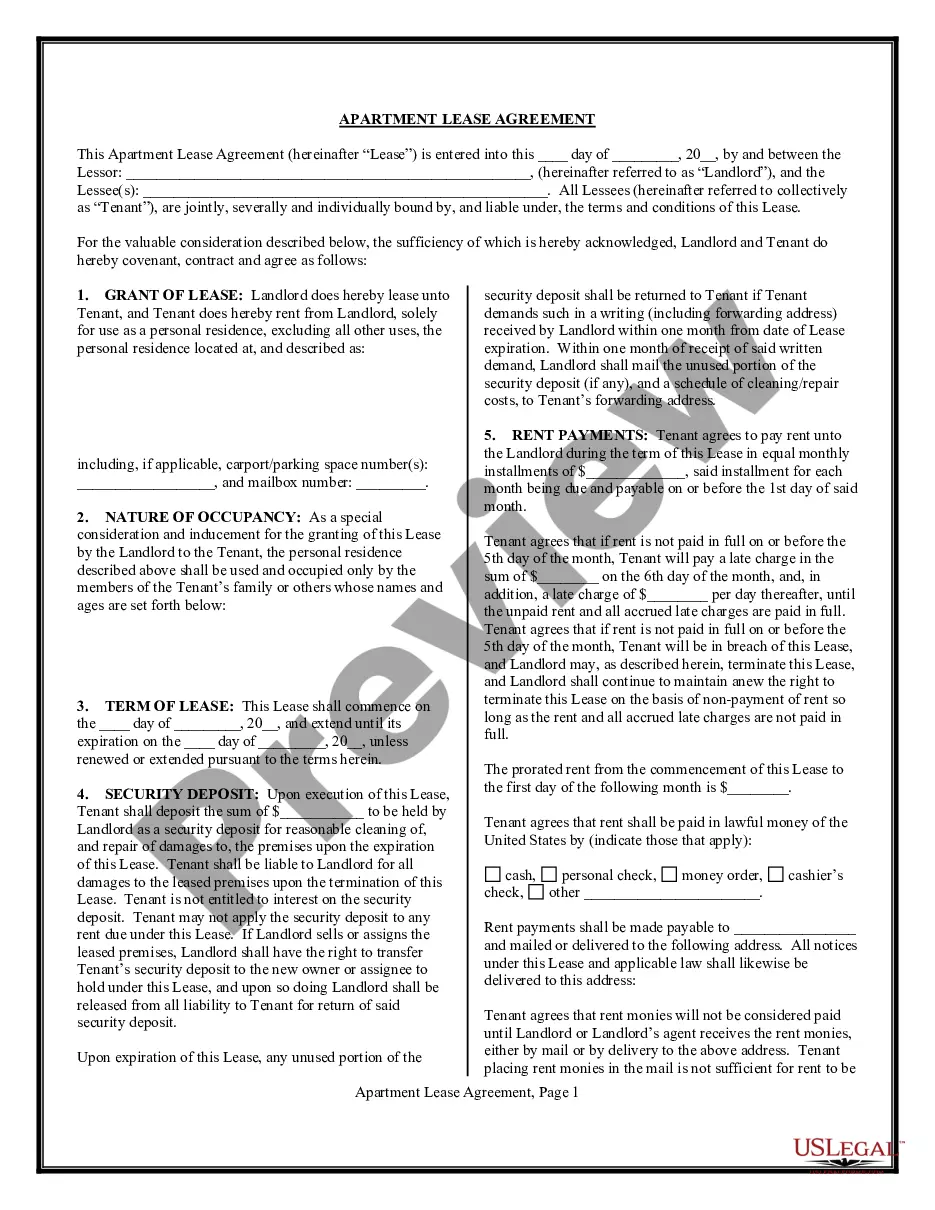
A standard lease agreement in Florida typically outlines the terms of the rental, including duration, rent amount, and responsibilities of both parties. It usually includes clauses on security deposits, maintenance obligations, and the process for terminating the lease. Understanding these components is crucial for both landlords and tenants to ensure compliance with Florida lease agreement laws. For a comprehensive lease template, consider using the resources available on the US Legal Forms platform.
As a tenant in Florida, you have several rights designed to protect you. These include the right to a livable home, the right to privacy, and the right to seek repairs when needed. Additionally, Florida lease agreement laws ensure you cannot be evicted without proper notice. Familiarizing yourself with these rights can empower you as a tenant.
When reviewing a lease agreement, be cautious of unclear terms or excessive fees. Look for clauses that allow the landlord to change the rules without notice or unreasonable penalties for breaking the lease. These issues may indicate potential problems down the line. Understanding Florida lease agreement laws can help you identify and address these red flags effectively.
(1) A rental-purchase agreement must be in writing, must be signed by both the lessor and the lessee, and must be completed as to all essential provisions prior to being signed by the lessee.
You can write your own lease agreement in Florida. However, it is important that you make sure the agreement complies with Florida laws, including containing any required disclosures.
LANDLORDS CANNOT JUST THROW YOU OUT. Florida law prohibits landlords from evicting tenants without going through the court system (self-help evictions). Your landlord can't evict you without a judge's order. And if the sheriff shows up to evict you, he also must have a court order.
When writing a rental agreement in Florida, it is important to include essential details such as the names of all parties involved, the property address, the lease term and renewal options, the amount of rent and due dates, the security deposit amount, and terms, any restrictions or rules regarding the use of the ...