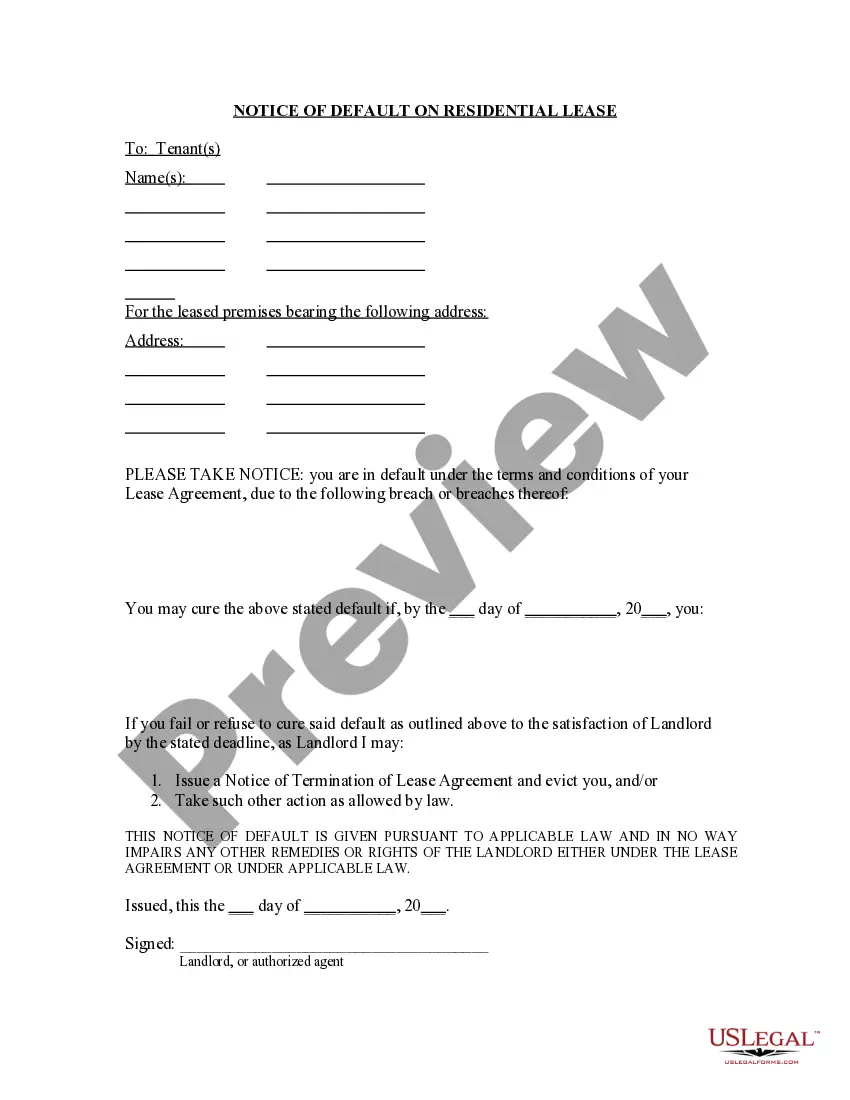
Default On Lease Meaning With Lease Agreement
Description
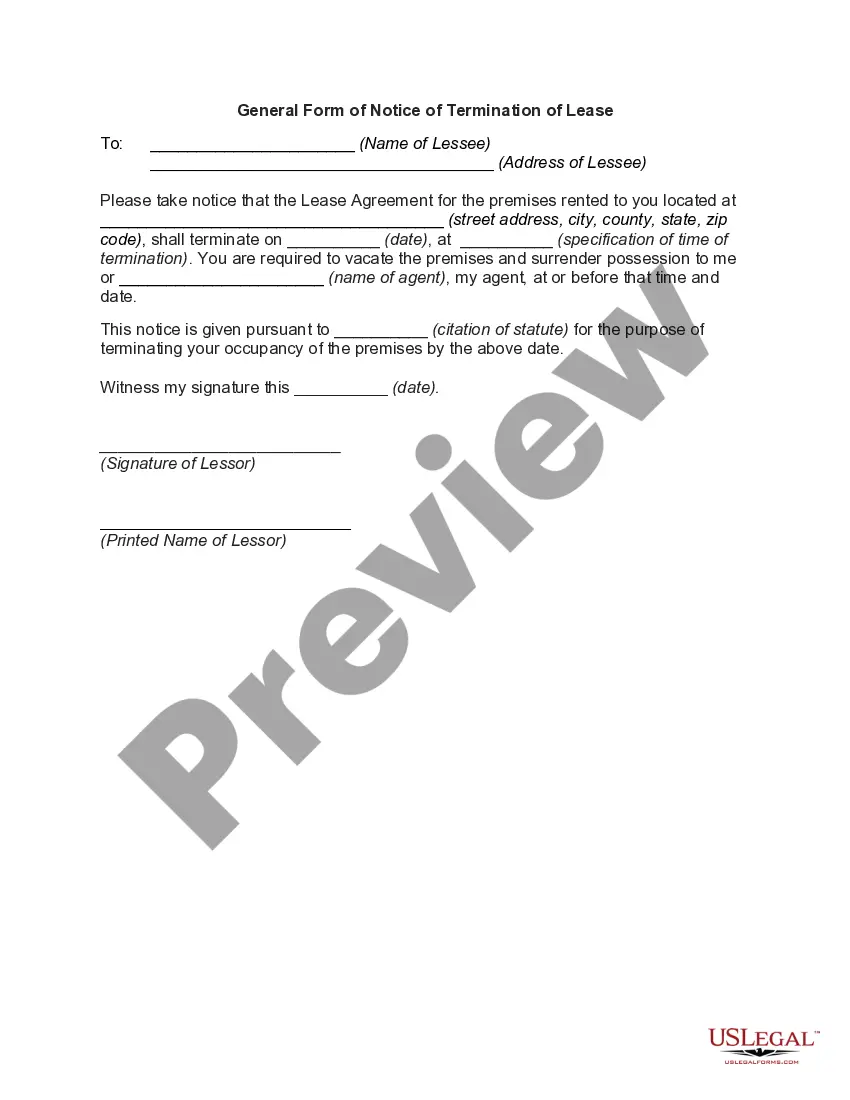

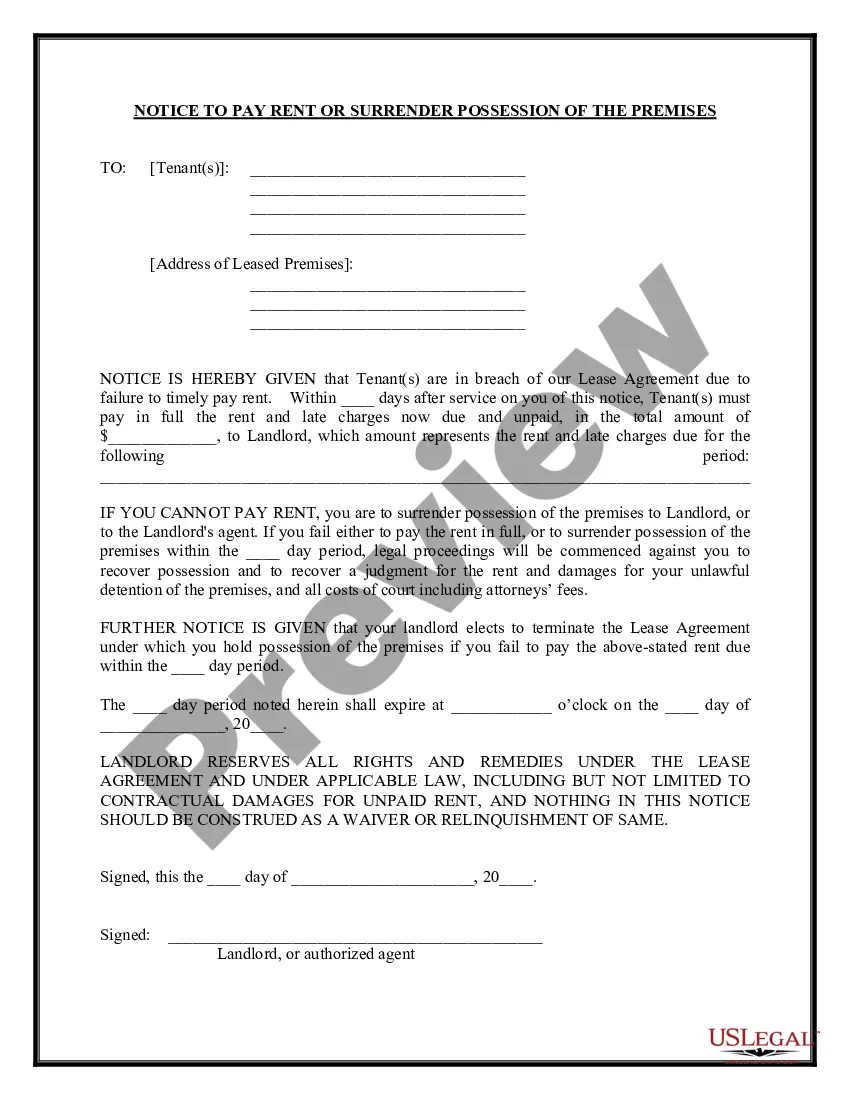
Get your form ready online
Our built-in tools help you complete, sign, share, and store your documents in one place.
Make edits, fill in missing information, and update formatting in US Legal Forms—just like you would in MS Word.
Download a copy, print it, send it by email, or mail it via USPS—whatever works best for your next step.
Sign and collect signatures with our SignNow integration. Send to multiple recipients, set reminders, and more. Go Premium to unlock E-Sign.
If this form requires notarization, complete it online through a secure video call—no need to meet a notary in person or wait for an appointment.
We protect your documents and personal data by following strict security and privacy standards.

Make edits, fill in missing information, and update formatting in US Legal Forms—just like you would in MS Word.

Download a copy, print it, send it by email, or mail it via USPS—whatever works best for your next step.

Sign and collect signatures with our SignNow integration. Send to multiple recipients, set reminders, and more. Go Premium to unlock E-Sign.

If this form requires notarization, complete it online through a secure video call—no need to meet a notary in person or wait for an appointment.

We protect your documents and personal data by following strict security and privacy standards.
Looking for another form?




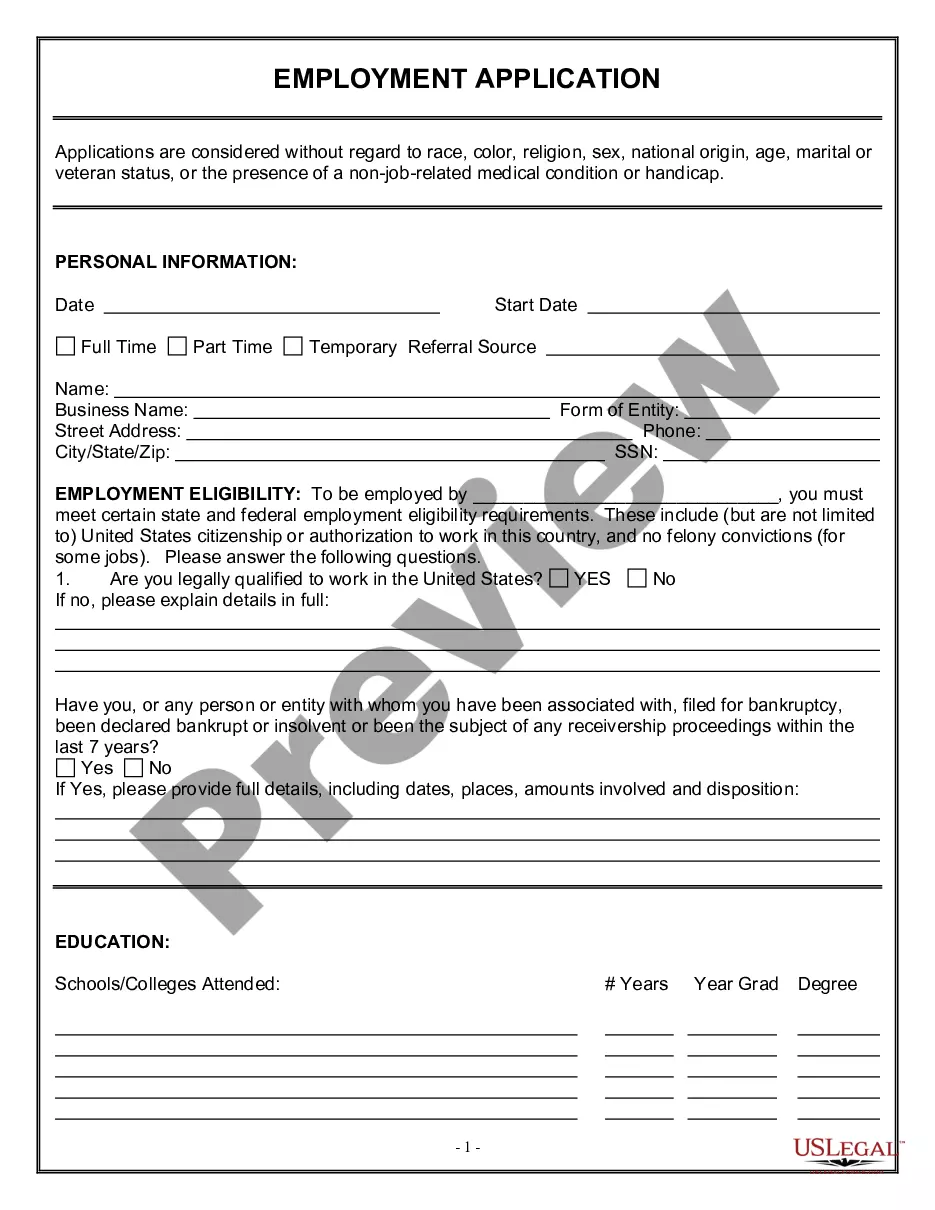





How to fill out Florida Notice Of Default On Residential Lease?
The Standard On Lease Interpretation With Lease Agreement you observe on this page is a versatile official template crafted by expert attorneys in accordance with national and local statutes.
For over 25 years, US Legal Forms has supplied individuals, entities, and lawyers with over 85,000 authenticated, state-specific documents for any commercial and personal situation. It’s the quickest, simplest, and most dependable method to acquire the forms you require, as the service ensures bank-level data security and anti-malware safeguards.
Choose the format you desire for your Standard On Lease Interpretation With Lease Agreement (PDF, DOCX, RTF) and download the sample onto your device.
- Search for the document you require and review it.
- Browse through the example you looked for and preview it or examine the form description to confirm it meets your requirements. If it doesn’t, utilize the search bar to locate the correct one. Click Buy Now once you have found the template you require.
- Select and Log In.
- Pick the pricing option that fits you and create an account. Use PayPal or a credit card to complete a swift payment. If you already possess an account, Log In and check your subscription to proceed.
- Acquire the editable template.
Form popularity
FAQ
Filling out a lease agreement properly involves providing accurate information about both the landlord and tenant, as well as the property details. You should clearly state the rental amount, payment terms, and any conditions regarding maintenance and repairs. Additionally, it's wise to review the document for clarity and ensure all parties understand the default on lease meaning with lease agreement. Using platforms like uslegalforms can simplify this process, providing templates that guide you through each step.
In Utah, terminating a lease early is possible but usually comes with specific conditions and potential penalties. You may need to demonstrate valid reasons, such as job relocation or health issues, to legally break the lease. Knowing the default on lease meaning with lease agreement can help you navigate this process and explore options available to you.
A default clause in a lease agreement outlines the circumstances under which a tenant is considered to be in default. This clause typically specifies the actions that can be taken by the landlord in response to a tenant's default. Knowing the default on lease meaning with lease agreement, including the default clause, can empower you as a tenant to maintain compliance.
When a tenant defaults, it means they fail to meet the obligations outlined in the lease agreement. This typically includes not paying rent on time or violating other terms of the lease. Understanding the default on lease meaning with lease agreement helps tenants know their responsibilities and the potential consequences of not fulfilling them.
For example, failing to deliver goods or services on time, or failing to pay on time would trigger a default. Often, these provisions enable the non-defaulting party to cancel the contract, but often these provisions set forth the conditions which must first arise.
Default tenancy is shared. You and other customers all have VM's on the same hypervisor, and the separation is programmatic. Dedicated tenancy means you're the only customer running anything on that host.
Default terms, such as implied warranties, apply absent evidence of the parties' contrary agreement. Default terms are specified in the transaction documents and commonly include the debtor missing one or more payments or failing certain liquidity measures, among other events.
A ?default? is a failure to comply with a provision in the lease. ?Curing? or ?remedying? the default means correcting the failure or omission. A common example is a failure to pay the rent on time.
Lessee Default means any default by the applicable Lessee in payment of a total of three months of rent pursuant to such Lease, and such default remains uncured for more than 120 days from the original due date of the latest payment resulting in a total of three months of rent remaining unpaid.