Fingerprints, Handwriting, and DNA Evidence
What this document covers
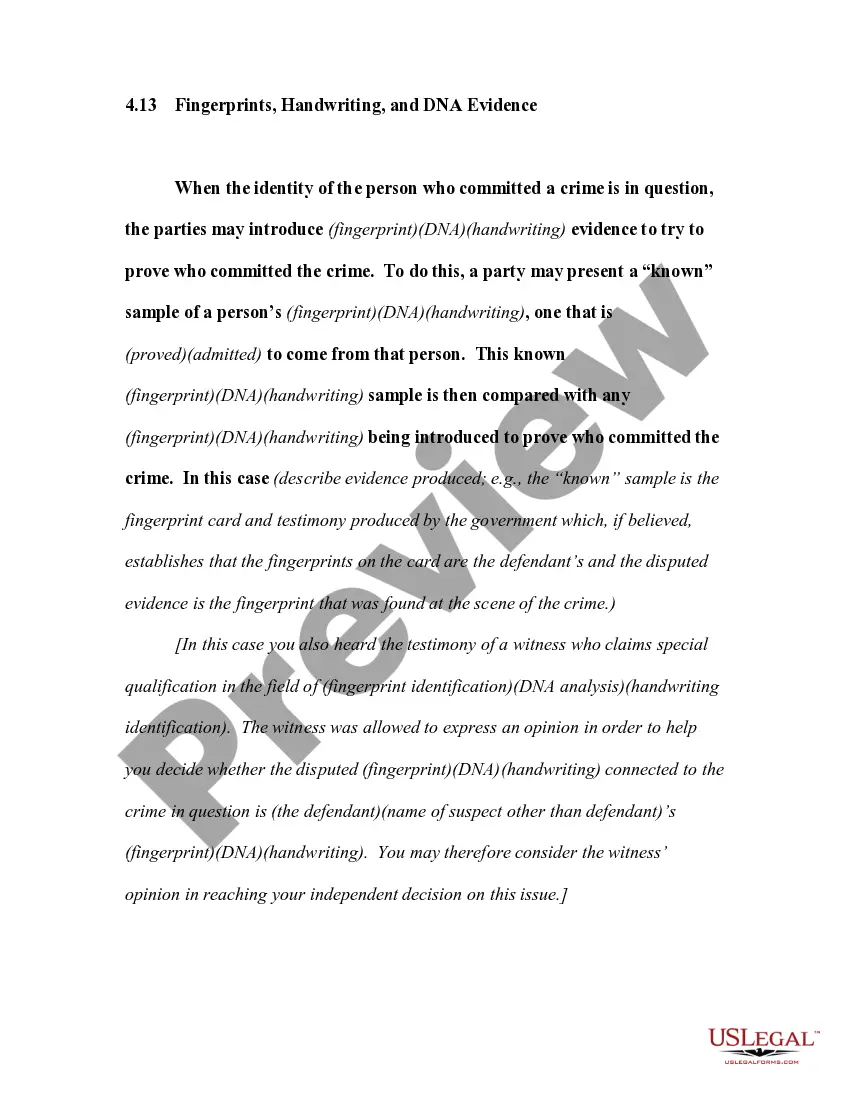
The Fingerprints, Handwriting, and DNA Evidence form is a legal document used in criminal cases to present evidence that aims to establish the identity of a perpetrator. This form allows parties to introduce various types of evidence, including fingerprints, DNA samples, and handwriting analysis, to support their case regarding who committed a crime. It differs from other forms in that it specifically addresses the methods of introducing and comparing these critical types of forensic evidence in court.
What’s included in this form
- Introduction of known samples for comparison, such as fingerprints, DNA, or handwriting.
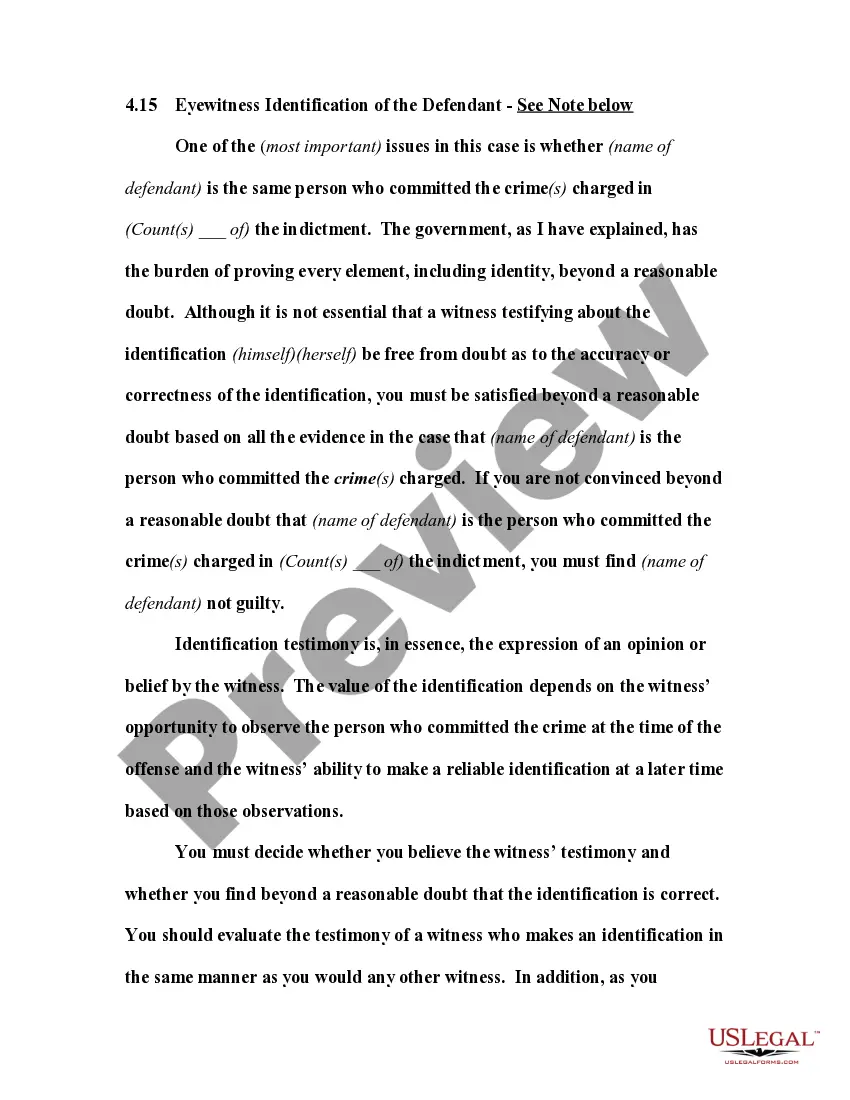
- Details on how the evidence relates to the identity of the suspect.
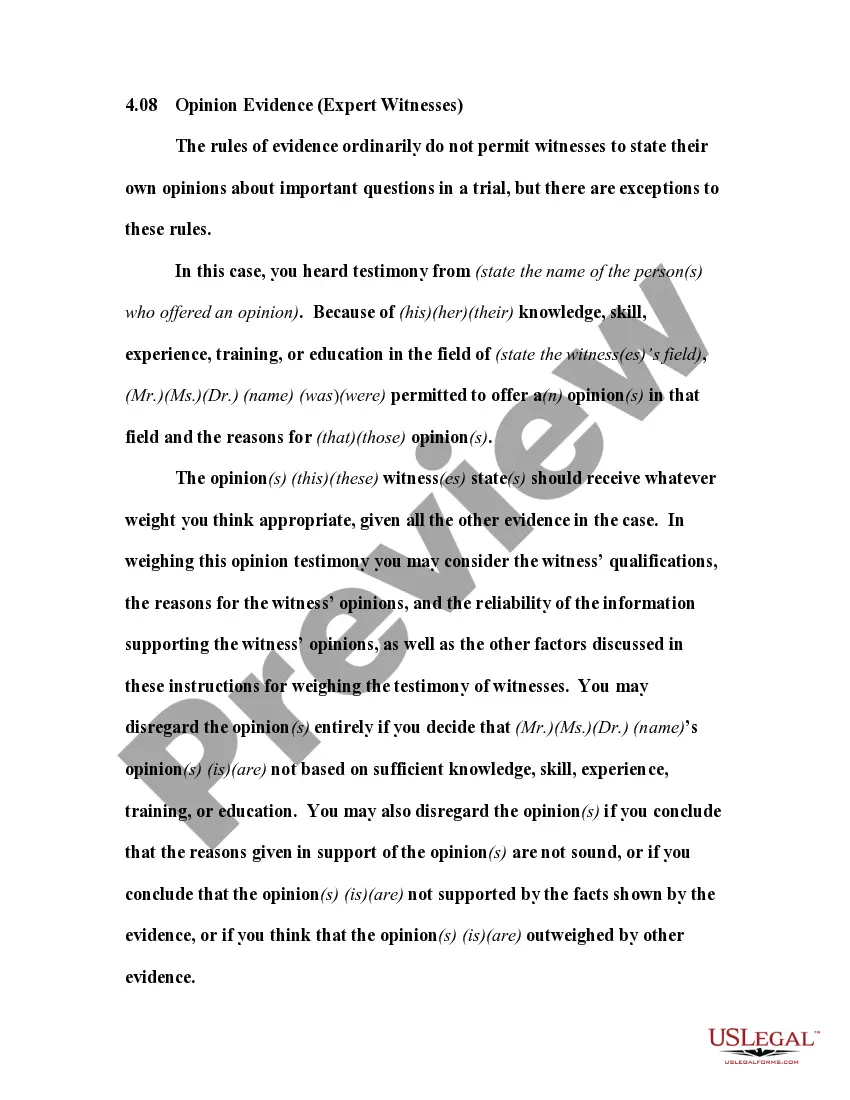
- Inclusion of testimony from qualified experts to validate the evidence presented.
- Instructions for the jury on how to interpret the evidence and expert opinions.
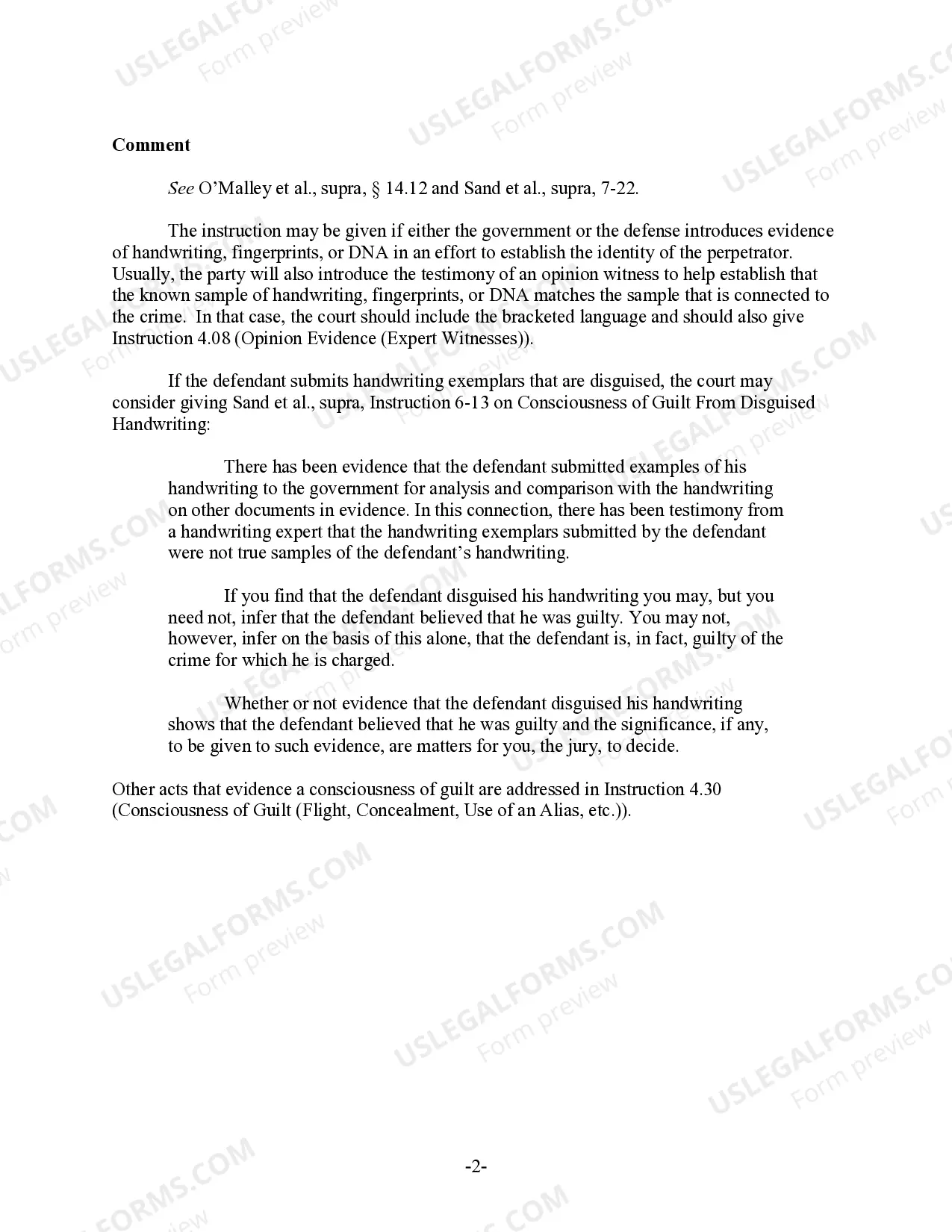
- Guidelines on what constitutes consciousness of guilt in case of disguised handwriting.
Common use cases
This form is necessary in criminal cases where the identity of the accused is disputed. Various scenarios, such as a burglary, assault, or homicide, typically require this form when law enforcement aims to prove the suspect's participation in the crime through forensic evidence. It is essential when the defense or prosecution plans to present forensic evidence to strengthen their case.
Intended users of this form
- Prosecutors seeking to substantiate their case against a suspect.
- Defense attorneys wishing to challenge the reliability of forensic evidence.
- Law enforcement agencies involved in the investigation.
- Judges presiding over cases that hinge on forensic evidence.
How to complete this form
- Identify the known sample: Specify the fingerprints, DNA, or handwriting that can be confirmed as belonging to the suspect.
- Document the disputed evidence: Include details about the fingerprints, DNA, or handwriting related to the crime.
- Present evidence of expert qualification: Provide information on the expert witness who will testify about the forensic evidence.
- Outline the relationship between the evidence and the crime: Clearly explain how the presented evidence connects the suspect to the offense.
- Include jury instructions: Ensure the jury understands how to evaluate the evidence and the testimonies presented.
Does this document require notarization?
This form does not typically require notarization unless specified by local law.
Get your form ready online
Our built-in tools help you complete, sign, share, and store your documents in one place.
Make edits, fill in missing information, and update formatting in US Legal Forms—just like you would in MS Word.
Download a copy, print it, send it by email, or mail it via USPS—whatever works best for your next step.
Sign and collect signatures with our SignNow integration. Send to multiple recipients, set reminders, and more. Go Premium to unlock E-Sign.
If this form requires notarization, complete it online through a secure video call—no need to meet a notary in person or wait for an appointment.
We protect your documents and personal data by following strict security and privacy standards.

Make edits, fill in missing information, and update formatting in US Legal Forms—just like you would in MS Word.

Download a copy, print it, send it by email, or mail it via USPS—whatever works best for your next step.

Sign and collect signatures with our SignNow integration. Send to multiple recipients, set reminders, and more. Go Premium to unlock E-Sign.

If this form requires notarization, complete it online through a secure video call—no need to meet a notary in person or wait for an appointment.

We protect your documents and personal data by following strict security and privacy standards.
Typical mistakes to avoid
- Failing to properly validate the expert qualifications when introducing testimony.
- Neglecting to clearly differentiate between known and disputed evidence.
- Overlooking specific state requirements for forensic evidence presentation.
- Not providing adequate context for jurors to understand the evidence's significance.
Why complete this form online
- Convenience: Easily download and fill out the form from anywhere.
- Editability: Modify the document as needed before submission.
- Reliability: Access reliable legal information and templates developed by licensed attorneys.
Legal use & context
- This form is used within the framework of criminal law to establish identity based on physical evidence.
- Ensure that all evidence presented is properly collected and preserved for it to be admissible in court.
- Compliance with both state and federal rules of evidence is necessary for all forensic submissions.
Quick recap
- The form is essential for presenting forensic evidence in criminal cases.
- It outlines the procedures for substantiating the identity of a suspect using fingerprints, DNA, or handwriting.
- Proper usage can significantly influence the outcome of a case.
- Always ensure compliance with jurisdiction-specific rules for forensic evidence.
Looking for another form?

Form popularity
FAQ
Traditional forensic analysis methods include the following: Chromatography, spectroscopy, hair and fiber analysis, and serology (such as DNA examination)
Just like your actual fingerprint, your DNA fingerprint is something you are born with, it is unique to you.
This is called individual evidence. Examples are fingerprints, handwriting, DNA patterns, and sometimes physical matches, such as a piece of broken glass that fits exactly to another, like a jigsaw puzzle piece.
No two fingerprints have ever been identical in the many millions of comparisons. Fingerprints solve ten times more unknown-suspect cases than DNA fingerprinting.
Physical evidence is any tangible object that can connect an person to a crime scene. Biological evidence, which contains DNA, is a type of physical evidence.
DNA fingerprinting is a chemical test that shows the genetic makeup of a person or other living things. It's used as evidence in courts, to identify bodies, track down blood relatives, and to look for cures for disease.
The researchers found that archived latent prints indeed contained DNA and, using optimized methods, they were able to recover at least a partial DNA profile 90% of the time. One sample even produced a full profile.