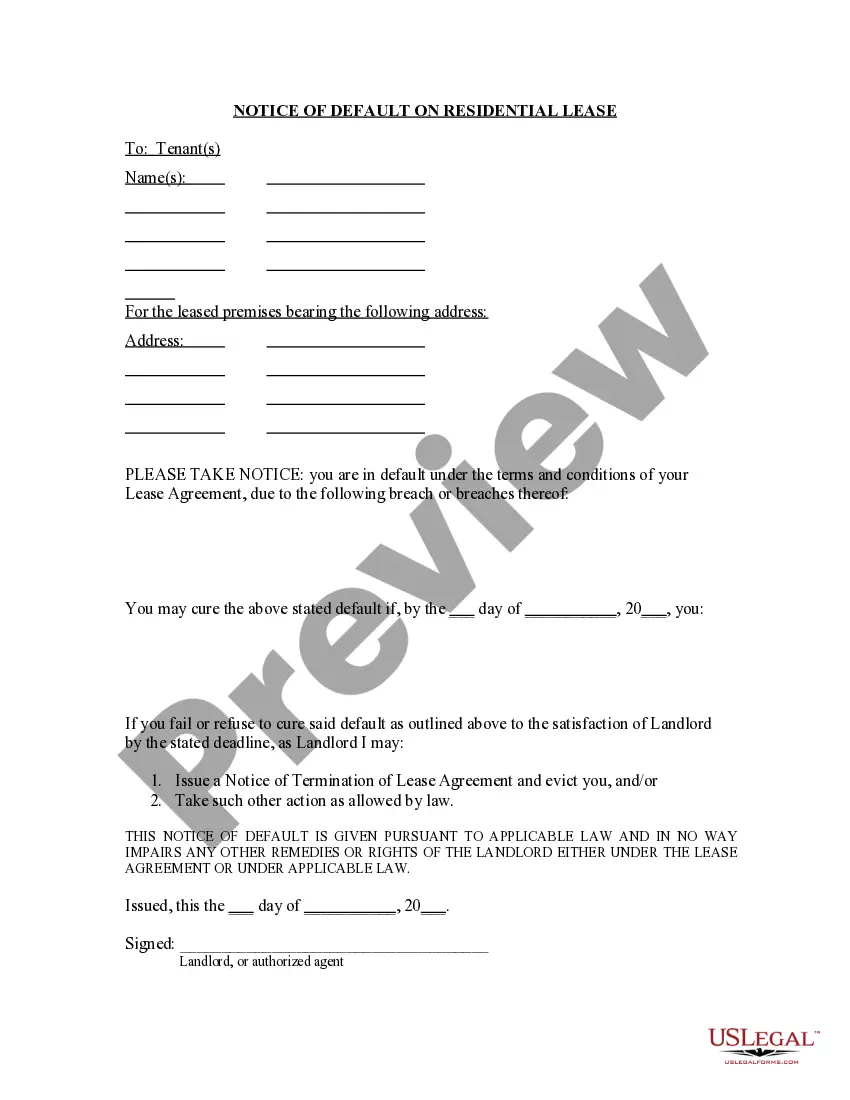
Default On Lease Meaning With Example
Description


Get your form ready online
Our built-in tools help you complete, sign, share, and store your documents in one place.
Make edits, fill in missing information, and update formatting in US Legal Forms—just like you would in MS Word.
Download a copy, print it, send it by email, or mail it via USPS—whatever works best for your next step.
Sign and collect signatures with our SignNow integration. Send to multiple recipients, set reminders, and more. Go Premium to unlock E-Sign.
If this form requires notarization, complete it online through a secure video call—no need to meet a notary in person or wait for an appointment.
We protect your documents and personal data by following strict security and privacy standards.

Make edits, fill in missing information, and update formatting in US Legal Forms—just like you would in MS Word.

Download a copy, print it, send it by email, or mail it via USPS—whatever works best for your next step.

Sign and collect signatures with our SignNow integration. Send to multiple recipients, set reminders, and more. Go Premium to unlock E-Sign.

If this form requires notarization, complete it online through a secure video call—no need to meet a notary in person or wait for an appointment.

We protect your documents and personal data by following strict security and privacy standards.
Looking for another form?








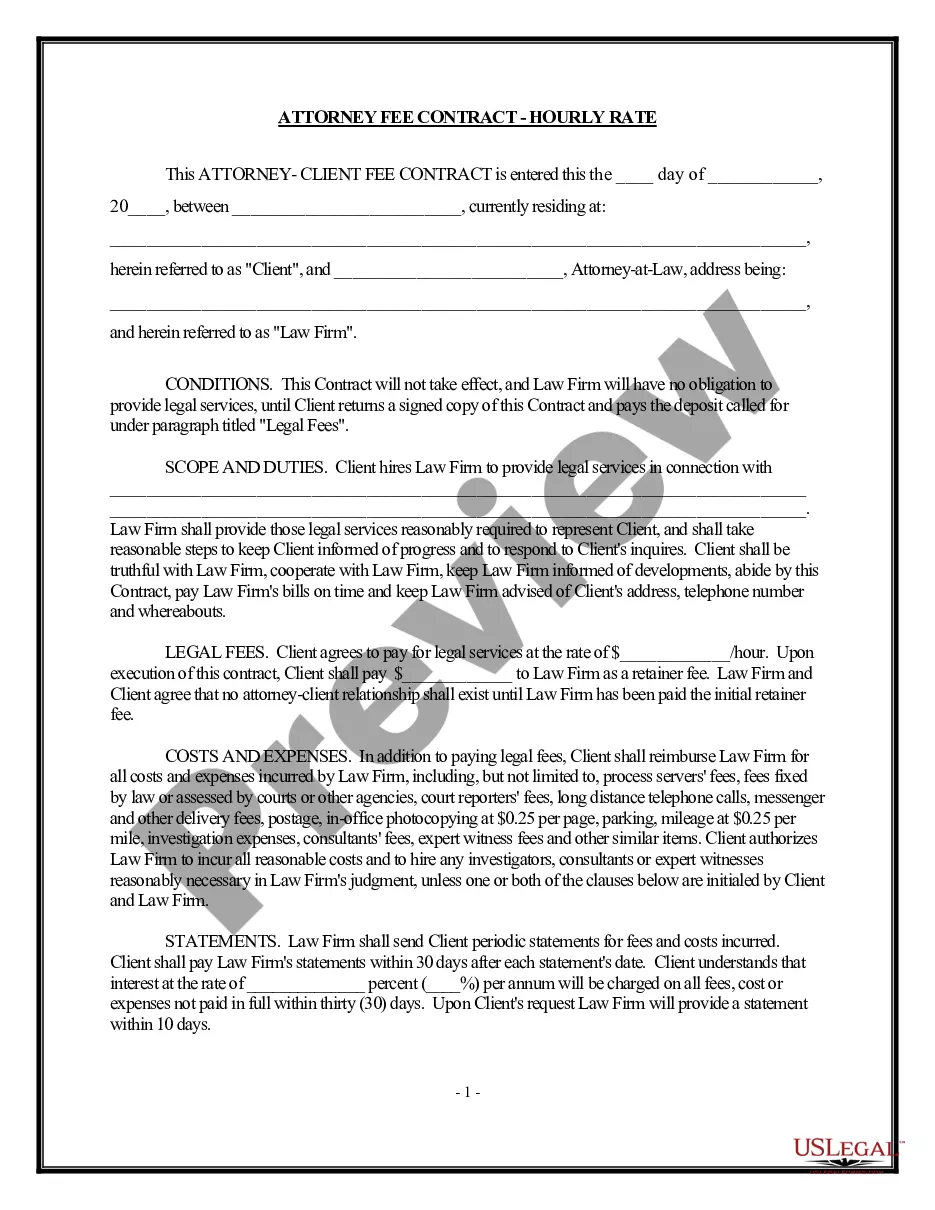
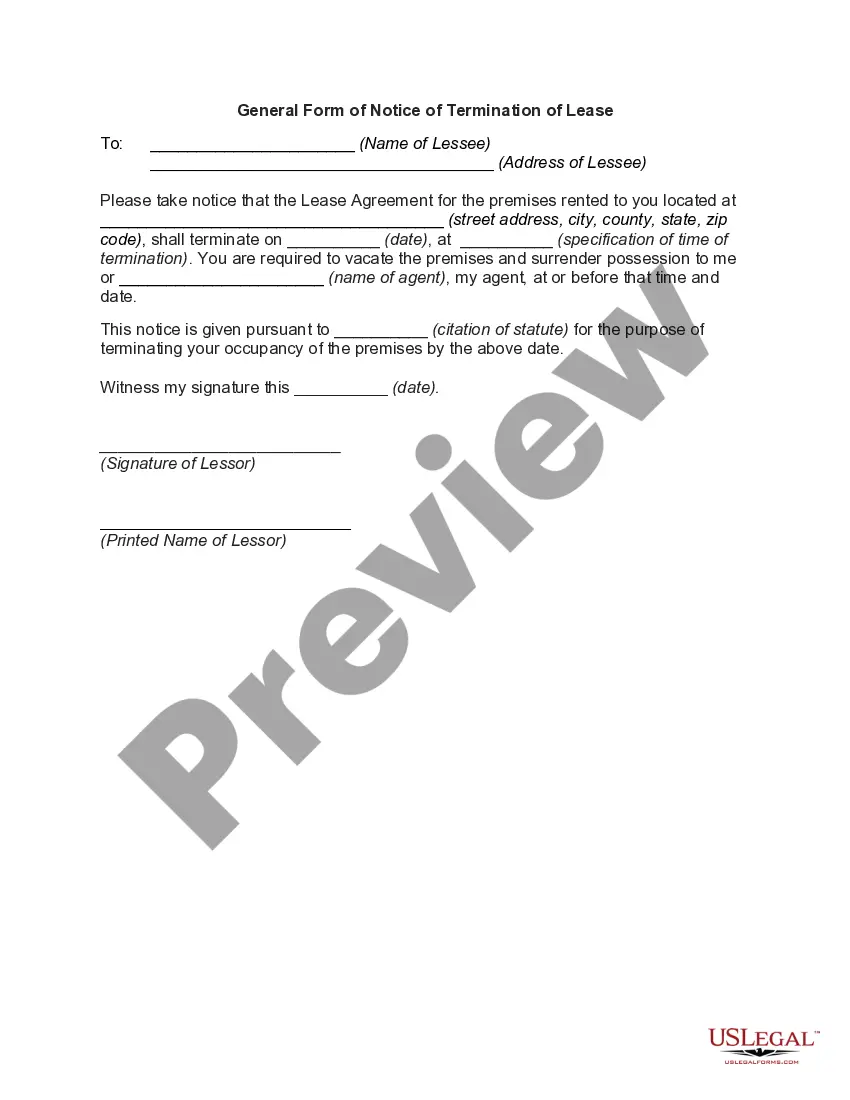
How to fill out Florida Notice Of Default On Residential Lease?
It’s well known that you cannot become a legal authority instantly, nor can you quickly comprehend how to draft a Default On Lease Meaning With Example without having a specialized education.
Compiling legal documents is a lengthy process that necessitates specific training and abilities. So why not entrust the development of the Default On Lease Meaning With Example to the experts.
With US Legal Forms, one of the most comprehensive legal template collections, you can discover anything from court documents to templates for internal communication. We recognize the significance of compliance and adherence to federal and local regulations. That’s why, on our site, all templates are location-specific and current.
Select Buy now. Once the transaction is completed, you can obtain the Default On Lease Meaning With Example, complete it, print it, and send or mail it to the necessary parties or organizations.
You can regain access to your forms from the My documents tab at any time. If you’re a current client, you can simply Log In, and find and download the template from the same tab. Regardless of the intention behind your paperwork—whether it’s financial and legal, or personal—our website has you covered. Try US Legal Forms today!
- Begin with our website and acquire the form you require in just minutes.
- Find the document you need using the search bar at the top of the page.
- Preview it (if this option is available) and review the accompanying description to ascertain whether Default On Lease Meaning With Example is what you seek.
- Restart your search if you need any other template.
- Create a free account and select a subscription plan to buy the form.
Form popularity
FAQ
Understanding the risks of tenant default is crucial for landlords. When a tenant defaults on a lease, it can lead to financial losses due to unpaid rent and potential legal fees. Additionally, the process of evicting a tenant can be lengthy and costly, often requiring court intervention. For example, if a tenant stops paying rent, the landlord must navigate the complexities of lease agreements and state laws, illustrating the importance of grasping the default on lease meaning with example. To mitigate these risks, consider using USLegalForms to access legal documents that help protect your interests.
If you default on a lease, the landlord may take several steps, including sending a notice of default or pursuing eviction. The landlord has the right to reclaim the property and seek damages for unpaid rent or repairs needed. Understanding the default on lease meaning with example can help you avoid such situations. Utilizing resources like US Legal Forms can guide you through your rights and options after a default.
In Utah, tenants may terminate their lease early under certain circumstances, such as if the property is uninhabitable or if the tenant is a victim of domestic violence. However, a tenant should review their lease agreement for specific terms regarding early termination. It is advisable to communicate with your landlord and potentially use a platform like US Legal Forms to help ensure compliance with state laws. Knowing how to navigate this process can save you time and stress.
A default clause in a lease agreement outlines the actions that constitute a breach of the lease. This clause clearly defines the rights and responsibilities of both the landlord and tenant in case of a default. For instance, it may state that non-payment of rent for a specified period leads to eviction. Understanding this clause is vital for both parties to know their rights and avoid disputes.
Default on lease meaning with example refers to a tenant failing to meet the obligations outlined in their lease agreement. This can include not paying rent on time, causing damage to the property, or violating any specific terms of the lease. When a tenant defaults, the landlord has the right to take action, which may include eviction. Understanding this concept is crucial for both tenants and landlords to maintain a healthy rental relationship.
For example, the original tenant might have put holes in the wall to make a new passageway or undertaken other major work on the property. At the end of the lease, the new tenant must fix those issues and return the property to the condition that it was in at the start of the lease.
Default tenancy is shared. You and other customers all have VM's on the same hypervisor, and the separation is programmatic. Dedicated tenancy means you're the only customer running anything on that host.
Here is an example of a rent amount clause in a lease: "The Tenant agrees to pay $12,000 as rent, to be paid as follows: $1,000 per month, due on the 1st day of each month. Payment of the first month's rent and any security deposit is due upon the signing of this Lease by the Tenant.
Examples of 'make good' provisions include: If a tenant rents the premises as a shell, their 'make good' obligation could involve stripping all fixtures and fittings, removing staircases, and returning the premises to the landlord as a shell (sometimes also referred to as decommissioning obligations)
A ?default? is a failure to comply with a provision in the lease. ?Curing? or ?remedying? the default means correcting the failure or omission. A common example is a failure to pay the rent on time.