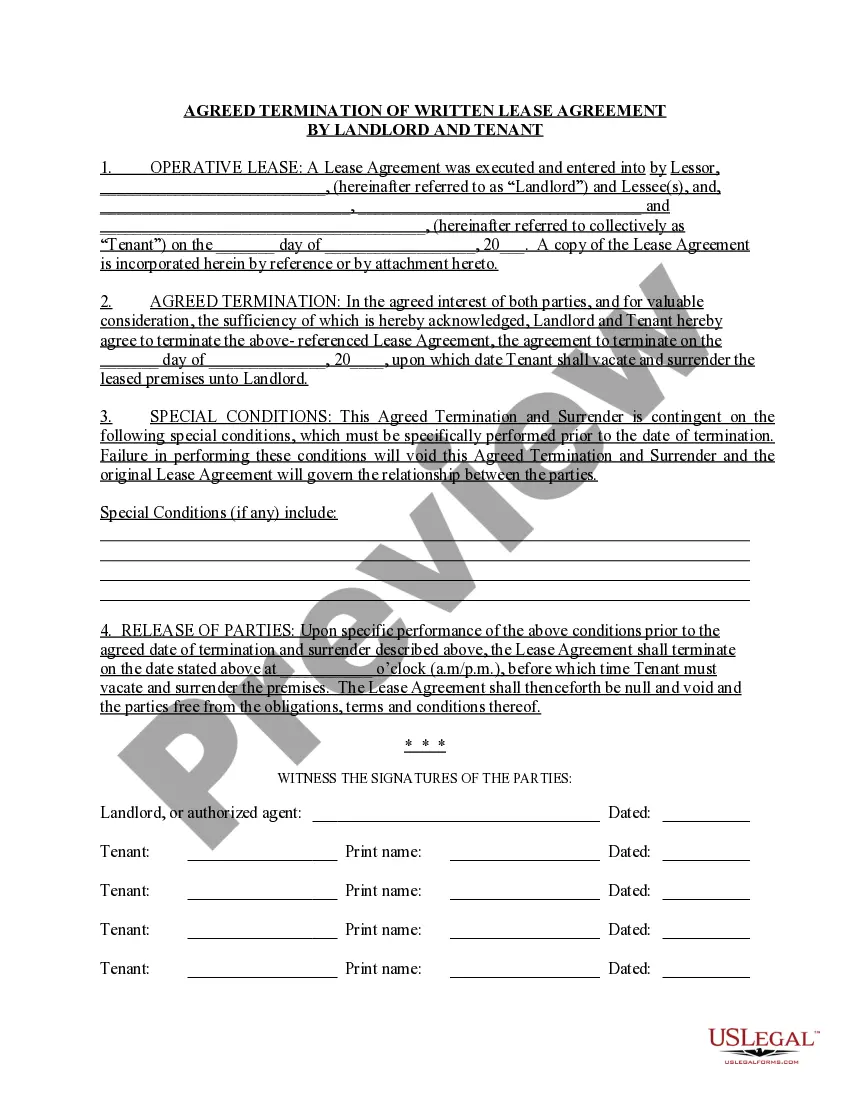
Lease Termination For Landlord
Description

Get your form ready online
Our built-in tools help you complete, sign, share, and store your documents in one place.
Make edits, fill in missing information, and update formatting in US Legal Forms—just like you would in MS Word.
Download a copy, print it, send it by email, or mail it via USPS—whatever works best for your next step.
Sign and collect signatures with our SignNow integration. Send to multiple recipients, set reminders, and more. Go Premium to unlock E-Sign.
If this form requires notarization, complete it online through a secure video call—no need to meet a notary in person or wait for an appointment.
We protect your documents and personal data by following strict security and privacy standards.

Make edits, fill in missing information, and update formatting in US Legal Forms—just like you would in MS Word.

Download a copy, print it, send it by email, or mail it via USPS—whatever works best for your next step.

Sign and collect signatures with our SignNow integration. Send to multiple recipients, set reminders, and more. Go Premium to unlock E-Sign.

If this form requires notarization, complete it online through a secure video call—no need to meet a notary in person or wait for an appointment.

We protect your documents and personal data by following strict security and privacy standards.
Looking for another form?


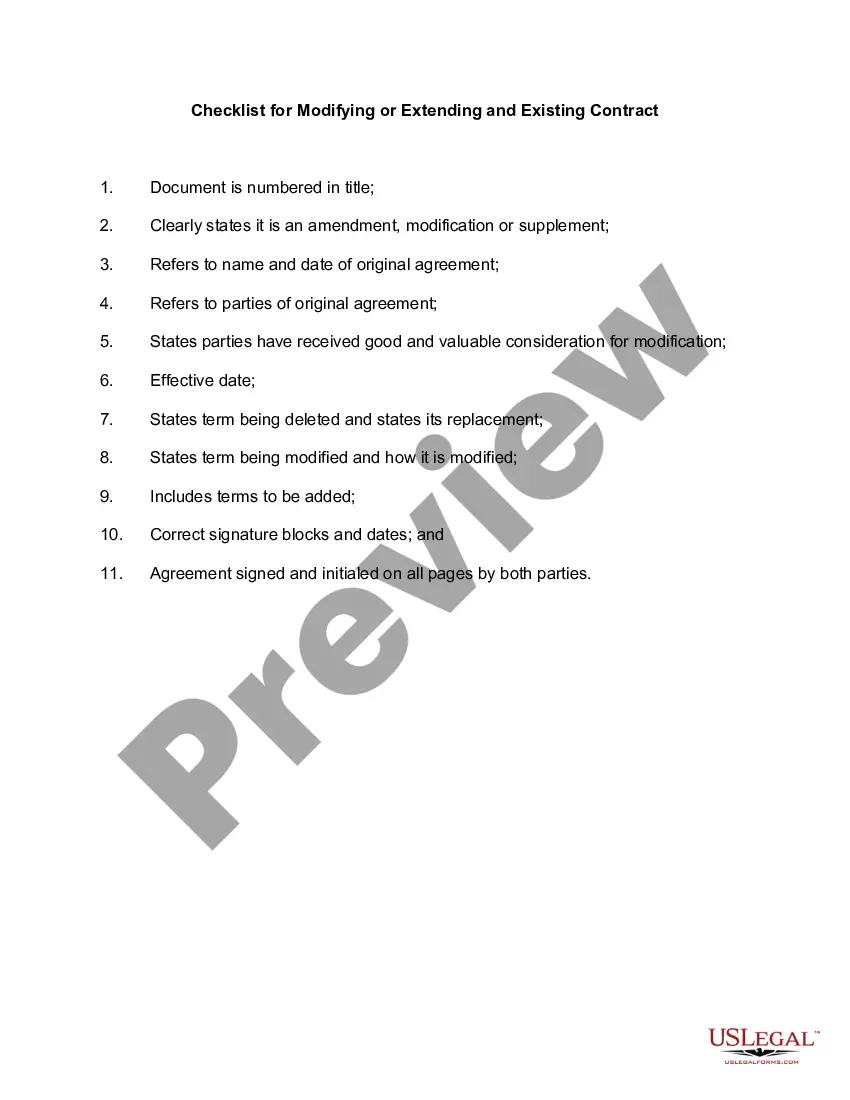






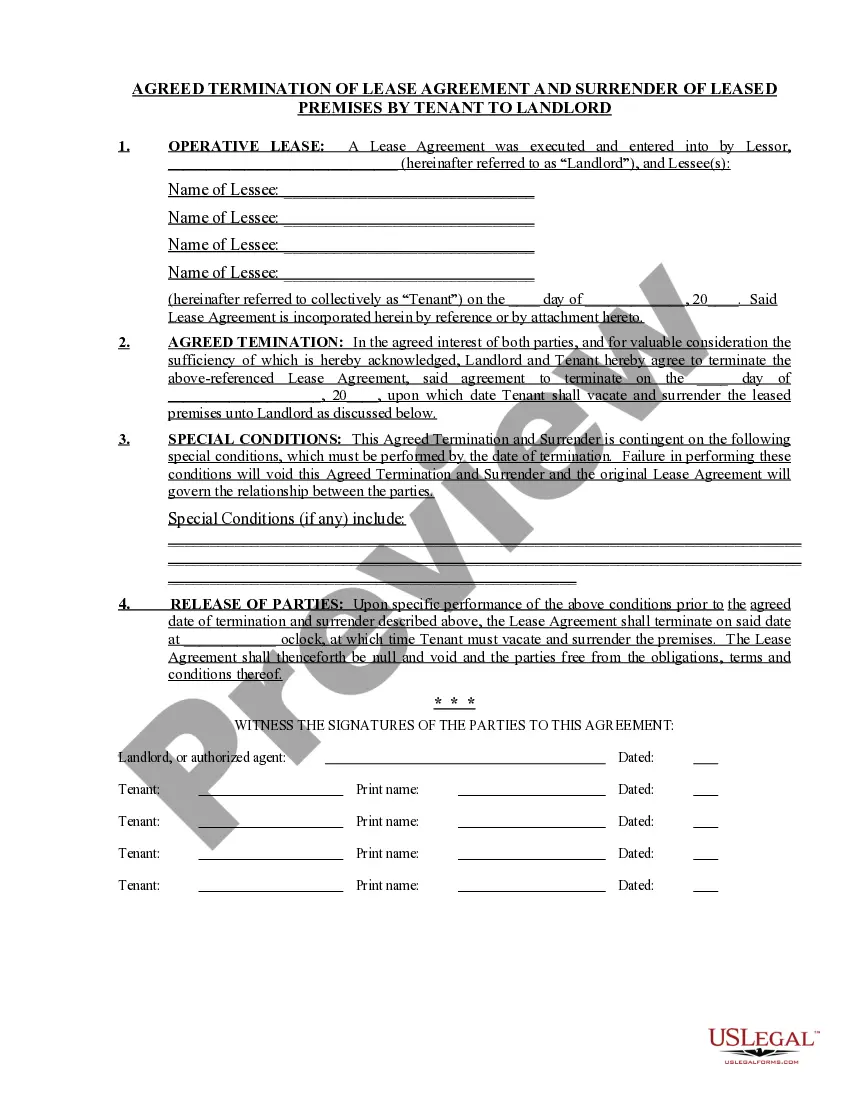
How to fill out Florida Agreed Written Termination Of Lease By Landlord And Tenant?
- Log in to your US Legal Forms account if you're a returning user. Ensure your subscription is active before downloading any forms.
- If you are a new user, start by exploring the available forms. Use the Preview mode to review the lease termination templates to ensure they meet your legal requirements.
- If the current form doesn't match your needs, utilize the Search tab to find alternative templates that may better suit your situation.
- Select the document you need and proceed to purchase it. Choose the subscription plan that works best for you.
- Complete your payment using either your credit card or PayPal for a secure transaction.
- Once your purchase is confirmed, download your form and save it to your device for easy access. You can also find it later in the My Forms section of your account.
In conclusion, US Legal Forms makes the process of lease termination for landlords easier than ever. With a vast array of templates and expert assistance, you can ensure that your legal documents are accurate and straightforward.
Don’t wait! Visit US Legal Forms today to access the resources that can simplify your lease termination process.
Form popularity
FAQ
Breaking a lease can be a delicate situation, but valid excuses include job relocation, health issues, or unsafe living conditions. It's crucial to communicate openly with your landlord and provide documentation if necessary. Remember, lease termination for landlord should be conducted respectfully and legally, as this approach will facilitate a smoother resolution. Tools from US Legal Forms can equip you with the necessary resources to handle your lease termination effectively.
In Illinois, the rules for lease termination depend on the type of lease and the circumstances surrounding the termination. Generally, landlords must provide proper notice, often 30 days, before ending a lease agreement. Additionally, lease termination for landlord may vary based on factors such as lease duration and specific terms outlined in the contract. Familiarizing yourself with these rules can help you navigate the process smoothly.
When you need to inform your landlord about moving out before the lease ends, start by clearly stating your intent in the letter. Include your name, the property address, and the lease termination date. It's important to mention any relevant reasons for your early departure and to provide your landlord with a formal notice. Use US Legal Forms for templates that guide you in crafting a well-structured letter for lease termination for landlord.
New York law outlines specific requirements for lease termination, which landlords must follow according to New York State’s Real Property Law. Landlords must provide written notice and adhere to designated timeframes based on lease type and reasons for termination. Failing to comply with these laws may lead to legal complications for landlords. By understanding the laws around lease termination for landlords, property owners can navigate the process confidently and efficiently.
A lease termination clause is a provision in the lease agreement that outlines the conditions under which a lease can be terminated early. This clause typically specifies the notice period, the conditions that allow for termination, and any penalties that may apply. Landlords should clearly define this clause to protect their interests and ensure that tenants understand their rights. Incorporating a well-drafted lease termination for landlords fosters clear communication and smooth transitions.
In New York, lease termination laws vary depending on the type of lease and the reasons for termination. Landlords must follow specific legal procedures to terminate a lease, such as providing proper notice and adhering to any lease clauses. It’s crucial for landlords to familiarize themselves with the laws governing lease termination to ensure compliance. Efficient lease termination for landlords minimizes disputes and prepares for new tenancy.
In New York, landlords typically must provide tenants with a written notice before they must move out. For month-to-month leases, landlords need to give at least 30 days' notice. If the lease is for a fixed term, the terms of the lease often dictate the notice period required. Understanding lease termination for landlords allows property owners to manage their rental agreements effectively.
The best excuse to break a lease often involves valid legal reasons, such as unsafe living conditions or a significant personal circumstance like job relocation. Lease termination for landlords can be complicated, so it is crucial to approach the situation thoughtfully. Always document your reasons and communicate them clearly to your landlord. For assistance with the legal process, explore resources such as USLegalForms to ensure your rights are protected.
The most common method of terminating a lease involves providing written notice to your landlord, stating your intent to vacate the premises. This notice usually complies with the timeframe outlined in your lease agreement. Lease termination for landlords can also occur through mutual agreement if both parties consent. Consider using clear templates from USLegalForms to ensure all necessary legal aspects are covered.
When writing a letter to your landlord to terminate a lease, start with a clear statement of your intention to terminate. Include important details such as the lease start and end dates, and provide a valid reason for the termination. Remember to follow any notice period specified in your lease agreement, as lease termination for landlords can be a formal process. Utilizing USLegalForms can help you create a professional and effective termination letter.