Florida Agreed Written Termination of Lease by Landlord and Tenant
What this document covers
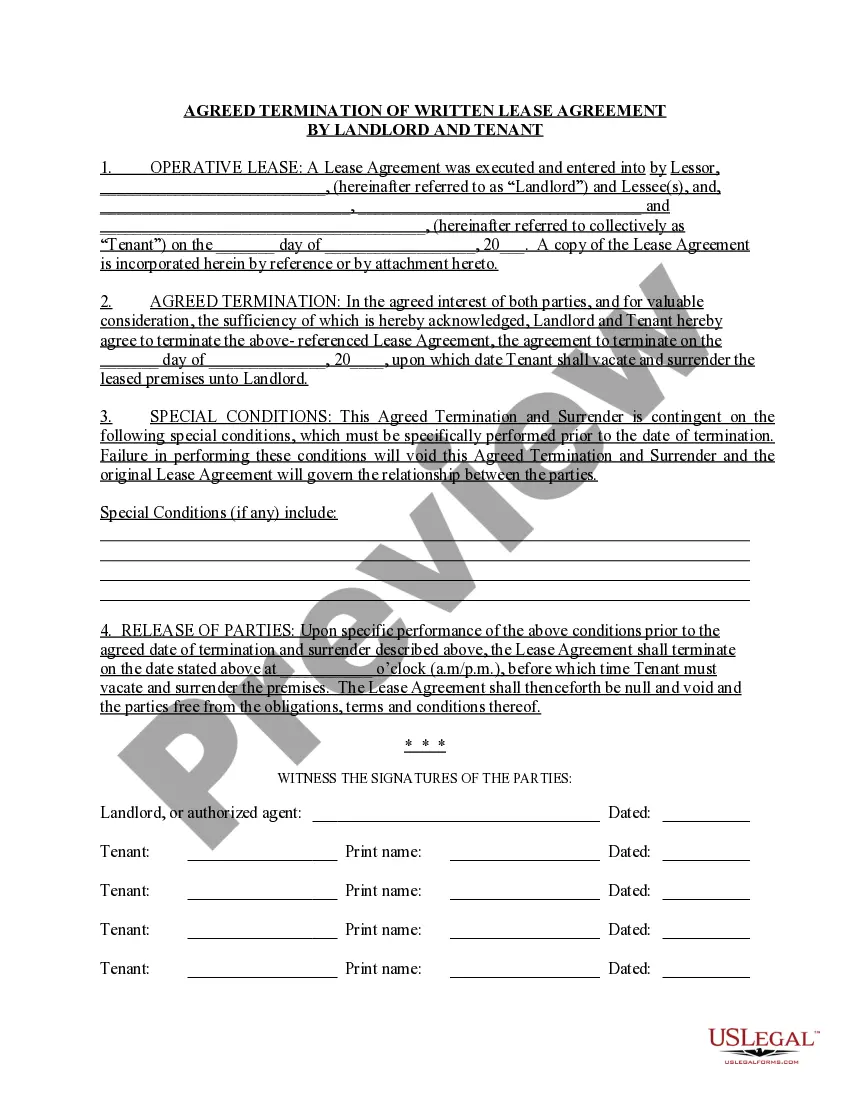
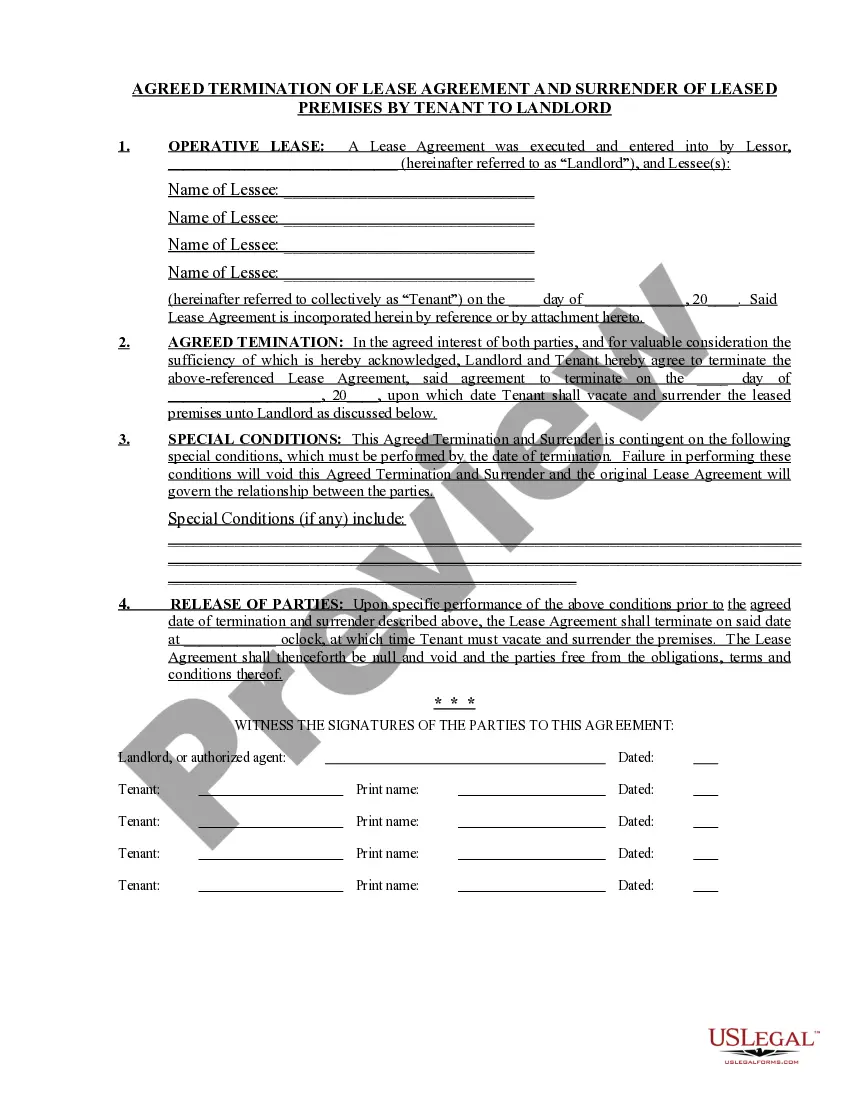
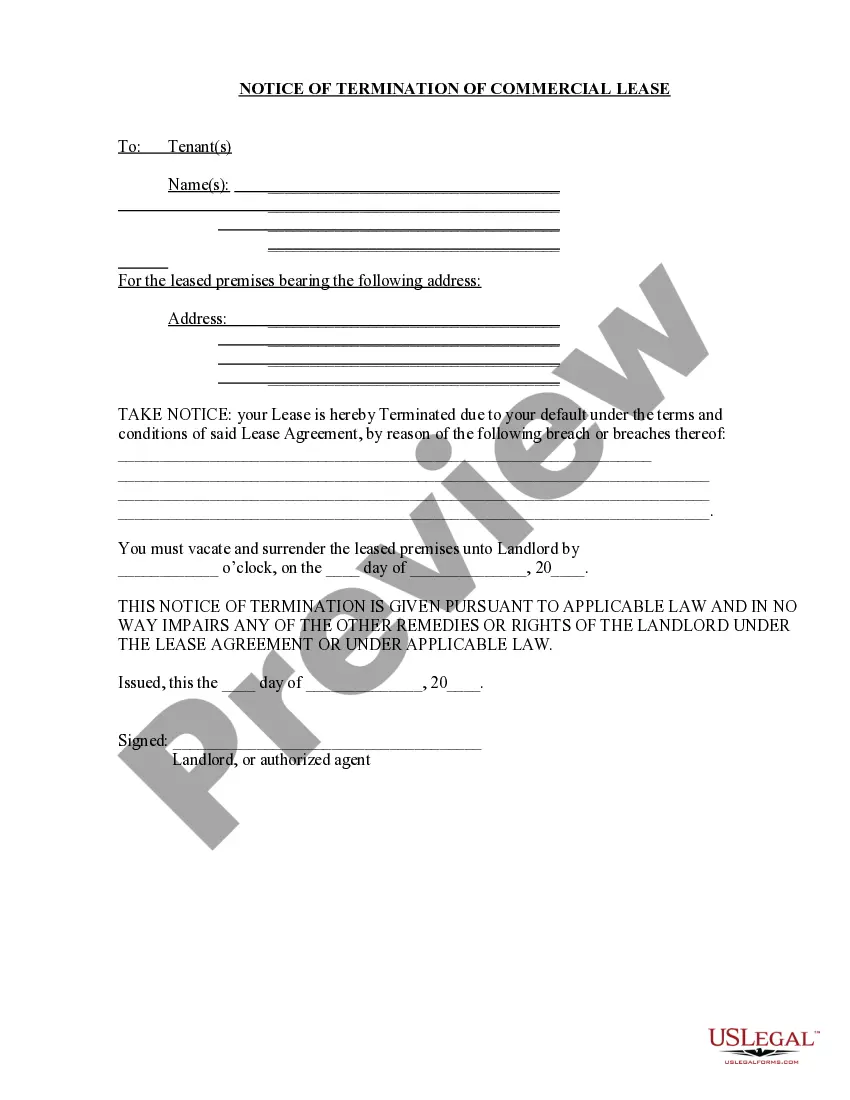
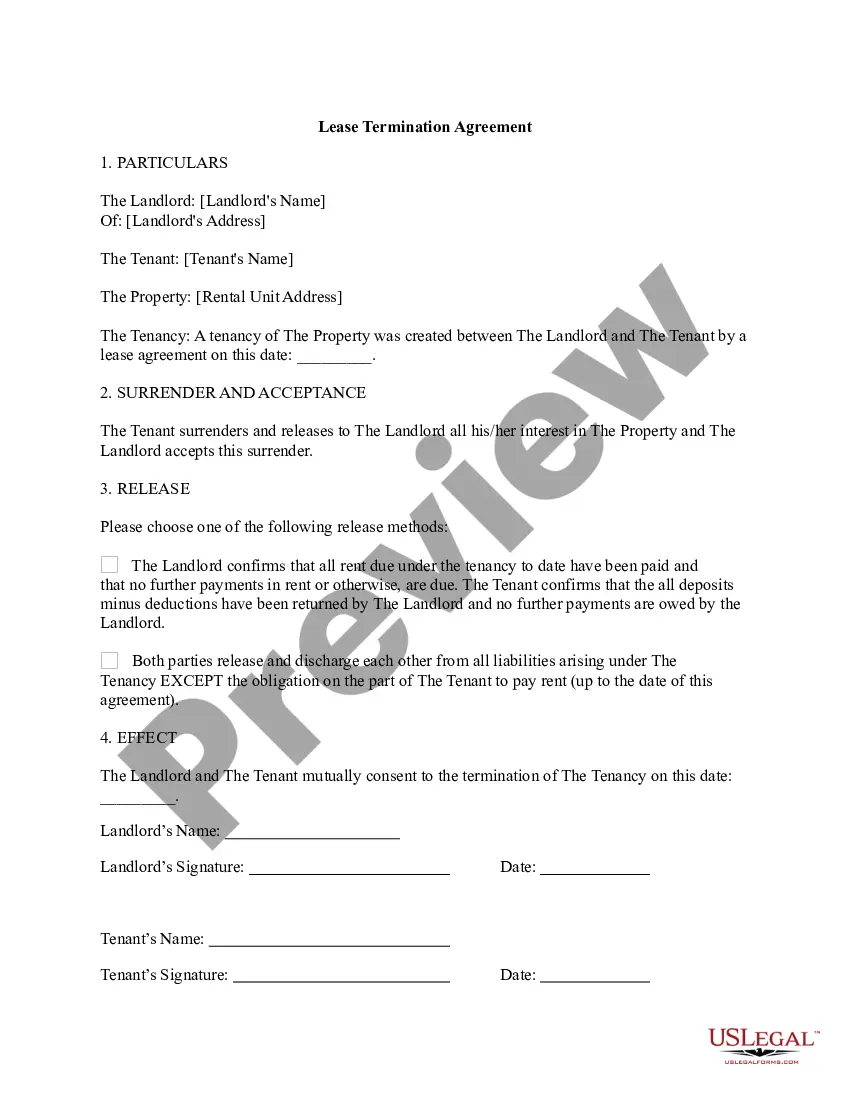
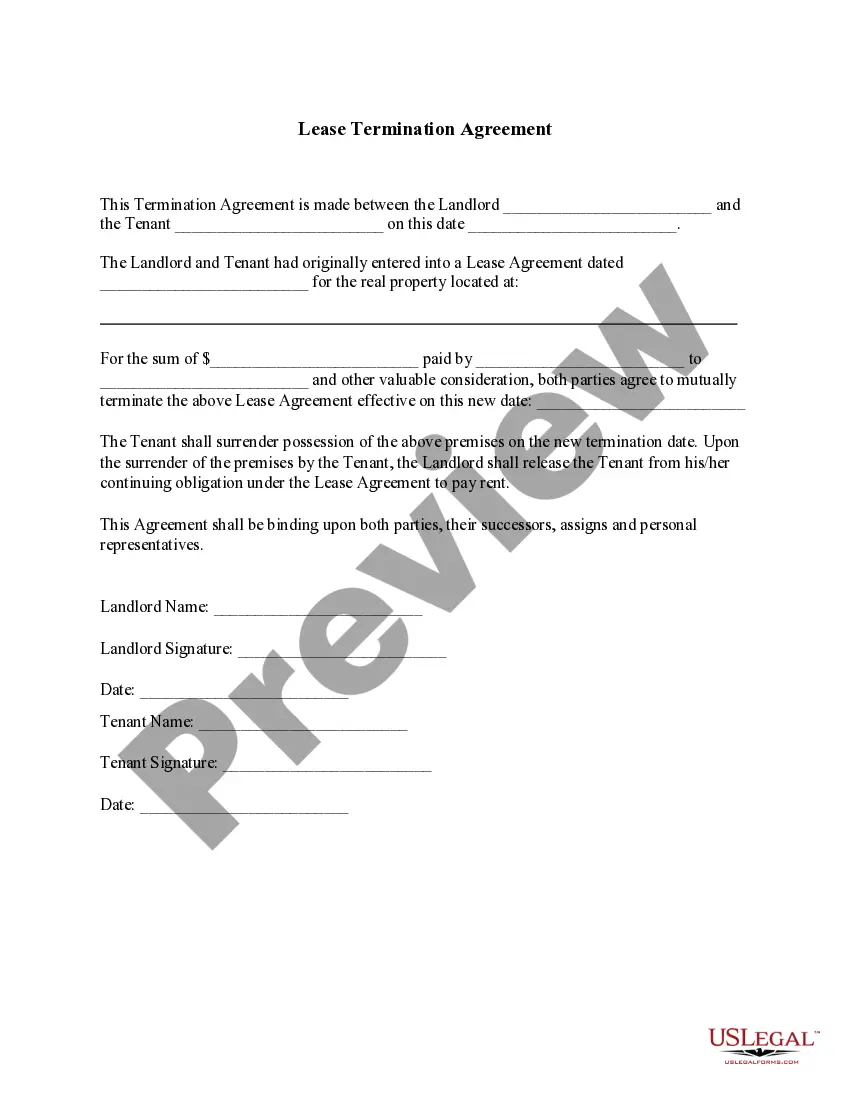
The Agreed Written Termination of Lease by Landlord and Tenant form allows both parties to mutually agree to end a lease agreement. Unlike other lease termination forms, this document facilitates an organized and documented surrender of the rental premises, ensuring both the landlord and tenant are released from any further obligations once the lease is terminated. It also allows for the inclusion of special conditions before the termination becomes effective.
Key components of this form
- Details of the original lease agreement, including parties involved and effective dates.
- A specific section outlining the agreed termination date of the lease.
- Provisions for any special conditions that must be met prior to termination.
- A release clause that confirms the lease agreement will be null and void following termination and compliance with any special conditions.
- Signature fields for both the landlord and tenant to validate the agreement.

Situations where this form applies
This form is ideal for landlords and tenants who have come to a mutual decision to end their lease early. It is particularly useful in situations where both parties agree on terms for the return of the property, and it is necessary to document the ending of the lease agreement formally. This form can help prevent future disputes over obligations related to the lease.
Intended users of this form
- Landlords who wish to document the mutual termination of a lease.
- Tenants who have agreed with their landlord to end their lease agreement.
- Real estate professionals facilitating the termination on behalf of landlords and tenants.
Instructions for completing this form
- Identify the parties involved: Enter the full name and contact information of the landlord and all tenants.
- Specify the property: Include the address of the rental property being vacated.
- Enter the original lease details: Include the date the lease was signed and attach a copy of the lease if available.
- State the agreed termination date: Clearly mention the date when the lease will terminate and the tenant must vacate.
- List any special conditions: Include any specific terms that must be met before the lease can be fully terminated.
- Gather signatures: Ensure all parties sign and date the document to validate the termination agreement.
Does this document require notarization?
This form does not typically require notarization unless specified by local law.
Get your form ready online
Our built-in tools help you complete, sign, share, and store your documents in one place.
Make edits, fill in missing information, and update formatting in US Legal Forms—just like you would in MS Word.
Download a copy, print it, send it by email, or mail it via USPS—whatever works best for your next step.
Sign and collect signatures with our SignNow integration. Send to multiple recipients, set reminders, and more. Go Premium to unlock E-Sign.
If this form requires notarization, complete it online through a secure video call—no need to meet a notary in person or wait for an appointment.
We protect your documents and personal data by following strict security and privacy standards.

Make edits, fill in missing information, and update formatting in US Legal Forms—just like you would in MS Word.

Download a copy, print it, send it by email, or mail it via USPS—whatever works best for your next step.

Sign and collect signatures with our SignNow integration. Send to multiple recipients, set reminders, and more. Go Premium to unlock E-Sign.

If this form requires notarization, complete it online through a secure video call—no need to meet a notary in person or wait for an appointment.

We protect your documents and personal data by following strict security and privacy standards.
Common mistakes
- Failing to include specific conditions that were agreed upon before termination.
- Omitting signatures or dates, which can render the form unenforceable.
- Not providing all the original lease details, which may lead to confusion or disputes.
Why use this form online
- Convenient access to legal forms that can be downloaded and completed at your own pace.
- Editability allows users to customize the form to reflect their specific circumstances.
- Reliability, as these forms are drafted by licensed attorneys to ensure legal compliance.
- The Agreed Written Termination of Lease is essential for legally ending a lease by mutual agreement.
- Special conditions should be included to ensure clarity and protect both parties.
- Always collect signatures from both the landlord and tenant to validate the form.
Looking for another form?
Form popularity
FAQ
To write a handwritten lease agreement, begin by clearly stating the names of the landlord and tenant. Include details about the property, rent amount, and duration of the lease, referencing the Florida Agreed Written Termination of Lease by Landlord and Tenant for clarity. Ensure both parties sign and date the document for validation. A well-crafted agreement protects both parties' interests.
In Florida, the required notice to terminate a lease typically depends on the terms specified in the lease agreement. Most leases will require either a 30-day or 60-day notice, aligned with the Florida Agreed Written Termination of Lease by Landlord and Tenant. It's essential to check your specific lease for exact requirements. Meeting these timelines helps ensure a smooth transition.
Yes, you can challenge a notice of termination, but you must have valid grounds. Gather evidence and document your communications with the landlord regarding the Florida Agreed Written Termination of Lease by Landlord and Tenant. If disputes arise, consider seeking legal advice to understand your options and potential outcomes. Acting confidently can influence the process positively.
When a tenant gives notice, respond promptly and formally. Acknowledge the notice and confirm the termination timeline as per the Florida Agreed Written Termination of Lease by Landlord and Tenant. Include any instructions regarding moving out and address potential final inspections or deposits. A clear response fosters a positive landlord-tenant relationship.
To legally get out of your lease in Florida, you can follow the procedures outlined in the lease agreement or state law. Consider utilizing the Florida Agreed Written Termination of Lease by Landlord and Tenant, which provides a structured approach to terminate the lease. Notify your landlord in writing, ensuring you adhere to required notice periods. Proper execution can minimize potential penalties.
No, a notice of termination of tenancy is not the same as an eviction. The notice indicates that a lease agreement is ending or being terminated, while eviction is a legal process to remove a tenant from the property. Understanding this distinction is crucial when dealing with the Florida Agreed Written Termination of Lease by Landlord and Tenant. Being informed can help you take appropriate actions.
While you can handle lease termination without a lawyer, consulting one can provide valuable guidance. A legal professional can help navigate the complexities of the Florida Agreed Written Termination of Lease by Landlord and Tenant, ensuring your rights are protected. This becomes especially important if disputes arise or if unique circumstances affect your lease. Protect your interests by understanding all terms.
To reply to a termination notice, write a formal response that acknowledges the tenant's request for termination. Include essential details regarding the next steps that align with the Florida Agreed Written Termination of Lease by Landlord and Tenant. Make sure to maintain a professional tone and provide any required information about security deposits or property inspections. Clear communication helps avoid misunderstandings.
When you receive a termination notice from your tenant, first acknowledge it in writing. Confirm the receipt and outline the next steps regarding the Florida Agreed Written Termination of Lease by Landlord and Tenant. Be sure to review the lease terms and local laws to ensure compliance. This sets a clear communication pathway for both parties.
Section 83.57 of the Florida Residential Landlord Tenant Act details the rules surrounding the termination of a rental agreement. This section outlines how landlords can terminate a lease and the required notice period for tenants. It emphasizes the importance of a written agreement in the Florida Agreed Written Termination of Lease by Landlord and Tenant, ensuring that both parties understand their rights and obligations. To simplify this process, you can access various resources on the US Legal Forms platform.