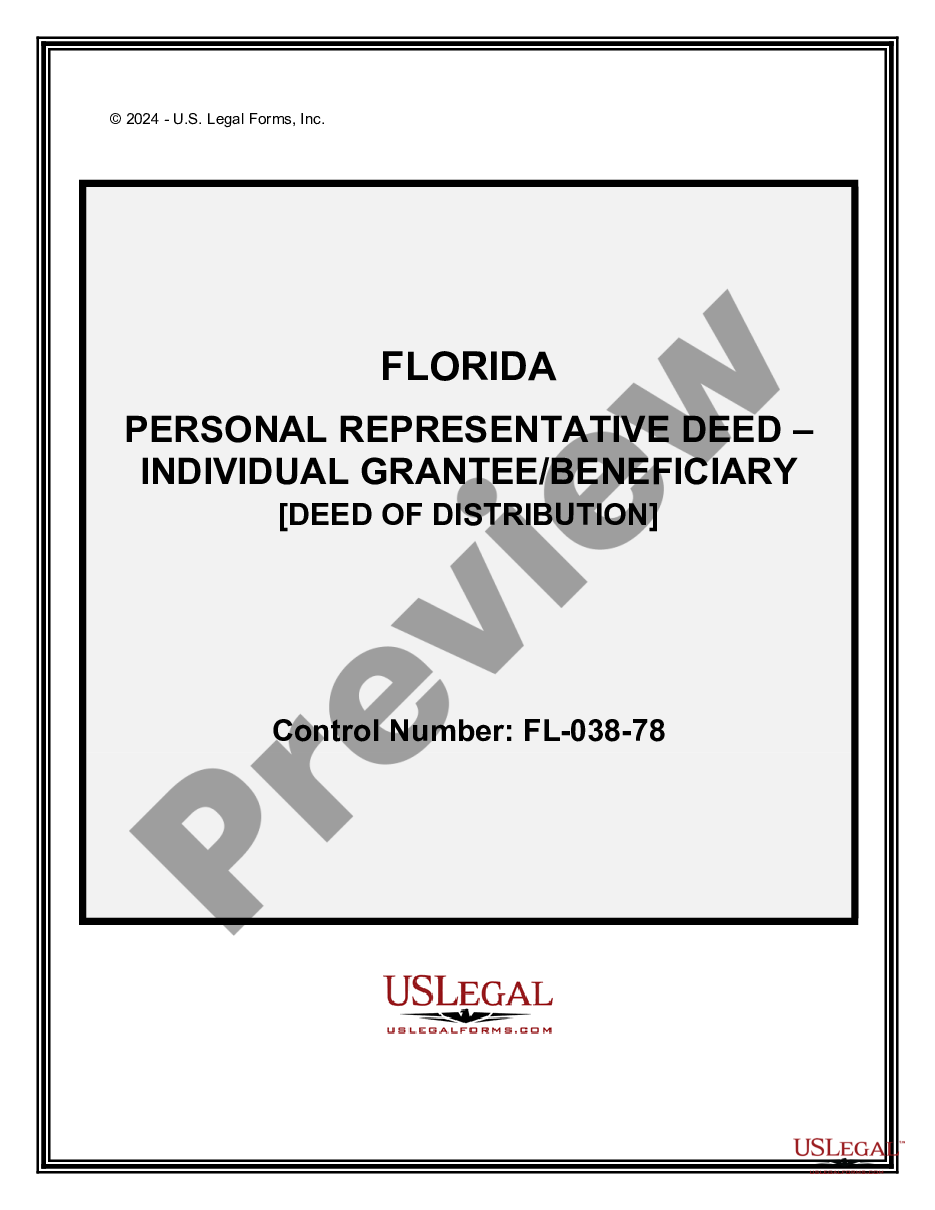
Florida Personal Representative Form With Estate
Description

Get your form ready online
Our built-in tools help you complete, sign, share, and store your documents in one place.
Make edits, fill in missing information, and update formatting in US Legal Forms—just like you would in MS Word.
Download a copy, print it, send it by email, or mail it via USPS—whatever works best for your next step.
Sign and collect signatures with our SignNow integration. Send to multiple recipients, set reminders, and more. Go Premium to unlock E-Sign.
If this form requires notarization, complete it online through a secure video call—no need to meet a notary in person or wait for an appointment.
We protect your documents and personal data by following strict security and privacy standards.

Make edits, fill in missing information, and update formatting in US Legal Forms—just like you would in MS Word.

Download a copy, print it, send it by email, or mail it via USPS—whatever works best for your next step.

Sign and collect signatures with our SignNow integration. Send to multiple recipients, set reminders, and more. Go Premium to unlock E-Sign.

If this form requires notarization, complete it online through a secure video call—no need to meet a notary in person or wait for an appointment.

We protect your documents and personal data by following strict security and privacy standards.
Looking for another form?



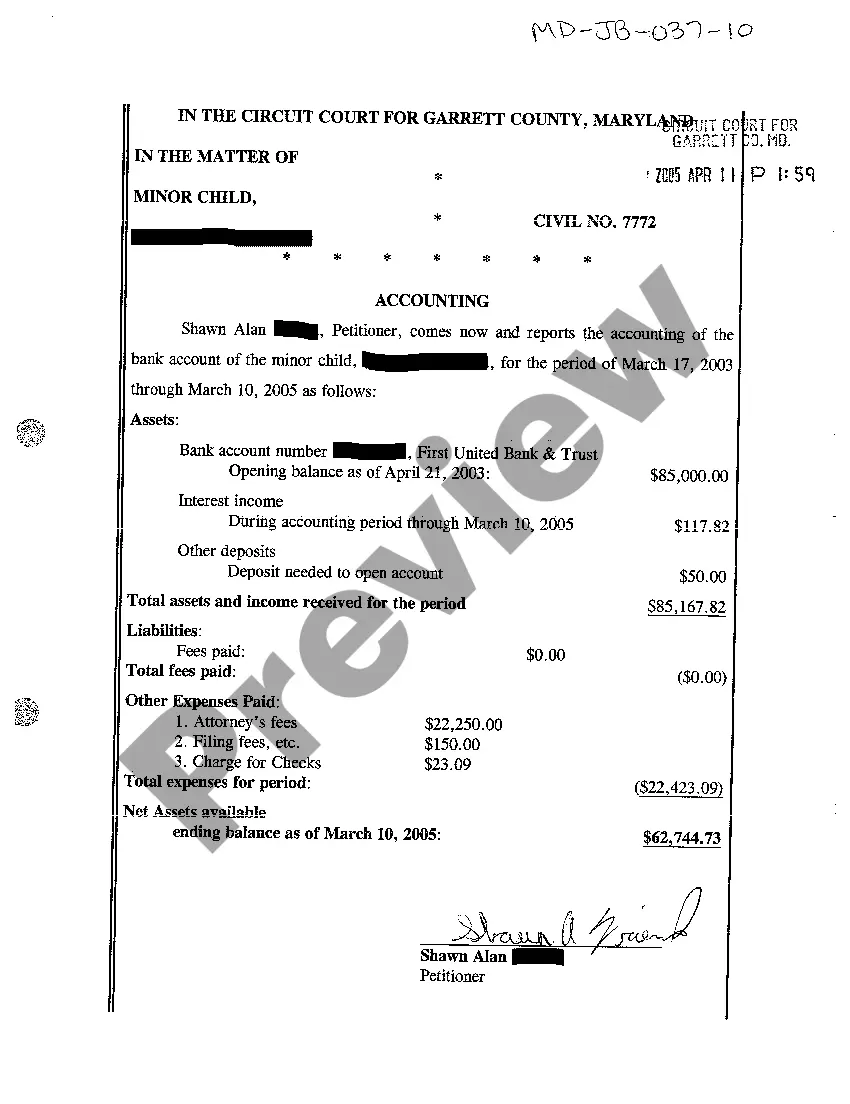
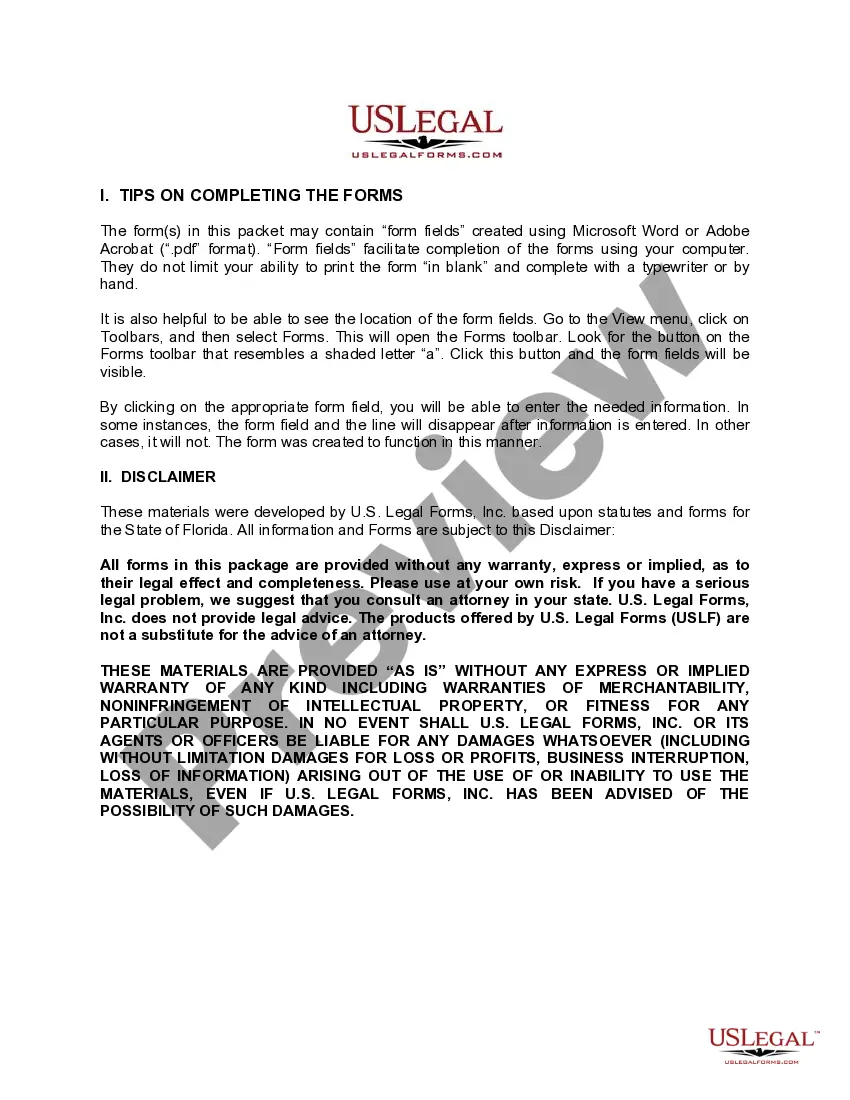
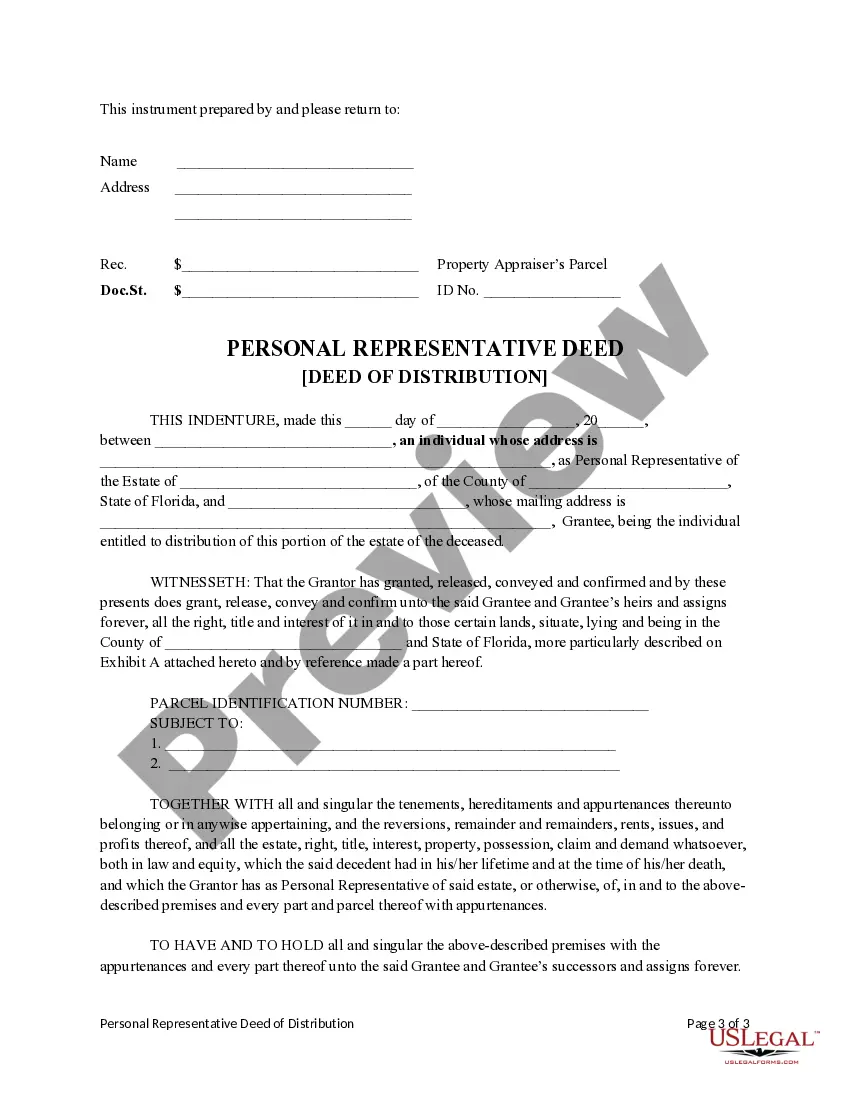
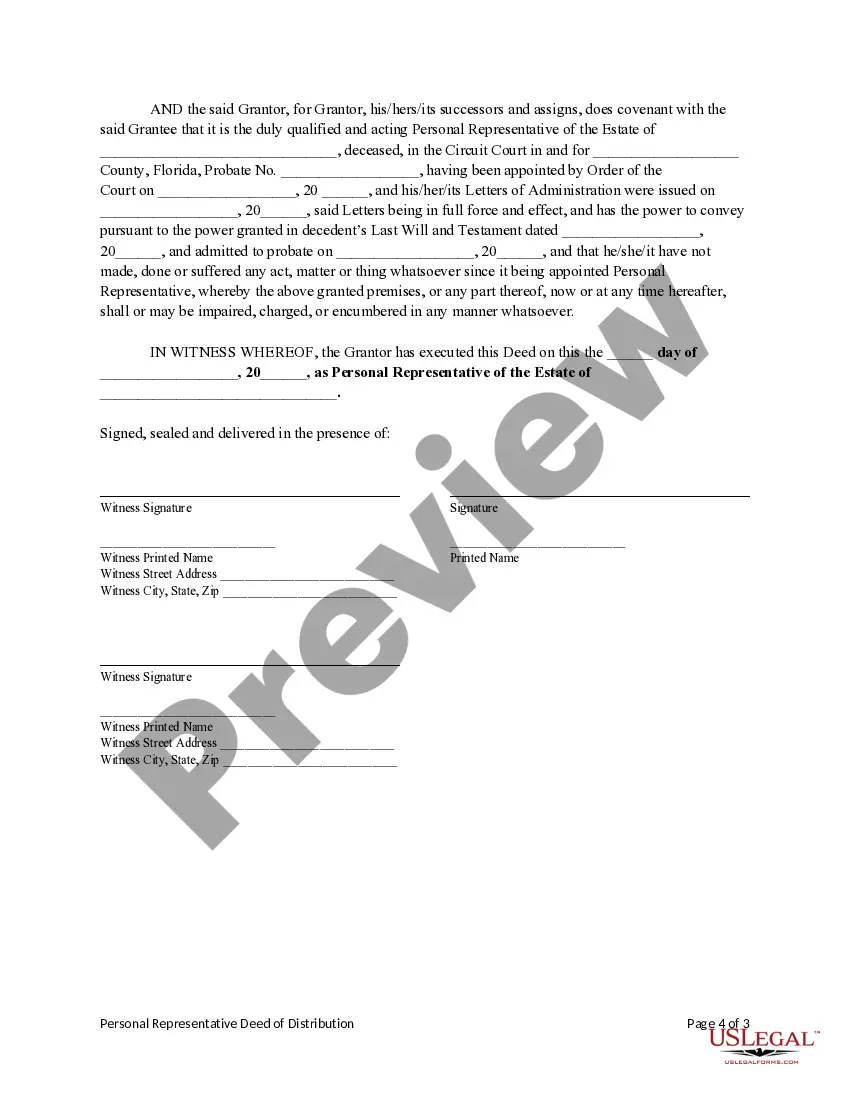
How to fill out Florida Personal Representative's Deed Of Distribution?
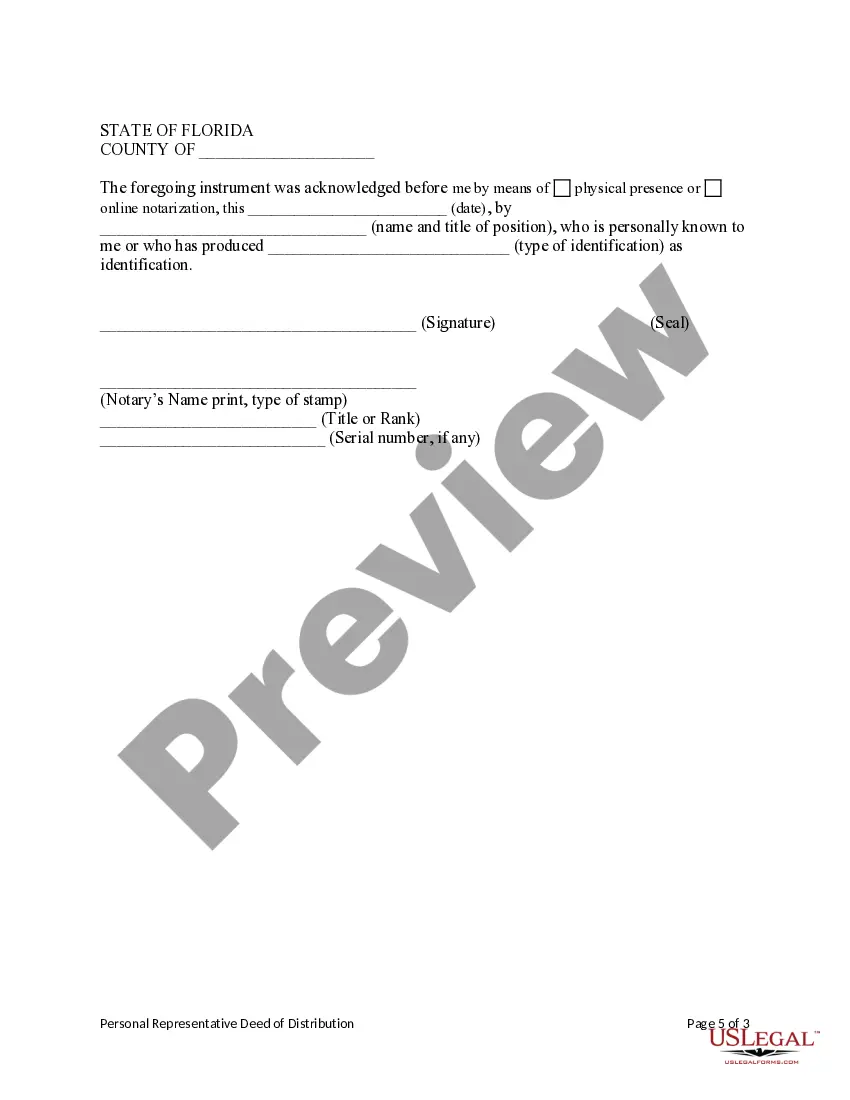
The Florida Personal Representative Form With Estate presented on this page is a versatile formal template created by experienced attorneys in compliance with federal and state regulations.
For over 25 years, US Legal Forms has supplied individuals, businesses, and lawyers with more than 85,000 authenticated, state-specific documents for any professional and personal situation. It’s the fastest, simplest, and most dependable method to acquire the necessary paperwork, as the service ensures bank-level data security and anti-malware safeguards.
Enroll in US Legal Forms to have authenticated legal templates for every situation in life at your fingertips.
- Search for the document you require and review it.
- Browse through the file you searched and preview it or check the form description to confirm it meets your needs. If it doesn’t, utilize the search feature to find the suitable one. Click Buy Now once you’ve found the template you want.
- Register and Log In.
- Select the payment plan that fits you and create an account. Use PayPal or a credit card for a swift transaction. If you already possess an account, Log In and verify your subscription to continue.
- Acquire the editable template.
- Choose the format you desire for your Florida Personal Representative Form With Estate (PDF, Word, RTF) and store the document on your device.
- Fill out and sign the documents.
- Print the template to complete it by hand. Alternatively, utilize an online multifunctional PDF editor to quickly and accurately fill out and sign your form with an eSignature.
- Download your documents once more.
- Access the same document again whenever necessary. Open the My documents tab in your profile to redownload any previously saved forms.
Form popularity
FAQ
To become a personal representative for a deceased person in Florida, start by filing a petition with the probate court along with the Florida personal representative form with estate information. You will need to provide proof of your eligibility and the death certificate of the deceased. Once approved by the court, you will gain the authority to manage the estate and fulfill your duties.
The time it takes to be appointed as a personal representative in Florida can vary, but it typically ranges from a few weeks to several months. The process involves filing the necessary documents, including the Florida personal representative form with estate details, and waiting for the court's approval. Factors such as the estate's complexity and any disputes among heirs can also affect this timeline.
Filling out a personal representative deed involves providing accurate information about the estate and the deceased. You will need to include details such as the names of heirs, the description of assets, and any relevant court orders. Using the Florida personal representative form with estate specifics simplifies this process, ensuring that all necessary information is captured correctly.
To serve as a personal representative in Florida, you must be at least 18 years old and a resident of Florida, or a close relative of the deceased. Additionally, you should not have been convicted of a felony or have been found mentally incapacitated. Understanding these requirements helps ensure you can effectively complete the Florida personal representative form with estate information.
A personal representative of an estate in Florida is an individual appointed by the court to manage the estate of a deceased person. This role involves overseeing the distribution of assets, paying debts, and ensuring that the wishes of the deceased are honored. To fulfill this role, you will often need to complete the Florida personal representative form with estate details, which outlines your authority and responsibilities.
The basic duties of the personal representative will be to collect and preserve the assets of the estate; to pay all debts of the decedent and expenses of administration including taxes; and finally to distribute the remainder of the estate to those persons entitled to it.
? Most assets go through probate court in Florida. However, if the decedent has a well-executed trust document the family may avoid probate court. Also, any property held in joint tenancy with full survivorship rights avoids probate court.
Within 1 year, distribute the assets: Once all the claims against the estate are satisfied, the personal representative can transfer the remaining assets to beneficiaries ing to the terms of the will. Or, if there is no will, following the state laws of inheritance. Close the estate.
The custodian of a Will must deposit the original copy of the Will with the clerk of the Court having the venue of the decedent's estate within 10 days of receiving information that the testator is dead. (S. 732.901, Florida Statutes.) There is no fee to deposit the Will with the clerk of Court.
Formal administration is required for any estate with non-exempt assets valued at over $75,000 when a decedent died less than two years ago. Formal administration is also required any time that a personal representative is needed to settle the affairs of the decedent.