Florida Estate Individual Withholding
Description


Get your form ready online
Our built-in tools help you complete, sign, share, and store your documents in one place.
Make edits, fill in missing information, and update formatting in US Legal Forms—just like you would in MS Word.
Download a copy, print it, send it by email, or mail it via USPS—whatever works best for your next step.
Sign and collect signatures with our SignNow integration. Send to multiple recipients, set reminders, and more. Go Premium to unlock E-Sign.
If this form requires notarization, complete it online through a secure video call—no need to meet a notary in person or wait for an appointment.
We protect your documents and personal data by following strict security and privacy standards.

Make edits, fill in missing information, and update formatting in US Legal Forms—just like you would in MS Word.

Download a copy, print it, send it by email, or mail it via USPS—whatever works best for your next step.

Sign and collect signatures with our SignNow integration. Send to multiple recipients, set reminders, and more. Go Premium to unlock E-Sign.

If this form requires notarization, complete it online through a secure video call—no need to meet a notary in person or wait for an appointment.

We protect your documents and personal data by following strict security and privacy standards.
Looking for another form?
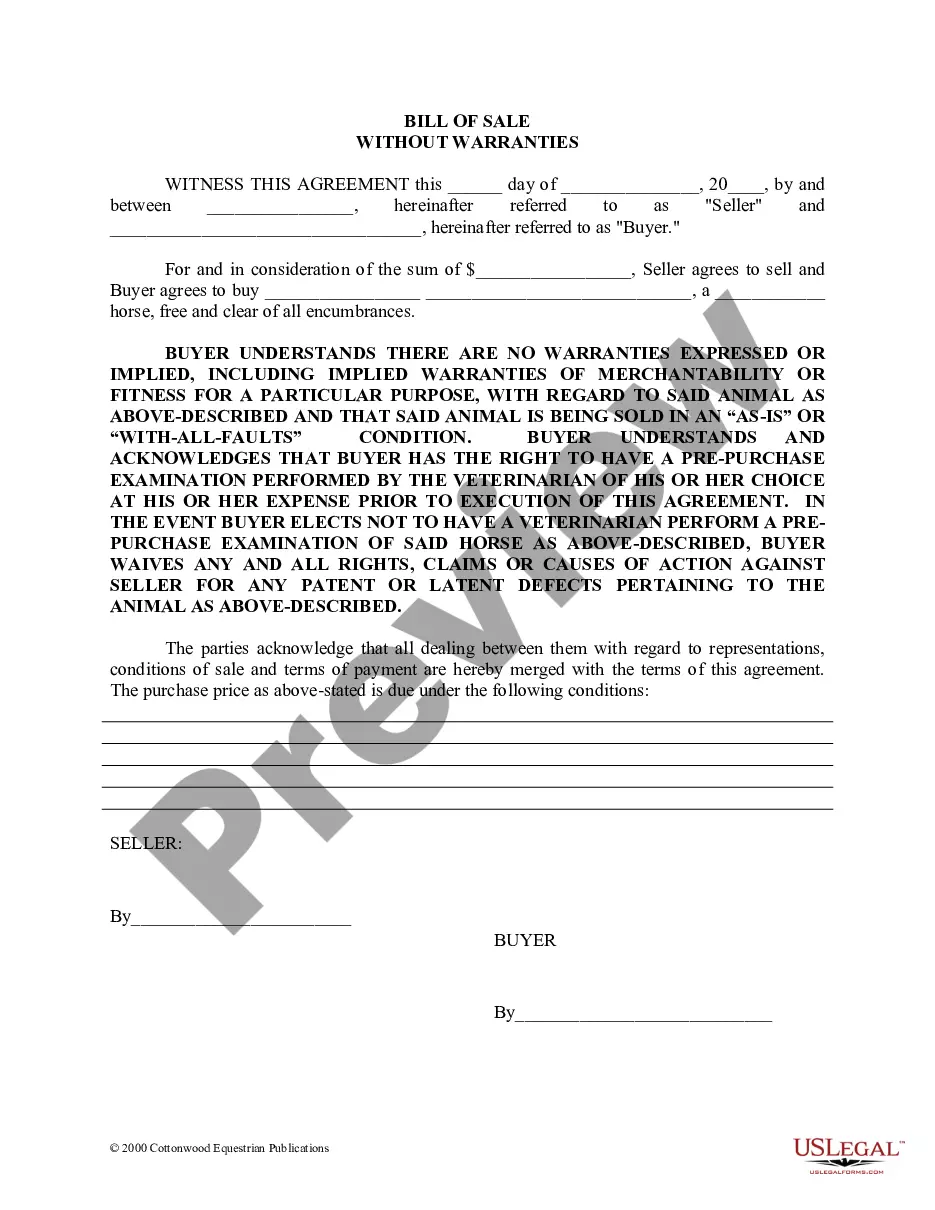


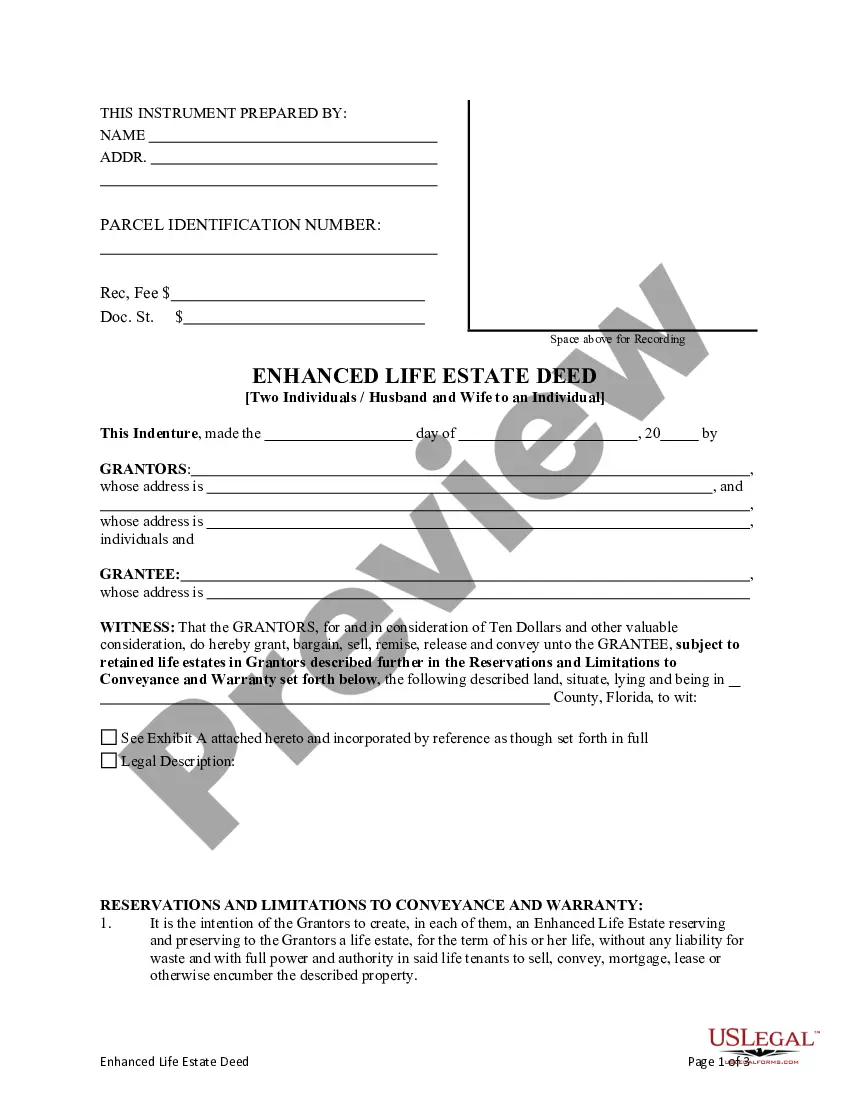
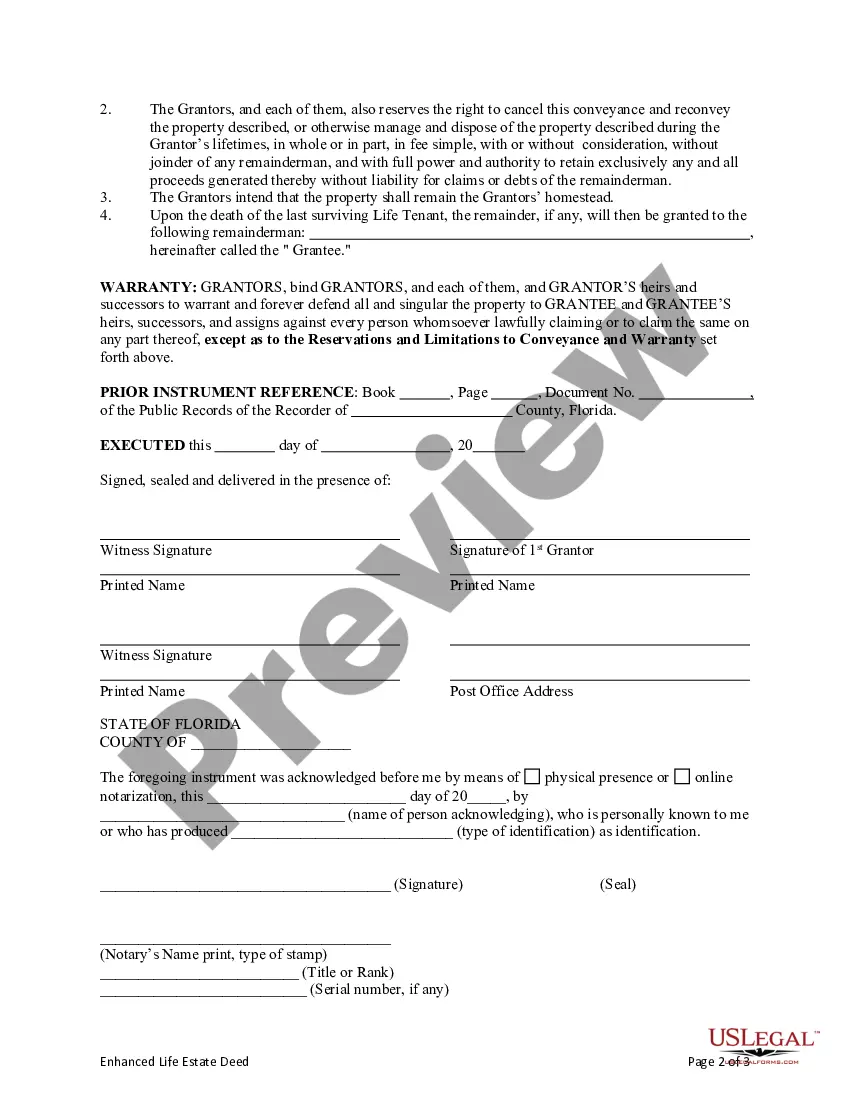
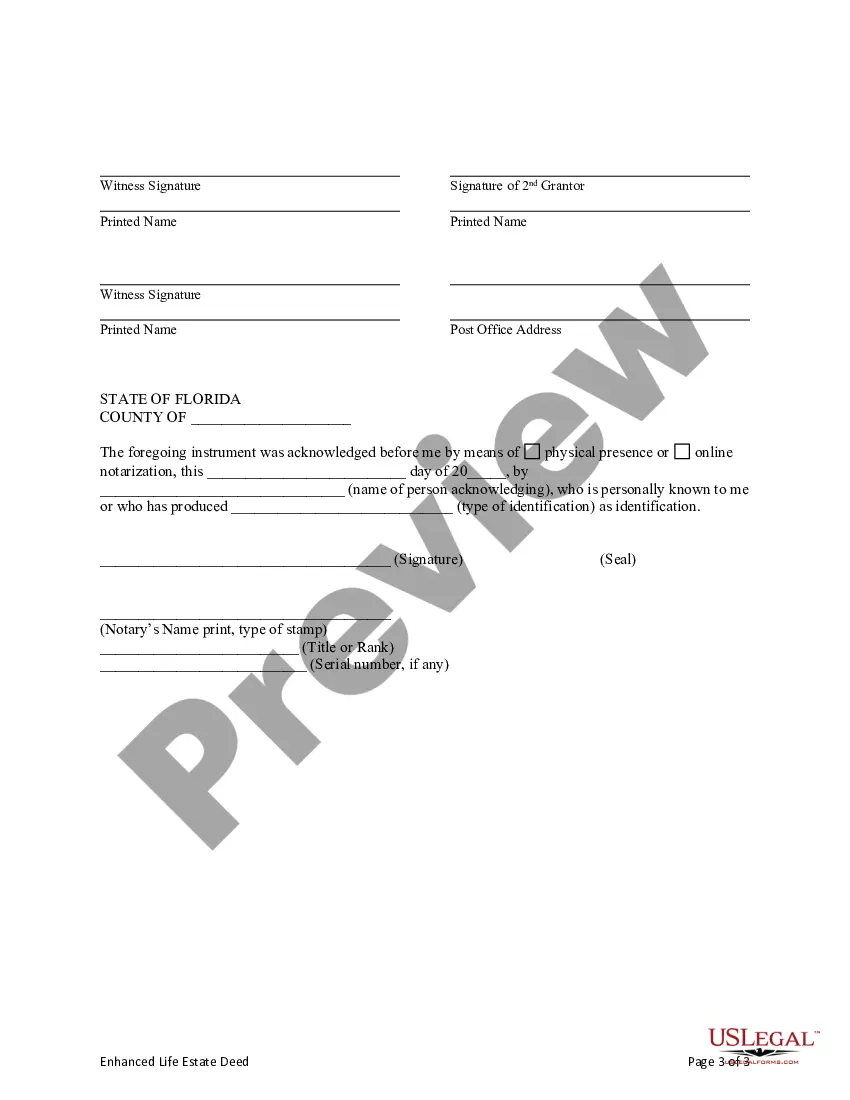
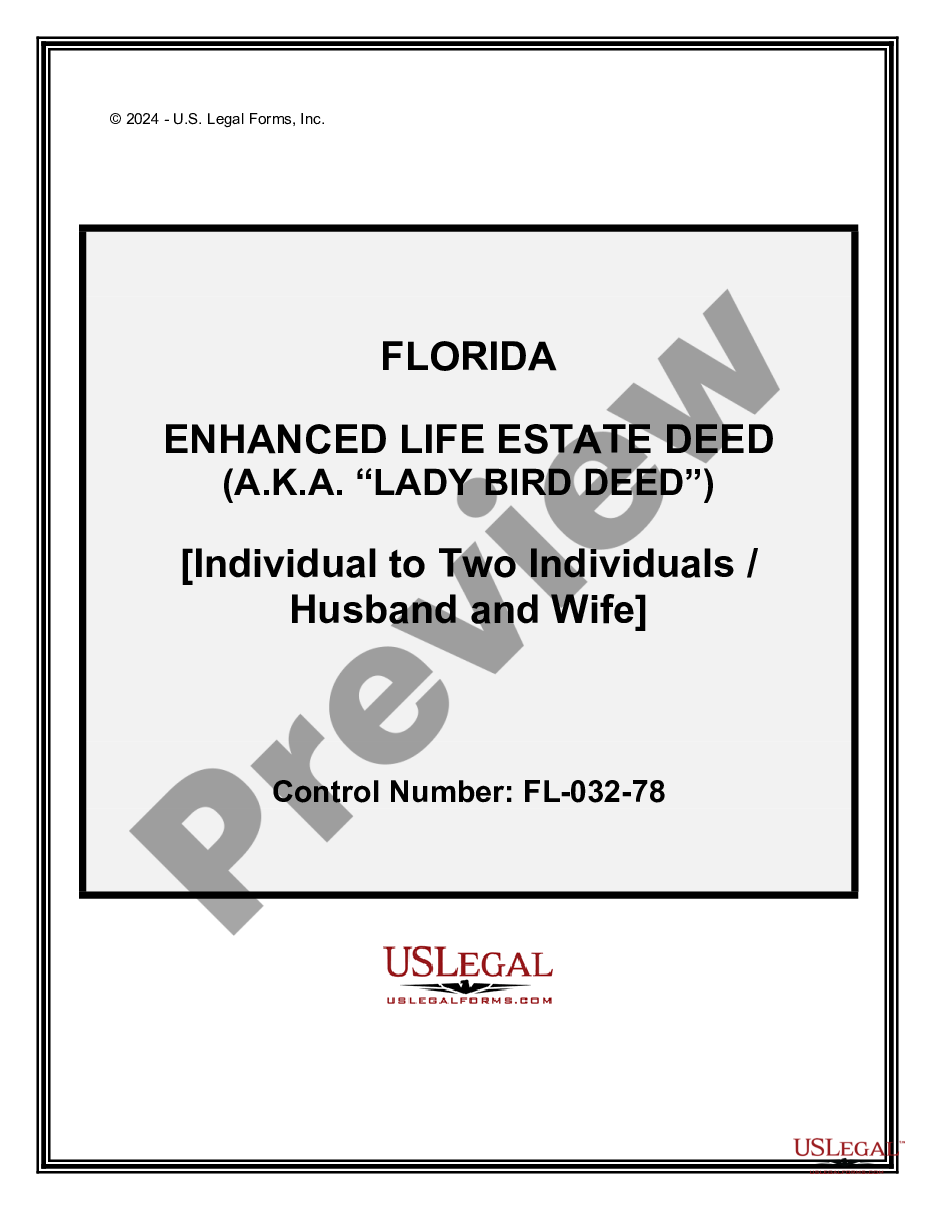
How to fill out Florida Enhanced Life Estate Or Lady Bird Deed - Two Individual / Husband And Wife To Individual?
Locating a reliable source to obtain the most up-to-date and pertinent legal templates is a significant part of navigating bureaucracy.
Identifying the appropriate legal documents necessitates precision and meticulousness, which is why it is crucial to procure samples of Florida Estate Individual Withholding exclusively from reputable sources, such as US Legal Forms.
Once you have the document on your device, you can modify it with the editor or print it to complete it manually. Eliminate the complications associated with your legal paperwork. Explore the extensive US Legal Forms catalog where you can discover legal templates, verify their applicability to your situation, and download them instantly.
- Utilize the catalog navigation or search bar to find your template.
- Examine the form’s description to verify if it aligns with your state and regional requirements.
- View the form preview, if available, to confirm that it is the document you need.
- Return to the search and identify the appropriate template if the Florida Estate Individual Withholding does not fulfill your needs.
- If you are confident about the form’s relevance, proceed to download it.
- If you are a registered member, click Log in to verify your identity and access your selected forms in My documents.
- If you do not possess an account yet, click Buy now to acquire the form.
- Select the pricing package that best fits your needs.
- Continue to the registration process to complete your purchase.
- Finalize your acquisition by selecting a payment option (credit card or PayPal).
- Choose the file format to download Florida Estate Individual Withholding.
Form popularity
FAQ
Florida does not have a state individual income tax. Florida has a 5.50 percent corporate income tax. Florida has a 6.00 percent state sales tax rate, a max local sales tax rate of 2.00 percent, and an average combined state and local sales tax rate of 7.02 percent.
Report income distributions to beneficiaries and to the IRS on Schedule K-1 (Form 1041). For calendar year estates and trusts, file Form 1041 and Schedule(s) K-1 on or before April 15 of the following year.
The good news is Florida does not have a separate state inheritance tax. Even further, heirs and beneficiaries in Florida do not pay income tax on any monies received from an estate because inherited property does not count as income for Federal income tax purposes (and Florida does not have a separate income tax).
If paper-filed, write ?Deceased,? the taxpayer's name, and the taxpayer's date of death across the top of the final return. If e-filed, follow the directions provided by the tax software and be sure to indicate the taxpayer is deceased and the date of death.
Once the executor of the estate has divided up the assets and distributed them to the beneficiaries, the inheritance tax can come into play. The amount of tax is calculated separately for each individual beneficiary, and the beneficiary has to pay the tax.