General Contractor Agreement Cost Plus Fee Formula
Description
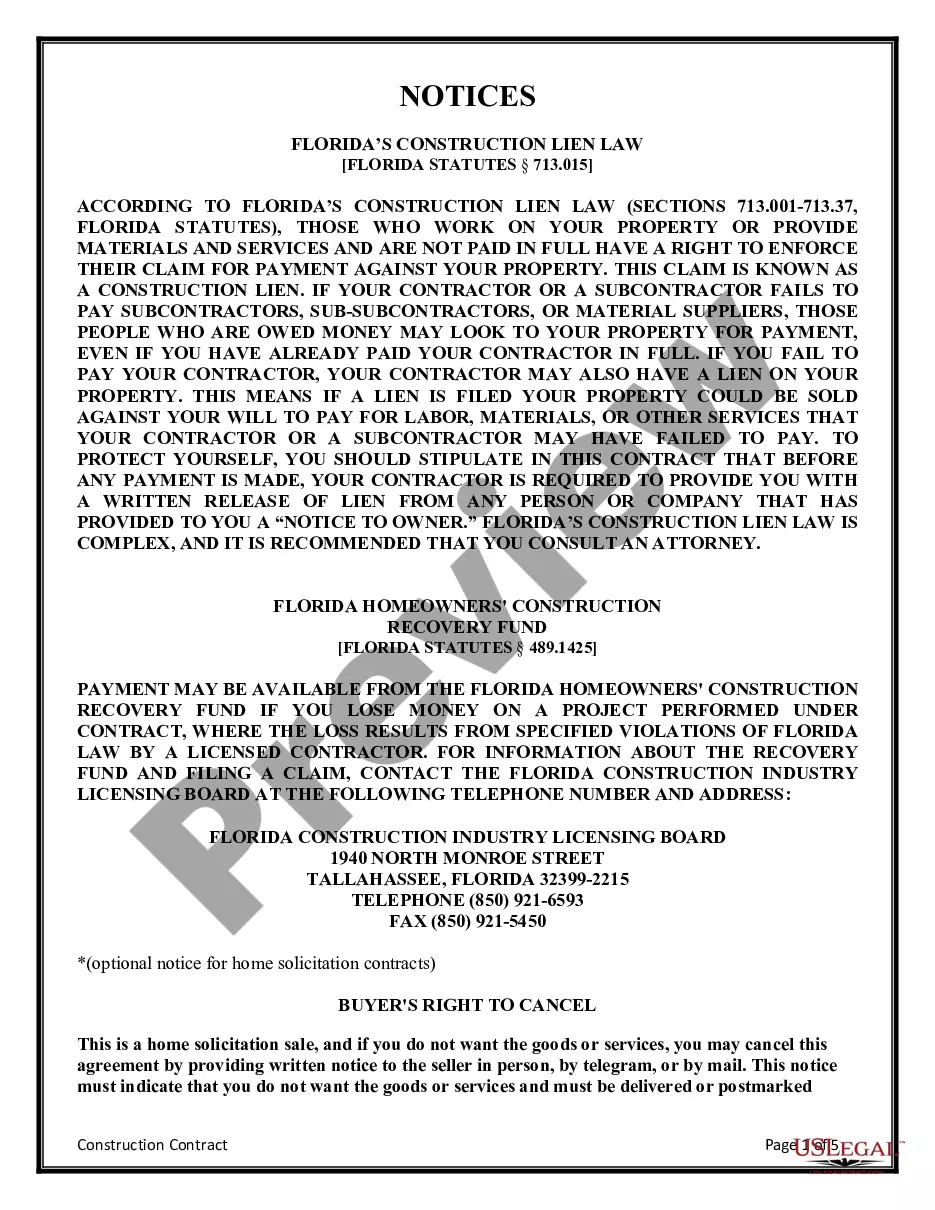
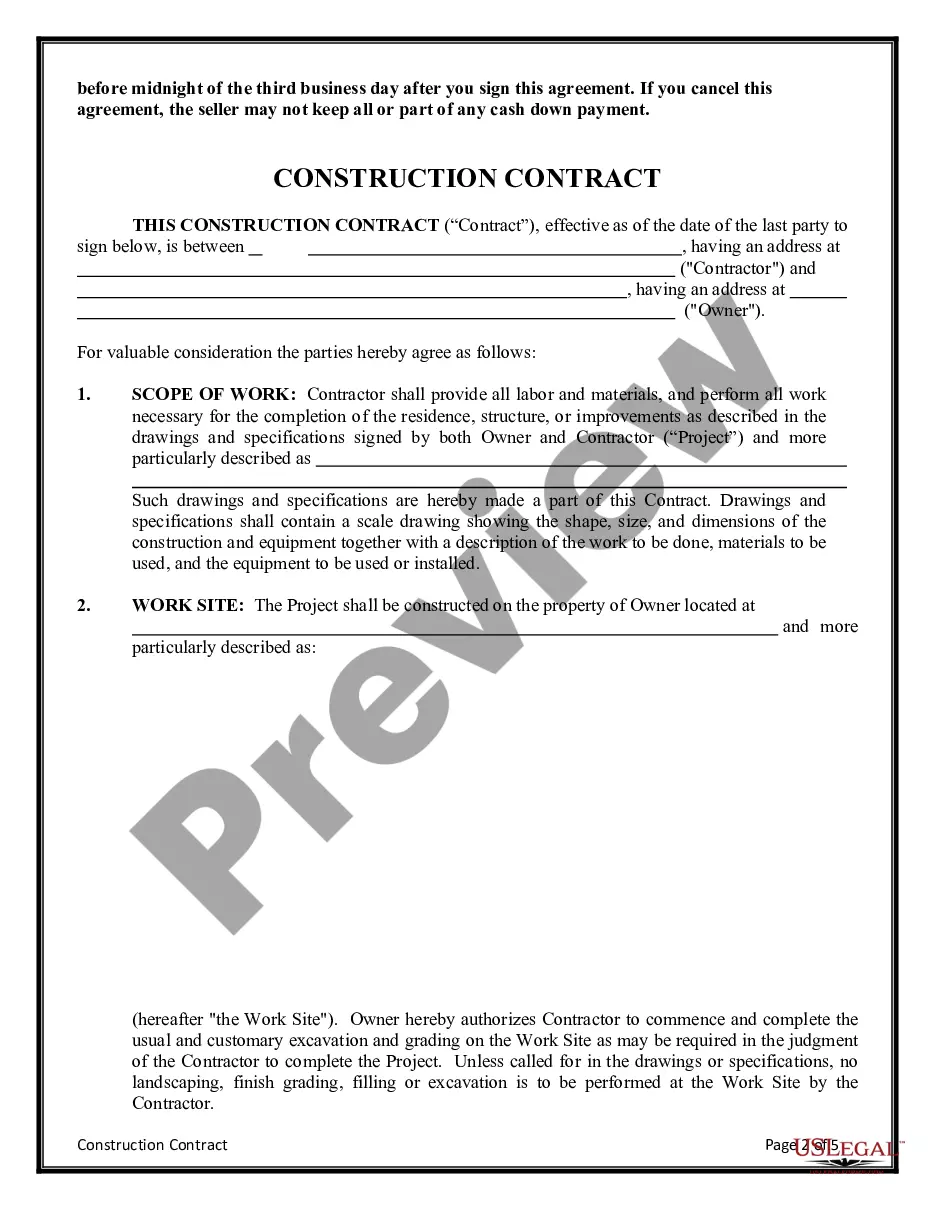
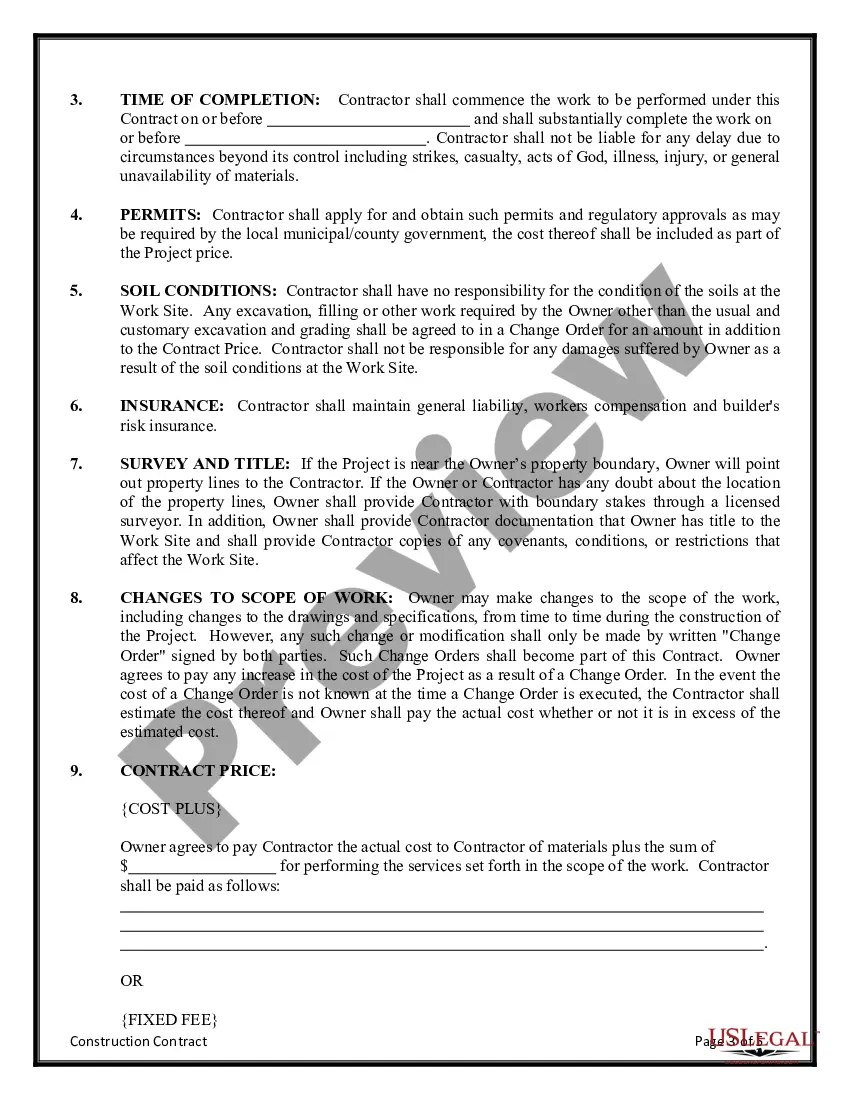
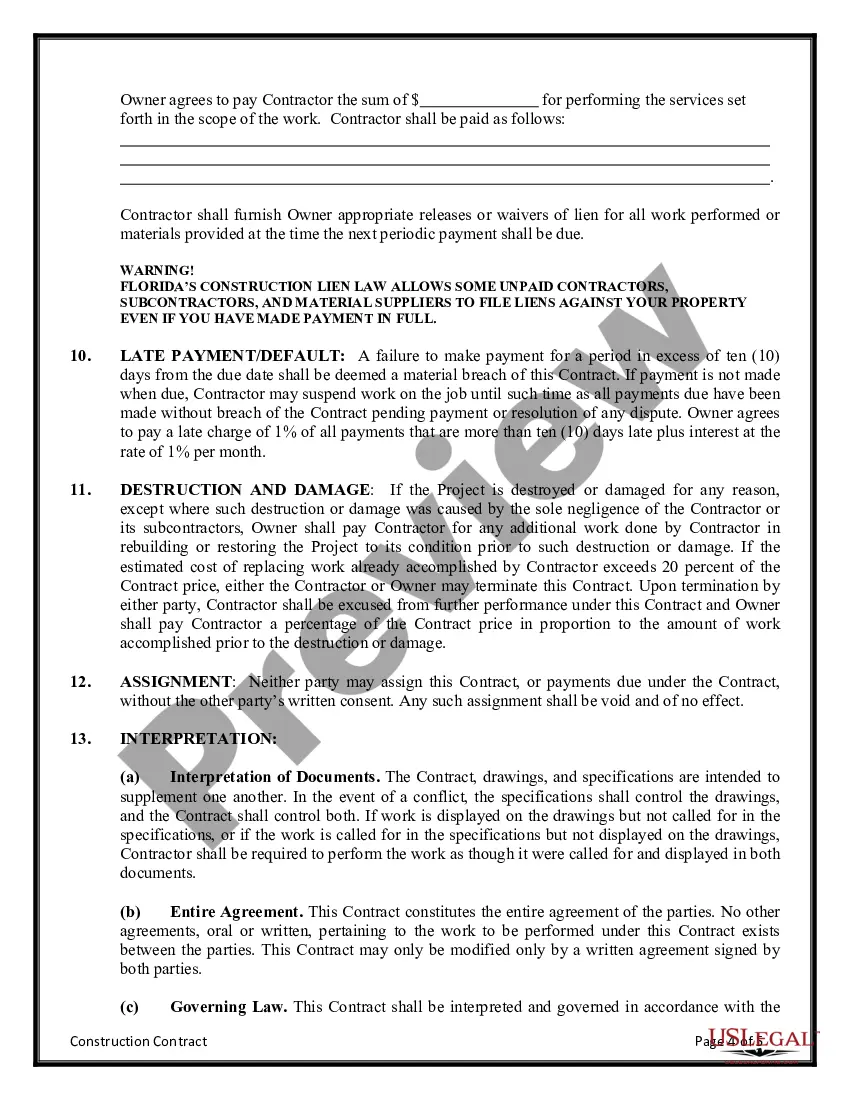

Get your form ready online
Our built-in tools help you complete, sign, share, and store your documents in one place.
Make edits, fill in missing information, and update formatting in US Legal Forms—just like you would in MS Word.
Download a copy, print it, send it by email, or mail it via USPS—whatever works best for your next step.
Sign and collect signatures with our SignNow integration. Send to multiple recipients, set reminders, and more. Go Premium to unlock E-Sign.
If this form requires notarization, complete it online through a secure video call—no need to meet a notary in person or wait for an appointment.
We protect your documents and personal data by following strict security and privacy standards.

Make edits, fill in missing information, and update formatting in US Legal Forms—just like you would in MS Word.

Download a copy, print it, send it by email, or mail it via USPS—whatever works best for your next step.

Sign and collect signatures with our SignNow integration. Send to multiple recipients, set reminders, and more. Go Premium to unlock E-Sign.

If this form requires notarization, complete it online through a secure video call—no need to meet a notary in person or wait for an appointment.

We protect your documents and personal data by following strict security and privacy standards.
Looking for another form?








How to fill out Florida Construction Contract Cost Plus Or Fixed Fee?
Locating a reliable venue to obtain the latest and suitable legal templates is half the challenge of navigating bureaucracy.
Identifying the correct legal forms requires accuracy and meticulousness, which is why it is vital to take samples of General Contractor Agreement Cost Plus Fee Formula solely from credible sources, such as US Legal Forms.
Once you have the form on your device, you can modify it using the editor or print it and complete it manually. Eliminate the stress associated with your legal documentation. Explore the extensive US Legal Forms collection where you can find legal templates, evaluate their pertinence to your situation, and download them instantly.
- Employ the library navigation or search function to find your template.
- Review the form’s description to determine if it meets the criteria of your state and region.
- Access the form preview, if available, to confirm the form is indeed the one you seek.
- Return to the search and identify the suitable template if the General Contractor Agreement Cost Plus Fee Formula does not align with your requirements.
- Once you are confident in the form’s relevance, download it.
- If you are a registered user, click Log in to verify and access your selected forms in My documents.
- If you do not possess an account yet, click Buy now to acquire the template.
- Select the pricing plan that suits your preferences.
- Proceed to the registration to complete your purchase.
- Finalize your transaction by selecting a payment method (credit card or PayPal).
- Choose the file format for downloading the General Contractor Agreement Cost Plus Fee Formula.
Form popularity
FAQ
The formula for a cost-plus fixed-fee contract includes the total cost of the project plus a fixed fee that the contractor earns as profit. This fee remains constant regardless of the project's actual costs, providing clients with predictability in budgeting. Understanding the general contractor agreement cost plus fee formula is essential for both parties to align their financial expectations and foster a successful working relationship.
The formula for a cost-plus fixed fee contract combines the actual project costs with a predetermined fee. This means that the contractor is reimbursed for their legitimate expenses, plus a fixed amount agreed upon beforehand. It’s a simple way to ensure that both parties maintain a financial balance during the project. Using the general contractor agreement cost plus fee formula helps clarify expectations and protects your financial interests.
The formula for the cost-plus method is quite straightforward. It typically includes the total project costs plus an allowable margin for profit. This means the contractor’s fees are calculated based on the actual costs incurred, ensuring they are compensated fairly. By using the general contractor agreement cost plus fee formula, you can guarantee your project stays within budget while compensating your contractor appropriately.
A CPPC contract is one that is structured to pay the contractor his actual costs incurred on the contract plus a fixed percent for profit or overhead (that is not audited/adjusted) and which is applied to actual costs incurred.
A: As an example, a cost-plus contract may establish that the total estimated cost of a building project is $10 million plus a fixed fee of $1.5 million, roughly 15% of the total cost, as the contractor's profit. So the total expense to the buyer would be approximately $11.5 million ?the cost plus the fee.
The profit in a cost-plus contract is typically set as a fixed amount or a fixed percentage of the project's total costs. The percentage typically ranges from 10% to 20% of the total cost of the project.
In addition to this, the buyer also pays a pre-negotiated fixed fee, which represents the contractor's profit. The formula for cost plus fixed fee calculation is: Total Contract Value = Actual Costs + Fixed Fee.
Cost-Plus GMP Contract Agreements are ?cost reimbursement? contracts. In a Cost-Plus price arrangement, there is no set or Fixed Fee. In other words, the contractor is paid for the Cost of the Work it incurs to complete the project, plus a Fee, not-to-exceed the GMP (absent scope changes or extenuating circumstances).