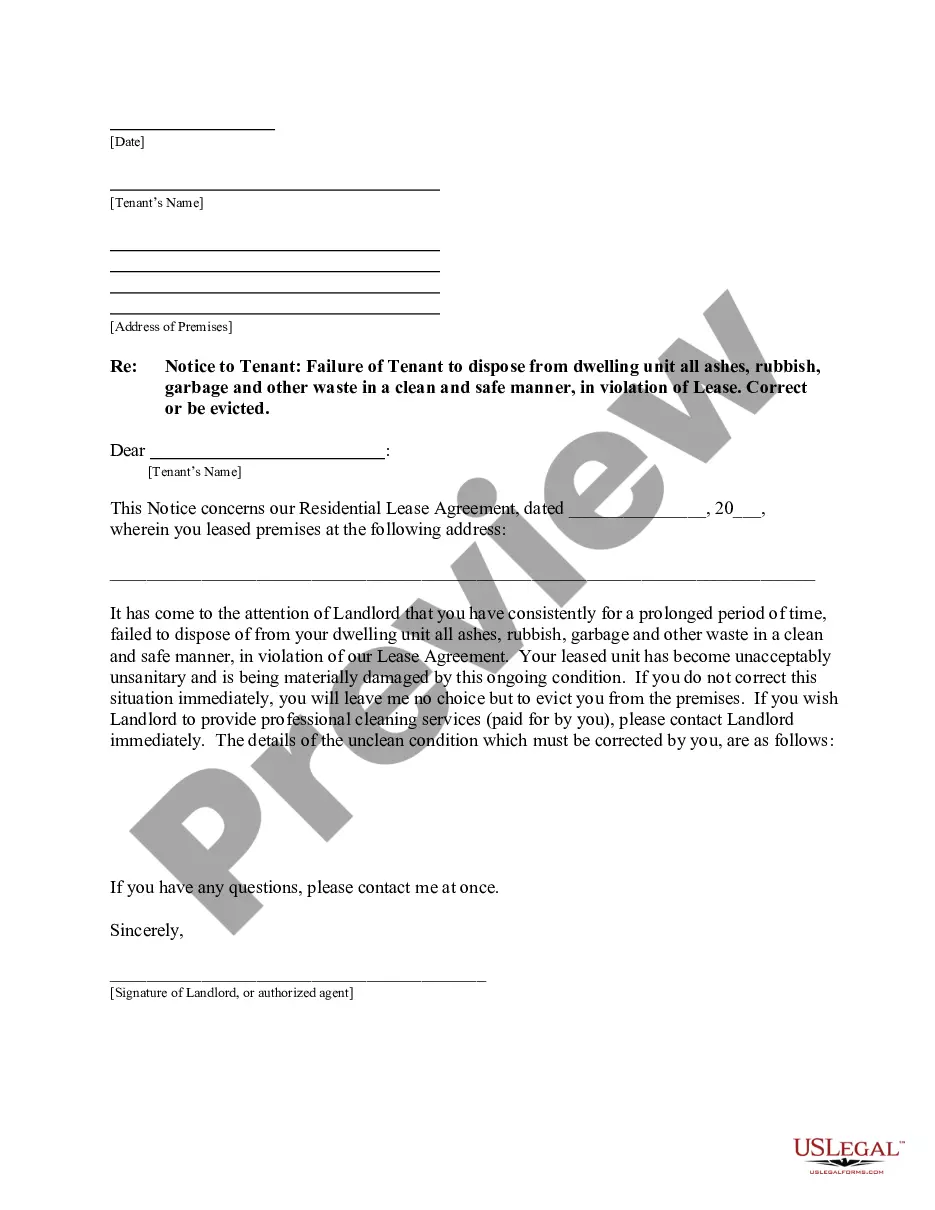
Letter Tenant In With Evict
Description


Get your form ready online
Our built-in tools help you complete, sign, share, and store your documents in one place.
Make edits, fill in missing information, and update formatting in US Legal Forms—just like you would in MS Word.
Download a copy, print it, send it by email, or mail it via USPS—whatever works best for your next step.
Sign and collect signatures with our SignNow integration. Send to multiple recipients, set reminders, and more. Go Premium to unlock E-Sign.
If this form requires notarization, complete it online through a secure video call—no need to meet a notary in person or wait for an appointment.
We protect your documents and personal data by following strict security and privacy standards.

Make edits, fill in missing information, and update formatting in US Legal Forms—just like you would in MS Word.

Download a copy, print it, send it by email, or mail it via USPS—whatever works best for your next step.

Sign and collect signatures with our SignNow integration. Send to multiple recipients, set reminders, and more. Go Premium to unlock E-Sign.

If this form requires notarization, complete it online through a secure video call—no need to meet a notary in person or wait for an appointment.

We protect your documents and personal data by following strict security and privacy standards.
Looking for another form?




Form popularity
FAQ
To write a move out message to your landlord, clearly state your intention to vacate, the date you plan to move, and any requests for a final inspection. This helps ensure that both parties are on the same page regarding the move-out process. A professional tone communicates respect and sets a positive tone for your departure.
In South Carolina, eviction rules generally require landlords to provide tenants with a written notice of termination. This notice should include the reason for the eviction and any applicable deadlines. Familiarizing yourself with these regulations can help avoid legal complications during the eviction process.
When writing a letter explaining your eviction, be honest and concise about the circumstances surrounding it. Explain the steps you've taken to rectify your situation, such as timely rent payments since the eviction. This letter can help potential landlords understand that your past does not define your character as a tenant.
While there is no foolproof way to get around an eviction on your record, you can take specific steps to manage its impact. Clearly communicate your situation with potential landlords, and consider using a letter tenant in with evict to present your case effectively. Building good credit and showing rental stability can also help.
If you want to rent with an eviction on your record, focus on building a strong application. Include a letter explaining the circumstances of your eviction and outlining your steps taken since then, such as maintaining a stable job. Additionally, consider seeking landlords who are more flexible with rental histories.
Renting again after an eviction can be challenging, as many landlords conduct thorough background checks. However, providing a letter tenant in with evict can explain your circumstances and demonstrate your efforts to improve your rental history. Highlighting stable income and positive rental references can also help.
When drafting a vacate letter to a tenant, specify the reasons for the eviction, the date by which they must vacate, and any relevant terms of the lease agreement. Including clear instructions on what they need to do before leaving can help facilitate a smooth process. A well-structured letter supports clear communication.
To write a notice letter for moving out, include your current address, the date of your notice, and the planned move-out date. Clearly state your intention to move and whether you plan to conduct a final walkthrough. This letter serves as a formal notice and helps avoid disputes later.
When writing a letter from landlord to tenant to vacate, clearly outline the reasons for the eviction, along with the necessary timeline for moving out. Include the date by which the tenant must leave and any specific clean-up or return of property instructions. A polite tone can foster a smoother transition.
Yes, you can still rent with an eviction on your record, but it may complicate the process. Landlords often conduct background checks, and prior evictions can be a red flag. Consider using a letter tenant in with evict to provide context about your past situation and demonstrate your commitment to responsible renting.
