Notice To Residents
Description

Get your form ready online
Our built-in tools help you complete, sign, share, and store your documents in one place.
Make edits, fill in missing information, and update formatting in US Legal Forms—just like you would in MS Word.
Download a copy, print it, send it by email, or mail it via USPS—whatever works best for your next step.
Sign and collect signatures with our SignNow integration. Send to multiple recipients, set reminders, and more. Go Premium to unlock E-Sign.
If this form requires notarization, complete it online through a secure video call—no need to meet a notary in person or wait for an appointment.
We protect your documents and personal data by following strict security and privacy standards.

Make edits, fill in missing information, and update formatting in US Legal Forms—just like you would in MS Word.

Download a copy, print it, send it by email, or mail it via USPS—whatever works best for your next step.

Sign and collect signatures with our SignNow integration. Send to multiple recipients, set reminders, and more. Go Premium to unlock E-Sign.

If this form requires notarization, complete it online through a secure video call—no need to meet a notary in person or wait for an appointment.

We protect your documents and personal data by following strict security and privacy standards.
Looking for another form?





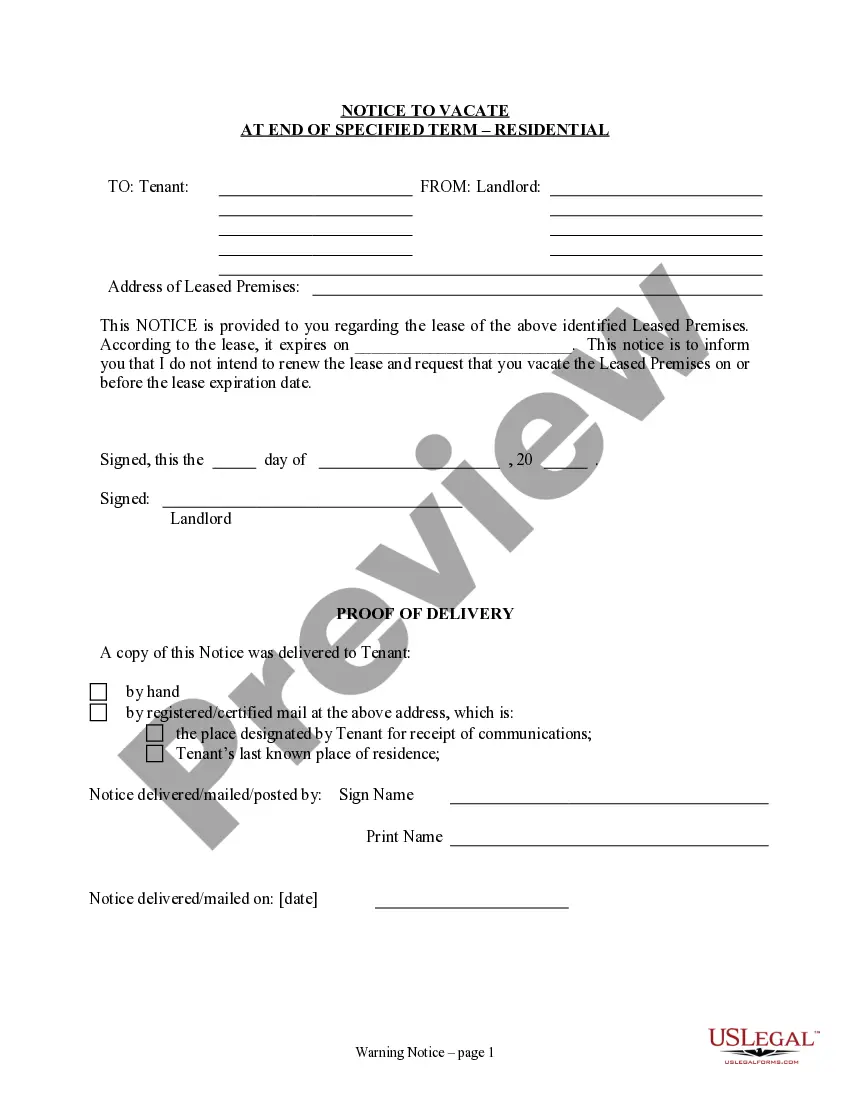
How to fill out Connecticut Notice Of Intent Not To Renew At End Of Specified Term From Landlord To Tenant For Residential Property?
- Visit US Legal Forms and log into your account if you're a returning user. Make sure your subscription is active, or renew it as needed.
- Explore the browsing options to find the specific notice template you require. Review the Preview mode and description to confirm it meets your standards.
- If the selected form isn't suitable, utilize the Search function to locate the correct template that aligns with your legal needs.
- Purchase the form by clicking the Buy Now button and select the subscription plan that suits you best. Create an account if you're a new user.
- Complete your purchase using your credit card or PayPal information. Ensure your transaction is processed successfully.
- Once completed, download the form to your device. You'll also find it conveniently stored under the My Forms section in your profile for future reference.
With US Legal Forms, getting the legal documents you need is quick and uncomplicated. The vast library and expert support ensure you have all the resources required to create legally sound documents.
Ready to simplify your legal document process? Start exploring the benefits of US Legal Forms today!
Form popularity
FAQ
To write a letter to get someone out of your house, clearly identify the person and your address. State your intention for them to leave and include a deadline for their departure. It is vital to maintain a professional tone while being direct about your expectations. Consider utilizing templates from US Legal Forms to ensure your letter is clear and legally sound.
If you fail to provide a 30-day notice to your landlord, you risk losing part or all of your security deposit. Additionally, your landlord may take legal action to recover rental payments for the notice period. It's crucial to follow proper procedures as outlined in your lease agreement. Using tools from US Legal Forms can help you understand your rights and responsibilities regarding notices to residents.
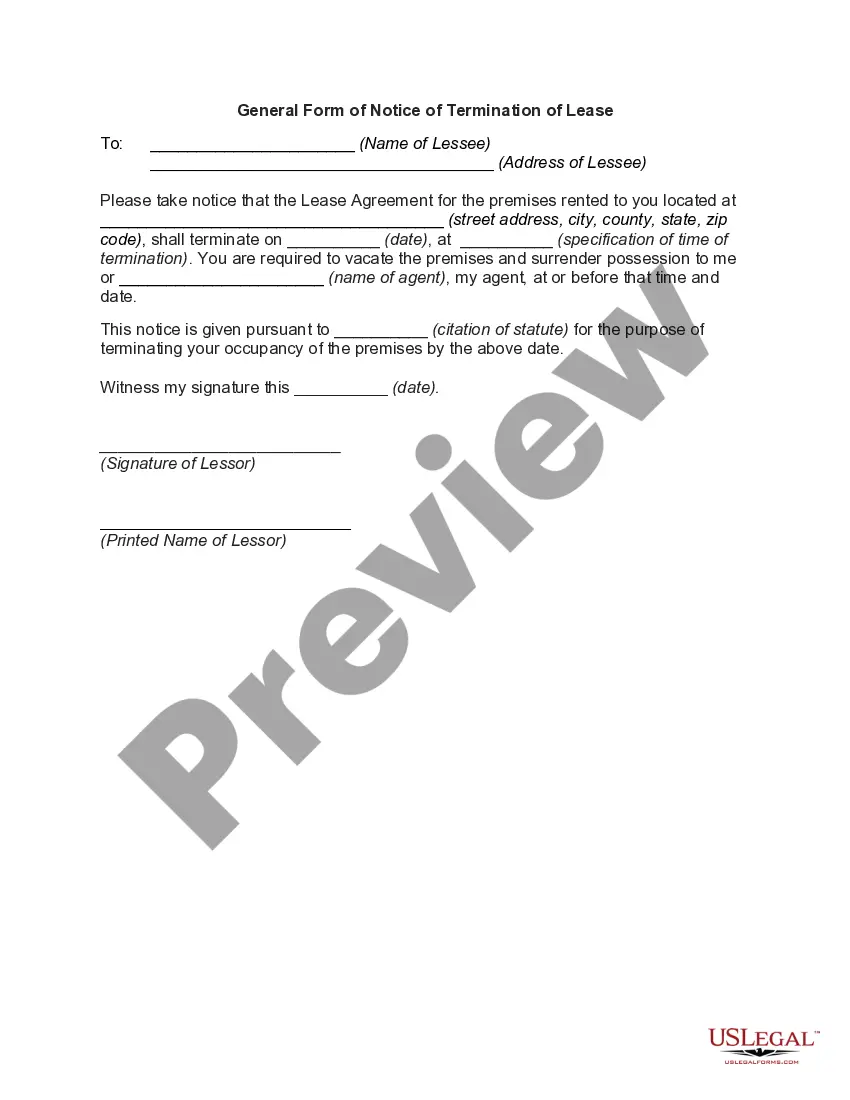
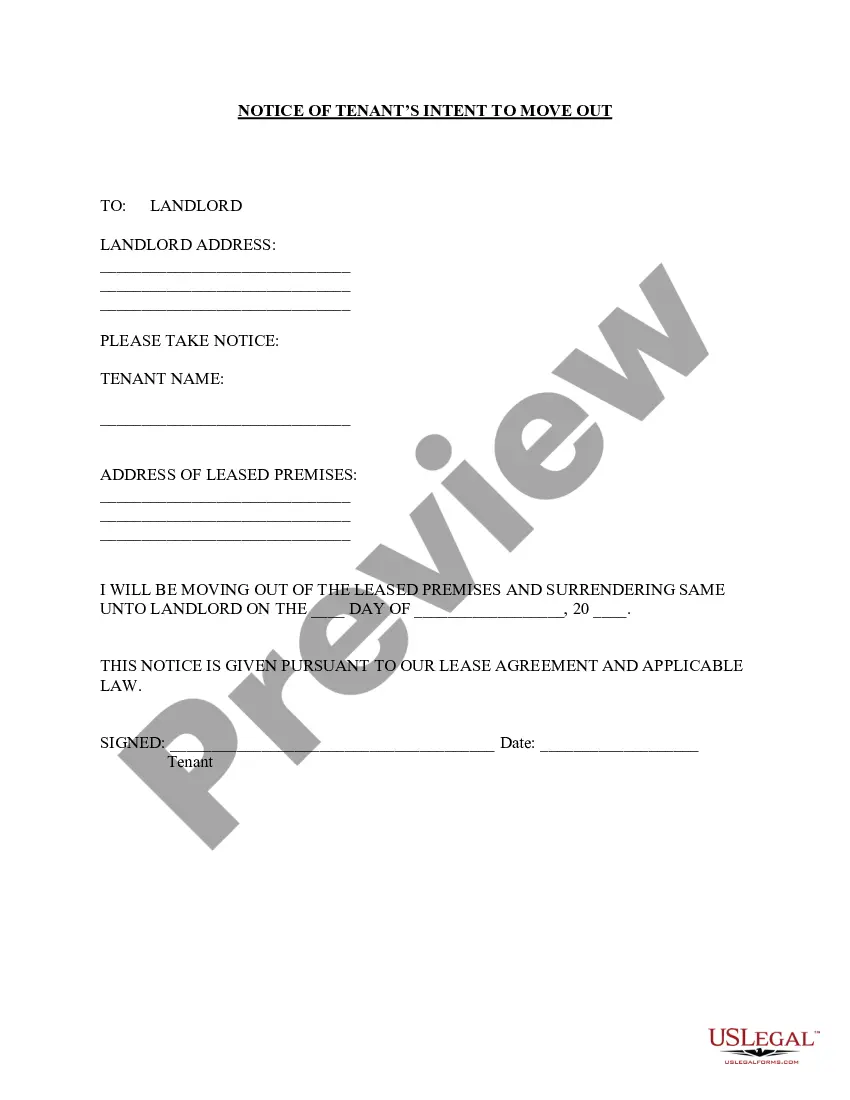
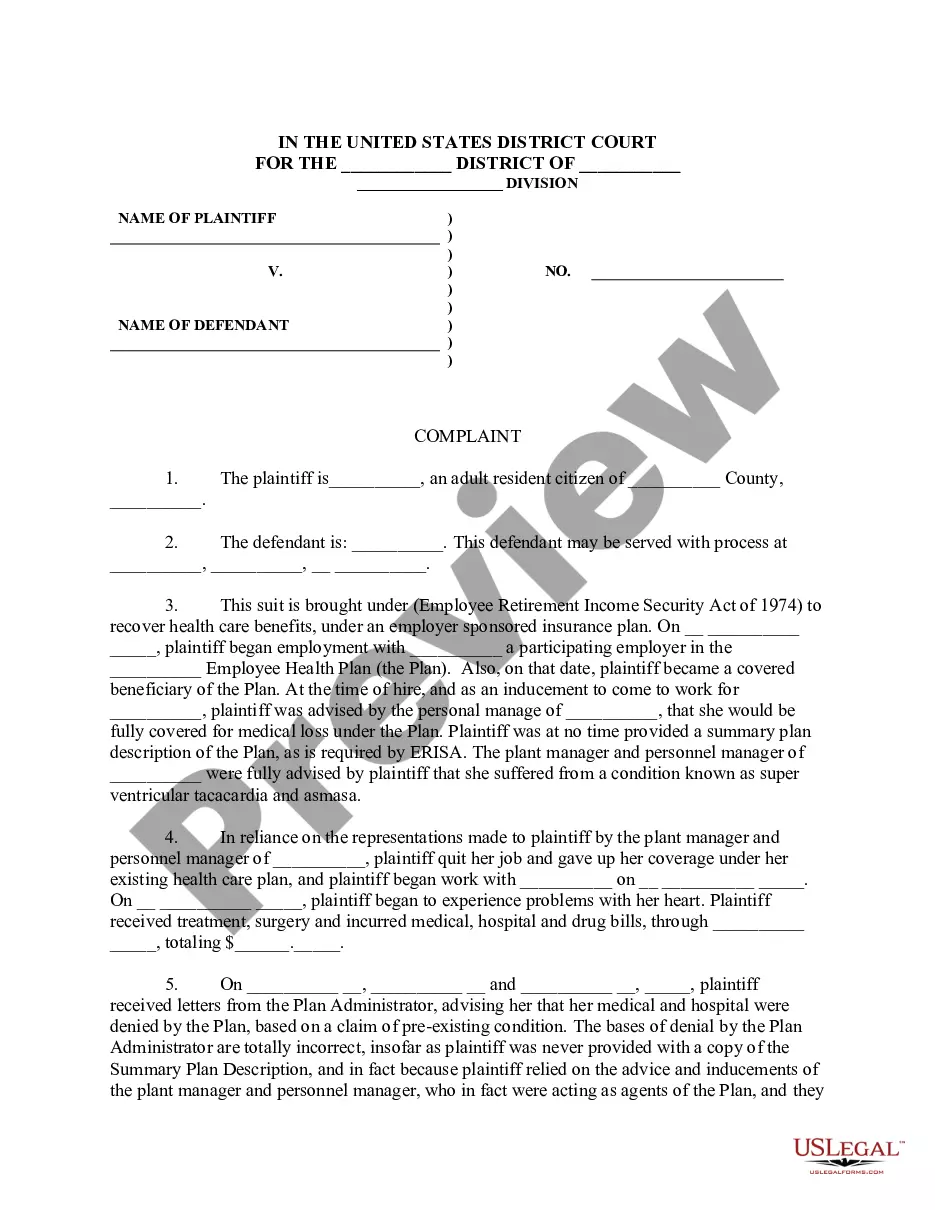
An example of a moving out notice includes a header stating 'Notice to Residents.' In the body, mention the tenant's name, the property's address, and the date they are expected to vacate. Ensure to include your contact information and any specific instructions regarding the return of keys or other responsibilities. Using a reliable resource like US Legal Forms can help ensure all necessary components are included.
Writing a vacate notice letter is straightforward. Start by including your name and the tenant's name, followed by a statement that indicates the notice to residents to vacate the premises. Specify the move-out date and detail any conditions related to the return of the security deposit. US Legal Forms offers customizable templates to assist in drafting a formal and compliant notice.
To write a letter to your tenant, begin with a clear subject line, such as 'Notice to Residents.' Address your tenant by name and clearly state the purpose of the letter. Be concise in your message, outline any necessary actions, and conclude with your contact information for follow-up questions. Utilizing templates from platforms like US Legal Forms can streamline this process.
To write a notice to a tenant, be clear and concise, stating the date and purpose of the notice. Include specific details that the tenant needs to know, like access times or issues requiring attention. It’s essential to keep a professional tone and provide contact information for further questions. If you need templates or assistance, platforms like Us Legal Forms offer helpful resources.
Landlords may conduct random walkthroughs to ensure proper property upkeep or confirm tenant compliance with the lease. Such actions serve as a notice to residents about the importance of maintaining the space. While some tenants may find these visits intrusive, they are often necessary for property management. Open dialogue can help alleviate concerns on both sides.
No, landlords are typically required to announce their visit in advance. A notice to residents should inform you of their plans to enter your home. This requirement ensures that residents feel secure and respected in their living environment. If you believe your rights are being violated, consider seeking legal guidance.
Landlords usually cannot show up unexpectedly unless there is an emergency. As a notice to residents, landlords should communicate their intentions to enter the property. If they do not provide reasonable notice, this may violate tenant rights. Clear communication can help prevent misunderstandings and maintain a good relationship.
In general, landlords must provide notice to residents before entering the property. Laws often require a proper advance notice unless there is an emergency. Understanding your local landlord-tenant laws is essential to interpret these guidelines correctly. Keep in mind that respecting privacy is a crucial aspect of the landlord-tenant relationship.