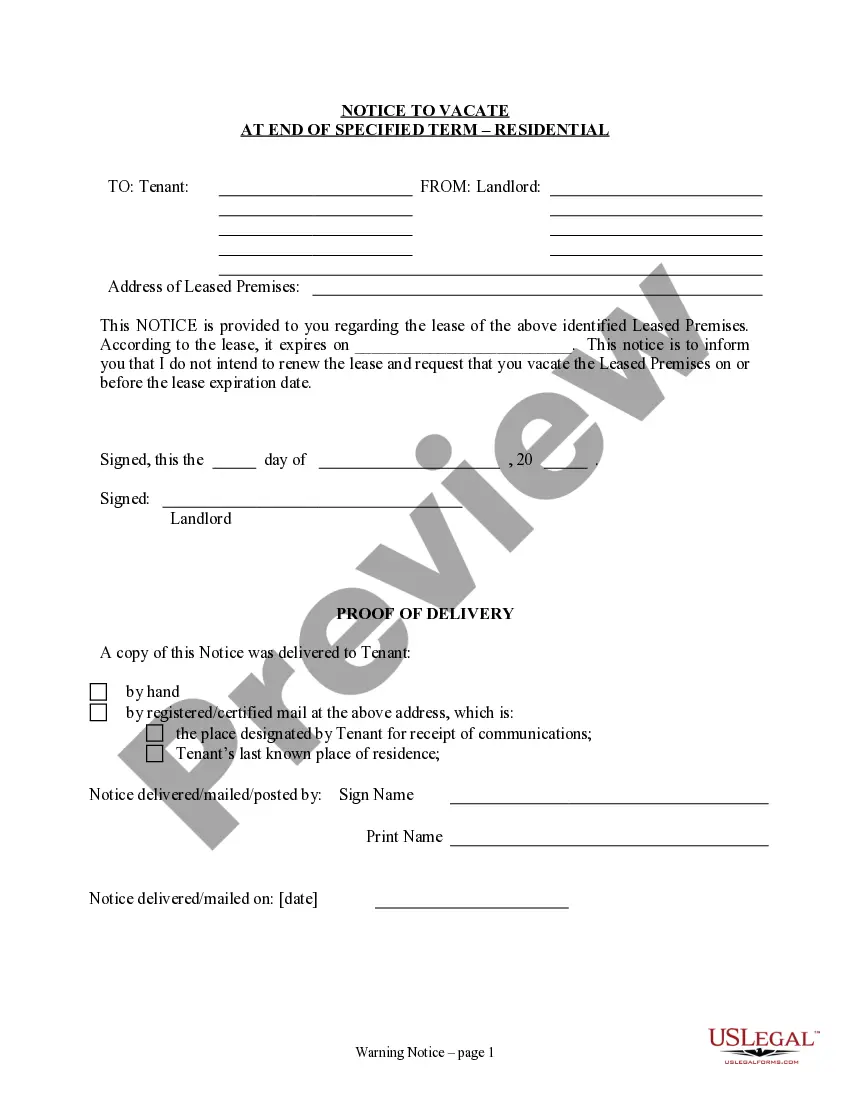
Not Renew Landlord For Deposit
Description

Get your form ready online
Our built-in tools help you complete, sign, share, and store your documents in one place.
Make edits, fill in missing information, and update formatting in US Legal Forms—just like you would in MS Word.
Download a copy, print it, send it by email, or mail it via USPS—whatever works best for your next step.
Sign and collect signatures with our SignNow integration. Send to multiple recipients, set reminders, and more. Go Premium to unlock E-Sign.
If this form requires notarization, complete it online through a secure video call—no need to meet a notary in person or wait for an appointment.
We protect your documents and personal data by following strict security and privacy standards.

Make edits, fill in missing information, and update formatting in US Legal Forms—just like you would in MS Word.

Download a copy, print it, send it by email, or mail it via USPS—whatever works best for your next step.

Sign and collect signatures with our SignNow integration. Send to multiple recipients, set reminders, and more. Go Premium to unlock E-Sign.

If this form requires notarization, complete it online through a secure video call—no need to meet a notary in person or wait for an appointment.

We protect your documents and personal data by following strict security and privacy standards.
Looking for another form?









Form popularity
FAQ
While you cannot directly force your landlord to return your deposit, you can take specific actions to encourage compliance. Start by contacting your landlord and formally requesting the return of your deposit. If that does not work, you may need to seek legal advice or mediation services. Using resources from US Legal Forms can provide you with the tools and information necessary to navigate this process effectively.
In the UK, you can indeed take legal action against your landlord for failing to return your deposit. If your landlord does not follow the legal procedure for returning a deposit, you may have grounds to sue. It's important to gather all relevant documentation, including your tenancy agreement and any correspondence with your landlord. Consider using platforms like US Legal Forms to help you understand the process and prepare any necessary paperwork.
In New York, landlords are required to return security deposits regardless of whether a lease was formally signed, as long as you maintained residency. However, your ability to retrieve the deposit may depend on your agreement with the landlord and any verbal commitments. Communicating effectively with your landlord about your situation is crucial, especially if you aim to not renew landlord for deposit reasons. If issues arise, consider utilizing US Legal Forms to draft a formal request to optimize your chances of getting your deposit back.
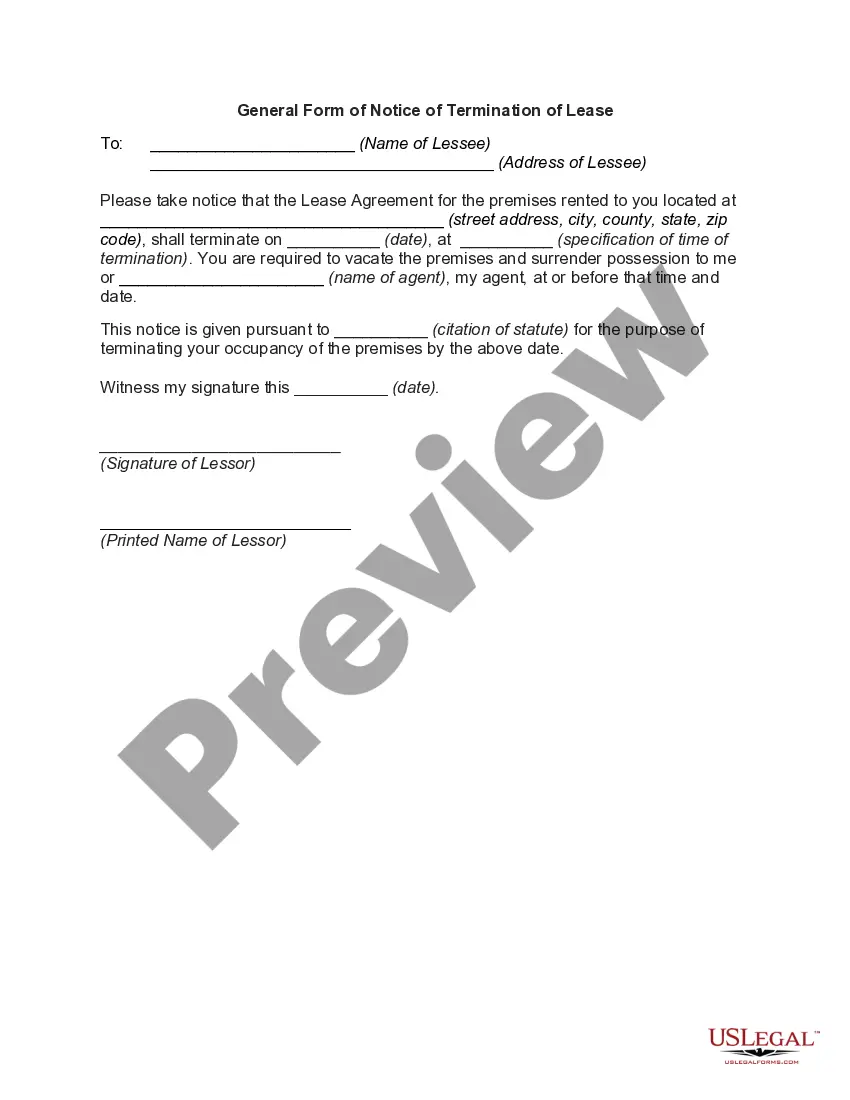
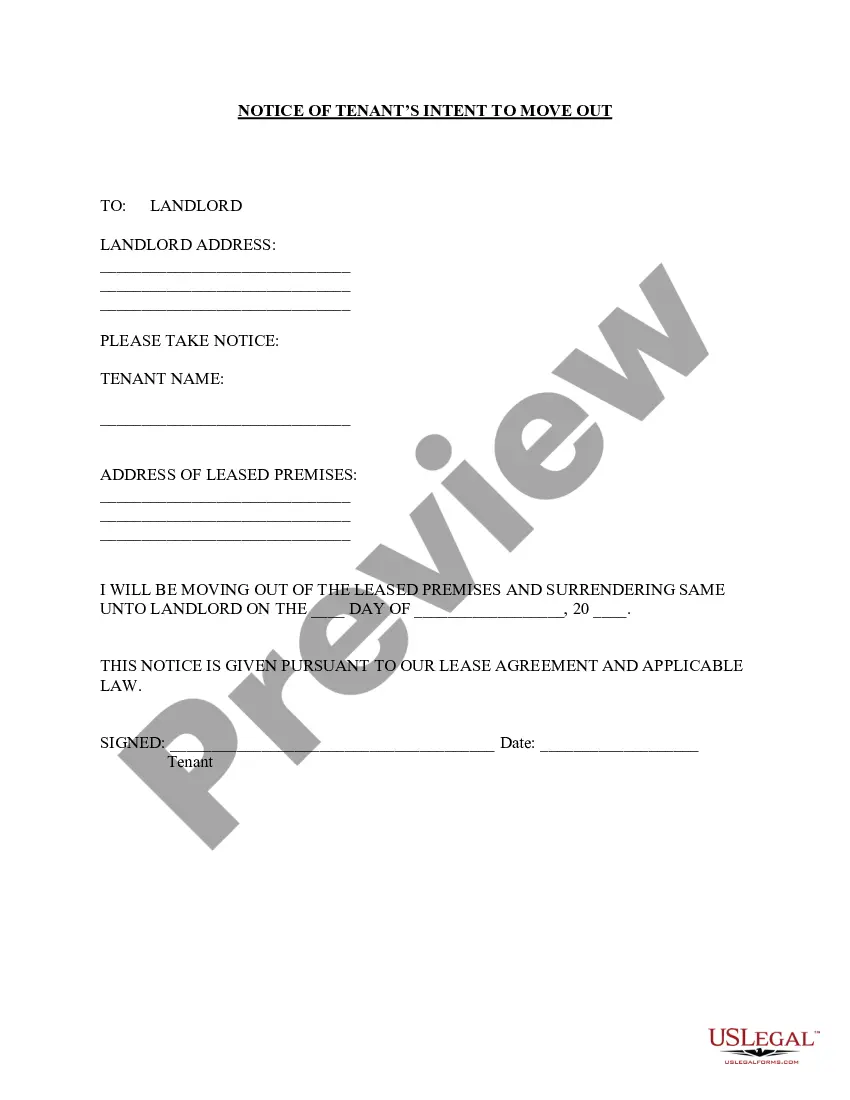
When writing a letter to not renew a contract, start by clearly stating your intent to not renew, followed by your reasons, if applicable. Include essential details such as your name, the property address, and the date. A well-structured letter ensures clear communication with your landlord and can help manage any financial aspects, including your security deposit. Using templates from platforms like US Legal Forms can streamline this process and make your letter professional.
Accidental damage refers to harm that occurs unexpectedly, such as a broken window or stained carpet caused by a tenant's actions. Wear and tear, on the other hand, includes the natural deterioration that happens over time, such as faded paint or worn-out flooring. Understanding this distinction is essential, especially when you are considering whether to not renew landlord for deposit considerations related to any damages. By knowing your rights, you can navigate the return of your security deposit more effectively.
If your deposit is not returned, first review your lease agreement and communicate with your landlord. If discussions do not resolve the issue, consider filing a claim in small claims court. Document your interactions and gather evidence, as this will support your case. Platforms like uslegalforms can assist you in navigating the legal process and understanding your rights.
The timeframe for receiving your deposit back varies by state, but it's typically between 14 to 30 days. If you are not notified during this period, you can contact your landlord to inquire about the status. It’s essential to understand the laws in your state, as they can influence how quickly you will receive your funds. Utilize resources such as uslegalforms to learn more about security deposit regulations.
If you change your mind after signing a lease, the possibility of getting your deposit back depends on the lease terms. Generally, deposits are non-refundable unless specified otherwise, especially if you decide not to renew. It’s important to carefully review your lease agreement. Consulting with platforms like uslegalforms can provide guidance on your options.
If a landlord does not return the security deposit within 21 days in California, legal repercussions may arise. You could potentially file a claim in small claims court to recover your deposit. Many tenants discuss their experiences on platforms like Reddit, highlighting the importance of knowing your rights. Make sure to keep all related correspondence and documentation handy to support your case.
If a deposit is not returned, the first step is to review your lease to understand why it was withheld. Landlords must often provide a detailed list of deductions, if any, that justify holding back the funds. If disputes arise over the deposit, you may consider legal options, such as mediation or small claims court. Resources from US Legal Forms can help you navigate this situation and facilitate actions to reclaim your deposit.