Sample Corporate Records for a Tennessee Professional Corporation
What this document covers
The Sample Corporate Records for a Tennessee Professional Corporation provides essential templates for managing corporate affairs. This form is tailored specifically for Tennessee professional corporations and includes notices for meetings, shareholder resolutions, and certificates. It distinguishes itself from generic corporate forms by accommodating the unique requirements of professional entities regulated by specific licensing authorities in Tennessee.
What’s included in this form
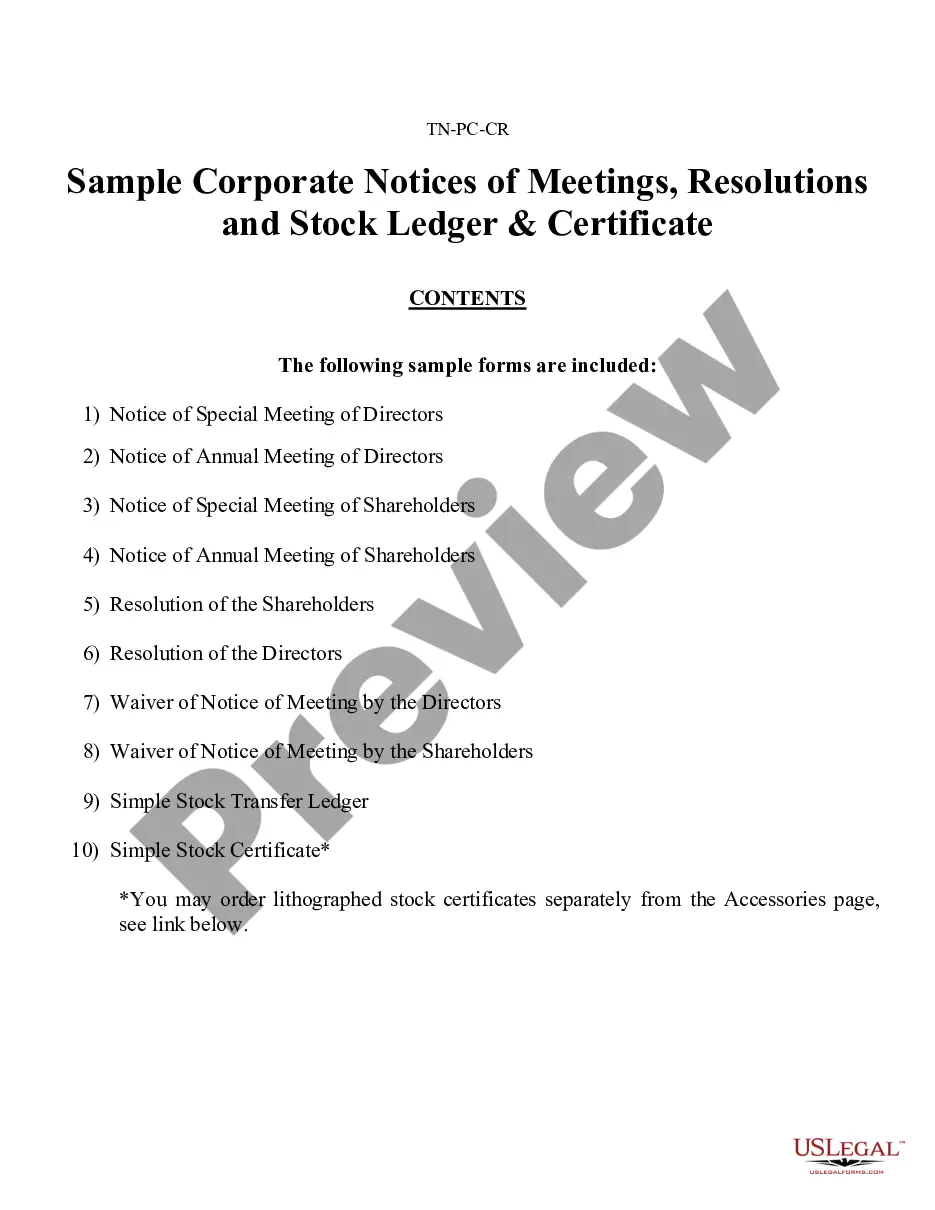
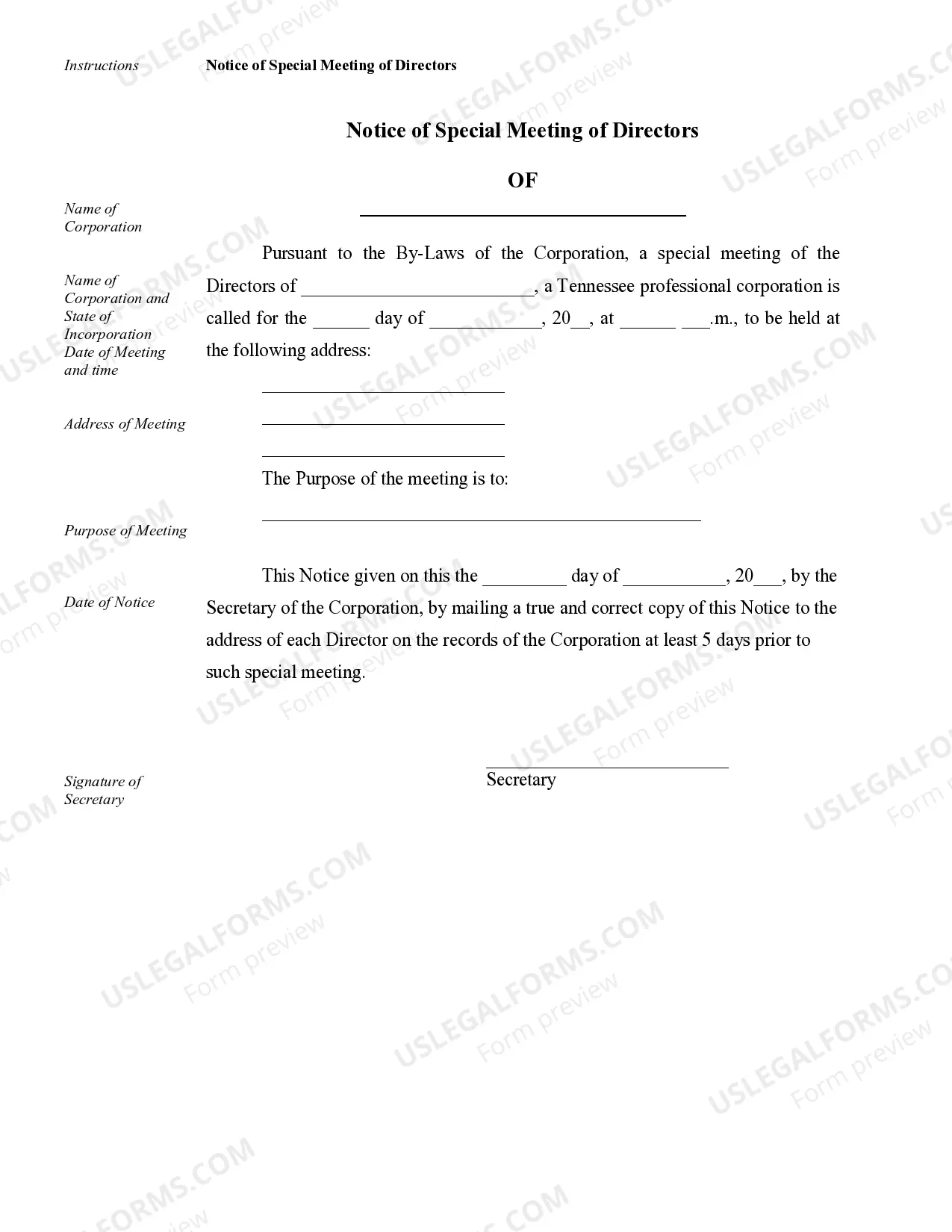
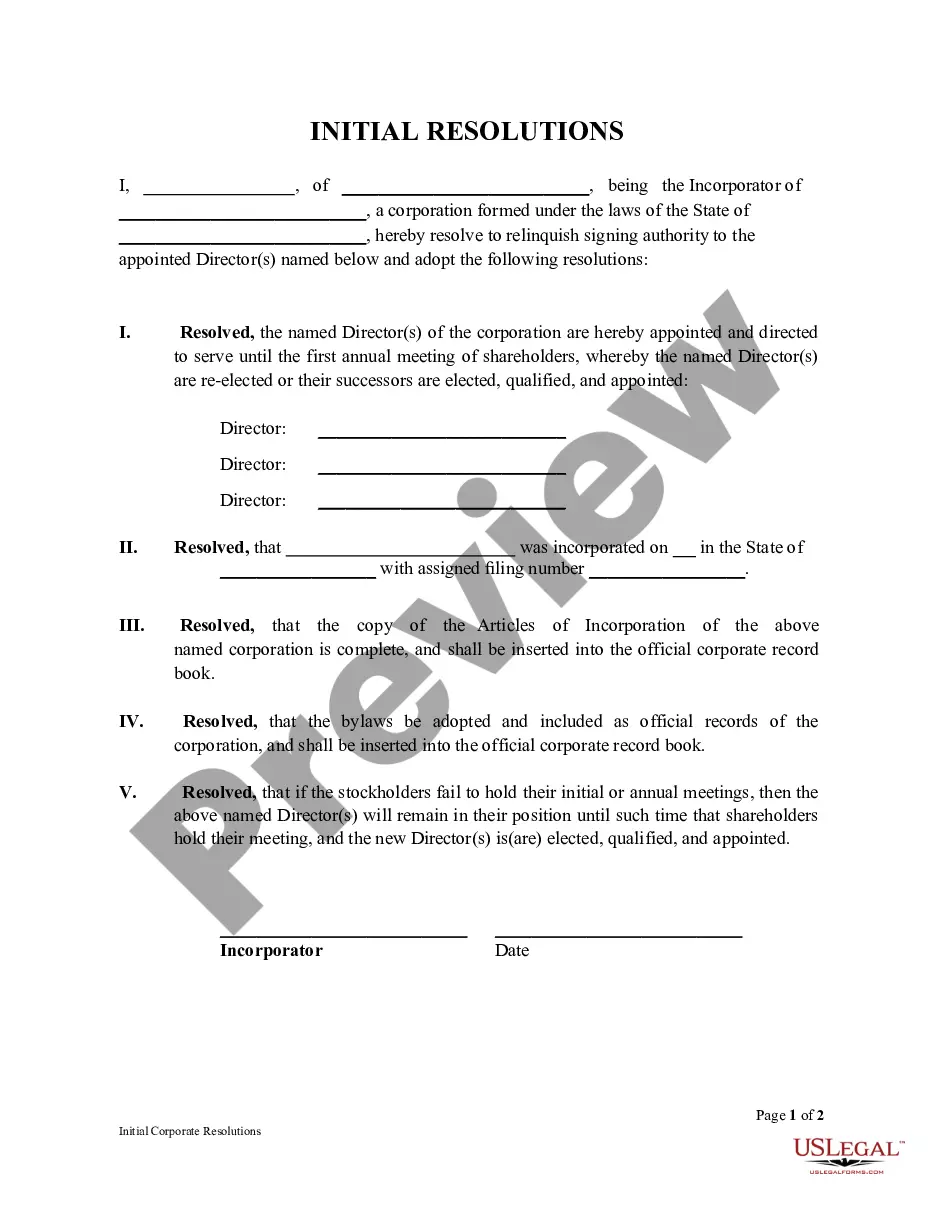
- Notice of Special Meeting of Directors
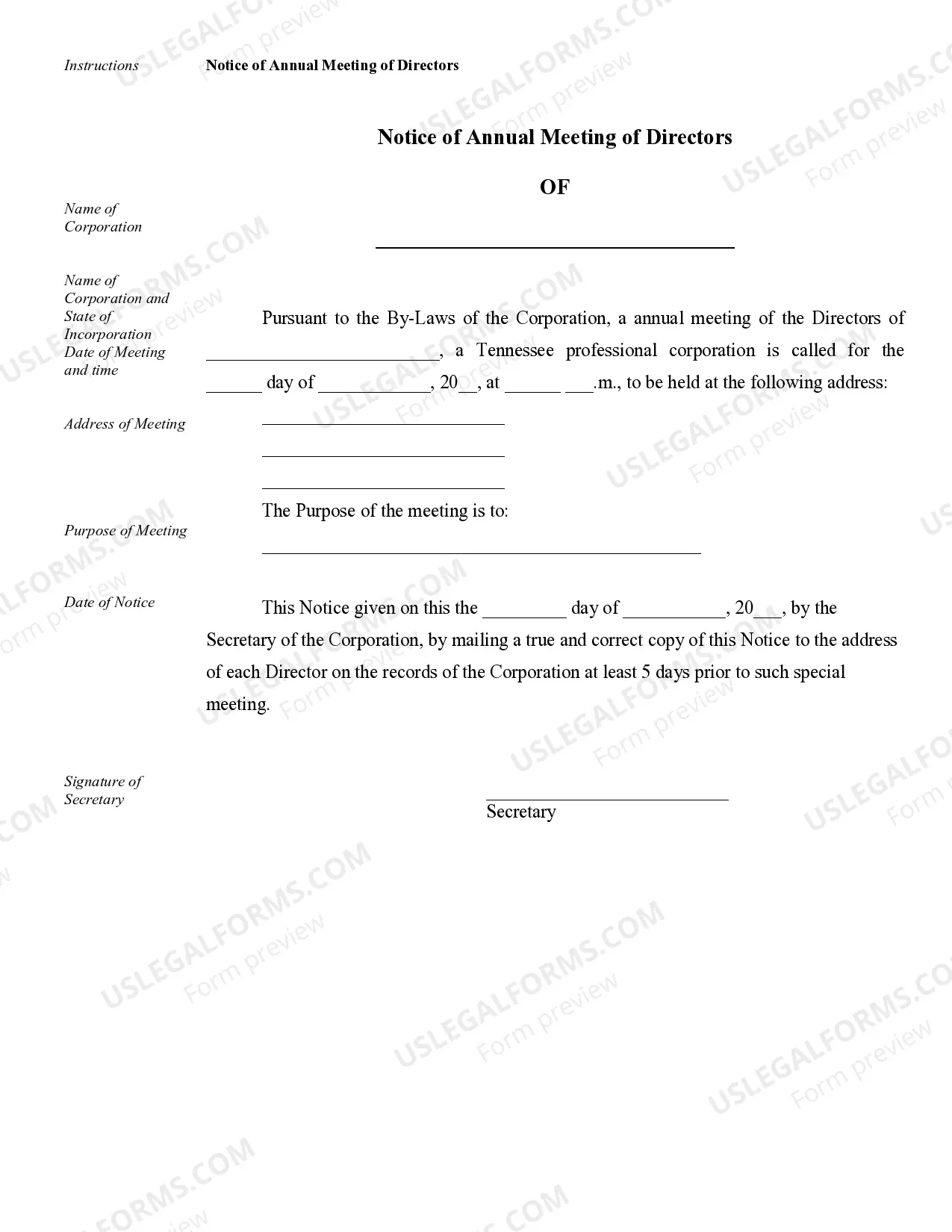
- Notice of Annual Meeting of Directors
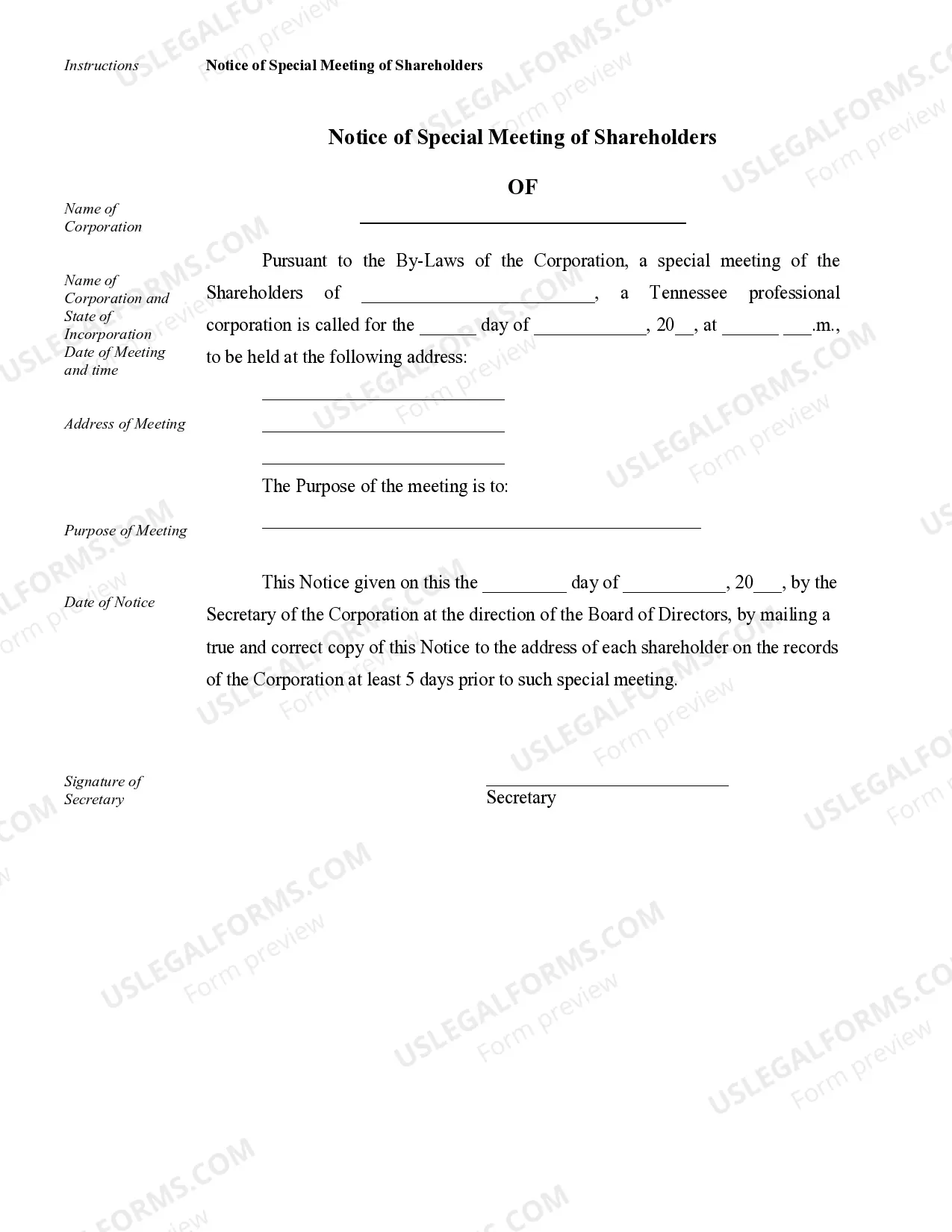
- Notice of Special Meeting of Shareholders
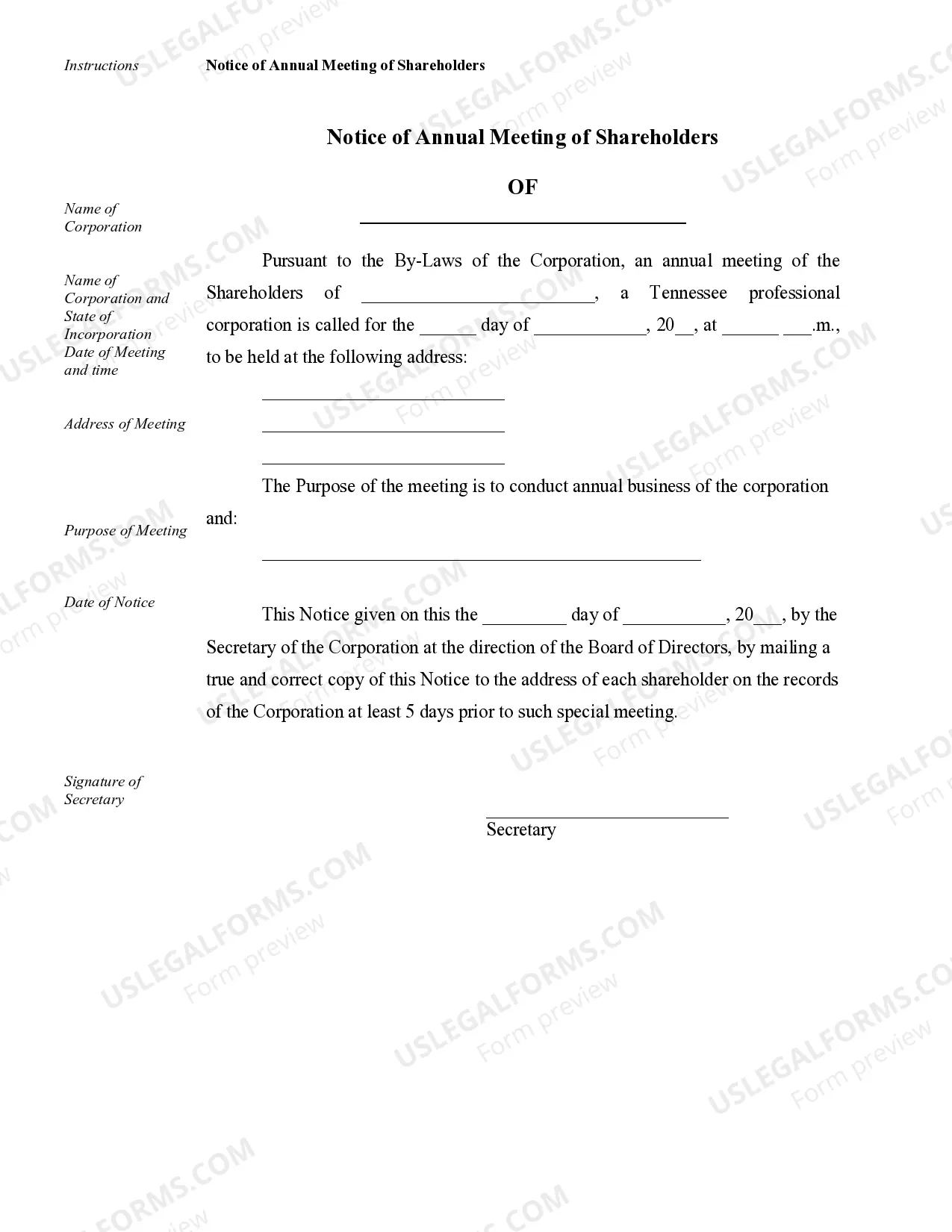
- Notice of Annual Meeting of Shareholders
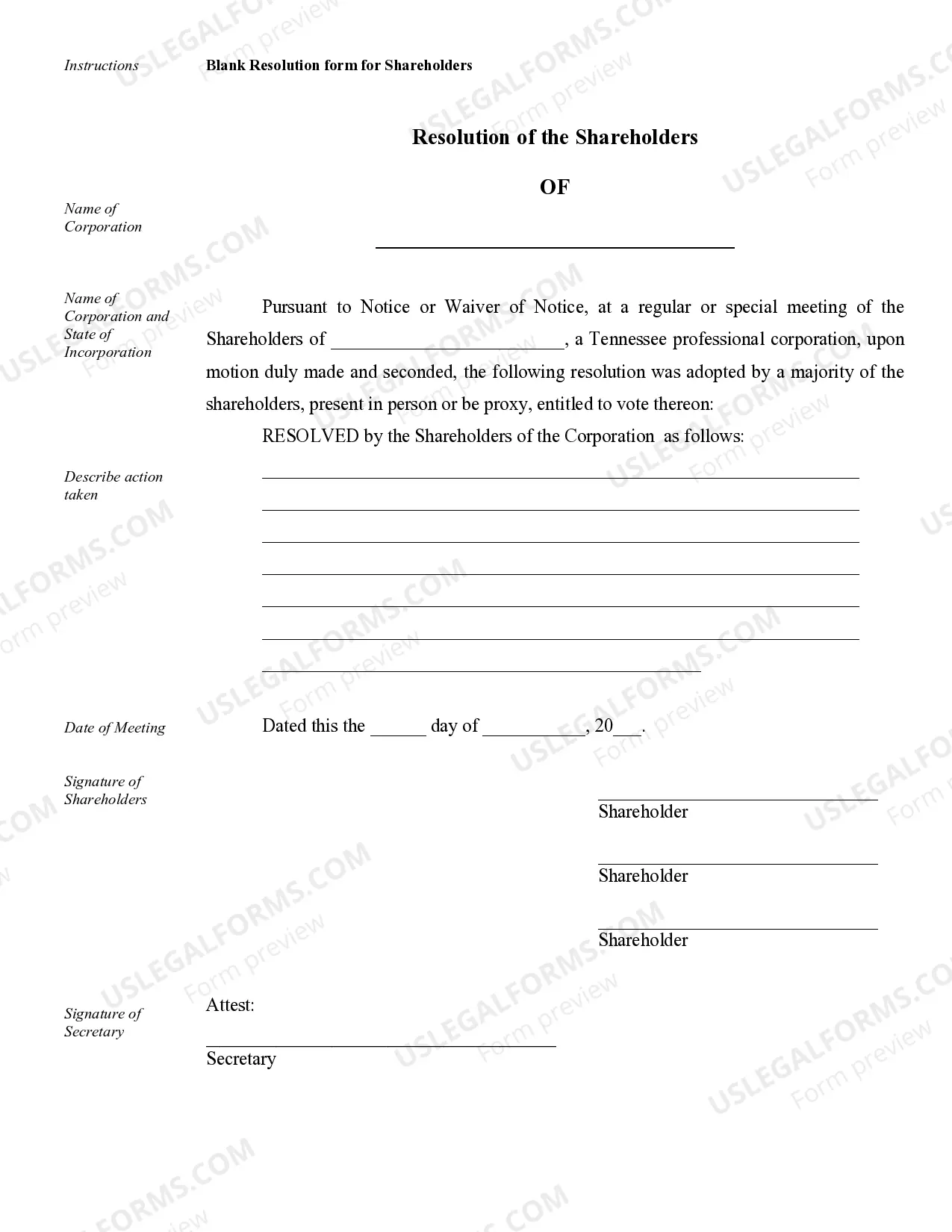
- Resolution of the Shareholders
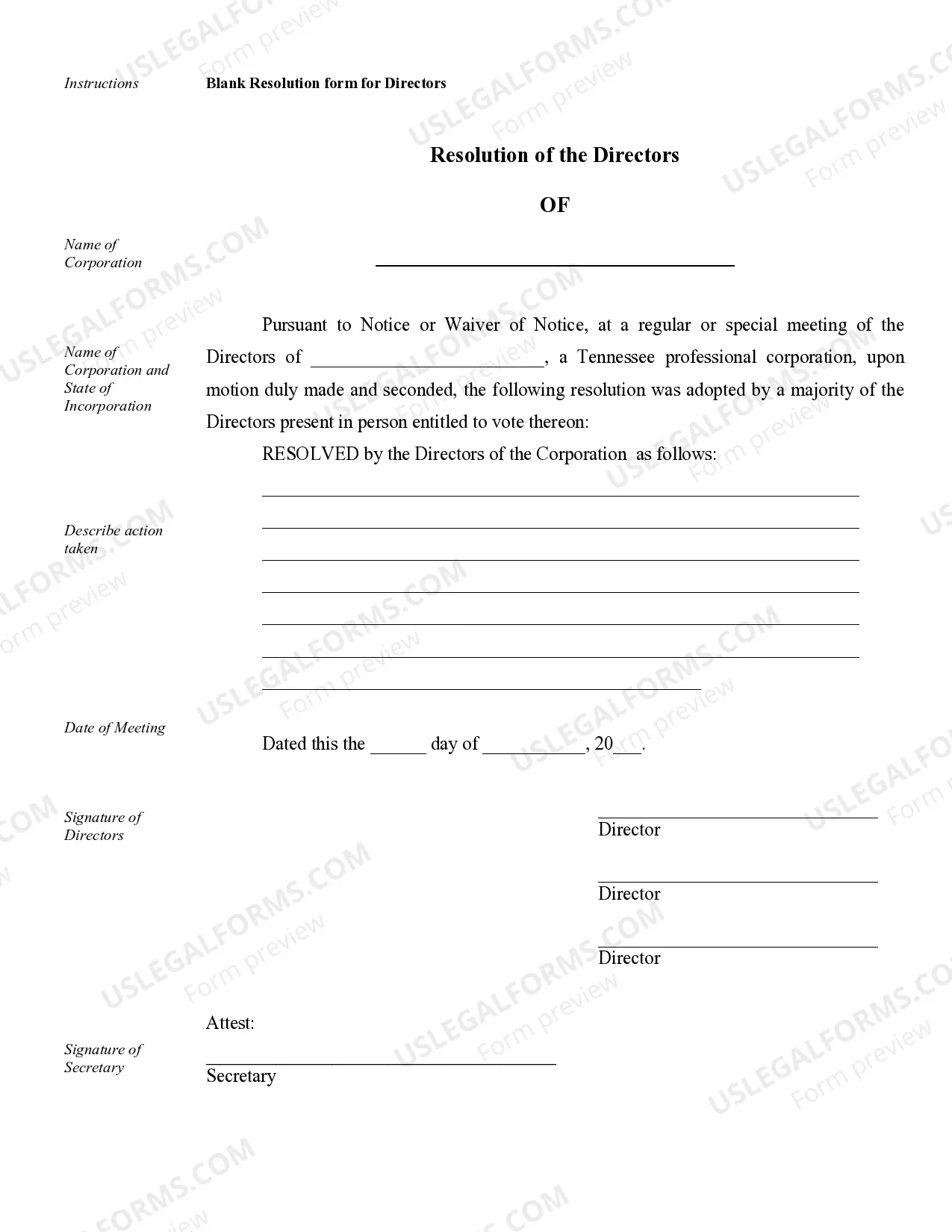
- Resolution of the Directors
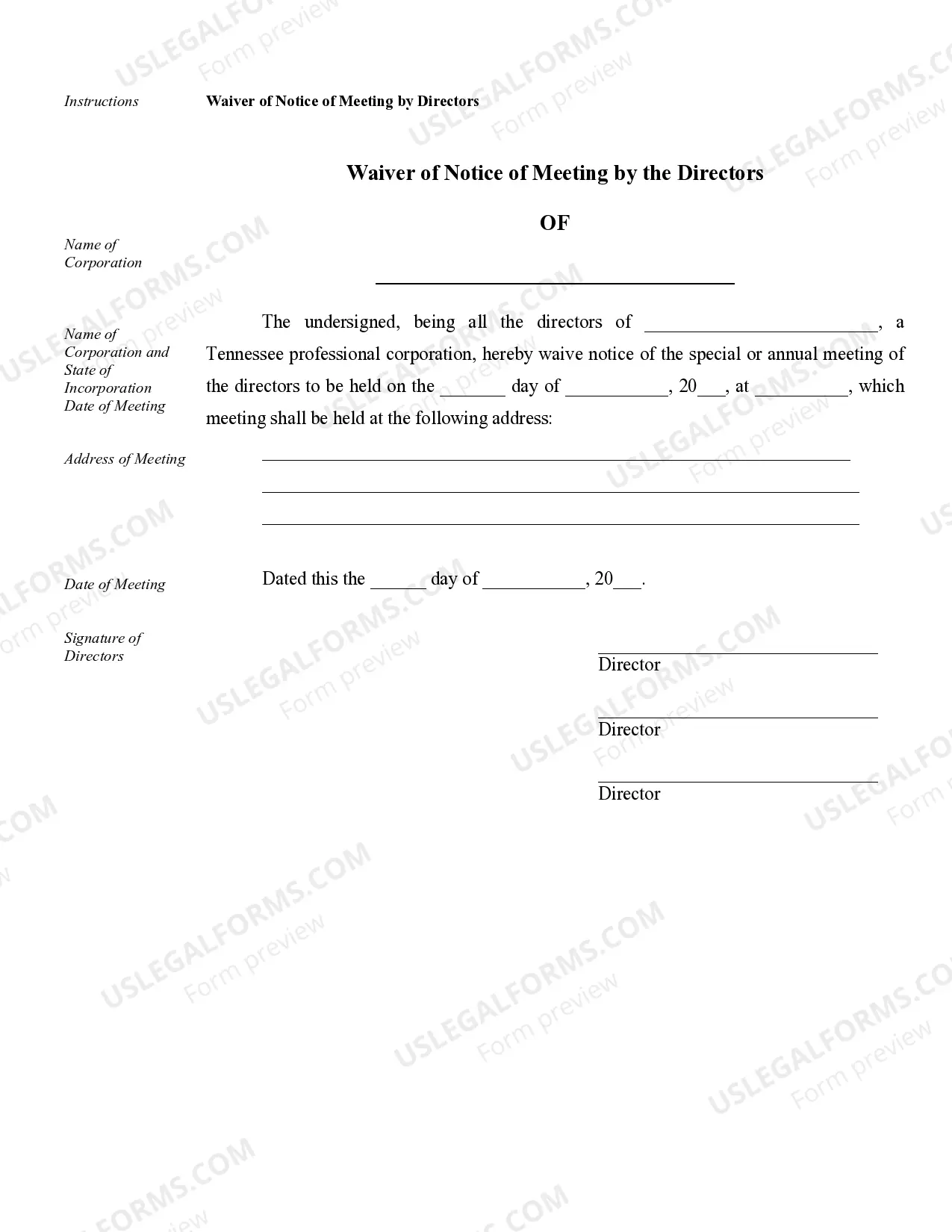
- Waiver of Notice of Meeting by the Directors
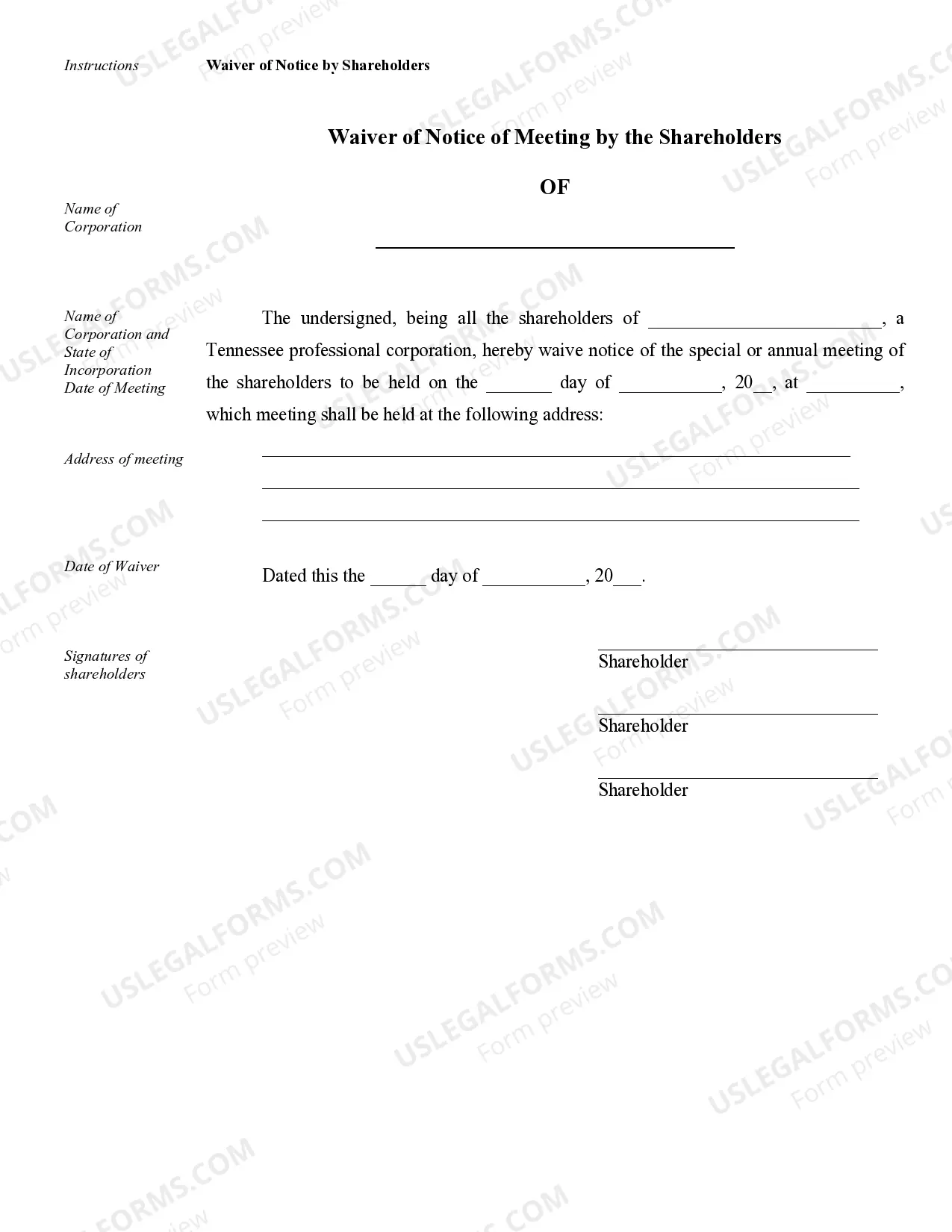
- Waiver of Notice of Meeting by the Shareholders
- Simple Stock Transfer Ledger
- Simple Stock Certificate

When to use this document
This form should be used when a professional corporation in Tennessee needs to document corporate meetings, secure shareholder resolutions, or maintain accurate records related to stock ownership and transfers. It's particularly useful during annual or special meetings where significant company decisions are made or when maintaining compliance with state regulations.
Who can use this document
This form is suitable for:
- Directors and officers of Tennessee professional corporations
- Shareholders of professional corporations needing to document meetings and resolutions
- Legal and compliance professionals working with corporate governance in Tennessee
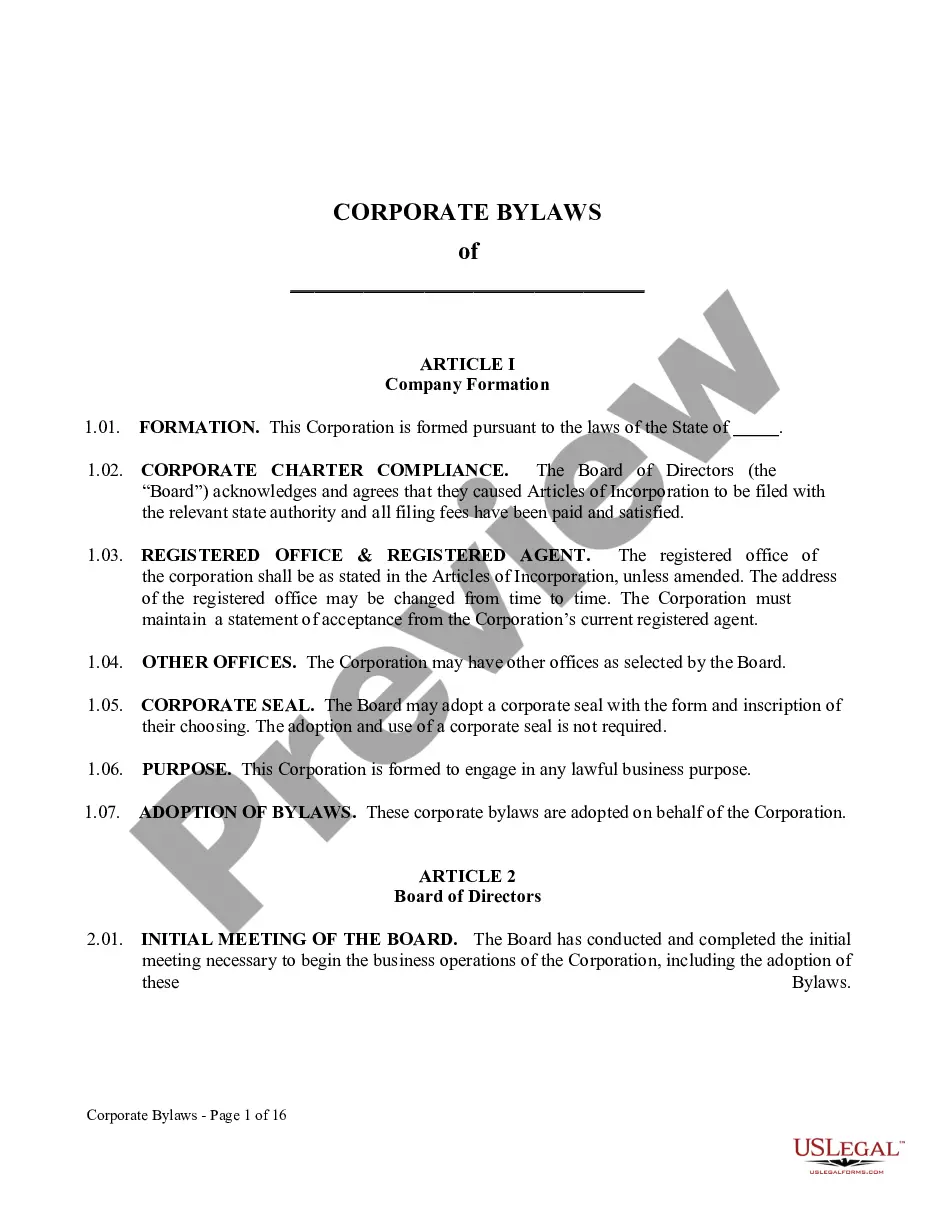
- New and existing professional corporations looking to establish proper corporate records
How to complete this form
- Fill in the name of the corporation and its state of incorporation.
- Enter the date, time, and address of the meeting for directors or shareholders.
- State the purpose of the meeting clearly in the designated section.
- Ensure the date of notice is recorded to comply with notification periods.
- Include the signature of the secretary to validate the notice or resolution.
Is notarization required?
This form does not typically require notarization unless specified by local law. Always verify your specific corporate bylaws and state regulations to ensure compliance.
Get your form ready online
Our built-in tools help you complete, sign, share, and store your documents in one place.
Make edits, fill in missing information, and update formatting in US Legal Forms—just like you would in MS Word.
Download a copy, print it, send it by email, or mail it via USPS—whatever works best for your next step.
Sign and collect signatures with our SignNow integration. Send to multiple recipients, set reminders, and more. Go Premium to unlock E-Sign.
If this form requires notarization, complete it online through a secure video call—no need to meet a notary in person or wait for an appointment.
We protect your documents and personal data by following strict security and privacy standards.

Make edits, fill in missing information, and update formatting in US Legal Forms—just like you would in MS Word.

Download a copy, print it, send it by email, or mail it via USPS—whatever works best for your next step.

Sign and collect signatures with our SignNow integration. Send to multiple recipients, set reminders, and more. Go Premium to unlock E-Sign.

If this form requires notarization, complete it online through a secure video call—no need to meet a notary in person or wait for an appointment.

We protect your documents and personal data by following strict security and privacy standards.
Mistakes to watch out for
- Failing to provide adequate notice to directors or shareholders before meetings.
- Incorrectly filling out dates or purpose of meetings.
- Not obtaining necessary signatures on resolutions and documents.
- Using outdated forms not reflective of the current corporation's status.
Why complete this form online
- Convenience of downloading and editing the forms to meet specific corporate needs.
- Access to attorney-drafted templates ensures legal accuracy.
- Ability to quickly update and customize records as needed.
- Save time on paperwork with easily accessible electronic formats.
Legal use & context
- These forms are legally recognized in Tennessee for maintaining corporate records.
- Proper usage guarantees compliance with the Tennessee Business Corporation Act.
- Forms serve as essential documentation for corporate meetings and resolutions.
What to keep in mind
- The form is essential for managing corporate records for Tennessee professional corporations.
- It includes notices and resolutions that adhere to state-specific legal requirements.
- Proper completion is crucial for maintaining legal compliance and good corporate governance.
Looking for another form?
Form popularity
FAQ
(1) It is an artificial being; (2) Created by operation of law; (3) With right of succession; (4) Has the powers, attributes, and properties as expressly authorized by law or incident to its existence.
The IRS categorizes professional corporations as C corporations. They are considered taxpayers and must pay income taxes at the corporate rate. In some states, physicians are not allowed to form professional corporations and must instead establish professional associations.
Professional corporations or professional service corporation (abbreviated as PC or PSC) are those corporate entities for which many corporation statutes make special provision, regulating the use of the corporate form by licensed professionals such as attorneys, architects, engineers, public accountants and physicians
A corporation is a legal entity, meaning it is a separate entity from its owners who are called stockholders. A corporation is treated as a person with most of the rights and obligations of a real person. A corporation is not allowed to hold public office or vote, but it does pay income taxes.
Great companies are focused on one goal and don't get distracted from it. They're strategic.Great people who create a culture of accountability and those who aren't afraid to make decisions for the good of their team and the company. Great companies take risks, which often means they fail.
A professional corporation is one that only performs services in one, single profession. It is a specific type of corporation for professionals like doctors, lawyers, accountants, etc. The professional is able to form a corporation, but the professional remains liable for his or her own actions.
The different types of corporations and business structures. When it comes to types of corporations, there are typically four that are brought up: S corps, C corps, non-profit corporations, and LLCs.
Choose a Corporate Name. File a Corporate Charter. Appoint a Registered Agent. Prepare Corporate Bylaws. Appoint Initial Directors and Hold First Board Meeting. File Annual Report. Obtain an EIN.
Advantages of a corporation include personal liability protection, business security and continuity, and easier access to capital. Disadvantages of a corporation include it being time-consuming and subject to double taxation, as well as having rigid formalities and protocols to follow.