Trust Account For Real Estate
Description


Get your form ready online
Our built-in tools help you complete, sign, share, and store your documents in one place.
Make edits, fill in missing information, and update formatting in US Legal Forms—just like you would in MS Word.
Download a copy, print it, send it by email, or mail it via USPS—whatever works best for your next step.
Sign and collect signatures with our SignNow integration. Send to multiple recipients, set reminders, and more. Go Premium to unlock E-Sign.
If this form requires notarization, complete it online through a secure video call—no need to meet a notary in person or wait for an appointment.
We protect your documents and personal data by following strict security and privacy standards.

Make edits, fill in missing information, and update formatting in US Legal Forms—just like you would in MS Word.

Download a copy, print it, send it by email, or mail it via USPS—whatever works best for your next step.

Sign and collect signatures with our SignNow integration. Send to multiple recipients, set reminders, and more. Go Premium to unlock E-Sign.

If this form requires notarization, complete it online through a secure video call—no need to meet a notary in person or wait for an appointment.

We protect your documents and personal data by following strict security and privacy standards.
Looking for another form?








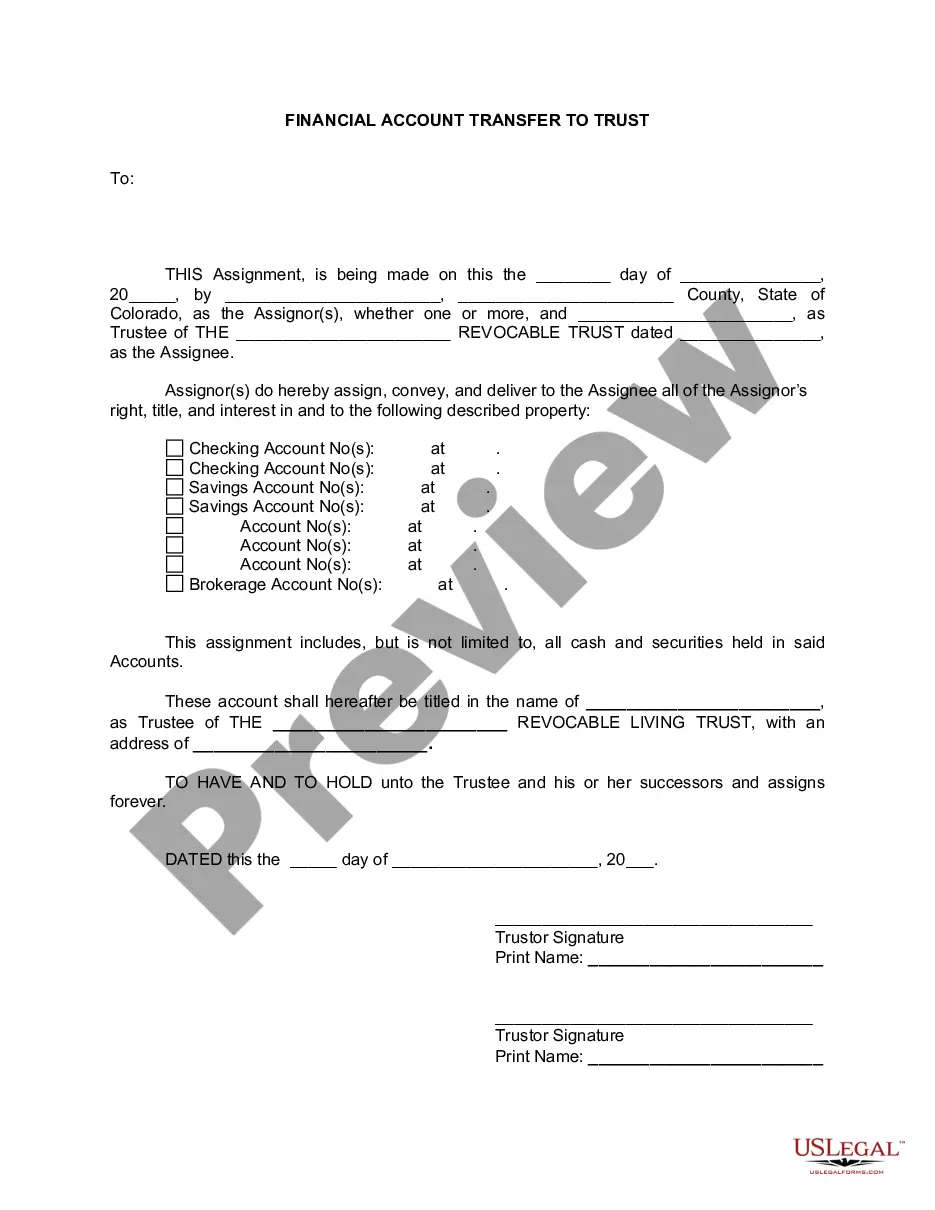
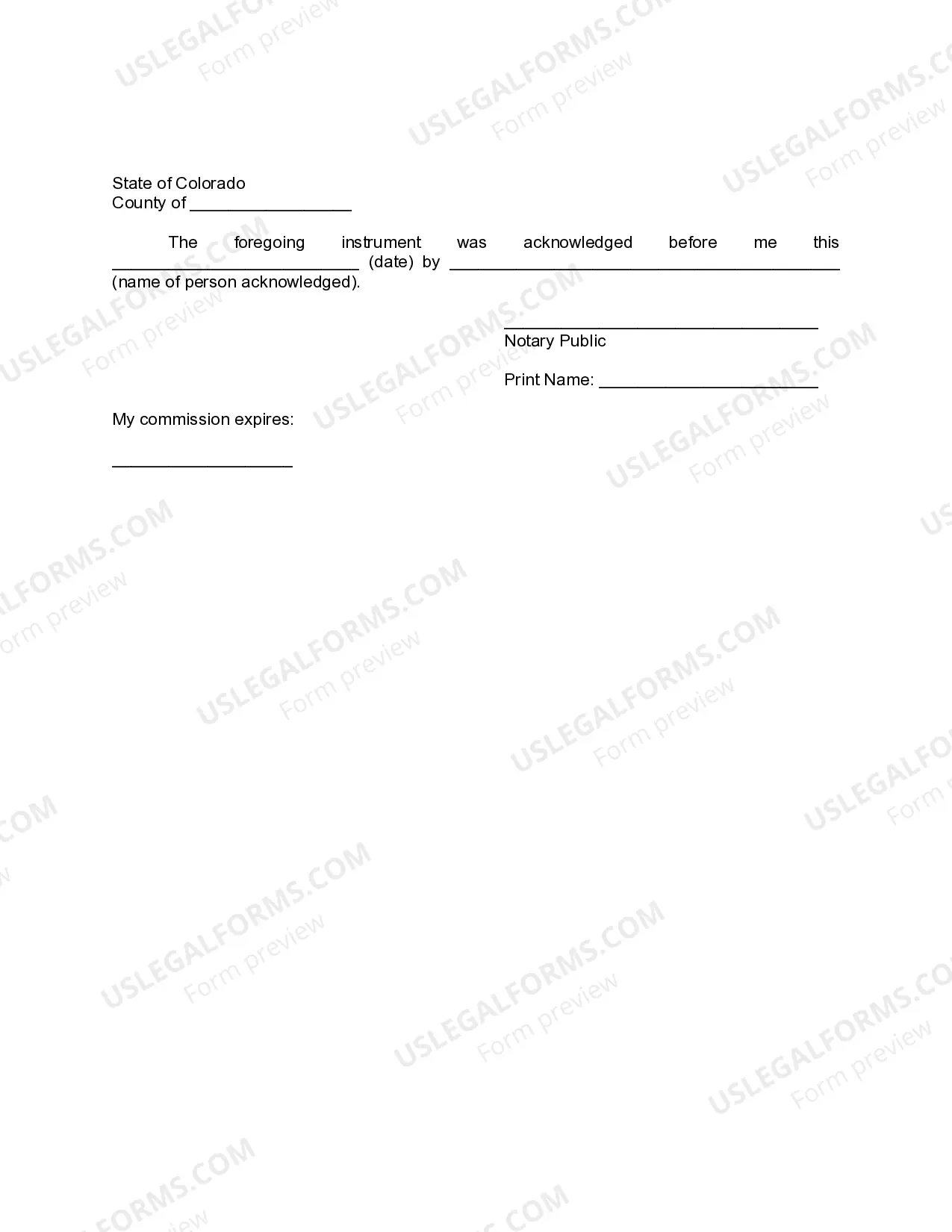
How to fill out Colorado Financial Account Transfer To Living Trust?
- For existing users, log in to your account, verify your subscription status, and download the form template you need directly by clicking the Download button.
- If you're new to US Legal Forms, start by previewing available forms to identify the one that meets your specific requirements and conforms to your local jurisdiction.
- Should you need a different template, utilize the Search tab to find alternatives that better suit your needs.
- Once you've selected the appropriate form, click on the Buy Now button and choose your preferred subscription plan. Be prepared to create an account for library access.
- Finally, complete your purchase by entering your payment details, either via credit card or PayPal. After payment, download the form and save it to your device, accessible later in the My Forms section of your profile.
By following these steps, you can efficiently acquire the necessary documentation to establish a trust account for real estate transactions.
US Legal Forms empowers users with a vast legal library and expert assistance, ensuring you can navigate legal processes confidently. Start your journey now!
Form popularity
FAQ
A common example of a trust account in real estate is an escrow account, where funds are held until the completion of a property sale. This mechanism ensures that buyers' deposits are secure while providing sellers with the assurance that payment will occur. By utilizing a trust account for real estate, both parties can confidently navigate the transaction process.
While trusts can offer many benefits, they may also limit accessibility to funds or assets during your lifetime. Additionally, establishing a trust typically requires legal assistance, which can add to your expenses. Knowing how a trust account for real estate functions will help you weigh these drawbacks more effectively.
This decision largely depends on your parents' specific circumstances and financial goals. A trust can help in managing assets and safeguarding them from unforeseen circumstances. Consulting with a professional about setting up a trust account for real estate might provide additional benefits that suit their needs.
A family trust can create tension among family members if not all assets are shared equally or if beneficiaries disagree on management. Furthermore, the process of setting up and maintaining a family trust can also be time-consuming and may incur significant legal fees. Understanding the implications of a trust account for real estate can help mitigate these issues.
Placing assets in a trust can lead to complexities and potential costs that you might not anticipate. For instance, there are often ongoing fees related to trust management. Additionally, if the trust is not set up correctly, it may not provide the protection or tax benefits you desire, especially when considering a trust account for real estate.
Choosing the best bank to open a trust account depends on your specific needs and preferences. Look for banks that offer specialized services for trust accounts, such as knowledgeable staff and beneficial terms. It's advisable to compare fees and services between banks, as some financial institutions may provide better options for your trust account for real estate than others.
To open a trust account for your property, you need to gather relevant documentation, including the trust agreement and identification for the trustee. Visit a bank that offers trust accounts and discuss your needs with a representative. They will guide you in completing the required forms and ensure that your trust account for real estate is set up correctly.
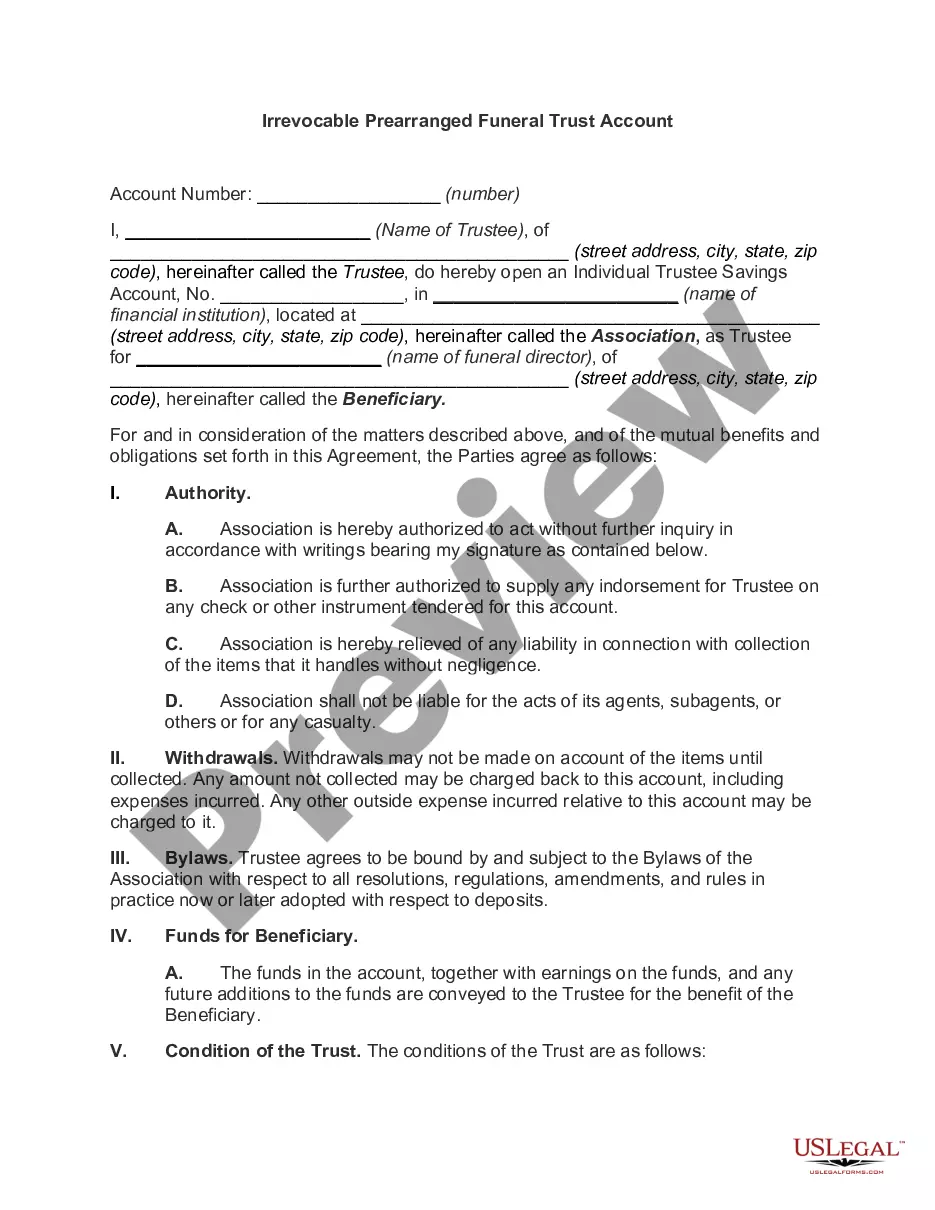
Setting up a trust fund for your property is a straightforward process. Start by defining the terms and the purpose of the trust, which will guide its management. Next, select a trustee who will manage the trust according to your instructions. Finally, you can utilize templates or services like US Legal Forms, which provide necessary documents to establish your trust account for real estate efficiently.
Placing your house in a trust can lead to several disadvantages. First, it may reduce your control over the property since you will need to follow the trust's terms. Second, there might be upfront costs associated with creating the trust and ongoing costs for managing it. Lastly, if you choose to use a corporate trustee, their fees can add up, impacting the value of your trust account for real estate.
One disadvantage of an estate trust is the potential for higher administrative costs, including taxes and fees associated with managing the trust. Additionally, the complexity of an estate trust might complicate the distribution of assets, especially if the trust involves a trust account for real estate. We recommend careful consideration and consultation with an expert to mitigate these challenges.