Bank Account For Trust
Description


Get your form ready online
Our built-in tools help you complete, sign, share, and store your documents in one place.
Make edits, fill in missing information, and update formatting in US Legal Forms—just like you would in MS Word.
Download a copy, print it, send it by email, or mail it via USPS—whatever works best for your next step.
Sign and collect signatures with our SignNow integration. Send to multiple recipients, set reminders, and more. Go Premium to unlock E-Sign.
If this form requires notarization, complete it online through a secure video call—no need to meet a notary in person or wait for an appointment.
We protect your documents and personal data by following strict security and privacy standards.

Make edits, fill in missing information, and update formatting in US Legal Forms—just like you would in MS Word.

Download a copy, print it, send it by email, or mail it via USPS—whatever works best for your next step.

Sign and collect signatures with our SignNow integration. Send to multiple recipients, set reminders, and more. Go Premium to unlock E-Sign.

If this form requires notarization, complete it online through a secure video call—no need to meet a notary in person or wait for an appointment.

We protect your documents and personal data by following strict security and privacy standards.
Looking for another form?




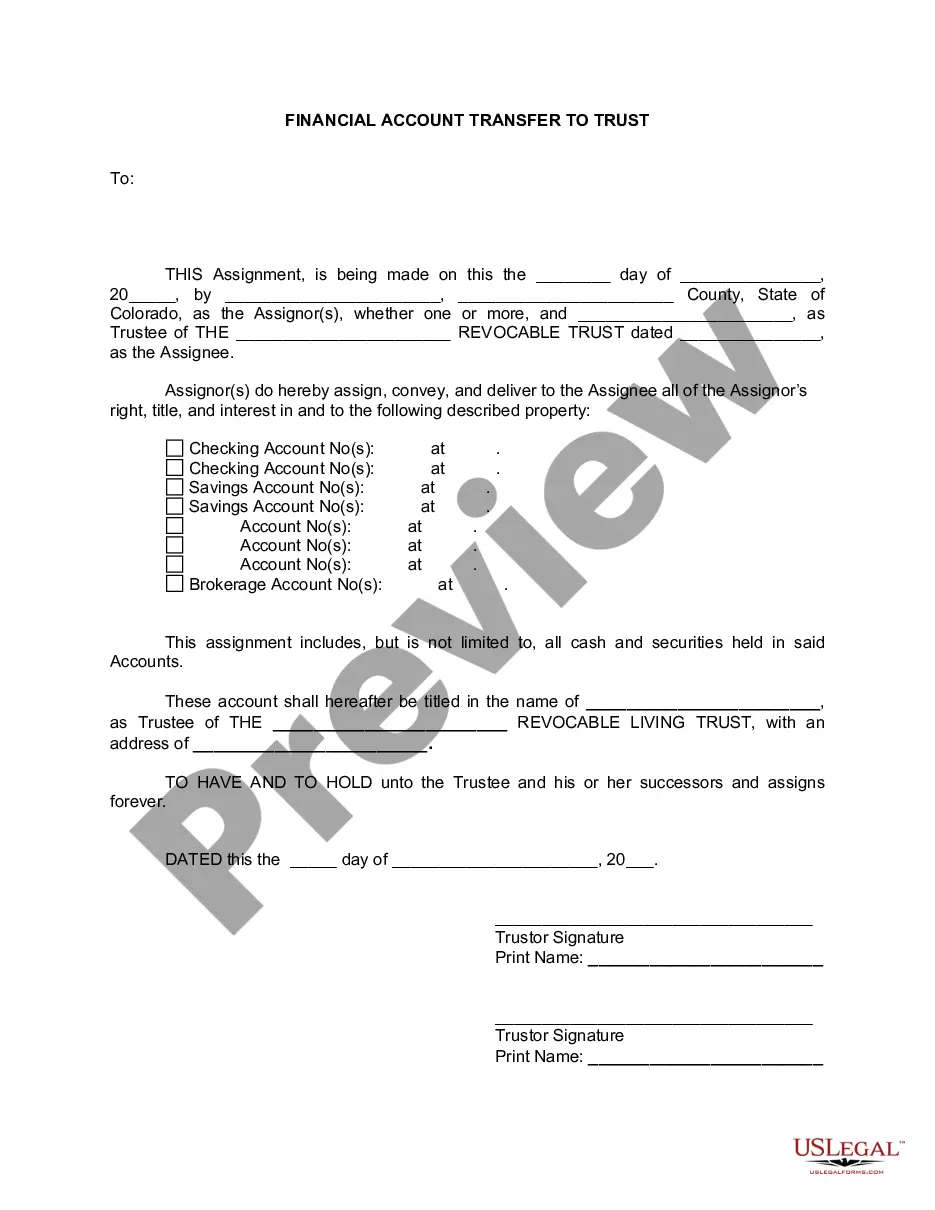
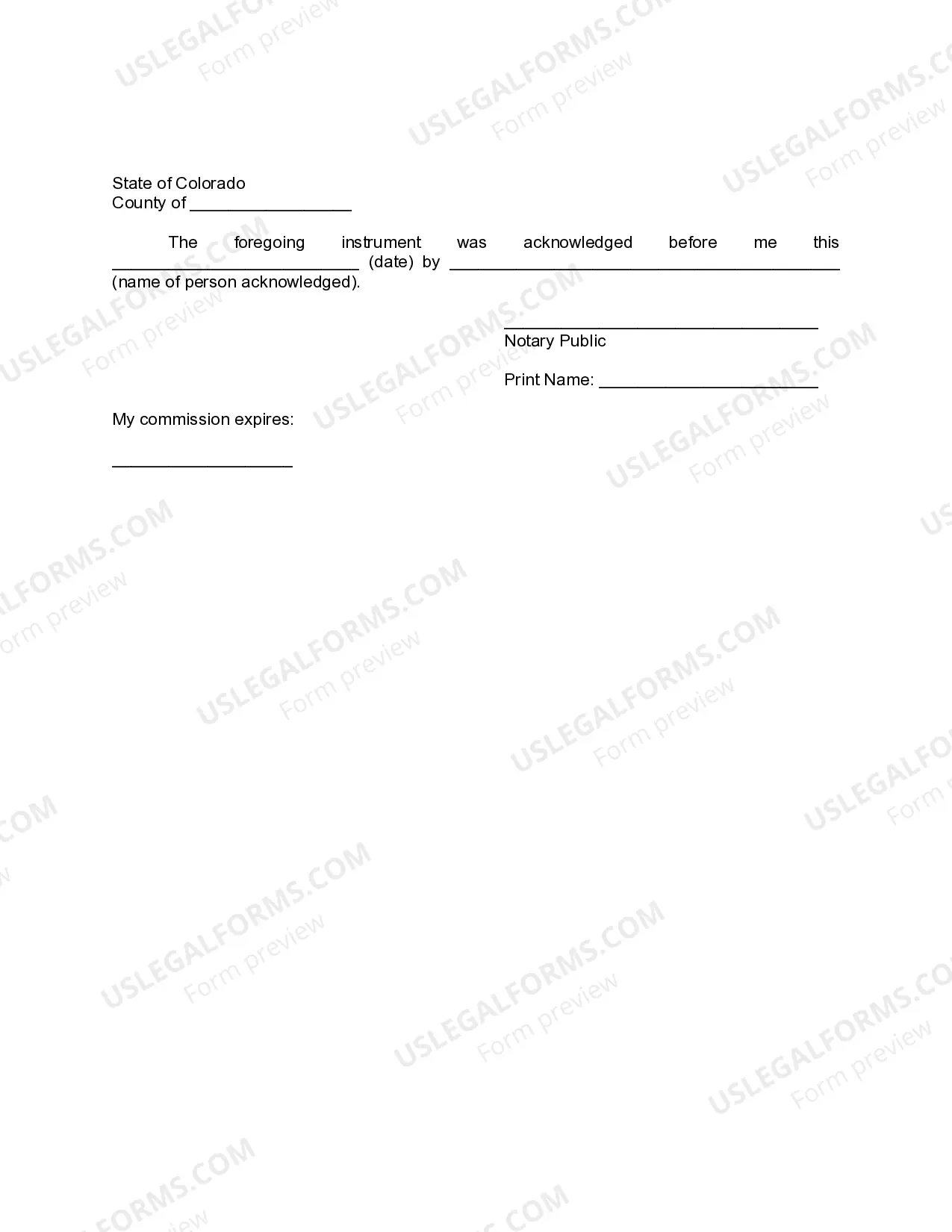
How to fill out Colorado Financial Account Transfer To Living Trust?
- Log in to your US Legal Forms account if you're a returning user. Make sure your subscription is active before downloading any forms.
- If you're new to the service, start by checking the Preview mode and the description of the bank account for trust form to ensure it meets your local jurisdiction requirements.
- Should you find discrepancies or need an alternate template, use the search feature to locate the correct form.
- Once you've found the right form, click the Buy Now button and select your preferred subscription plan to continue.
- Proceed to payment by entering your credit card information or using your PayPal account.
- After the purchase, download the template to your device, and access it anytime via the My Forms section in your profile.
By following these steps, you can efficiently establish a bank account for trust, ensuring all required legalities are addressed.
Start your legal journey with confidence! Explore US Legal Forms today to find the perfect document templates tailored to your needs.
Form popularity
FAQ
Setting up a bank account for trust involves a few steps. First, collect necessary documents such as the trust agreement and identification for the trustee. Next, visit a bank or credit union that offers trust accounts and complete their application. You may also find that uslegalforms provides helpful resources for ensuring you have the right documentation to make the process smoother.
The best type of bank account for a trust is often a dedicated trust account. These accounts provide transparency and security by ensuring funds are separate from personal assets. A trust account can also facilitate easier management of trust assets and help in meeting fiduciary responsibilities.
Yes, it is possible to open a bank account for trust without an EIN, but this option is limited. Revocable trusts may not need an EIN, while irrevocable trusts generally do. It’s important to verify with the bank for their specific requirements, as well as how it impacts your trust management.
To open a bank account for trust, you need specific documentation, which typically includes the trust agreement, identification for the trustee, and potentially an EIN if required. You'll also need to provide the Social Security number of the trust or grantor. Having these documents ready streamlines the account opening process.
Whether you need an EIN for a trust depends on the type of trust you establish. Revocable trusts typically do not require an EIN as income is reported on the grantor's tax return. In contrast, irrevocable trusts usually need an EIN since they are treated as separate tax entities. This consideration is essential when planning to open a bank account for trust.
You can open a bank account for trust without an Employer Identification Number (EIN) in certain situations, especially if the trust is revocable. However, banks often require an EIN when the trust is irrevocable. It's crucial to check with your chosen bank to understand their specific policies regarding EINs for trusts.
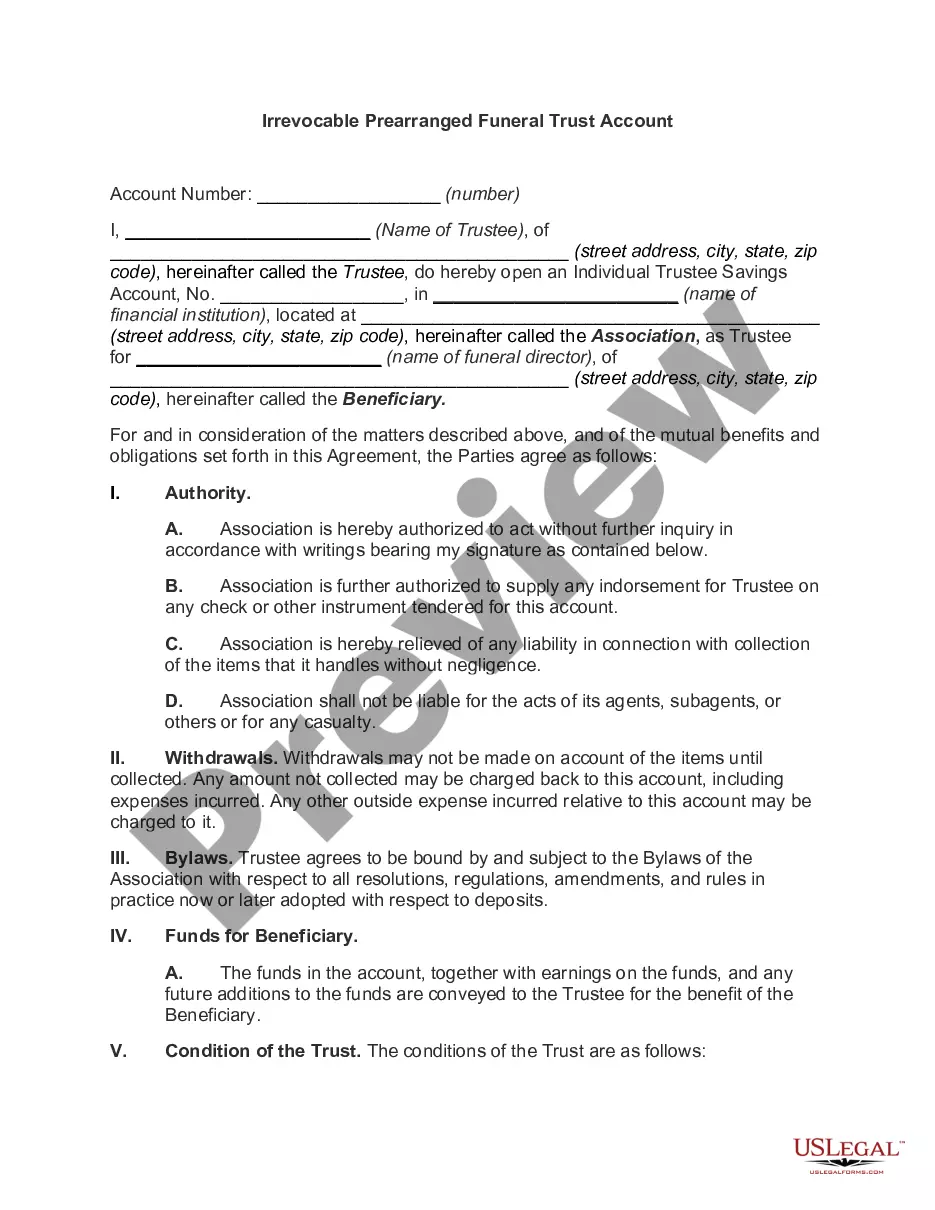
To open a bank account for trust, start by gathering essential documents, such as the trust agreement and tax identification number. Visit a bank of your choice and discuss options available specifically for trust accounts. The bank will guide you through the application process and help you understand all requirements. If you're unsure or want assistance, platforms like US Legal Forms can streamline this process and provide necessary support.
The best bank for opening a trust account varies based on your location and specific needs. Look for institutions that offer flexible account features, good customer service, and low fees. A bank account for trust should provide robust online capabilities and multiple access points for trustees. Research local banks along with larger financial institutions to find one that meets your trust’s requirements.
Yes, a trust can have its own bank account. This account should be opened in the name of the trust to ensure proper management of its assets. Having a bank account specifically for trust facilitates easier tracking of income and expenses, which is beneficial for both management and tax purposes. Take the time to set up this account with the right bank to support the trust's needs.
You should consider opening a checking or savings account specifically designed for trust management. Look for accounts that offer no monthly fees, online banking, and easy access for all trustees. A bank account for trust must allow smooth transactions while keeping the trust's financial activity organized. You might also want to inquire about additional features, such as interest accretion or advisory services.