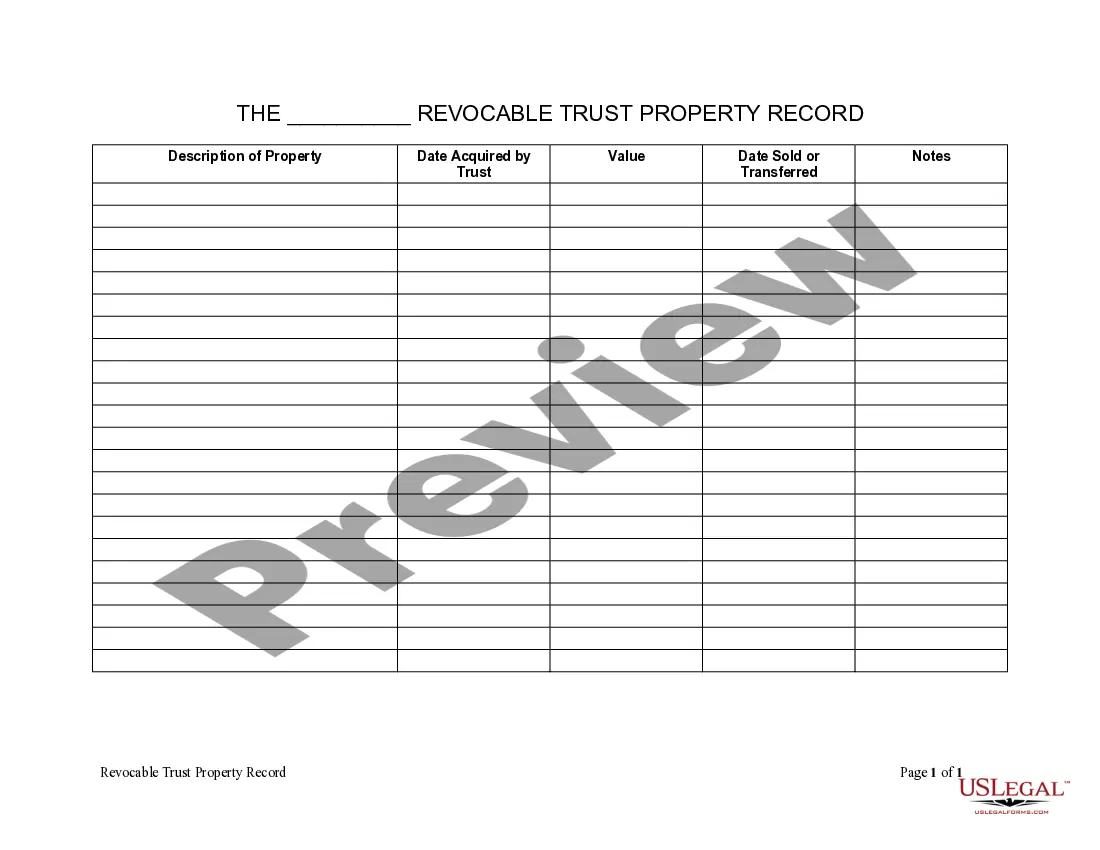
Living Trust Property With A Trust
Description

Get your form ready online
Our built-in tools help you complete, sign, share, and store your documents in one place.
Make edits, fill in missing information, and update formatting in US Legal Forms—just like you would in MS Word.
Download a copy, print it, send it by email, or mail it via USPS—whatever works best for your next step.
Sign and collect signatures with our SignNow integration. Send to multiple recipients, set reminders, and more. Go Premium to unlock E-Sign.
If this form requires notarization, complete it online through a secure video call—no need to meet a notary in person or wait for an appointment.
We protect your documents and personal data by following strict security and privacy standards.

Make edits, fill in missing information, and update formatting in US Legal Forms—just like you would in MS Word.

Download a copy, print it, send it by email, or mail it via USPS—whatever works best for your next step.

Sign and collect signatures with our SignNow integration. Send to multiple recipients, set reminders, and more. Go Premium to unlock E-Sign.

If this form requires notarization, complete it online through a secure video call—no need to meet a notary in person or wait for an appointment.

We protect your documents and personal data by following strict security and privacy standards.
Looking for another form?









How to fill out Colorado Living Trust Property Record?
- If you're a returning user, log in to your account and check if your subscription is active. Click the Download button to retrieve your desired form.
- For first-time users, begin by selecting the appropriate form. Utilize the Preview mode to review the document's details to ensure it's suitable for your location.
- If the selected template isn't right, use the Search tab to explore additional options until you find the perfect fit.
- Once you locate the correct document, click on the Buy Now button and select your preferred subscription plan. You'll need to create an account for full access.
- Proceed with the payment by entering your credit card information or using PayPal to finalize your subscription.
- Finally, download the form to your device. You can access it anytime through the My Forms section of your account.
In conclusion, using US Legal Forms simplifies the process of setting up a living trust property with a trust, ensuring you have the right documents at your fingertips. Their extensive library and expert resources make compliance easy and hassle-free.
Don't wait any longer; start your journey to secure your assets today with US Legal Forms!
Form popularity
FAQ
The biggest mistake parents often make when setting up a trust fund is not funding it correctly. Simply creating a living trust property with a trust is not enough; assets must be transferred into the trust for it to be effective. Another common error is failing to regularly review and update the trust as family dynamics or financial situations change. Consulting with a professional can help avoid these pitfalls.
One downside of putting assets in a trust is the potential for misunderstanding among family members. If beneficiaries do not fully grasp the implications of the living trust property with a trust, it can lead to disputes. Additionally, there can be administrative costs associated with maintaining the trust over time. Clearly communicating intentions can alleviate some of these issues.
A family trust can sometimes create a false sense of security regarding asset management. Some may overlook the need for regular updates, which can complicate distribution. Furthermore, when assets are placed in a living trust property with a trust but not correctly funded, intended protections may not be in place. Therefore, it’s crucial for families to stay actively involved in managing their trust.
People often place their property in a living trust to maintain control and ensure a smooth transition of those assets to their heirs. A living trust property with a trust provides privacy and can avoid the lengthy probate process. It also allows individuals to outline specific instructions on how their property should be managed after they pass. This clear planning can offer peace of mind.
In general, a trustee cannot sell property without the approval of all beneficiaries unless the trust document states otherwise. This requirement protects the interests of beneficiaries regarding living trust property with a trust. If the trust allows for such actions, the trustee must ensure that the sale is in line with the trust's objectives and complies with the law. Consider seeking expert guidance to clarify your specific situation.
A trustee must adhere to specific legal and fiduciary duties, limiting their actions. They cannot act in their own self-interest, engage in conflicts of interest, or disrespect the terms of the trust. Furthermore, a trustee is unable to make decisions that would harm the beneficiaries or violate regulations regarding living trust property with a trust. Understanding these limitations is crucial for maintaining trust integrity.
Putting property in a trust can present disadvantages, such as setup costs and administrative responsibilities. You may also encounter complexities in managing living trust property with a trust over time. Furthermore, some tax implications could arise, affecting your overall financial strategy. To make informed decisions, consider discussing these factors with a knowledgeable advisor.
In a unit trust, the trustee holds legal ownership of the assets, while the beneficiaries enjoy the benefits. This arrangement allows for effective management and protection of living trust property with a trust. Beneficiaries do not own the assets directly, making the trustee's role crucial in managing and distributing the property. Understanding this structure is key to navigating trust relationships.
While a living trust offers many benefits, there are potential drawbacks to consider. One downside is that living trust property with a trust requires initial time and expense to create and fund. Additionally, without comprehensive planning, some assets may inadvertently be left out of the trust, leading to complications during administration. It's crucial to weigh these factors and, if necessary, consult with a knowledgeable resource like uslegalforms for guidance.
Filling a living trust involves several clear steps. First, you need to gather information about your assets; this includes real estate, bank accounts, and personal property. Next, directly follow the guidelines laid out in the trust documentation to transfer your living trust property with a trust into the trust itself. Lastly, you may want to seek assistance from a professional, like uslegalforms, to ensure a seamless and correct process.