Security Deposit For Rental
Description

Get your form ready online
Our built-in tools help you complete, sign, share, and store your documents in one place.
Make edits, fill in missing information, and update formatting in US Legal Forms—just like you would in MS Word.
Download a copy, print it, send it by email, or mail it via USPS—whatever works best for your next step.
Sign and collect signatures with our SignNow integration. Send to multiple recipients, set reminders, and more. Go Premium to unlock E-Sign.
If this form requires notarization, complete it online through a secure video call—no need to meet a notary in person or wait for an appointment.
We protect your documents and personal data by following strict security and privacy standards.

Make edits, fill in missing information, and update formatting in US Legal Forms—just like you would in MS Word.

Download a copy, print it, send it by email, or mail it via USPS—whatever works best for your next step.

Sign and collect signatures with our SignNow integration. Send to multiple recipients, set reminders, and more. Go Premium to unlock E-Sign.

If this form requires notarization, complete it online through a secure video call—no need to meet a notary in person or wait for an appointment.

We protect your documents and personal data by following strict security and privacy standards.
Looking for another form?
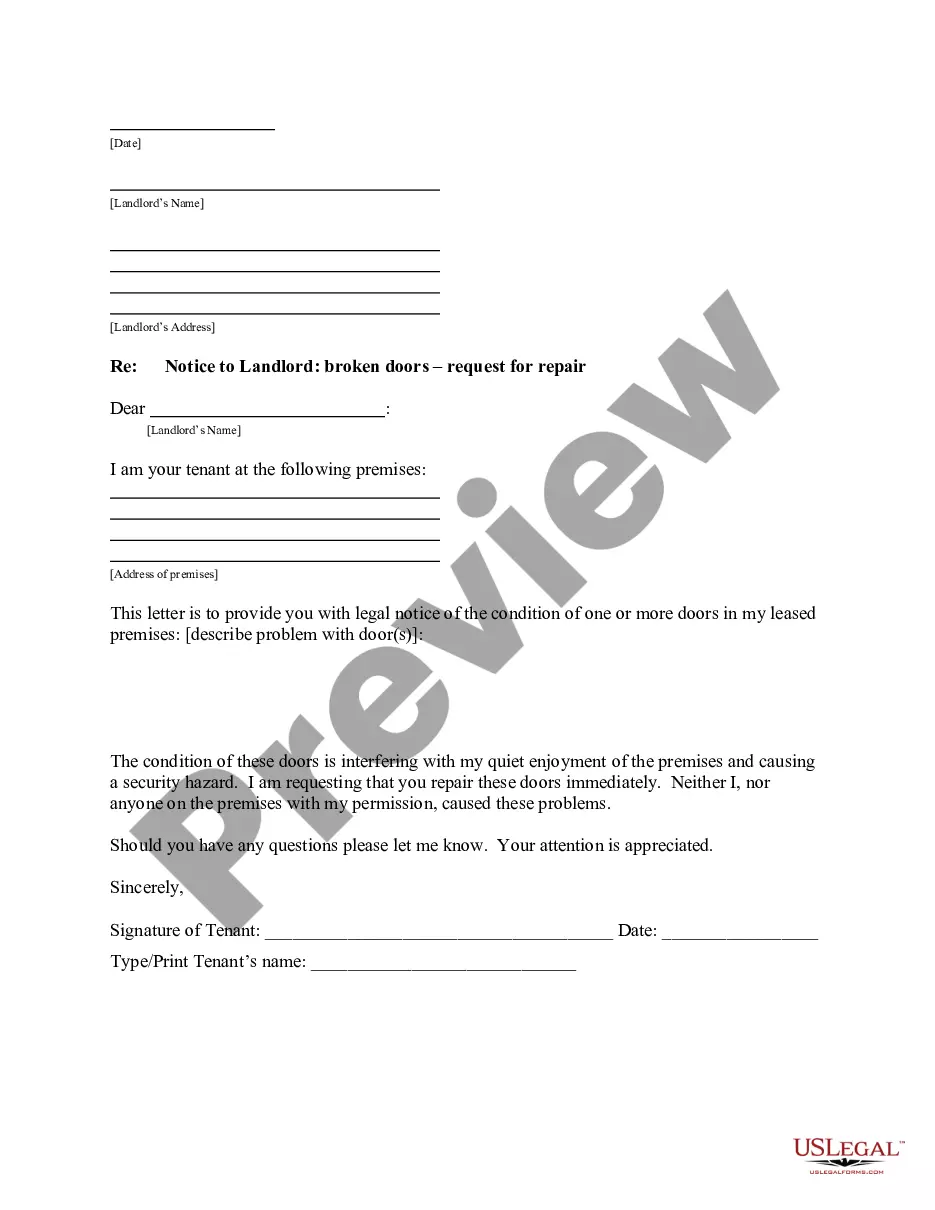
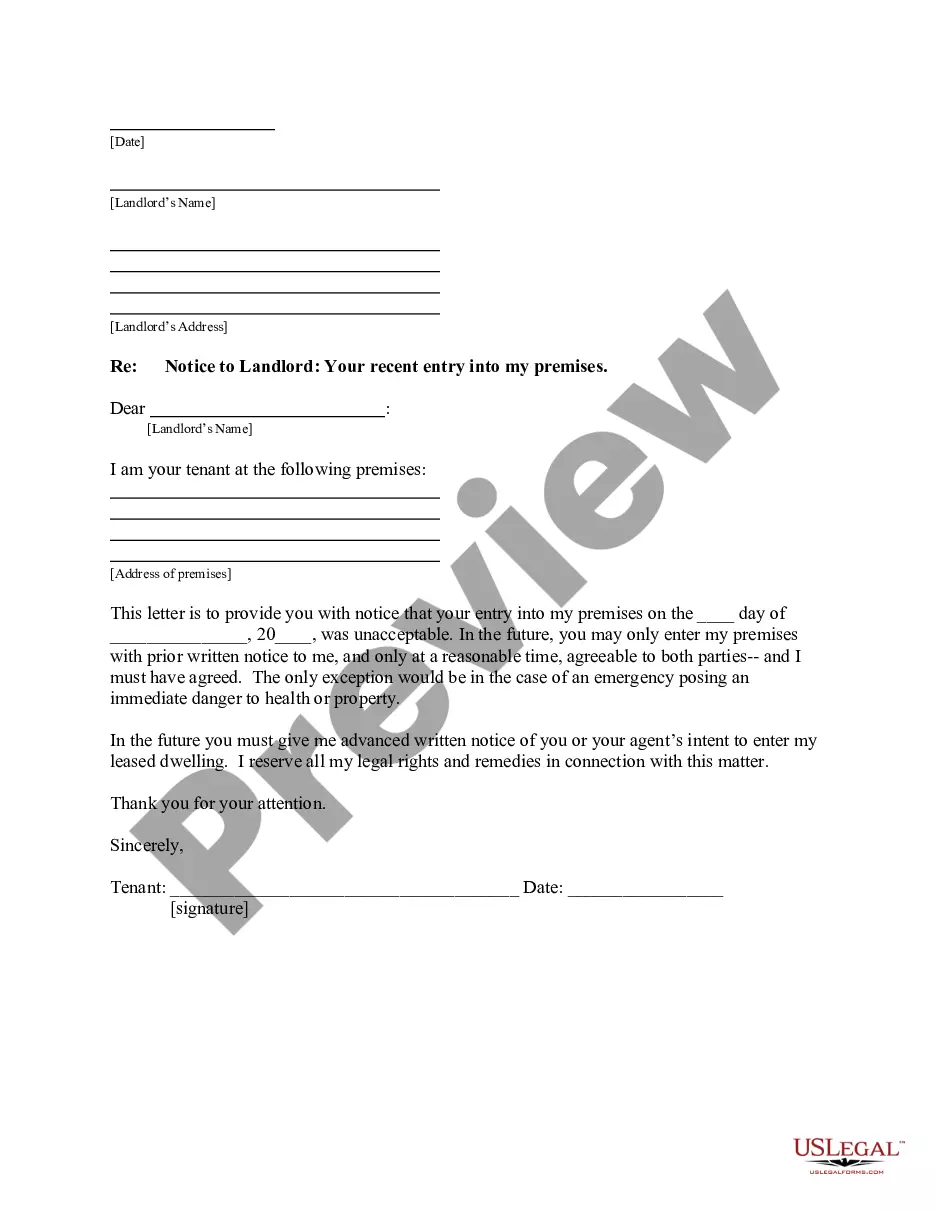
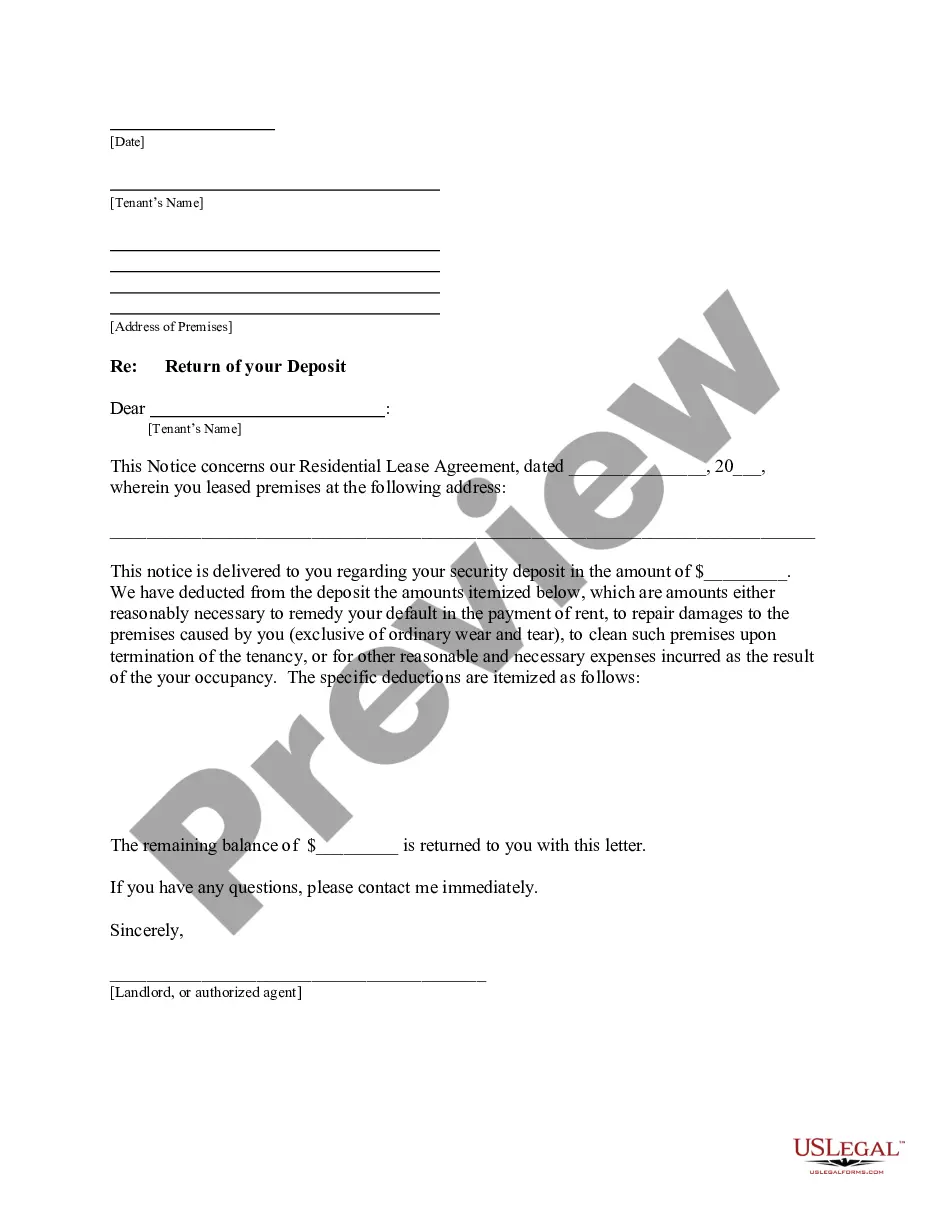
How to fill out Colorado Letter From Landlord To Tenant Returning Security Deposit Less Deductions?
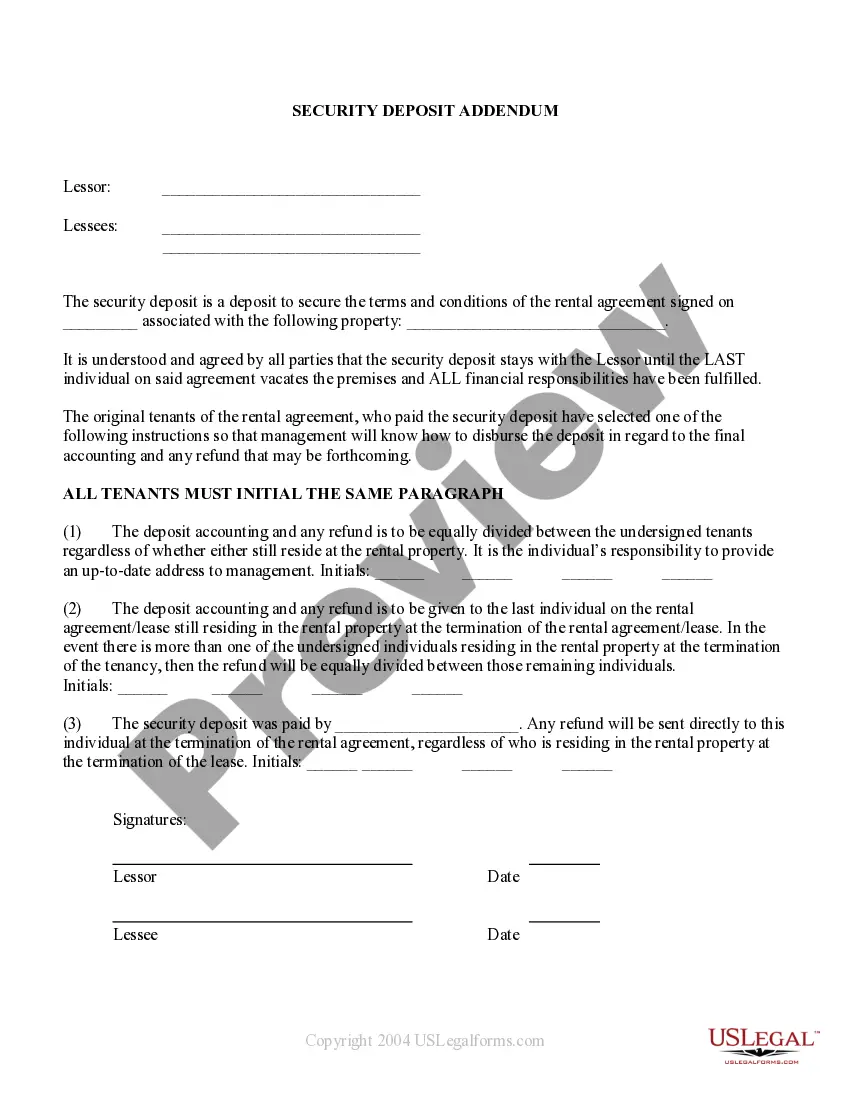
The Security Deposit For Rental displayed on this page is a reusable official template created by expert attorneys in compliance with federal and state statutes and regulations.
For over 25 years, US Legal Forms has supplied individuals, businesses, and legal practitioners with more than 85,000 authenticated, state-specific documents for any commercial and personal circumstance. It’s the quickest, easiest, and most reliable method to acquire the paperwork you require, as the service ensures bank-level data protection and anti-malware safeguards.
Subscribe to US Legal Forms to have authenticated legal templates for all of life's situations at your fingertips.
- Search for the document you require and verify it. Review the sample you searched for and preview it or examine the form description to ensure it meets your requirements. If it doesn’t, utilize the search feature to find the correct one. Click Buy Now once you’ve found the template you need.
- Register and Log In. Pick the pricing plan that fits you and set up an account. Use PayPal or a credit card for a swift payment. If you already possess an account, Log In and check your subscription to proceed.
- Obtain the editable template. Select the format you prefer for your Security Deposit For Rental (PDF, DOCX, RTF) and download the sample to your device.
- Fill out and sign the document. Print the template to complete it by hand. Alternatively, use an online multifunctional PDF editor to quickly and accurately fill out and sign your form with a valid.
- Redownload your documents. Utilize the same document again whenever necessary. Access the My documents tab in your profile to redownload any previously purchased forms.
Form popularity
FAQ
There are several reasons why you might not receive your security deposit for rental properties back. Common reasons include damage beyond normal wear and tear, unpaid rent, or failure to provide proper notice before moving out. To avoid surprises, familiarize yourself with your lease terms and communicate openly with your landlord throughout your tenancy.
Massachusetts law requires landlords to return the security deposit for rental properties within 30 days after a tenant vacates. Additionally, the law mandates that landlords provide an itemized list of any deductions taken from the deposit. Being aware of these legal requirements can empower tenants to advocate for their rights regarding their security deposits.
In Colorado, landlords must return the security deposit for rental properties within one month after the tenant moves out. If any deductions are made for damages, landlords must provide an itemized list of these deductions. Understanding these laws can help tenants effectively manage their expectations and rights regarding their security deposit.
Many tenants find it challenging to get their security deposit for rental properties returned due to various reasons. Common issues include landlords claiming deductions for damages or unpaid rent, which can lead to disagreements. To simplify the process, tenants should maintain good communication with their landlords and document any issues during their tenancy.
In Connecticut, the law on security deposits for rental properties requires landlords to follow specific guidelines. Generally, a landlord may collect up to two months' rent as a security deposit for rental agreements. It is essential for landlords to hold these deposits in a separate, interest-bearing account, and they must return the deposit within 30 days after the tenant moves out, minus any lawful deductions. Knowing these laws helps both tenants and landlords maintain a fair and transparent rental relationship.
A Security deposit is where you can ?hold? the damage deposit by holding either a cheque or money on the guest's credit/debit card (dependent on your payment processor ? this works with Sage Pay and Holiday Rent Payment). You don't physically take the money unless there are damages at the end of their stay.
A 2 month security deposit is an insurance policy for a landlord. If the tenant wants it back, they will leave the property in good condition prior to vacating. It also shows that the tenant has plenty of money to afford the unit they are renting.
It is a one-time deposit of money given to the landlord at the time of lease signing to ensure that rent will be paid and other responsibilities on the lease are performed. This covers the cost if damage comes to the house/apartment while the tenant is leasing it.
If you paid a deposit at the start of your tenancy, you have the right to get it back at the end. Your landlord or letting agent can only take money off if there's a good reason - for example if you've damaged the property. You'll need to contact your landlord at the end of your tenancy and ask them for your deposit.