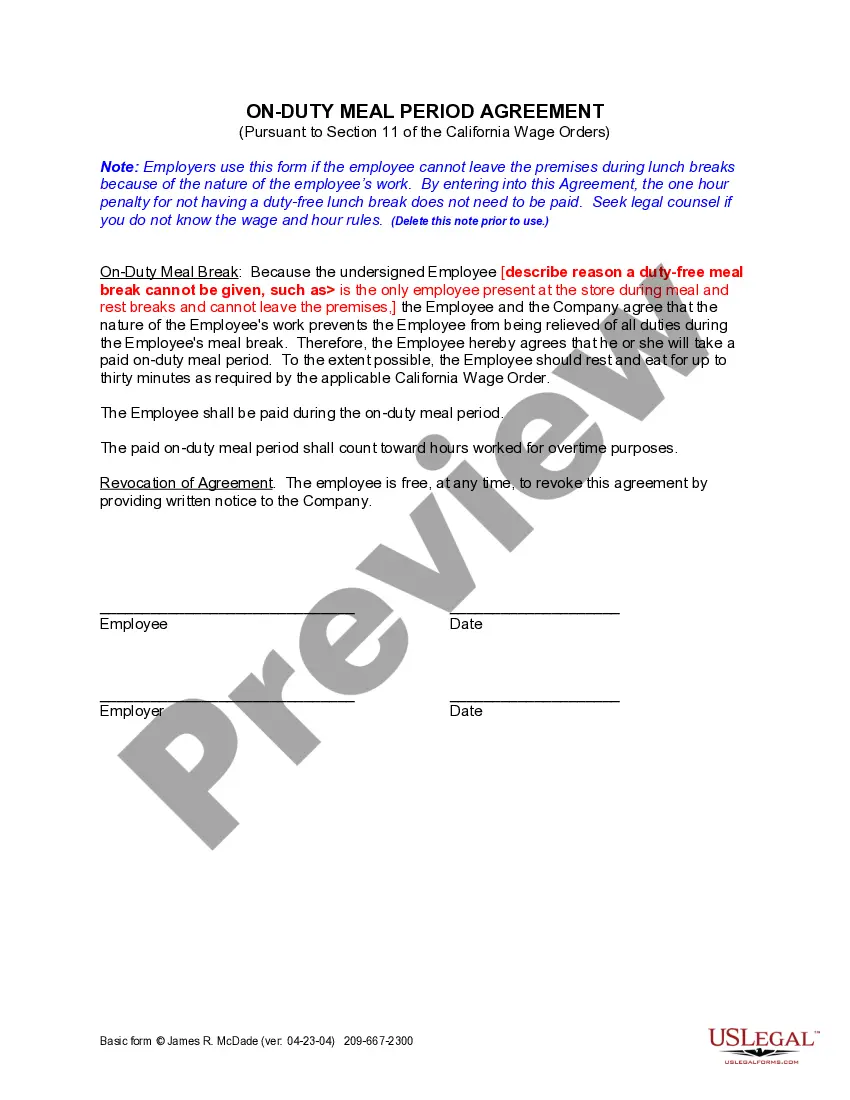
Employee Meal During For 3 Days
Description
Get your form ready online
Our built-in tools help you complete, sign, share, and store your documents in one place.
Make edits, fill in missing information, and update formatting in US Legal Forms—just like you would in MS Word.
Download a copy, print it, send it by email, or mail it via USPS—whatever works best for your next step.
Sign and collect signatures with our SignNow integration. Send to multiple recipients, set reminders, and more. Go Premium to unlock E-Sign.
If this form requires notarization, complete it online through a secure video call—no need to meet a notary in person or wait for an appointment.
We protect your documents and personal data by following strict security and privacy standards.

Make edits, fill in missing information, and update formatting in US Legal Forms—just like you would in MS Word.

Download a copy, print it, send it by email, or mail it via USPS—whatever works best for your next step.

Sign and collect signatures with our SignNow integration. Send to multiple recipients, set reminders, and more. Go Premium to unlock E-Sign.

If this form requires notarization, complete it online through a secure video call—no need to meet a notary in person or wait for an appointment.

We protect your documents and personal data by following strict security and privacy standards.
Looking for another form?







How to fill out California On Duty Meal Period Agreement?
- If you’re a returning user, log in to your account and ensure your subscription is current. Click the Download button to retrieve your desired form template.
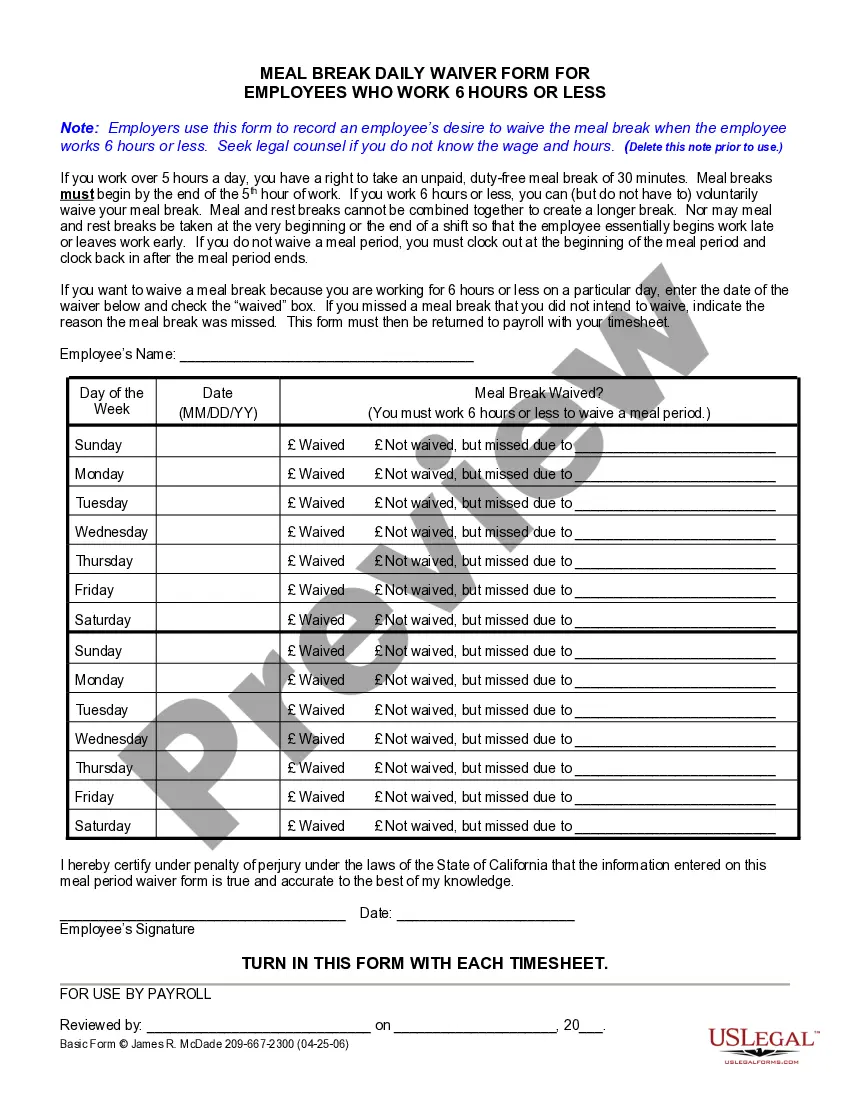
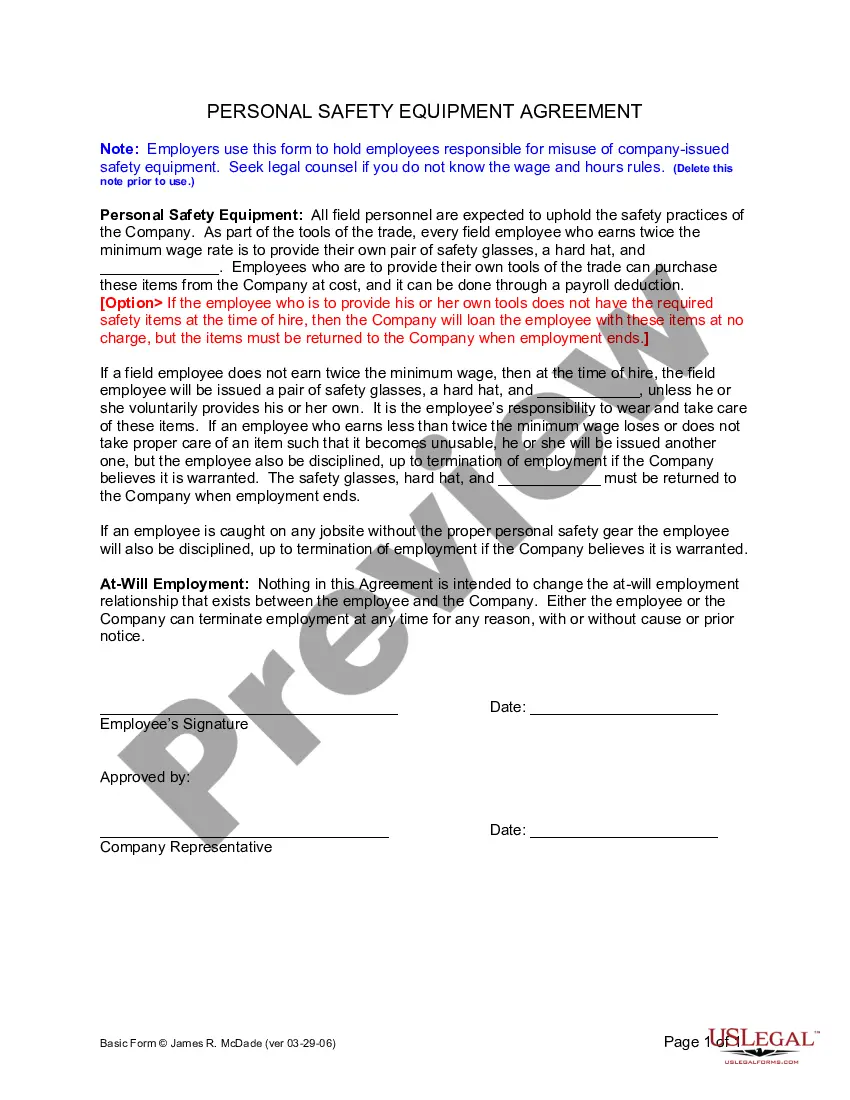
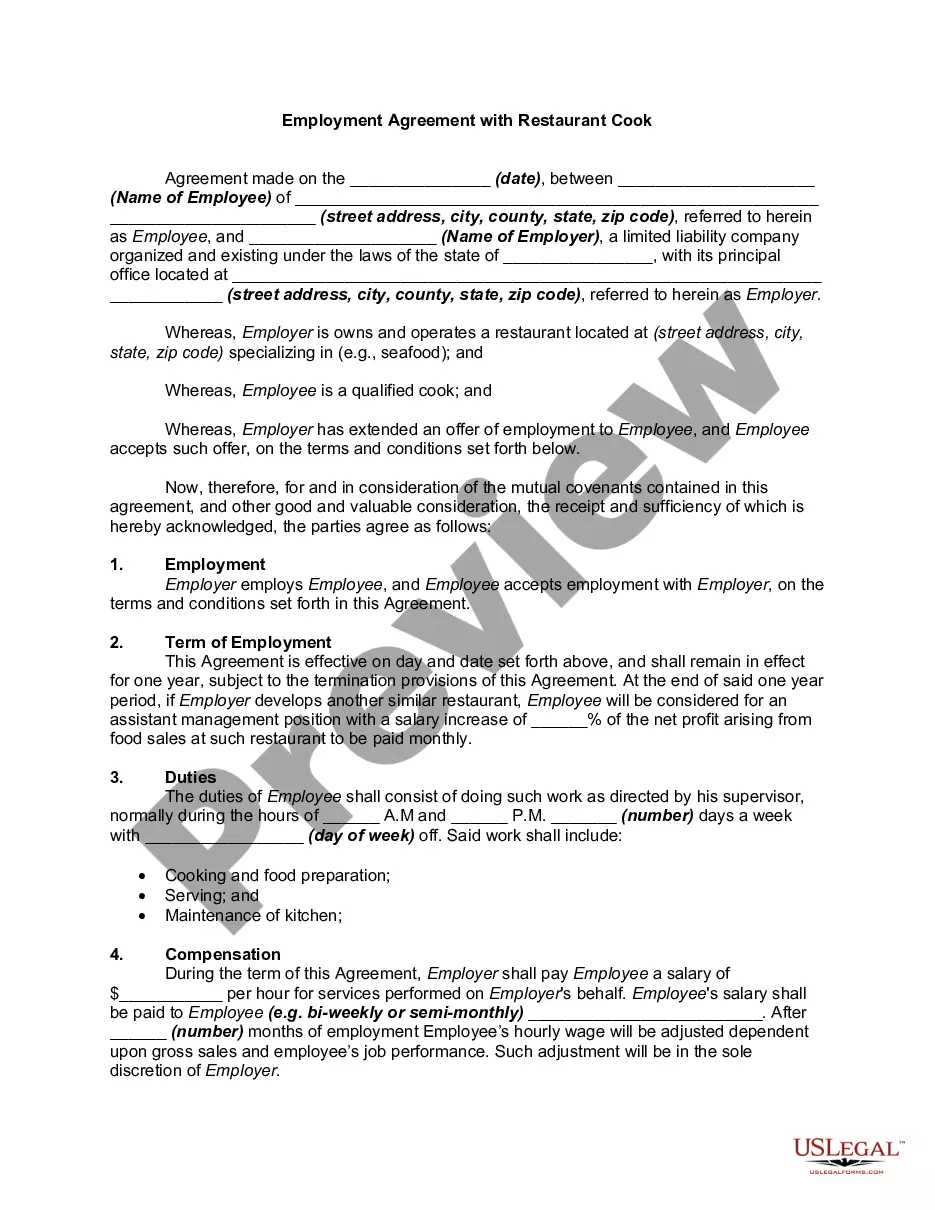
- For first-time users, start by exploring the Preview mode to review the form description. Make sure the template you select meets your specific needs and complies with local legal requirements.
- Use the Search tab to look for alternative templates if necessary. If you encounter any discrepancies, this feature helps you find the correct document quickly.
- Proceed to purchase by clicking the Buy Now button. Select your preferred subscription plan and create an account to gain access to a wealth of resources.
- Enter your payment information. You can use either your credit card or PayPal to complete the transaction.
- After successful payment, download your form. It will be saved to your device and can be accessed later through the My Forms section of your account.
Using US Legal Forms not only provides you with a diverse assortment of legal documents but also connects you with experts who can guide you in completing forms accurately. This ensures that your documents are not only ready to use but also legally sound.
In conclusion, navigating employee meal documentation does not have to be complicated. Leverage the power of US Legal Forms to streamline your process and ensure legal compliance. Start today and empower your workplace!
Form popularity
FAQ
When someone eats at a restaurant without paying, it is often referred to as dining and dashing. This practice is illegal and considered theft, as the individual leaves without fulfilling their financial obligation. Understanding the legal implications is important, particularly if you are an employer offering employee meal during for 3 days. Using a platform like US Legal Forms can provide guidance on creating clear policies to prevent such situations.
Yes, you can generally deduct meals you provide to your employees, especially if they serve a business purpose. However, ensure these meals meet IRS guidelines. Keeping detailed records of employee meals during for 3 days will help substantiate your deductions.
In accounting, food expenses are classified based on their purpose, such as meals for client meetings or employee meals during for 3 days. It's crucial to separate these expenses from personal dining. Clear classifications will aid in proper reporting and deductions.
When planning an employee meal during for 3 days, consider a menu that accommodates various dietary preferences. Options like sandwiches, salads, and classic comfort foods often work well. A diverse selection can help foster a communal atmosphere, improving employee morale and engagement.
Employee meals typically fall under the category of ' meals and entertainment' expenses in your accounting system. These expenses are generally deductible but must meet IRS requirements. Keeping well-organized records of employee meals during for 3 days can make tax time much easier.
To effectively account for employee meals during for 3 days, you should track all expenditures related to food provided to your employees. Document each transaction with receipts, noting the purpose of the meal and the attendees. This ensures you maintain accurate records for tax purposes and company budgeting.
Yes, you can deduct meals while traveling for work, including employee meals during for 3 days. The deductible amount typically adheres to IRS guidelines, which allows for 50% of the meal costs incurred while away from your tax home for business. It is essential to keep detailed receipts and records of the travel and purpose of the meals. To navigate these complexities, consider exploring the resources available on the US Legal Forms platform.
The IRS allows for the reimbursement of meals as long as they are directly related to business activities. Employees must demonstrate that the meal was necessary for work during the specified period, typically limiting meal deductions to 50% of the costs. For instance, meals provided to employees during business events count as deductible expenses. US Legal Forms can assist in drafting policies that comply with IRS rules on meal reimbursement.
To expense meals for employees effectively, document each meal's date, amount, and purpose. Establish a clear company policy regarding employee meals during for 3 days to ensure compliance and consistency. This policy should include guidelines about who is eligible and how to submit reimbursement requests. Using US Legal Forms can simplify the creation of an expense report template tailored to your needs.
Employee meals during for 3 days can indeed be tax deductible under certain conditions. If these meals are provided for the benefit of the business, to keep employees on-site, or for additional productivity, it counts. Companies must keep proper documentation and ensure meals are classified correctly. Consulting a tax professional or the US Legal Forms platform can help clarify specific scenarios.