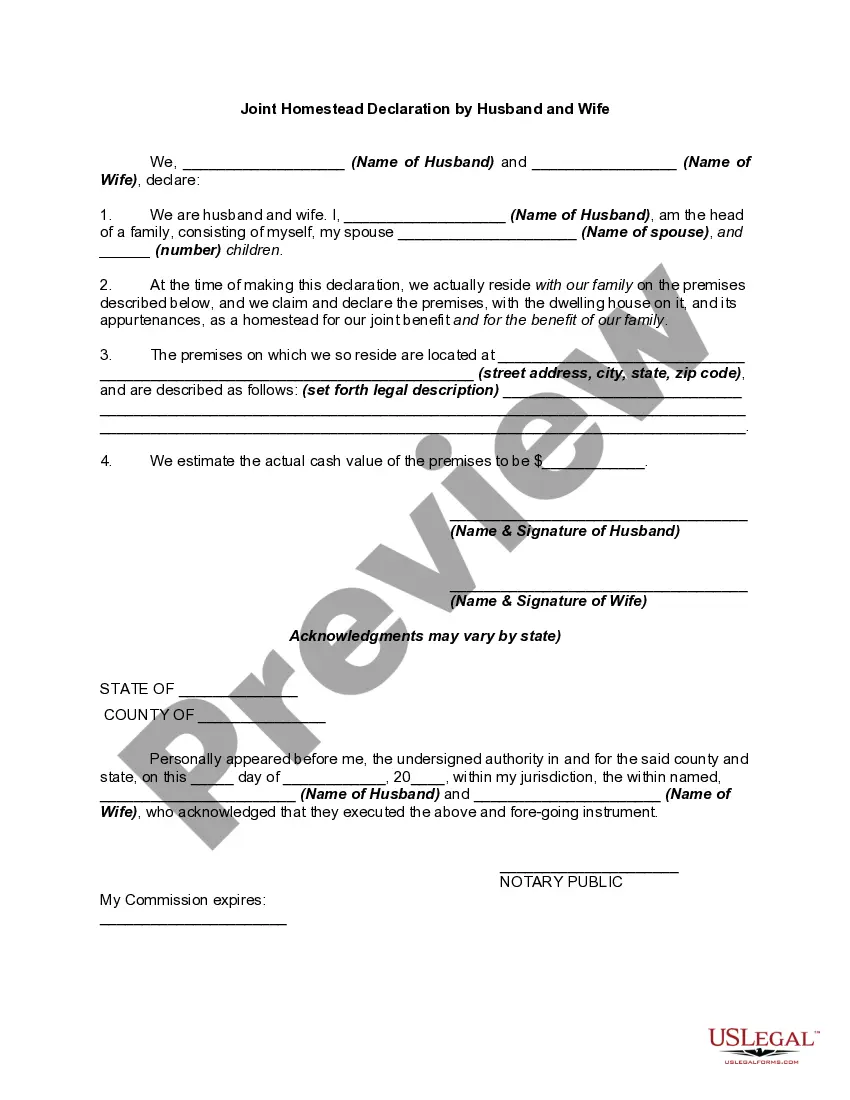
Ca Homestead Form With Two Points
Description
Get your form ready online
Our built-in tools help you complete, sign, share, and store your documents in one place.
Make edits, fill in missing information, and update formatting in US Legal Forms—just like you would in MS Word.
Download a copy, print it, send it by email, or mail it via USPS—whatever works best for your next step.
Sign and collect signatures with our SignNow integration. Send to multiple recipients, set reminders, and more. Go Premium to unlock E-Sign.
If this form requires notarization, complete it online through a secure video call—no need to meet a notary in person or wait for an appointment.
We protect your documents and personal data by following strict security and privacy standards.

Make edits, fill in missing information, and update formatting in US Legal Forms—just like you would in MS Word.

Download a copy, print it, send it by email, or mail it via USPS—whatever works best for your next step.

Sign and collect signatures with our SignNow integration. Send to multiple recipients, set reminders, and more. Go Premium to unlock E-Sign.

If this form requires notarization, complete it online through a secure video call—no need to meet a notary in person or wait for an appointment.

We protect your documents and personal data by following strict security and privacy standards.
Looking for another form?




How to fill out California Homestead Declaration For Single Person?
It’s widely known that you can’t transform into a legal authority instantly, nor can you swiftly master how to prepare the Ca Homestead Form With Two Points without possessing a specialized background.
Assembling legal documents is a labor-intensive task that demands specific training and expertise. So why not entrust the preparation of the Ca Homestead Form With Two Points to the experts.
With US Legal Forms, one of the largest legal template repositories, you can find anything from court documents to templates for internal corporate communication. We understand the significance of compliance and adherence to federal and state regulations. That’s why, on our platform, all templates are location-specific and current.
Select Buy now. Once the transaction is complete, you can download the Ca Homestead Form With Two Points, complete it, print it, and send it or mail it to the appropriate individuals or entities.
You can revisit your forms from the My documents tab anytime. If you’re a returning client, you can simply Log In and locate and download the template from the same tab.
- Begin with our website and obtain the document you need in just a few minutes.
- Locate the form you require by utilizing the search bar at the top of the page.
- Preview it (if this option is available) and review the accompanying description to ascertain whether the Ca Homestead Form With Two Points is what you seek.
- If you need a different form, restart your search.
- Create a free account and choose a subscription plan to purchase the form.
Form popularity
FAQ
As of January 1, 2021, the California homestead exemption amount will be at least $300,000 if the median sale price for homes in your county were less than that during the prior year. However, it can be as high as $600,000 if the median sale price in your county was more than that amount.
If your home is worth more money than you owe on it, you have equity. For example, if your home is worth $350,000 and you owe $300,000, you have $50,000 in equity. A homestead can protect the $50,000. There are two types of homesteads, automatic and declared.
As of January 1, 2021, the California homestead exemption amount will be at least $300,000 if the median sale price for homes in your county were less than that during the prior year.
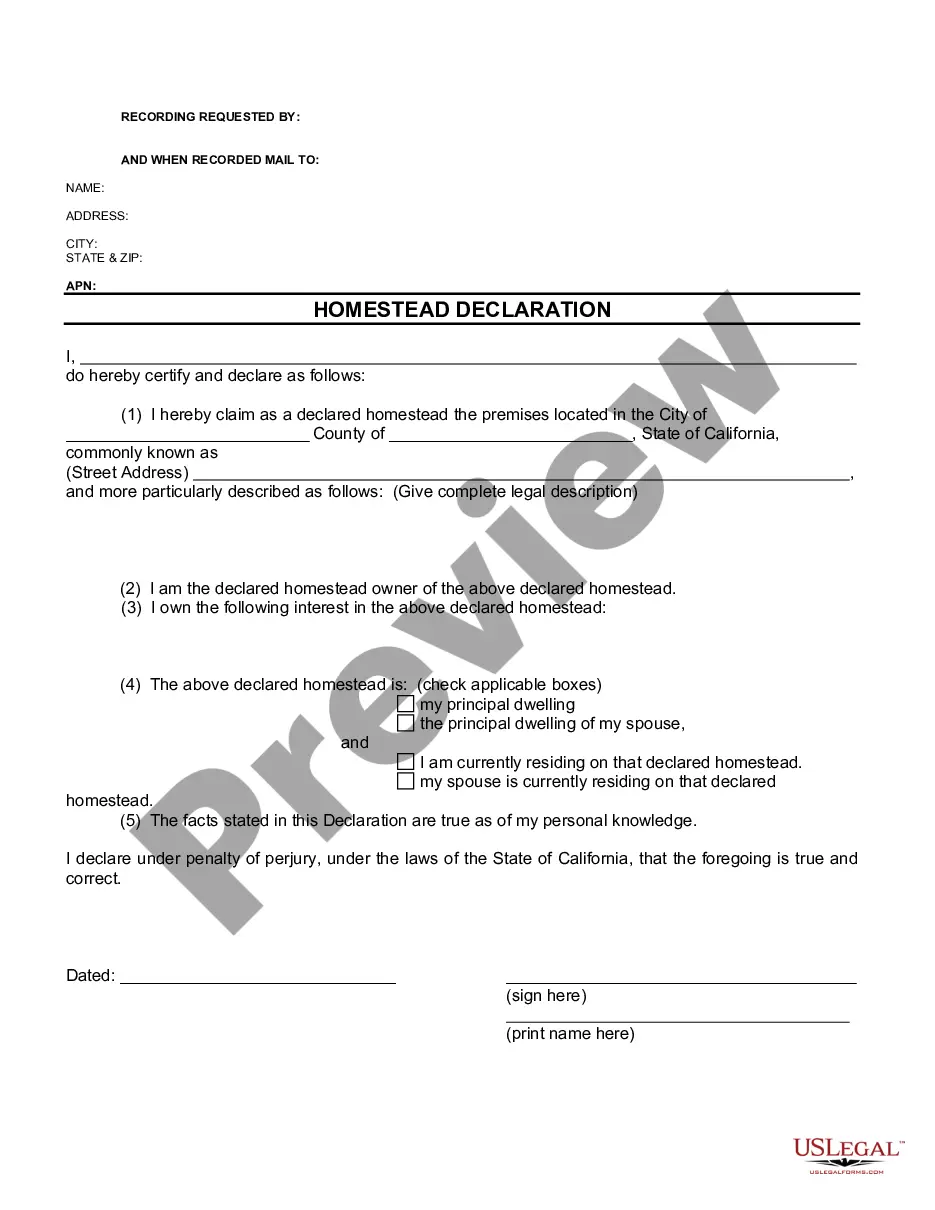
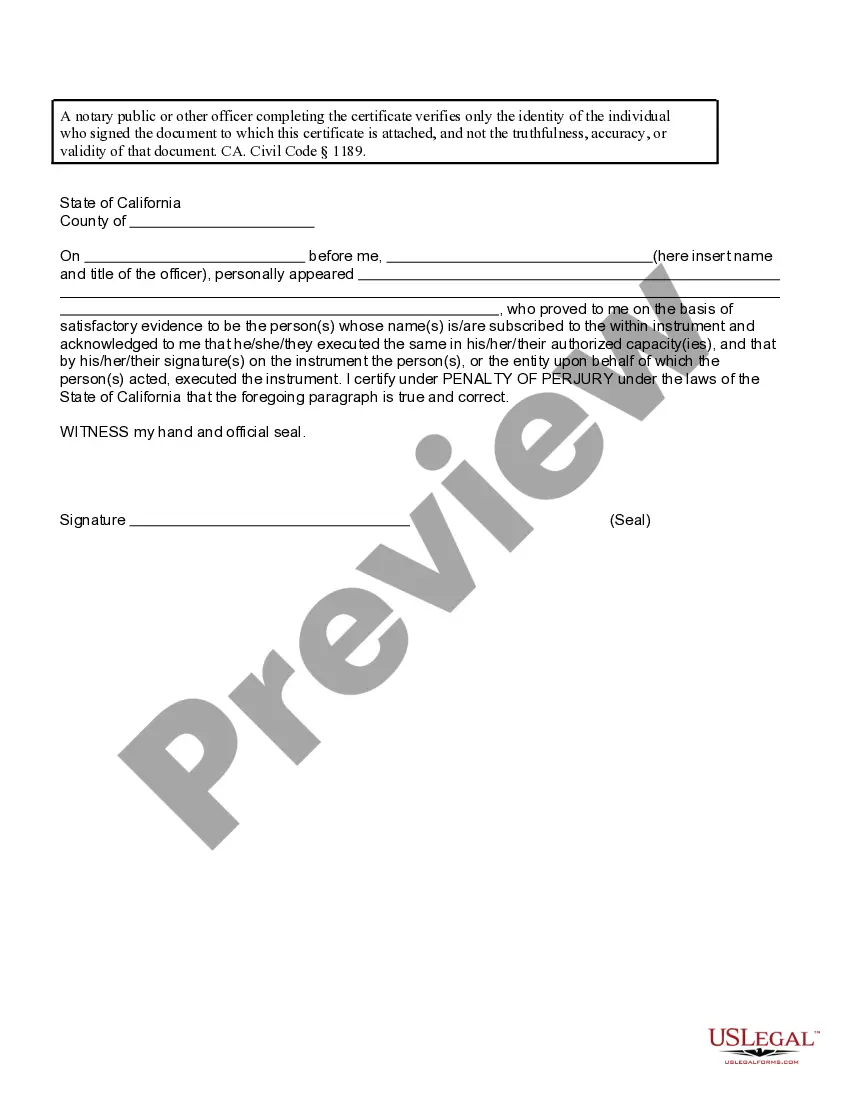
Filing a homestead declaration typically requires three steps. Complete a homestead declaration form. Sign your declaration in front of a notary. Record the homestead declaration form with your county recorder's office.
The home must have been the principal place of residence of the owner on the lien date, January 1st. To claim the exemption, the homeowner must make a one-time filing with the county assessor where the property is located.