Regulation For Tenants
Description
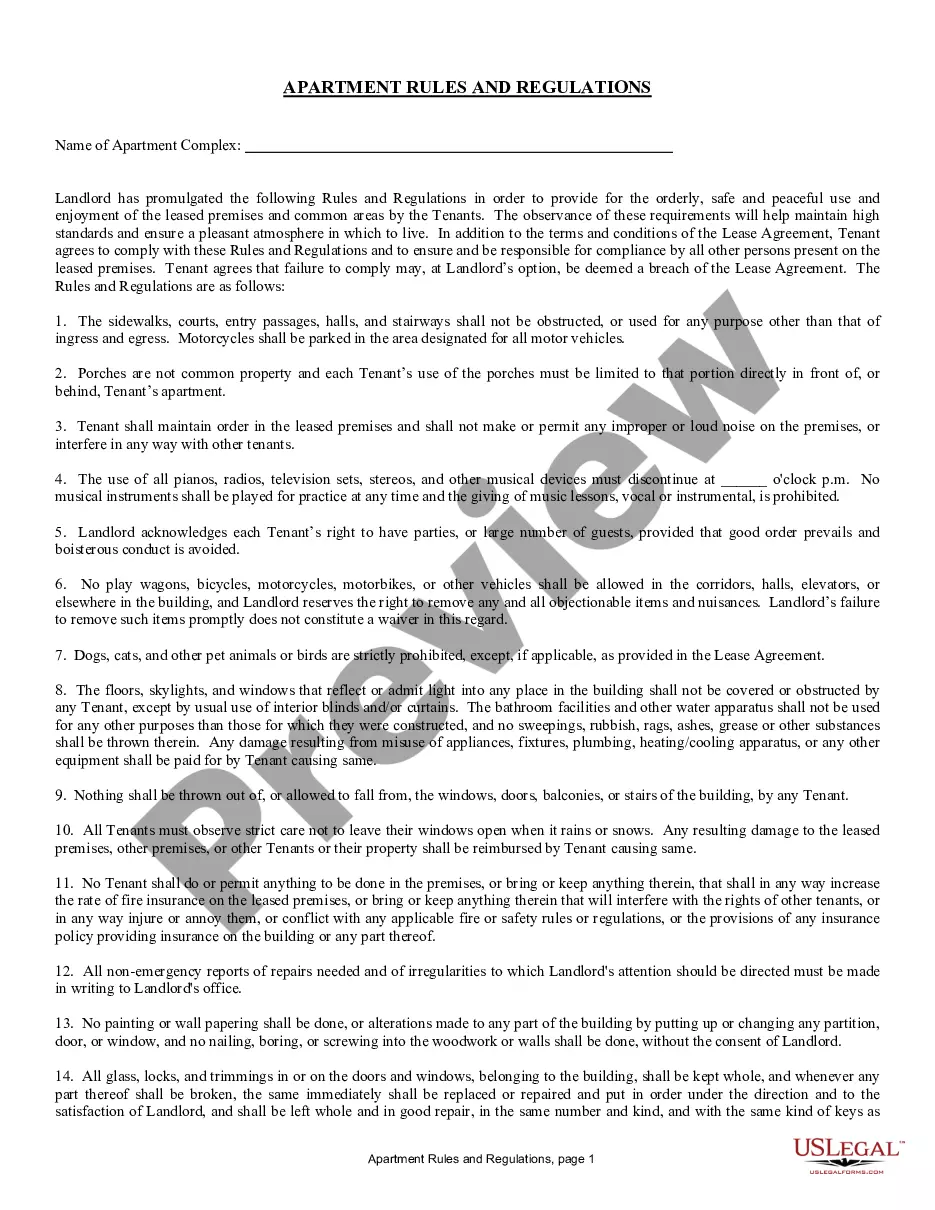
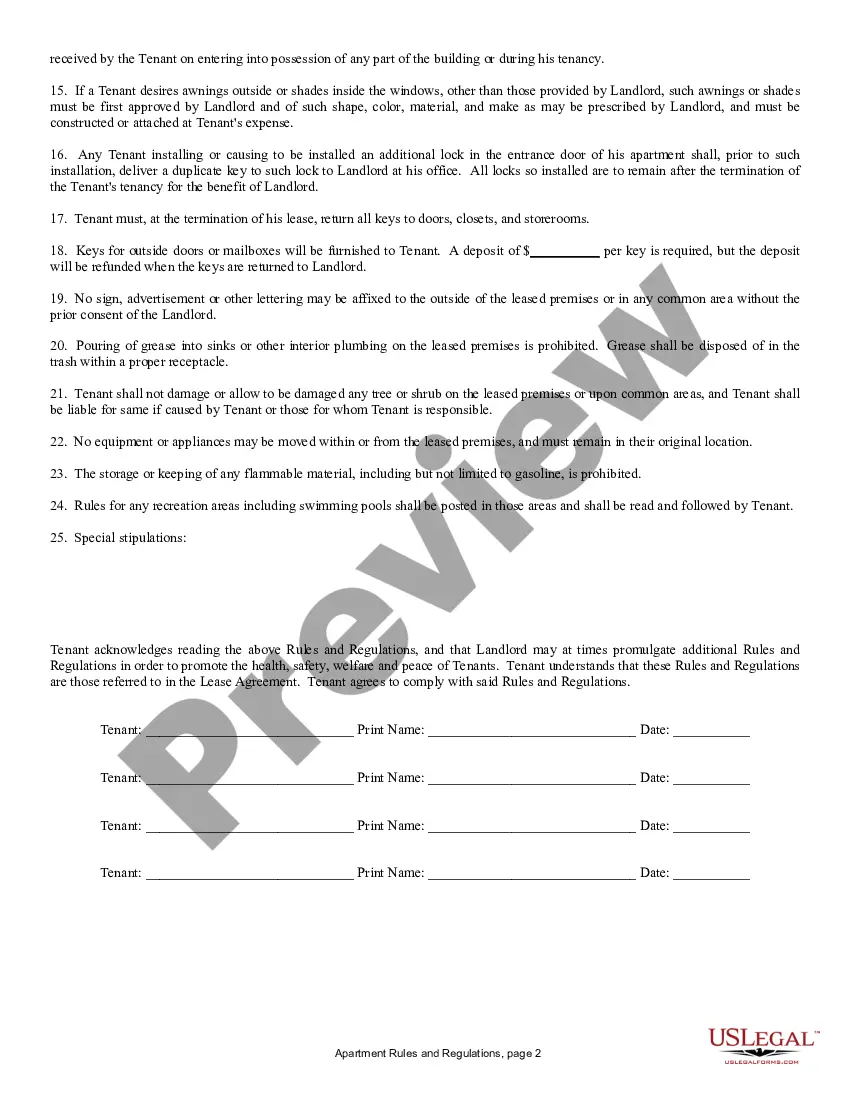
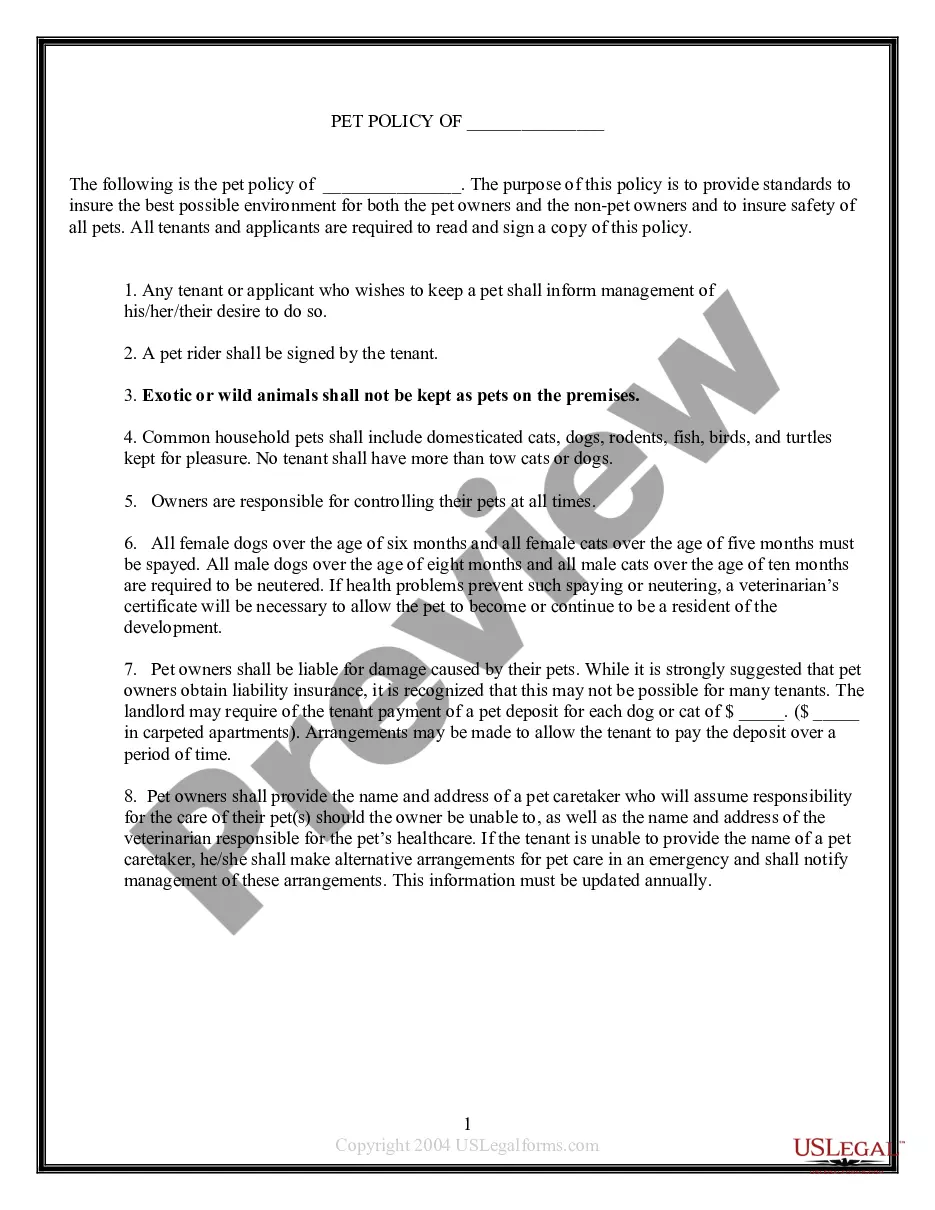
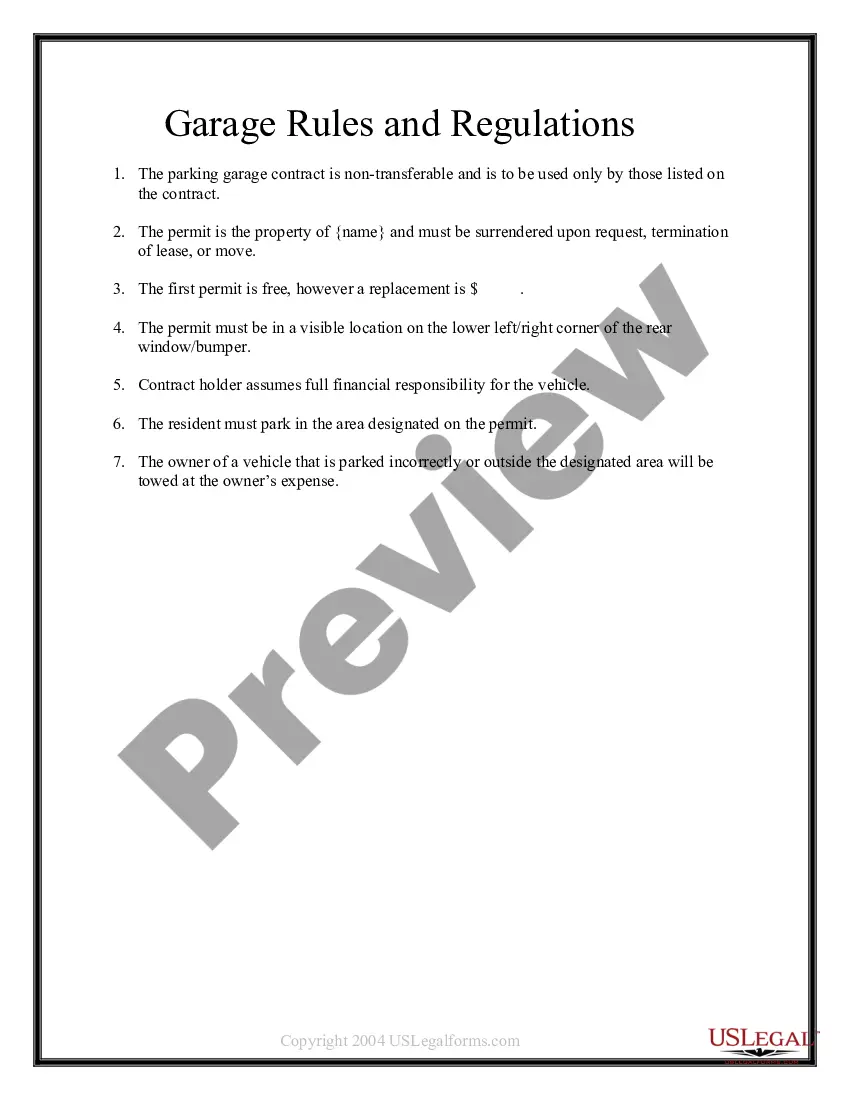
Get your form ready online
Our built-in tools help you complete, sign, share, and store your documents in one place.
Make edits, fill in missing information, and update formatting in US Legal Forms—just like you would in MS Word.
Download a copy, print it, send it by email, or mail it via USPS—whatever works best for your next step.
Sign and collect signatures with our SignNow integration. Send to multiple recipients, set reminders, and more. Go Premium to unlock E-Sign.
If this form requires notarization, complete it online through a secure video call—no need to meet a notary in person or wait for an appointment.
We protect your documents and personal data by following strict security and privacy standards.

Make edits, fill in missing information, and update formatting in US Legal Forms—just like you would in MS Word.

Download a copy, print it, send it by email, or mail it via USPS—whatever works best for your next step.

Sign and collect signatures with our SignNow integration. Send to multiple recipients, set reminders, and more. Go Premium to unlock E-Sign.

If this form requires notarization, complete it online through a secure video call—no need to meet a notary in person or wait for an appointment.

We protect your documents and personal data by following strict security and privacy standards.
Looking for another form?
How to fill out California Apartment Rules And Regulations?
- If you're a returning user of US Legal Forms, log into your account to access your saved documents. Make sure your subscription is current; if it isn't, follow instructions to renew your plan.
- For first-time users, begin by exploring the Preview mode to find the form that aligns with your needs. Review the description closely to ensure it complies with your locality's legal requirements.
- In case the template doesn't suit your needs, utilize the Search function to locate a more appropriate form. Once you've found the right one, continue to the next step.
- Proceed to purchase the document by clicking 'Buy Now.' Choose the subscription plan that fits your requirements. You will be prompted to create an account to access their wide range of resources.
- Complete your transaction using your credit card or PayPal to finalize your subscription.
- Download the form and save it to your device. Access it at any time via the My Forms section of your profile.
Utilizing US Legal Forms not only saves time but also ensures that you are using legally sound documents tailored to your specific needs. Their robust collection and expert support make the legal process straightforward.
Don't hesitate to start simplifying your legal documentation. Explore US Legal Forms today and empower yourself with the right tools!
Form popularity
FAQ
The latest California law for tenants includes provisions designed to protect their rights more robustly. This law mandates that landlords must fulfill their responsibilities regarding maintenance and repairs promptly. By reinforcing these regulations for tenants, the law ensures that individuals have safe and habitable living conditions.
Starting in 2025, California will implement regulations for tenants that focus on further stabilizing rental prices and enhancing tenant protections. These laws will limit the frequency of rent increases and provide greater security against eviction without just cause. This change aims to foster a fair rental market, benefiting tenants throughout the state.
To file legal action against your landlord, begin by documenting all interactions and issues related to your rental situation. Gather evidence such as photos, emails, and witness statements. After preparing your case, you can file a complaint in the appropriate court, ensuring you adhere to the regulations for tenants in your area.
If you face issues with your landlord, you can report them to local housing authorities or the Department of Consumer Affairs. These organizations focus on ensuring compliance with regulations for tenants. They offer guidance on your rights and help address grievances effectively, making it easier to resolve conflicts.
In California, new regulations for tenants include enhanced protections against unfair evictions and rent increases. The new laws aim to ensure tenants have the right to negotiation regarding their lease terms. Additionally, landlords must provide proper notice before terminating a lease or increasing rent, helping tenants feel more secure in their housing situation.
When communicating with a landlord, it is best to avoid making threats or ultimatums, as this can escalate tensions. Additionally, refraining from discussing personal financial struggles in detail is advisable. Instead, focus on respectful and clear communication regarding any issues you may have. Recognizing how to navigate these conversations is crucial under the regulations for tenants.
As a tenant in New York, you possess several important rights. These include the right to a habitable living environment, protection against unjust evictions, and the right to privacy in your rented space. It is vital to know these regulations for tenants to ensure your landlord abides by the law and respects your rights.
In New York, it is illegal for a landlord to lock out a tenant without proper legal procedures. Landlords also cannot discriminate against tenants based on race, gender, or source of income. Furthermore, retaliatory eviction or harassment tactics are against the law. Familiarizing yourself with these regulations for tenants helps protect your rights.
In New York, a landlord typically must provide a tenant with a written notice before beginning eviction proceedings. This notice period varies based on the reason for eviction. For non-payment of rent, landlords usually provide a 14-day notice, while for other lease violations, the notice may require 30 days. Understanding these regulations for tenants ensures that both parties adhere to the law.
In New York, the time a landlord must give a tenant to move out usually ranges from 10 to 30 days, depending on the lease terms and circumstances surrounding the eviction. The regulation for tenants specifies these notice periods to ensure fairness and transparency. If a tenant has lived in the unit for more than a month, a 30-day notice is typically required. Familiarizing yourself with these regulations can help you better navigate your rights as a tenant.