California Landlord Tenant Code
Description
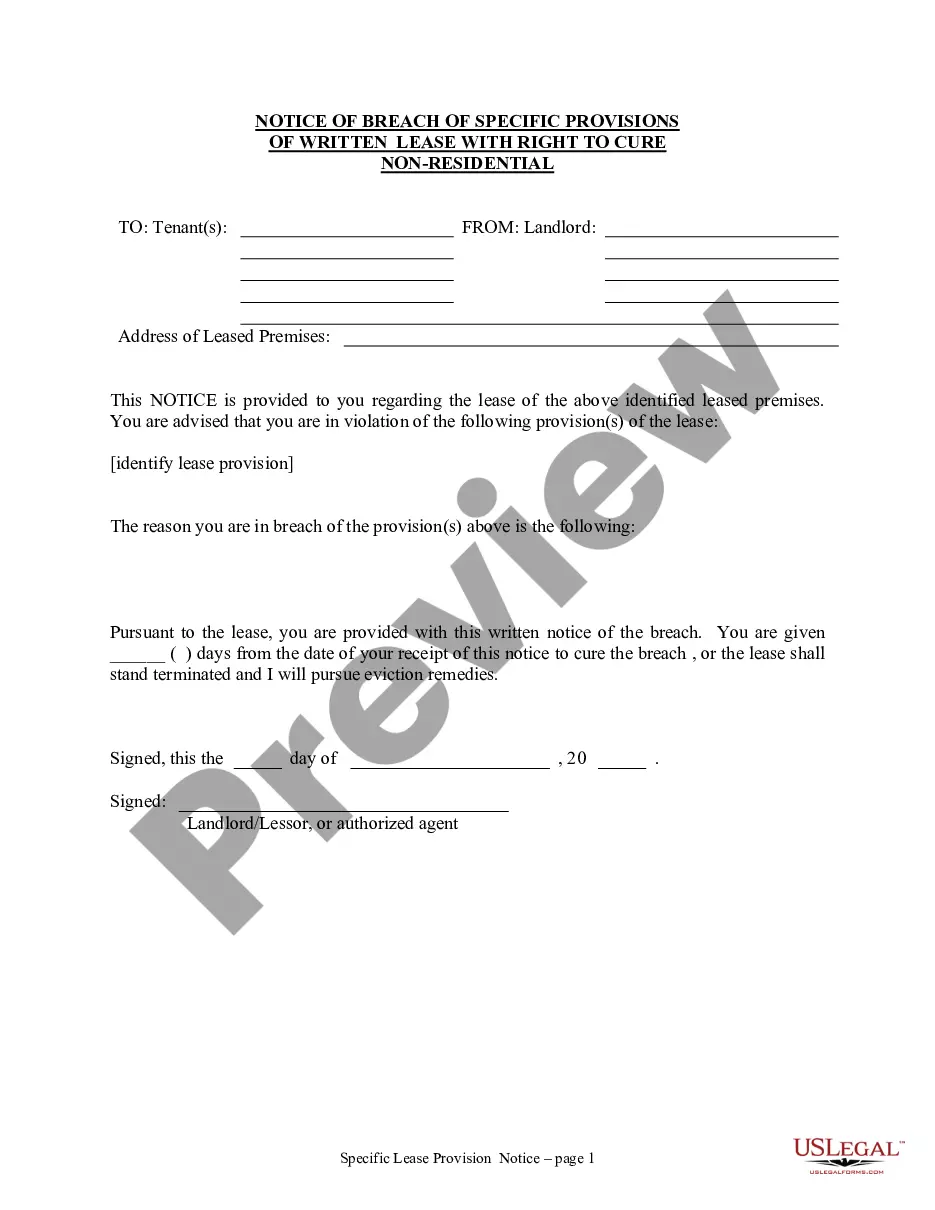


Get your form ready online
Our built-in tools help you complete, sign, share, and store your documents in one place.
Make edits, fill in missing information, and update formatting in US Legal Forms—just like you would in MS Word.
Download a copy, print it, send it by email, or mail it via USPS—whatever works best for your next step.
Sign and collect signatures with our SignNow integration. Send to multiple recipients, set reminders, and more. Go Premium to unlock E-Sign.
If this form requires notarization, complete it online through a secure video call—no need to meet a notary in person or wait for an appointment.
We protect your documents and personal data by following strict security and privacy standards.

Make edits, fill in missing information, and update formatting in US Legal Forms—just like you would in MS Word.

Download a copy, print it, send it by email, or mail it via USPS—whatever works best for your next step.

Sign and collect signatures with our SignNow integration. Send to multiple recipients, set reminders, and more. Go Premium to unlock E-Sign.

If this form requires notarization, complete it online through a secure video call—no need to meet a notary in person or wait for an appointment.

We protect your documents and personal data by following strict security and privacy standards.
Looking for another form?







How to fill out California Notice Of Breach Of Written Lease For Violating Specific Provisions Of Lease With Right To Cure For Nonresidential Property From Landlord To Tenant?
Handling legal documents can be perplexing, even for the most seasoned professionals.
When searching for a California Landlord Tenant Code and lacking the time to seek the correct and latest version, the procedures can be challenging.
Access legal and business forms specific to your state or county. US Legal Forms accommodates all your needs, from personal to corporate documents, all in a single platform.
Utilize sophisticated tools to complete and manage your California Landlord Tenant Code.
Here are the steps to follow after obtaining the form you need: Validate that this is the correct form by previewing it and reviewing its description. Ensure that the template is approved in your state or county. Click Buy Now when you are ready. Choose a monthly subscription plan. Select the format you prefer, and Download, fill out, sign, print, and send your documents. Enjoy the US Legal Forms online library, backed by 25 years of experience and trustworthiness. Streamline your everyday document management into a seamless and user-friendly process today.
- Tap into a valuable resource library of articles, guides, and handbooks pertinent to your situation and requirements.
- Save time and effort searching for the documents you need, and use US Legal Forms’ advanced search and Review feature to find the California Landlord Tenant Code and obtain it.
- If you hold a membership, Log In to your US Legal Forms account, search for the form, and download it.
- Check the My documents section to view the documents you have previously downloaded and manage your folders as desired.
- If this is your initial experience with US Legal Forms, create a free account to enjoy unlimited access to all the benefits of the library.
- An effective online form repository can revolutionize the way individuals handle these matters successfully.
- US Legal Forms stands as a frontrunner in digital legal documents, offering over 85,000 state-specific legal forms accessible at your convenience.
- With US Legal Forms, you can.
Form popularity
FAQ
But, your landlord can still require you to move out for one of the ?no-fault? reasons listed in the law. If your landlord evicts you for one of these reasons, they must first give you one month's rent or waive one month's rent to help you move out.
In addition to limiting rent increases, AB 1482 prevents evictions without just cause for tenants that have lived in the unit for at least one year. ?Just cause? for eviction includes failure to pay rent, criminal activity, or breach of a material term of the lease.
AB 1482 is an important California law with the following highlights: It requires a landlord to establish just cause to be able to terminate a tenancy. It sets the limit to annual rent increases to no more than 5 percent plus the local consumer price index or CPI (inflation rate), or 10 percent (whichever is lower).
Under the provisions of the TPA, landlords are allowed to increase rents each year by 5% plus the applicable average increase in the cost of living in order to allow for inflation. There is a maximum increase of 10% allowed in any given year, thus the Act's provision is often referred to as a ?rent cap.?
Rent Control Laws ing to the AB-1482 from the California Tenant Protection Act), any rent increase is capped at 5% plus inflation or 10% of the lowest price paid in the last 12 months. These laws started in January 2020, and it's expected to last until January 2030. You can read more about this measure here.