California Notice of Breach of Written Lease for Violating Specific Provisions of Lease with Right to Cure for Nonresidential Property from Landlord to Tenant
About this form
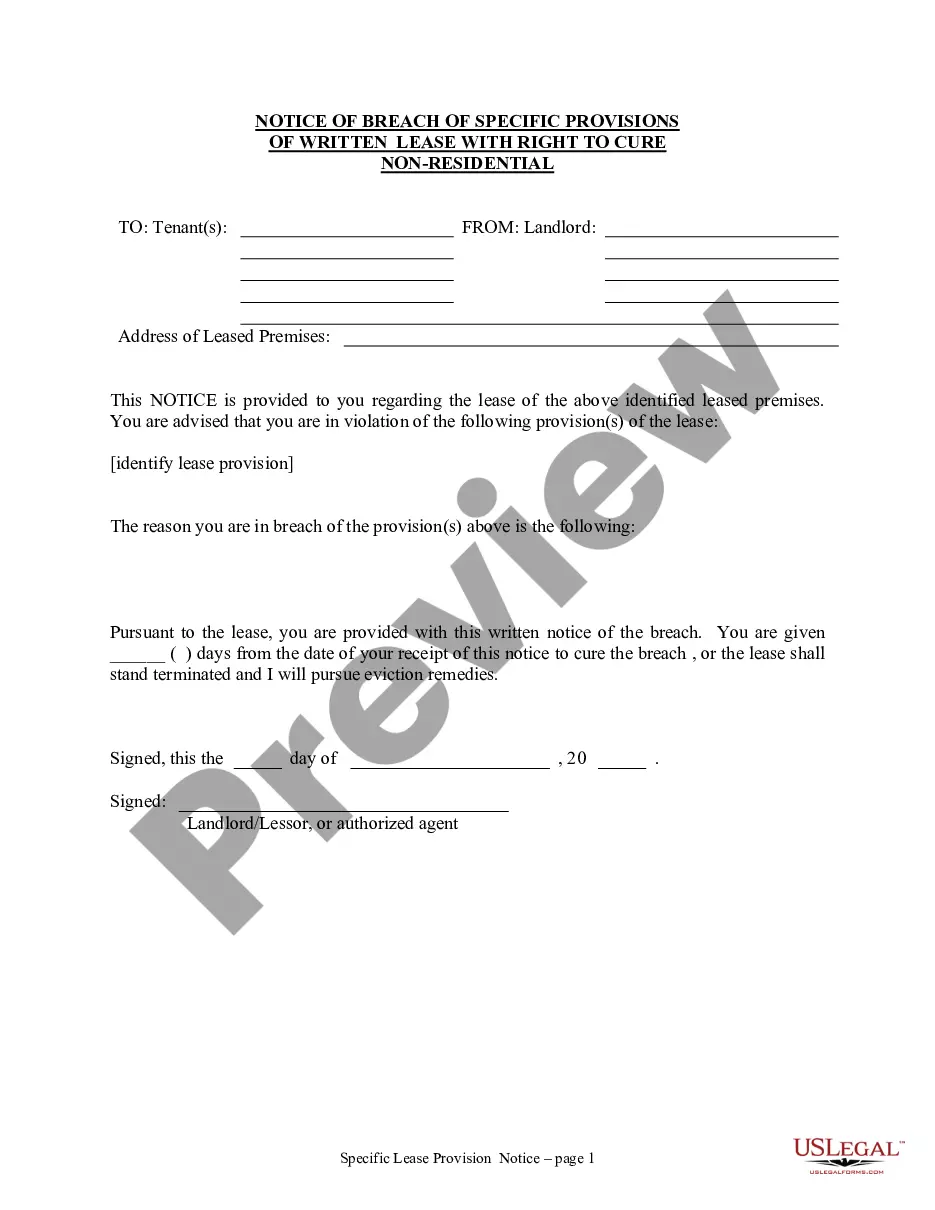
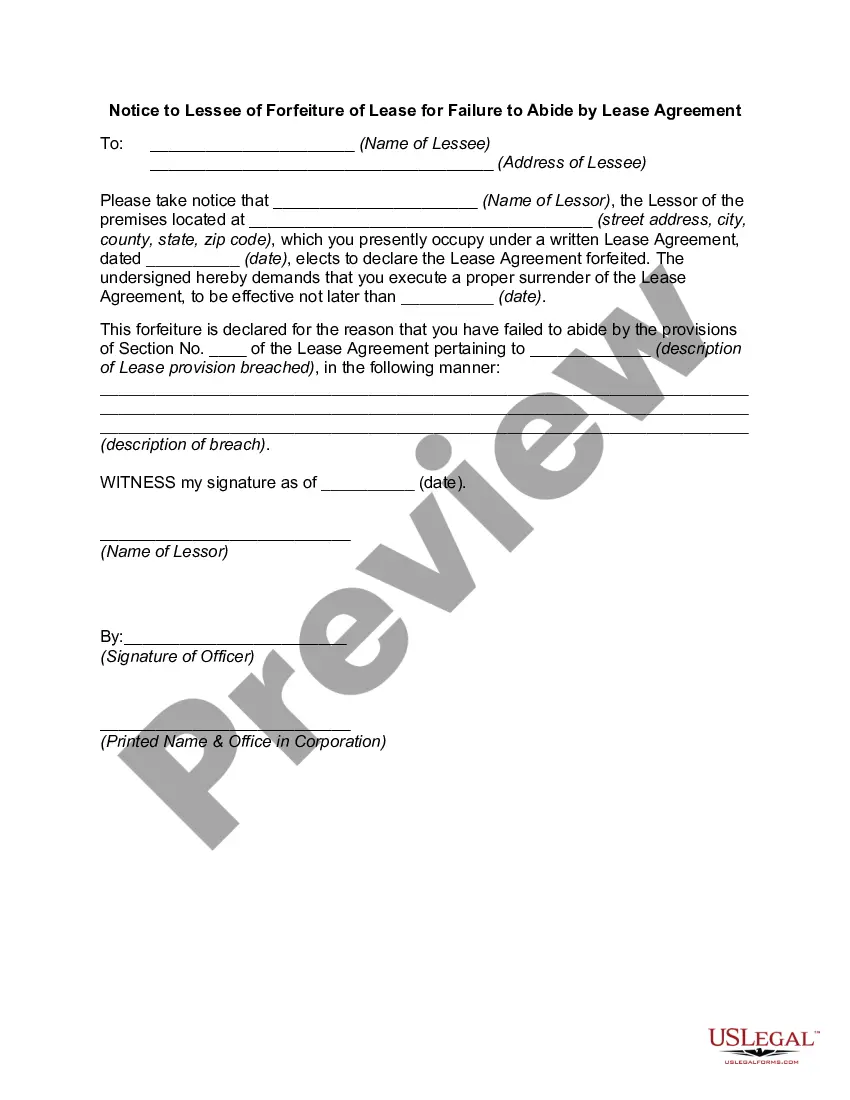
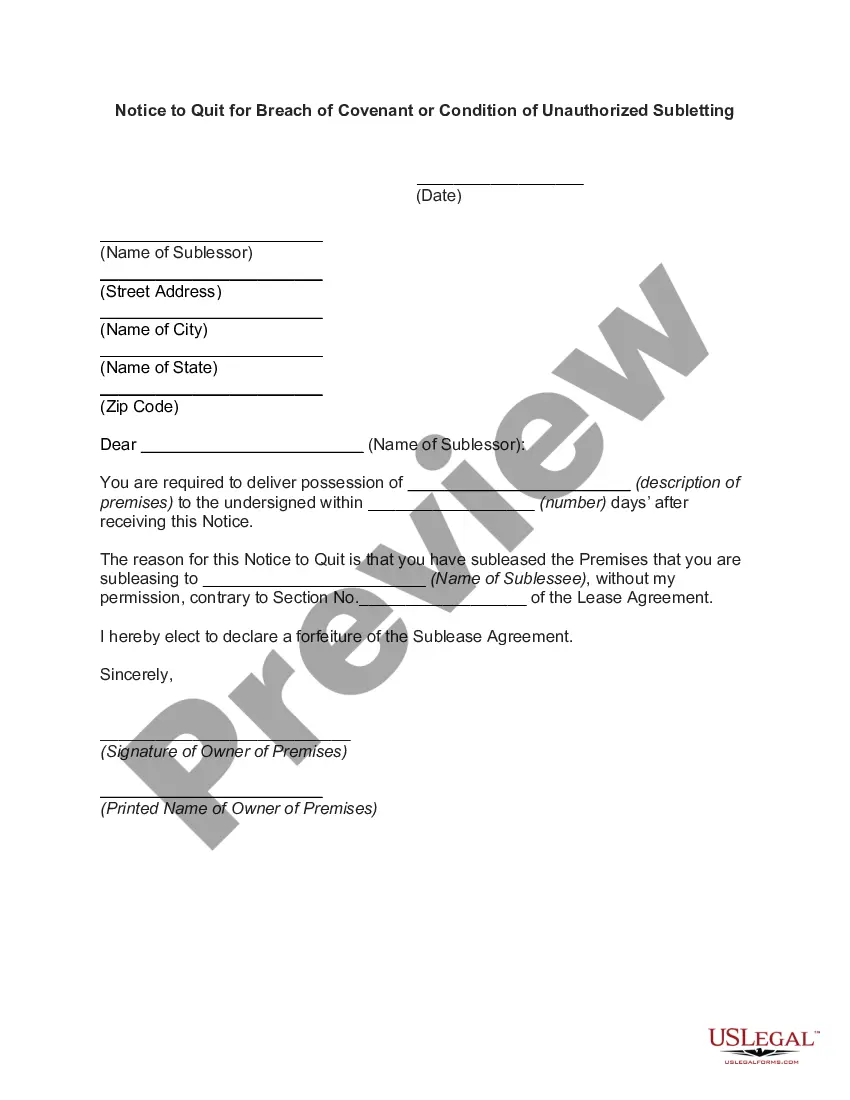
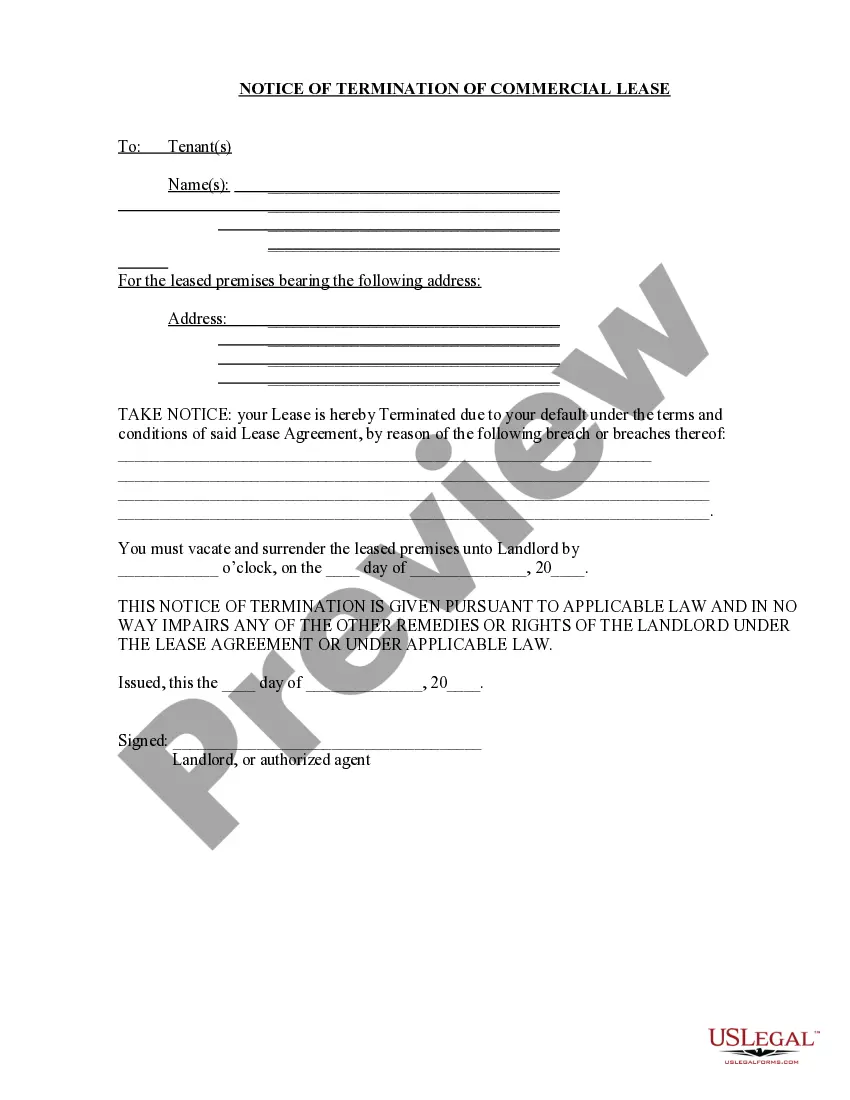
The Notice of Breach of Written Lease for Violating Specific Provisions of Lease with Right to Cure for Nonresidential Property is a critical document for landlords. It serves to formally notify tenants of a lease violation, providing them with the opportunity to remedy the situation before further legal action is taken. This form differs from general eviction notices as it specifically addresses a breach of lease terms while also allowing the tenant a chance to correct the issue within a specified timeframe.
Key components of this form
- Identification of the leased premises and parties involved.
- Details of the specific provision(s) of the lease that have been violated.
- Explanation of the breach and its implications.
- The time frame allocated for the tenant to cure the breach.
- Signature of the landlord or authorized agent.
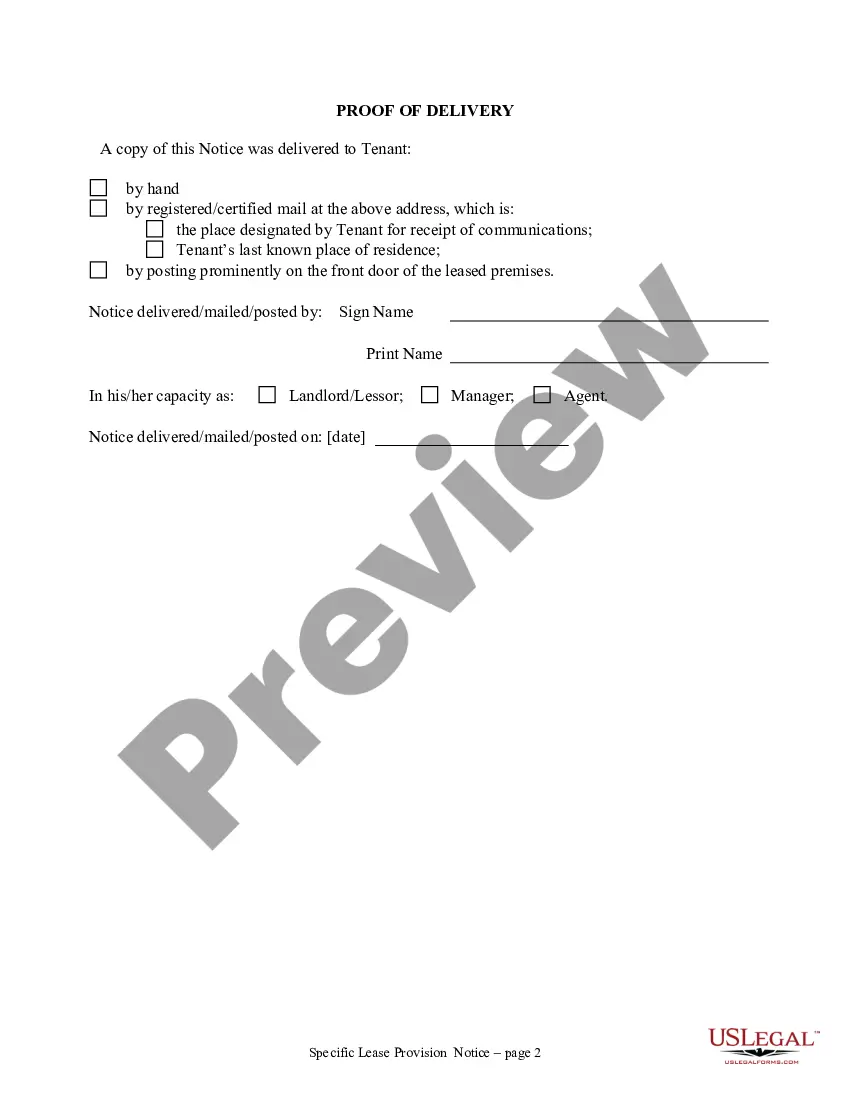
- Proof of delivery method for the notice.


When to use this form
This form is essential when a landlord identifies that a tenant has violated specific provisions outlined in a nonresidential lease. It is used to formally communicate the breach, outline the reasons for the violation, and provide a deadline for the tenant to correct the issue. Use this form before pursuing eviction or other legal remedies to ensure compliance with local lease laws.
Intended users of this form
- Landlords of nonresidential properties.
- Property managers acting on behalf of the landlord.
- Tenants who need to understand breach implications and rights to remedy.
Instructions for completing this form
- Identify the leased premises and enter the tenant's details.
- Specify the exact lease provision that has been violated.
- Provide a clear explanation of the breach.
- Insert the deadline by which the tenant must cure the breach.
- Sign the form and date it appropriately.
- Choose and execute the method of delivery to ensure the tenant acknowledges receipt.
Notarization requirements for this form
This form usually doesn’t need to be notarized. However, local laws or specific transactions may require it. Our online notarization service, powered by Notarize, lets you complete it remotely through a secure video session, available 24/7.
Get your form ready online
Our built-in tools help you complete, sign, share, and store your documents in one place.
Make edits, fill in missing information, and update formatting in US Legal Forms—just like you would in MS Word.
Download a copy, print it, send it by email, or mail it via USPS—whatever works best for your next step.
Sign and collect signatures with our SignNow integration. Send to multiple recipients, set reminders, and more. Go Premium to unlock E-Sign.
If this form requires notarization, complete it online through a secure video call—no need to meet a notary in person or wait for an appointment.
We protect your documents and personal data by following strict security and privacy standards.

Make edits, fill in missing information, and update formatting in US Legal Forms—just like you would in MS Word.

Download a copy, print it, send it by email, or mail it via USPS—whatever works best for your next step.

Sign and collect signatures with our SignNow integration. Send to multiple recipients, set reminders, and more. Go Premium to unlock E-Sign.

If this form requires notarization, complete it online through a secure video call—no need to meet a notary in person or wait for an appointment.

We protect your documents and personal data by following strict security and privacy standards.
Common mistakes
- Failing to specify the exact provision violated.
- Not providing a clear explanation of the breach.
- Omitting to include the deadline for curing the breach.
- Not delivering the notice properly or failing to keep proof of delivery.
Advantages of online completion
- Convenient access to legal templates anytime, anywhere.
- Editability allows you to customize the form for your specific situation.
- Reliability, with forms drafted by licensed attorneys ensuring compliance with legal standards.
Legal use & context
- This notice serves as a preliminary step before eviction proceedings can commence.
- Ensures compliance with specific state landlord-tenant laws regarding notice and cure periods.
- Establishes a record of the landlord's communication with the tenant regarding lease violations.
Main things to remember
- The form is essential for notifying tenants of lease breaches.
- It includes a right to cure the violation before eviction can be pursued.
- Proper completion and delivery of the notice are critical for legal protection.
Looking for another form?
Form popularity
FAQ
The statute of limitations on a breach of lease agreement in California is four years from the date of the breach. This timeframe is vital to keep in mind when considering actions related to the California Notice of Breach of Written Lease for Violating Specific Provisions of Lease with Right to Cure for Nonresidential Property from Landlord to Tenant. Acting swiftly can significantly affect your chances of a favorable outcome.
A breach of lease agreement occurs when either party fails to uphold the terms outlined in the contract. This includes not paying rent, violating property use terms, or neglecting maintenance duties. Understanding the details of the California Notice of Breach of Written Lease for Violating Specific Provisions of Lease with Right to Cure for Nonresidential Property from Landlord to Tenant can help clarify your rights and responsibilities in such situations.
The statute of limitations for breach of lease cases in California is four years. This period is important for both tenants and landlords to understand when dealing with lease violations, including those detailed in a California Notice of Breach of Written Lease for Violating Specific Provisions of Lease with Right to Cure for Nonresidential Property from Landlord to Tenant. Timely action is key to protecting your rights.
Breaking a lease in California can lead to several consequences, including potential financial penalties and a negative impact on your credit score. According to the California Notice of Breach of Written Lease for Violating Specific Provisions of Lease with Right to Cure for Nonresidential Property from Landlord to Tenant, landlords may pursue legal action for unpaid rent or damages. It is wise to review your lease agreement and consider legal options before taking any action.
The statute of limitations for collecting back rent in California is typically four years. This period also aligns with the rules regarding a California Notice of Breach of Written Lease for Violating Specific Provisions of Lease with Right to Cure for Nonresidential Property from Landlord to Tenant. Understanding this timeframe can help both landlords and tenants address issues promptly and avoid disputes.
In California, you generally have four years to file a lawsuit for breach of contract. This applies to cases involving a written lease agreement, including a California Notice of Breach of Written Lease for Violating Specific Provisions of Lease with Right to Cure for Nonresidential Property from Landlord to Tenant. It is crucial to keep this timeline in mind as delays can jeopardize your case.
A leasing violation refers to a failure to comply with the terms set in a lease agreement. This can involve various actions, such as not paying rent on time or making unauthorized modifications to the property. Responding effectively to any California Notice of Breach of Written Lease for Violating Specific Provisions of Lease with Right to Cure for Nonresidential Property from Landlord to Tenant can help maintain a positive rental history.
If you receive a lease violation in California, it is crucial to act quickly to resolve the issue. The landlord may provide a California Notice of Breach of Written Lease for Violating Specific Provisions of Lease with Right to Cure for Nonresidential Property, allowing you time to cure the violation. Ignoring this notice can result in eviction or further legal actions, so addressing it promptly is vital.
A breach of lease occurs when a tenant or landlord fails to fulfill their obligations outlined in the lease agreement. Common examples include late rent payments or unauthorized alterations to the property. Understanding your lease can help you navigate any California Notice of Breach of Written Lease for Violating Specific Provisions of Lease with Right to Cure for Nonresidential Property from Landlord to Tenant more effectively.
When responding to a lease violation, first read the notice carefully to understand the specific issues raised. Next, address the violation promptly and communicate with your landlord to resolve the matter. If the notice is a California Notice of Breach of Written Lease for Violating Specific Provisions of Lease with Right to Cure for Nonresidential Property from Landlord to Tenant, you'll want to rectify the situation as outlined in the notice.