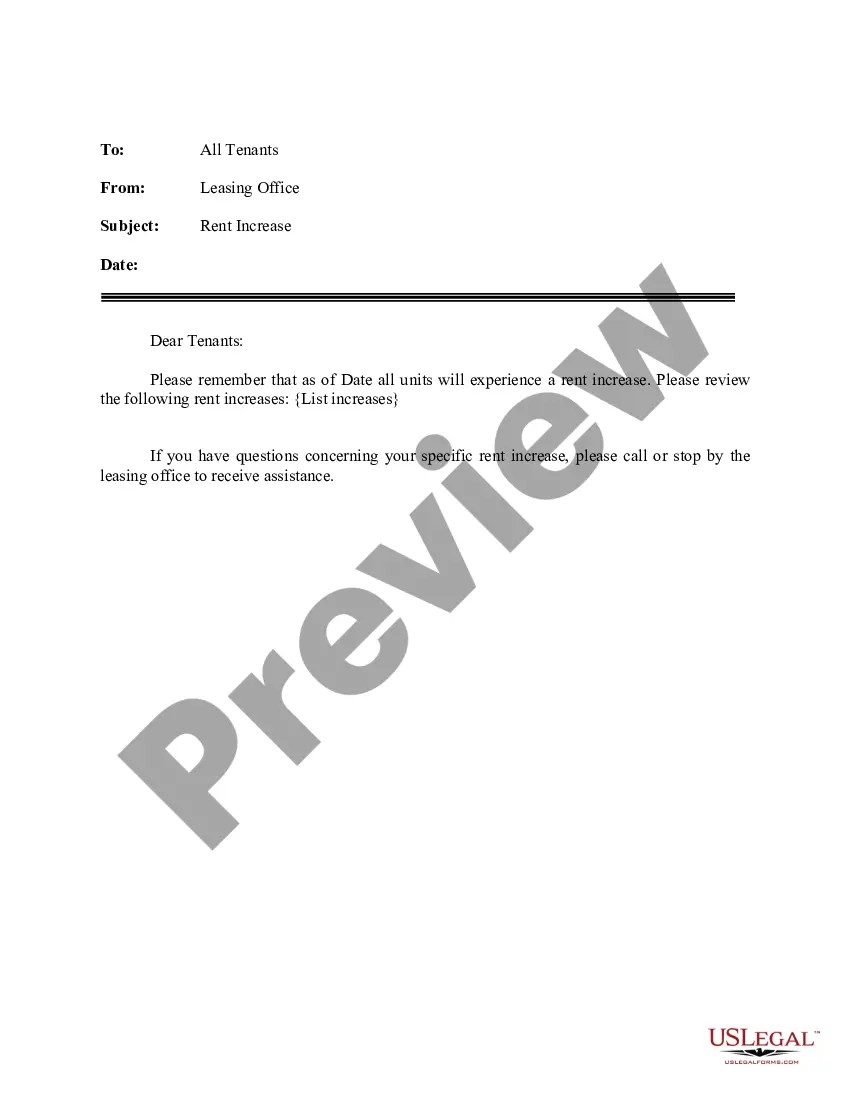
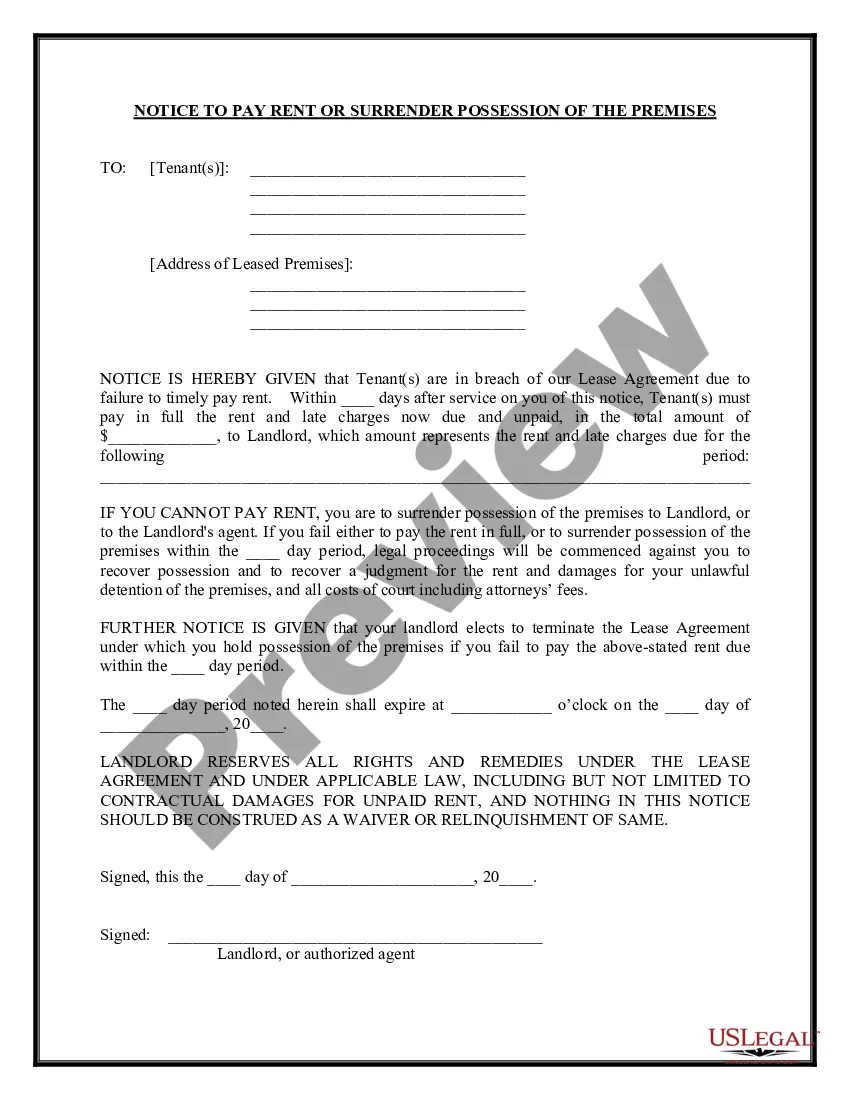
Rent Increase For Month To Month Lease
Description


Get your form ready online
Our built-in tools help you complete, sign, share, and store your documents in one place.
Make edits, fill in missing information, and update formatting in US Legal Forms—just like you would in MS Word.
Download a copy, print it, send it by email, or mail it via USPS—whatever works best for your next step.
Sign and collect signatures with our SignNow integration. Send to multiple recipients, set reminders, and more. Go Premium to unlock E-Sign.
If this form requires notarization, complete it online through a secure video call—no need to meet a notary in person or wait for an appointment.
We protect your documents and personal data by following strict security and privacy standards.

Make edits, fill in missing information, and update formatting in US Legal Forms—just like you would in MS Word.

Download a copy, print it, send it by email, or mail it via USPS—whatever works best for your next step.

Sign and collect signatures with our SignNow integration. Send to multiple recipients, set reminders, and more. Go Premium to unlock E-Sign.

If this form requires notarization, complete it online through a secure video call—no need to meet a notary in person or wait for an appointment.

We protect your documents and personal data by following strict security and privacy standards.
Looking for another form?







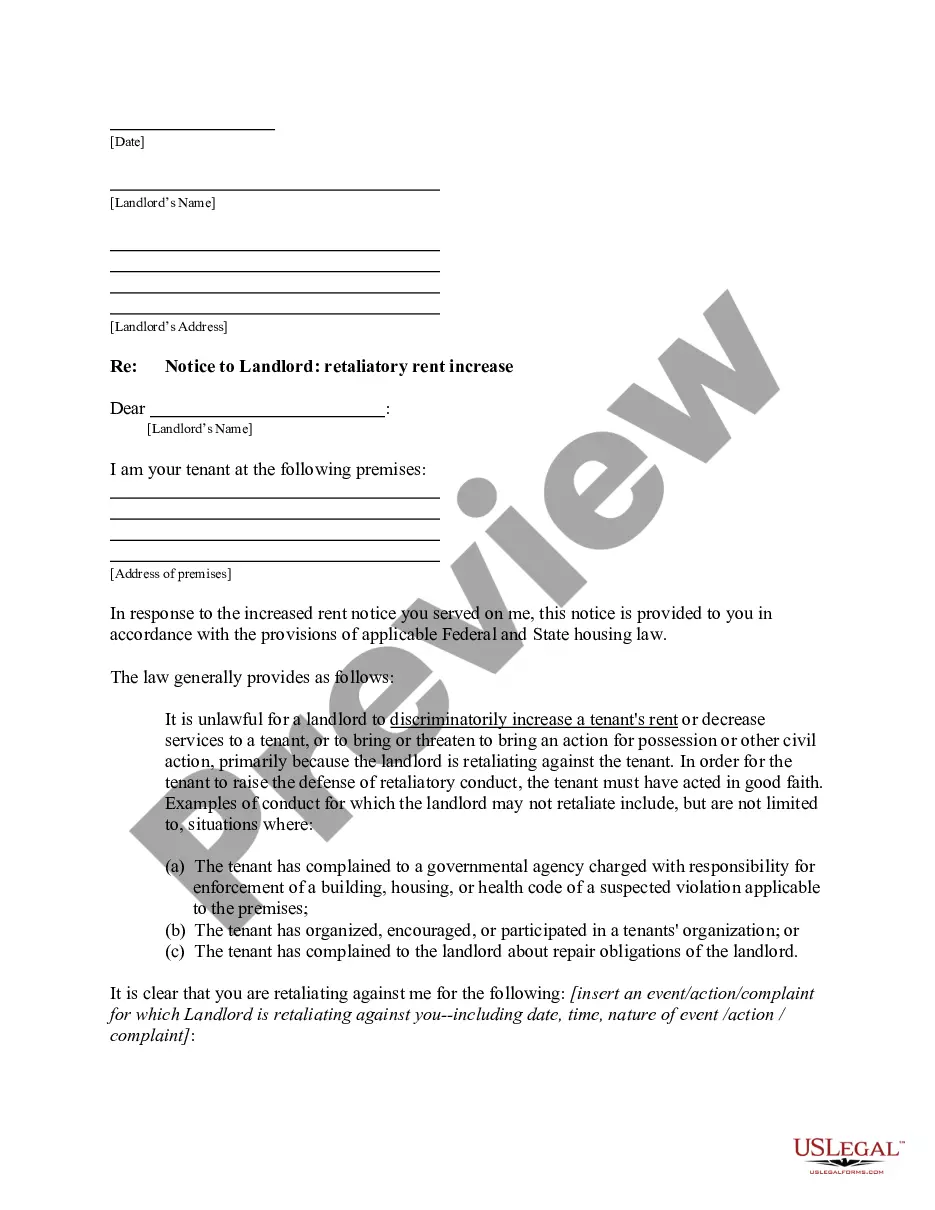
How to fill out California Letter From Tenant To Landlord Containing Notice To Landlord To Withdraw Retaliatory Rent Increase?
- Log in to your US Legal Forms account. If you're a returning user, ensure your subscription is active. If not, consider renewing it.
- Preview the form options available for a rent increase notice. Make sure the template aligns with your specific local regulations.
- Use the search feature if you need another form or if you're uncertain about the selection. Confirm accuracy before proceeding.
- Select the desired template and click 'Buy Now' to choose your subscription plan, ensuring to create an account for full access.
- Complete your purchase. Enter your payment details or use your PayPal for a seamless transaction.
- Once the payment is processed, download the completed form to your device, and you can locate it anytime in the 'My Forms' section of your profile.
In conclusion, using US Legal Forms not only streamlines the process of handling a rent increase for month-to-month leases but also provides peace of mind through their reliable resources.
Don't wait—visit US Legal Forms today to access your documents and step confidently into your legal matters!
Form popularity
FAQ
In Georgia, landlords must provide a written notice of at least 60 days before a rent increase for month-to-month lease agreements. This notice gives tenants time to prepare for the change. Understanding this requirement helps maintain a good landlord-tenant relationship while ensuring compliance with local laws. Always consider using platforms like uslegalforms to streamline the notification process.
The best type of lease for a landlord often depends on their goals. Long-term leases offer stability and guarantee income for an extended period. On the other hand, month-to-month leases give landlords the ability to increase rent more frequently, responding to market changes quickly. Each option has its merits, so considering a rent increase for month-to-month lease can be a strategic move.
Yes, a month-to-month lease can be beneficial for landlords. This type of lease allows landlords to adjust the rent more frequently, which is important in fluctuating markets. Additionally, it provides landlords with the option to terminate the lease if needed without a long notice period. Understanding the implications of a rent increase for month-to-month lease can help landlords make informed decisions.
When deciding whether to renew a lease or go month-to-month, consider your flexibility needs. A month-to-month lease offers more freedom, allowing you to adjust your living situation quickly. However, if you prefer stability and a fixed rental rate, renewing the lease may be better. Keep in mind that the rent increase for month-to-month lease can happen more frequently than in a long-term contract.
The month-to-month law in Ohio dictates that leases automatically renew each month until either party provides proper notice to terminate or modify the lease terms. Landlords can increase rent, which falls under the rent increase for month to month lease category, requiring a 30-day notice in most cases. Being informed about these laws can aid in making sound decisions regarding your tenancy. For assistance, USLegalForms can guide you through the complexities of lease agreements.
Ohio laws govern month-to-month leases by allowing either party to terminate the lease with proper notice, usually 30 days. These laws also stipulate that landlords may adjust rent based on market rates, hence understanding rent increase for month to month lease is crucial. Familiarizing yourself with these legal parameters helps protect your rights as a tenant or landlord. For comprehensive details, USLegalForms is an excellent resource.
To evict a month-to-month tenant in Ohio, follow the legal procedures starting with a proper notice. Landlords must provide a written notice, typically 30 days, prior to filing for eviction. Understanding the process surrounding rent increase for month to month lease can clarify your rights and responsibilities. Consider using USLegalForms to find the necessary templates and legal guidance to streamline this process.
In Ohio, landlords typically must provide a 30-day notice for month-to-month tenants to move out. This period may vary based on specific lease agreements or if there are any violations of lease terms. Ensuring you understand the rent increase for month to month lease rules can help you prepare for any potential adjustments in your living situation. If you need guidance, USLegalForms offers resources to navigate this process.
Georgia law allows month-to-month leases, providing tenants and landlords with flexibility. These lease agreements typically do not require a written contract, although it's advisable to have one for clarity. Notice periods for rent increases must be adhered to, ensuring both parties have time to respond to changes. Educate yourself on the rent increase for month to month lease to stay informed of your rights.
Yes, a landlord can extend a lease by a month if both parties agree. This is often a simple process, requiring a written amendment to the existing lease. Such flexibility benefits both landlords and tenants, allowing them to evaluate their options without making long-term commitments. Understanding the intricacies of rent increase for month to month lease can aid in such negotiations.