Rent Increase For 2025 Bc
Description




Get your form ready online
Our built-in tools help you complete, sign, share, and store your documents in one place.
Make edits, fill in missing information, and update formatting in US Legal Forms—just like you would in MS Word.
Download a copy, print it, send it by email, or mail it via USPS—whatever works best for your next step.
Sign and collect signatures with our SignNow integration. Send to multiple recipients, set reminders, and more. Go Premium to unlock E-Sign.
If this form requires notarization, complete it online through a secure video call—no need to meet a notary in person or wait for an appointment.
We protect your documents and personal data by following strict security and privacy standards.

Make edits, fill in missing information, and update formatting in US Legal Forms—just like you would in MS Word.

Download a copy, print it, send it by email, or mail it via USPS—whatever works best for your next step.

Sign and collect signatures with our SignNow integration. Send to multiple recipients, set reminders, and more. Go Premium to unlock E-Sign.

If this form requires notarization, complete it online through a secure video call—no need to meet a notary in person or wait for an appointment.

We protect your documents and personal data by following strict security and privacy standards.
Looking for another form?

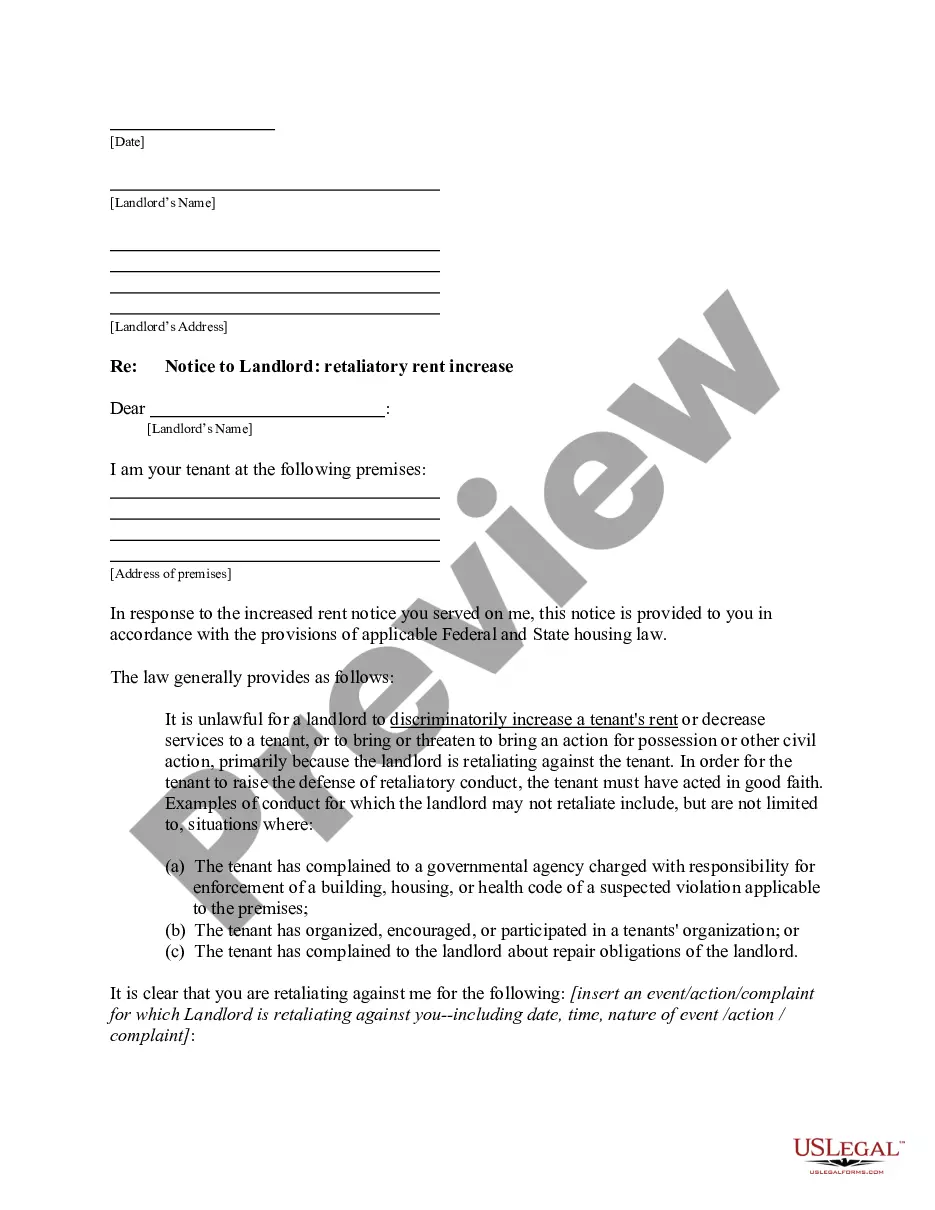
How to fill out California Letter From Tenant To Landlord Containing Notice To Landlord To Withdraw Retaliatory Rent Increase?
- If you're a returning user, log into your account and access your forms. Ensure your subscription is valid; renew it if necessary.
- If you're using US Legal Forms for the first time, start by checking the Preview mode and form description. Make sure to choose a document that matches your requirements and complies with local laws.
- If you need alternative templates, search using the Search tab at the top of the page to find the ones that suit your situation.
- To proceed with your desired document, click the Buy Now button and select an appropriate subscription plan. You’ll need to create an account to unlock access to the full library.
- Complete your purchase by entering your payment details via credit card or PayPal.
- Finally, download your form and save it for future use. You can find it anytime in the My Forms section of your profile.
US Legal Forms empowers individuals and attorneys by providing a rich library of over 85,000 editable legal documents, ensuring that both parties feel secure and informed. Their expert assistance is invaluable for creating legally sound forms quickly.
Take control of your rental agreements today and ensure compliance as 2025 approaches. Start your journey with US Legal Forms now!
Form popularity
FAQ
For 2025, the amount you can raise rent in BC is governed by provincial regulations that dictate the maximum allowable increase. Staying informed about these limits is essential to ensure you comply with the law. If you're unsure about the figures, consulting platforms like uslegalforms can give you clarity and guidance.
To calculate the maximum rent increase for 2025 in BC, you can use various online calculators that take official guidelines into account. This tool helps landlords and tenants understand how rate adjustments might affect rent. Utilizing resources like uslegalforms can simplify this process, offering clear insights tailored to your specific situation.
No, a rent increase of 23.5% is not approved for BC landlords. Such a drastic increase exceeds the limits set by current legislation, which is designed to protect tenants from excessive financial burdens. Always refer to the latest rent increase regulations to ensure compliance and avoid misunderstandings.
In BC, the maximum rent can increase each year is capped to ensure tenant affordability. This cap is calculated based on inflation rates and is designed to keep pace with economic changes. Familiarizing yourself with this limit can help landlords set fair rent while protecting tenants from steep increases.
For 2025, the maximum rent increase in BC is determined annually by the government, reflecting economic conditions. This number is crucial for both landlords planning their financials and tenants trying to understand their future expenses. It’s wise to check official resources for the most accurate figures as they become available.
The new tenant law in BC aims to protect tenant rights while providing clarity for landlords. This law introduces measures that limit the circumstances under which rent can be raised, ensuring transparency and fairness in rental agreements. Understanding these changes can help both parties navigate the rental landscape more smoothly.
In British Columbia, the Residential Tenancy Branch sets an annual limit on how much landlords can raise rent, including specific regulations for 2025 BC. Generally, the allowable rent increase is determined by a fixed percentage, which is announced each year. It's crucial for landlords to adhere to these limits to avoid penalties and disputes with tenants. For those seeking clarity on current regulations, uslegalforms offers valuable insights and resources tailored for landlords.
An addendum to increase rent is a formal document that modifies the original lease agreement to reflect a new rent amount. This document is crucial for both landlords and tenants, particularly in relation to a rent increase for 2025 BC. It should clearly state the terms of the increase and be signed by both parties for it to be legally binding. To simplify this process, landlords can use platforms like uslegalforms to generate comprehensive addendums that meet legal requirements.
The N11 form in British Columbia is an important document that enables tenants and landlords to agree on mutual consent to end a tenancy. This form can be used when a landlord plans to raise the rent, and the tenant agrees to move out instead of agreeing to the rent increase for 2025 BC. Proper usage of the N11 form ensures that both parties fully understand their rights and obligations during the transition. Utilizing resources like uslegalforms can help you navigate the process smoothly.
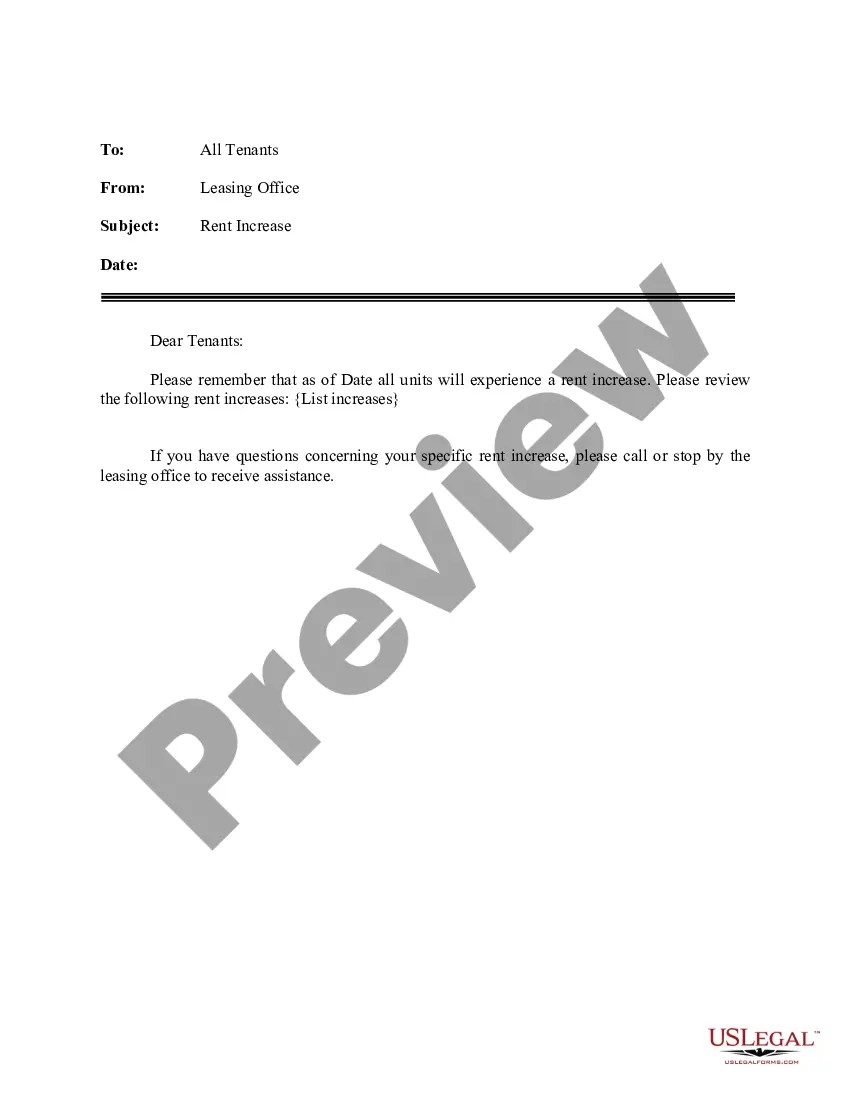
The RTB 26 form is essential for tenants and landlords in British Columbia during the rent increase process. This form serves as a notice to formally notify tenants about an upcoming rent increase for 2025 BC. It outlines important details about the increase, including the dollar amount and rationale behind it. Understanding how to fill out this form correctly can prevent disputes and ensure compliance with rental laws.