Notice Rent Increase With The Tenant
Description



Get your form ready online
Our built-in tools help you complete, sign, share, and store your documents in one place.
Make edits, fill in missing information, and update formatting in US Legal Forms—just like you would in MS Word.
Download a copy, print it, send it by email, or mail it via USPS—whatever works best for your next step.
Sign and collect signatures with our SignNow integration. Send to multiple recipients, set reminders, and more. Go Premium to unlock E-Sign.
If this form requires notarization, complete it online through a secure video call—no need to meet a notary in person or wait for an appointment.
We protect your documents and personal data by following strict security and privacy standards.

Make edits, fill in missing information, and update formatting in US Legal Forms—just like you would in MS Word.

Download a copy, print it, send it by email, or mail it via USPS—whatever works best for your next step.

Sign and collect signatures with our SignNow integration. Send to multiple recipients, set reminders, and more. Go Premium to unlock E-Sign.

If this form requires notarization, complete it online through a secure video call—no need to meet a notary in person or wait for an appointment.

We protect your documents and personal data by following strict security and privacy standards.
Looking for another form?








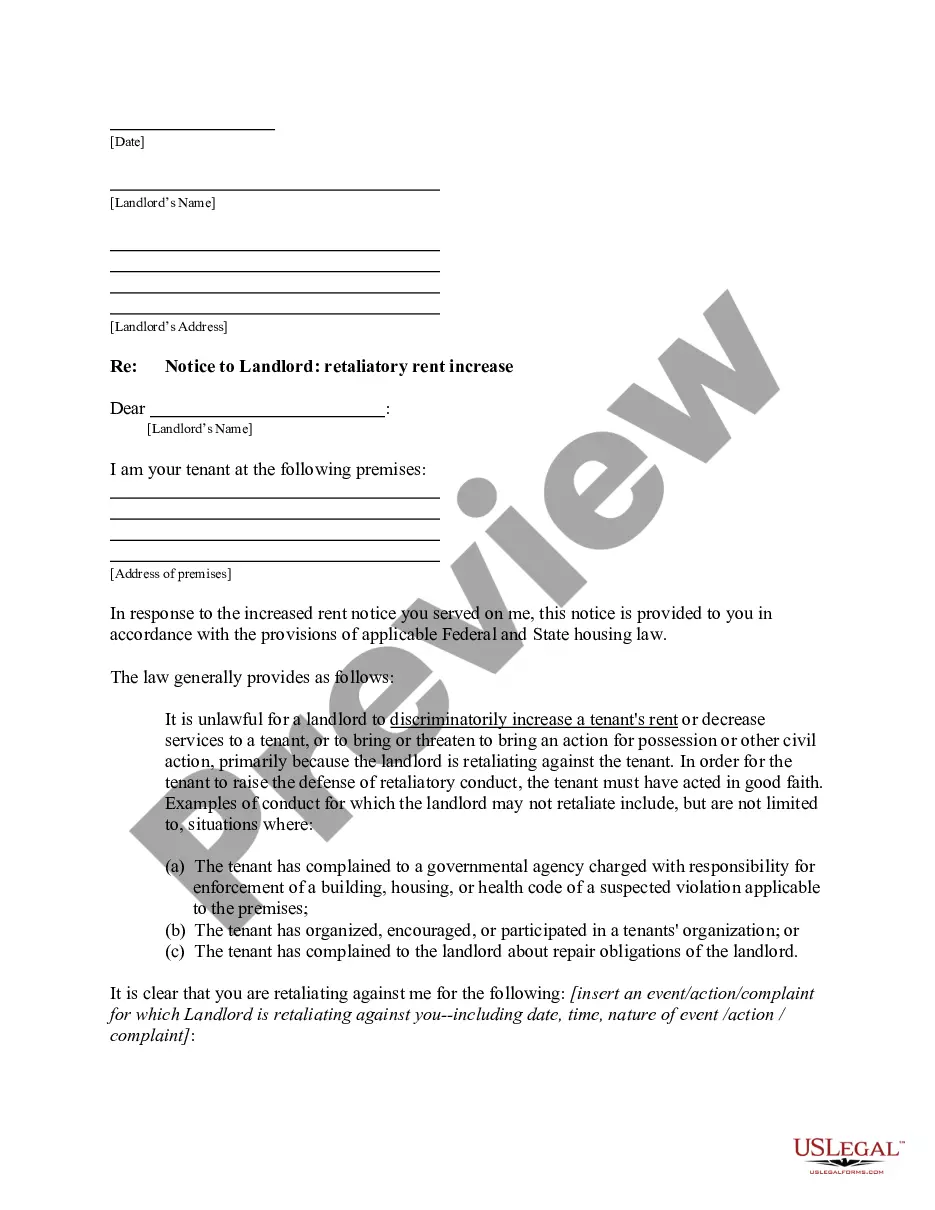
How to fill out California Letter From Tenant To Landlord Containing Notice To Landlord To Withdraw Retaliatory Rent Increase?
- Log in to your US Legal Forms account if you're a returning user and download the form template you need. Ensure your subscription is active; if it's expired, renew it as per your payment plan.
- If this is your first time using US Legal Forms, start by checking the form preview and description to confirm it suits your needs and complies with your local laws.
- If the template isn't quite right, use the search function to find a more suitable option before proceeding.
- Click on the 'Buy Now' button to select your desired subscription plan. You will need to create an account to access the extensive library of forms.
- Complete your purchase by entering your payment details. You can pay using a credit card or through PayPal.
- Once purchased, download the template to your device and access it anytime through the 'My Forms' menu in your account.
Using US Legal Forms gives you access to over 85,000 fillable legal documents, helping you to ensure your forms are precise and relevant. The platform not only offers a robust collection of forms but also connects users with premium experts for additional guidance, making your legal documentation straightforward and reliable.
Ready to create your rent increase notice? Start using US Legal Forms today to simplify your legal processes!
Form popularity
FAQ
The most a landlord can raise the rent typically varies based on state and local regulations. Many states require landlords to justify increases above a certain percentage or provide advance notification. Checking your local laws can clarify these limits. Understanding this will help you prepare when you receive a notice rent increase with the tenant.
The maximum amount a landlord can raise rent often depends on local laws and regulations. Typically, landlords must provide written notice and follow specific time frames for increases. It's wise to research your area’s rent control laws to understand your rights fully. This knowledge will empower you when addressing a notice rent increase with the tenant.
When addressing a rent increase with your landlord, be polite and clear in your letter. Start by expressing your concerns, then state the specific increase amount and your reasons for disputing it. Make sure to include any supporting evidence, like market rates in your area. A well-crafted letter can lead to a constructive dialogue regarding the notice rent increase with the tenant.
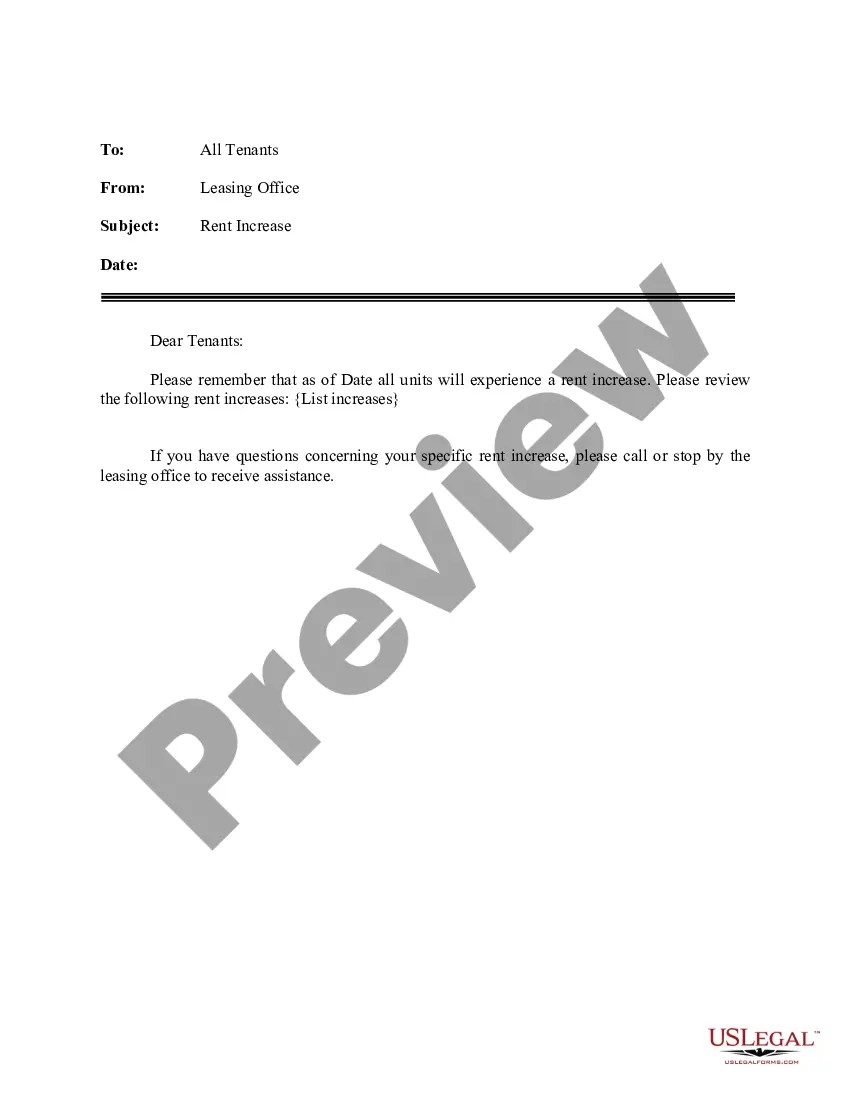
Writing a rent increase letter to your tenant involves clear communication. Start by stating the current rent, the new rent amount, and the reason for the increase. It is important to include the effective date of the change. Ensure you deliver the notice rent increase with the tenant in accordance with local laws to avoid any issues.
The maximum rent increase a landlord can impose varies by location and local laws. Typically, states or cities may have guidelines, but many landlords issue a Notice rent increase with the tenant based on market rates. Check your local housing authority or regulations for specifics to better understand your rights and obligations as a tenant or landlord.
In Tennessee, there is no specific limit to how much a landlord can raise rent. However, landlords must provide a factual Notice rent increase with the tenant ahead of time. It is wise to consider local market conditions and maintain fair practices to avoid potential disputes. Always confirm any specific county regulations that may be in place.
When asking your landlord for a rent increase, approach the conversation respectfully and professionally. Highlight reasons like increased property taxes or upkeep costs that may justify your request. It’s helpful to support your request with market comparisons or rental trends. Remember, a well-prepared discussion can lead to a positive outcome.
Writing a notice letter for a rent increase involves clear communication. Start by stating the current rent amount, the new increased amount, and the effective date of the change. Be sure to include the Notice rent increase with the tenant in writing and keep a copy for your records. A professional tone usually helps maintain a positive landlord-tenant relationship.
The highest a landlord can raise rent often depends on local regulations. Generally, landlords should provide a reasonable Notice rent increase with the tenant that reflects market conditions and maintenance costs. In some areas, there are caps on increases, especially for long-term tenants. Therefore, understanding local laws is crucial.
In explaining a rent increase to a tenant, it’s crucial to provide a well-structured sample letter that includes the reason behind the increase. Start with a friendly introduction, followed by details on the new rental rate and the date it takes effect. Use this opportunity to discuss factors such as market trends or maintenance costs that contributed to the decision. By presenting a clear notice rent increase with the tenant, you foster understanding and ensure a smooth transition.