Tenant Rights For Renting A Room
Description


Get your form ready online
Our built-in tools help you complete, sign, share, and store your documents in one place.
Make edits, fill in missing information, and update formatting in US Legal Forms—just like you would in MS Word.
Download a copy, print it, send it by email, or mail it via USPS—whatever works best for your next step.
Sign and collect signatures with our SignNow integration. Send to multiple recipients, set reminders, and more. Go Premium to unlock E-Sign.
If this form requires notarization, complete it online through a secure video call—no need to meet a notary in person or wait for an appointment.
We protect your documents and personal data by following strict security and privacy standards.

Make edits, fill in missing information, and update formatting in US Legal Forms—just like you would in MS Word.

Download a copy, print it, send it by email, or mail it via USPS—whatever works best for your next step.

Sign and collect signatures with our SignNow integration. Send to multiple recipients, set reminders, and more. Go Premium to unlock E-Sign.

If this form requires notarization, complete it online through a secure video call—no need to meet a notary in person or wait for an appointment.

We protect your documents and personal data by following strict security and privacy standards.
Looking for another form?

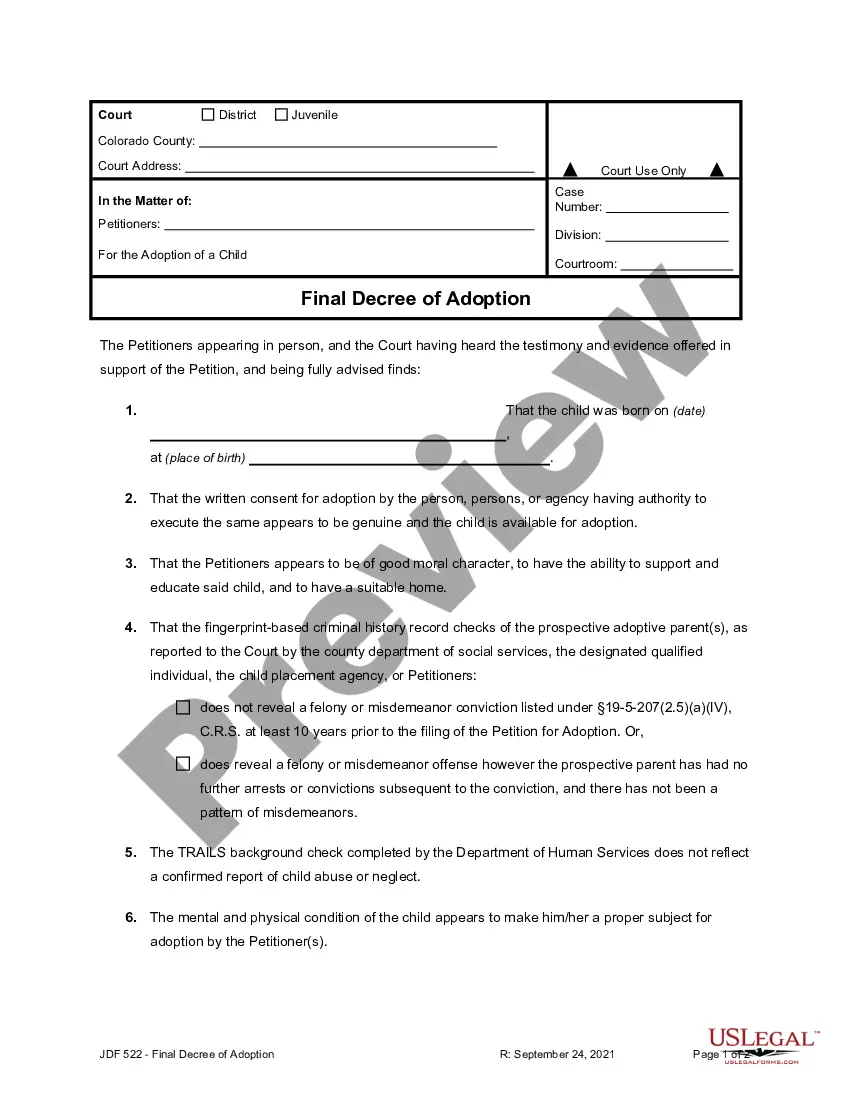




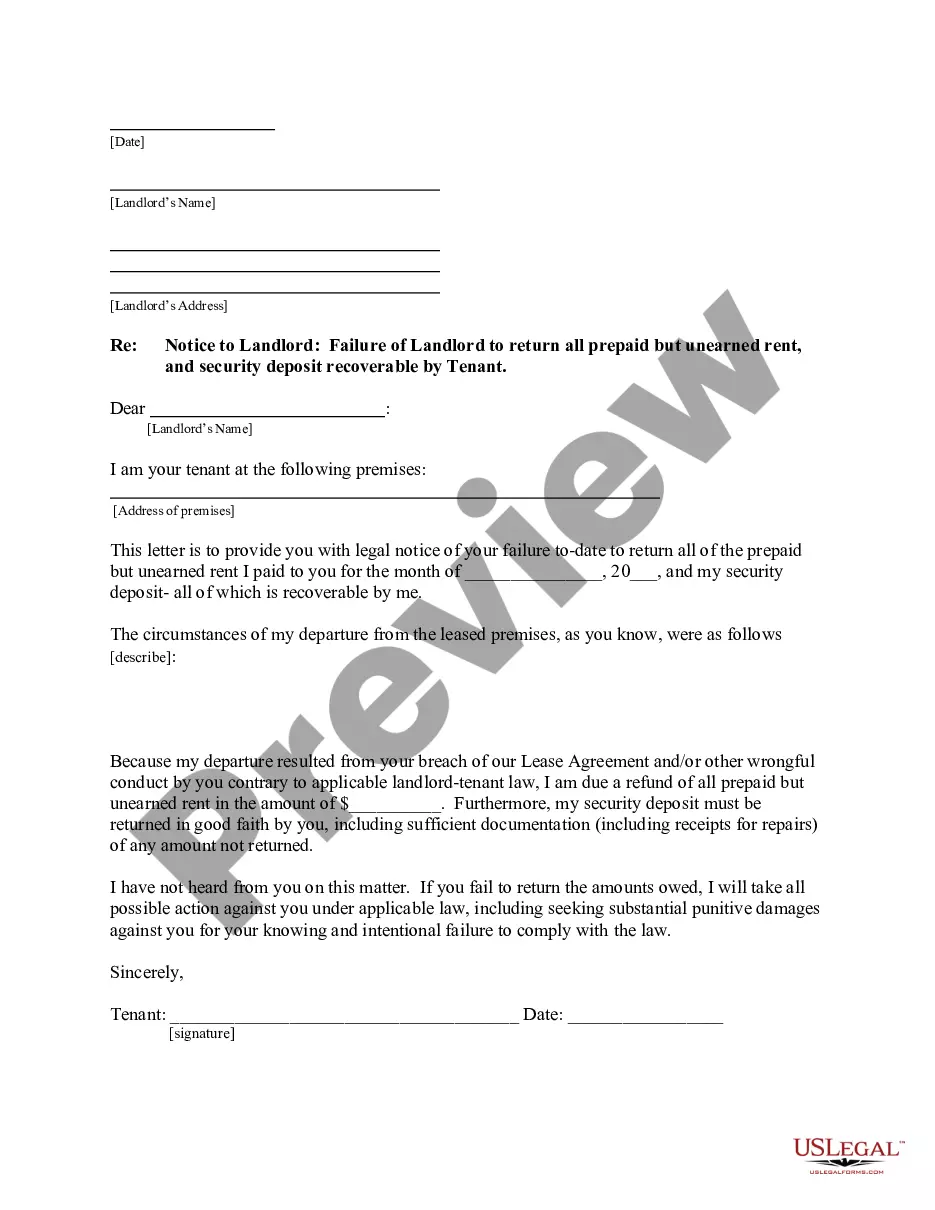
How to fill out California Letter From Tenant To Landlord For Failure Of Landlord To Return All Prepaid And Unearned Rent And Security Recoverable By Tenant?
- Begin by logging into your US Legal Forms account if you have previously used the service. Ensure your subscription is active; renew it if necessary.
- If you are a new user, start by previewing the form options available. Use the search feature to find the specific tenant rights document you need.
- Select the document that meets your needs and complies with your local regulations. Verify that it accurately reflects your requirements.
- Click the 'Buy Now' button to choose a subscription plan that best suits you. Register for an account to gain full access to the legal form library.
- Enter your payment details to complete the purchase, using either a credit card or PayPal.
- Download the form to your device. You can access it later through the 'My Forms' section in your profile whenever needed.
US Legal Forms empowers users with a comprehensive array of over 85,000 legal templates, allowing for tailored and convenient document creation. The platform also connects users with legal experts for guidance, ensuring all forms are completed accurately.
Take control of your renting experience and safeguard your rights today. Explore US Legal Forms to find the templates you need and get started!
Form popularity
FAQ
To rent a room, you typically need to complete an application, provide identification, and possibly face a background check. Landlords may also ask for references and income verification. Understanding your tenant rights for renting a room can help ensure that the process is fair and transparent. Resources like USLegalForms can provide guidance and templates to simplify your rental experience.
You may take legal action against your roommate if they violate your agreements or your rights as a tenant. Common issues include non-payment of rent or breaching the lease terms. Consult legal resources to understand your tenant rights for renting a room and determine the best course of action. Mediation may also be an effective first step.
Typically, someone can live with you without being on the lease for a short duration, often around 30 days. However, this varies based on your lease terms and local laws. Understanding tenant rights for renting a room can clarify how long a guest can stay without formal approval. It's advisable to inform your landlord to avoid any lease violations.
The golden rule of roommates is to communicate openly and respect each other's space and privacy. Establishing ground rules can help maintain a harmonious living situation. These expectations serve to uphold tenant rights for renting a room, ensuring everyone knows their boundaries. Regular check-ins can also keep misunderstandings at bay.
Generally, your roommate cannot move someone in without your permission, especially if both of you are on the lease. Tenant rights for renting a room generally protect your right to a peaceful living environment. It is important to review your lease agreement as it may specify occupancy rules. If your roommate insists, consider discussing it directly or seeking mediation.
While there is no strict state law governing the number of residents in a 3-bedroom house, local regulations and building codes typically provide guidelines. A common rule of thumb is two people per bedroom, but this can vary. Tenant rights for renting a room include the protection against arbitrary occupancy restrictions that exceed reasonable limits set by local law. It's vital to review your local regulations for precise information.
As a tenant in Texas, you have several legal rights, including the right to safe and habitable housing, privacy, and proper notice before eviction. Tenant rights for renting a room specifically protect you from unfair practices and convey your right to deduct repair costs from rent under certain conditions. Understanding these rights can empower you to maintain a fair landlord-tenant relationship.
Occupancy laws in Texas govern how many people can share a rental space. These laws ensure that living conditions remain safe and sanitary. Tenant rights for renting a room include the ability to challenge unreasonable occupancy limits imposed by landlords. Knowing these laws can help you advocate for your living situation.
In Texas, a guest can become a tenant if they stay for an extended period, typically associated with receiving mail at the property or paying rent. If a guest pays rent or stays longer than a month, they might gain tenant rights for renting a room. Therefore, it’s important to communicate clearly about your expectations for guests and establish proper agreements early on.
To legally rent out a room, start by reviewing your local laws and any homeowner association rules. Sign a detailed rental agreement outlining the terms of the lease, including rent, payment dates, and responsibilities for repairs. It's crucial to understand tenant rights for renting a room, as these rights protect both you and your tenant. Consider using platforms like uslegalforms to create a compliant lease.