Tenant Rights With Landlord
Description



Get your form ready online
Our built-in tools help you complete, sign, share, and store your documents in one place.
Make edits, fill in missing information, and update formatting in US Legal Forms—just like you would in MS Word.
Download a copy, print it, send it by email, or mail it via USPS—whatever works best for your next step.
Sign and collect signatures with our SignNow integration. Send to multiple recipients, set reminders, and more. Go Premium to unlock E-Sign.
If this form requires notarization, complete it online through a secure video call—no need to meet a notary in person or wait for an appointment.
We protect your documents and personal data by following strict security and privacy standards.

Make edits, fill in missing information, and update formatting in US Legal Forms—just like you would in MS Word.

Download a copy, print it, send it by email, or mail it via USPS—whatever works best for your next step.

Sign and collect signatures with our SignNow integration. Send to multiple recipients, set reminders, and more. Go Premium to unlock E-Sign.

If this form requires notarization, complete it online through a secure video call—no need to meet a notary in person or wait for an appointment.

We protect your documents and personal data by following strict security and privacy standards.
Looking for another form?







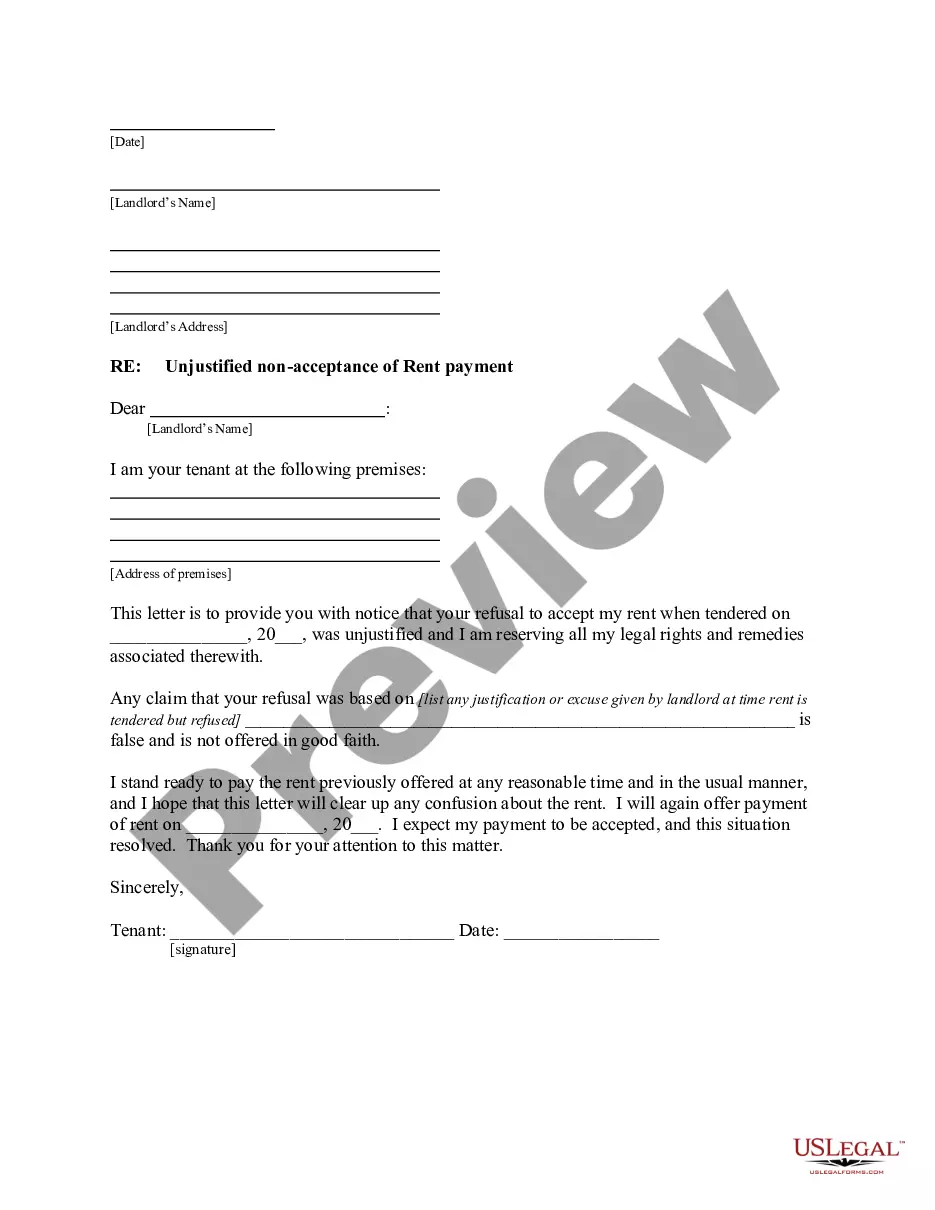
How to fill out California Letter From Tenant To Landlord Containing Notice To Cease Unjustified Nonacceptance Of Rent?
- If you're already a US Legal Forms user, log in and download the desired template by clicking the Download button. Confirm that your subscription is up-to-date; otherwise, renew it based on your payment plan.
- For new users, start by browsing the extensive library. Check the Preview mode and description of forms to ensure they fit your needs according to your local laws.
- If the selected form isn’t right for you, utilize the Search feature at the top to find an alternate template that suits your specifications.
- Once you find the correct document, click the Buy Now button to select your subscription plan and register for an account to access all resources.
- Complete your purchase by entering your payment information via credit card or PayPal.
- Finally, download the form to your device for easy completion and access it anytime from the My Forms section of your profile.
With US Legal Forms, you can tap into a robust collection of over 85,000 legal forms, making it easy for both individuals and attorneys to create legally sound documents.
Don't leave your tenant rights unprotected. Start exploring the library at US Legal Forms today, and ensure your legal documentation is both comprehensive and accurate!
Form popularity
FAQ
Landlord retaliation in Pennsylvania occurs when a landlord retaliates against a tenant for exercising their legal rights, such as filing a complaint or requesting repairs. Actions that may be considered retaliation include increasing rent, eviction notices, or reducing services. Understanding your tenant rights with landlord dynamics is crucial here, as retaliation is illegal. If you experience retaliation, document your interactions and consider contacting a legal expert for assistance.
To report a terrible landlord, start by documenting any issues, including examples of neglect or harassment. You can then reach out to local tenant associations or legal aid services that specialize in tenant rights with landlord matters. They can help guide you through the reporting process and may offer legal assistance. Such support can be invaluable in making sure that your grievances are taken seriously and addressed appropriately.
In Pennsylvania, you can report your landlord to local housing authorities or the Pennsylvania Department of Community and Economic Development. These organizations address issues related to safety, maintenance, and tenant rights with landlord interactions. Additionally, if the situation involves discrimination or unfair practices, the Pennsylvania Human Relations Commission can assist. These channels provide avenues for tenants to ensure their rights are upheld.
Deciding whether to take a landlord to court can depend on various factors, such as the severity of the issue and potential outcomes. Legal action can be an effective way to assert your tenant rights with landlord conflicts, especially if your rights have been violated. However, be aware of the costs and time involved in court proceedings. Weighing the pros and cons and seeking legal advice can help you make an informed decision.
Tenant rights in Pennsylvania include the right to a habitable living space, protection against discrimination, and privacy within your rented property. Additionally, tenants are entitled to receive proper notice before eviction. Understanding these rights is essential for anyone renting a property, as it strengthens your position in any disputes with a landlord. Familiarize yourself with local laws to enforce your tenant rights with landlord issues effectively.
In Pennsylvania, you can file a complaint against your landlord by contacting your local housing authority or the Pennsylvania Attorney General's office. They can assist you in understanding your tenant rights with landlord relationships. Additionally, consider reaching out to legal aid organizations or tenant unions for support and guidance on the formal complaint process. They can provide valuable resources to help ensure your voice is heard.
Writing a letter from landlord to tenant to vacate can be straightforward. Begin with a formal greeting and clearly state the intent to terminate the rental agreement with specific reasons. Ensure you include the date by which the tenant must vacate, allowing time for compliance. This letter serves to protect tenant rights with landlord communications and should be delivered via a method that provides documentation.
A landlord owns the property and rents it to tenants. Tenant rights with landlords mean that while landlords manage and maintain the property, tenants have the right to live in it and enjoy its use. This relationship is governed by a lease agreement, which outlines each party's responsibilities. Knowing these distinctions can help both landlords and tenants understand their roles within the rental agreement.
In California, tenants have several key rights including the right to a habitable living space, protection against unlawful eviction, and the right to privacy. These tenant rights with landlords are essential for ensuring a safe and fair rental experience. Understanding these rights empowers tenants to address issues and advocate for themselves. Always review local laws to stay informed about your protections.
Often, tenant rights with landlords are designed to protect individuals from potential abuse or unfair treatment. Laws prioritize tenant safety and fairness in housing situations. This balance helps ensure that tenants have safe, stable, and dignified living conditions. It’s important for both landlords and tenants to understand their respective rights to maintain a healthy rental relationship.