California Postnuptial Agreement Requirements
Description


Get your form ready online
Our built-in tools help you complete, sign, share, and store your documents in one place.
Make edits, fill in missing information, and update formatting in US Legal Forms—just like you would in MS Word.
Download a copy, print it, send it by email, or mail it via USPS—whatever works best for your next step.
Sign and collect signatures with our SignNow integration. Send to multiple recipients, set reminders, and more. Go Premium to unlock E-Sign.
If this form requires notarization, complete it online through a secure video call—no need to meet a notary in person or wait for an appointment.
We protect your documents and personal data by following strict security and privacy standards.

Make edits, fill in missing information, and update formatting in US Legal Forms—just like you would in MS Word.

Download a copy, print it, send it by email, or mail it via USPS—whatever works best for your next step.

Sign and collect signatures with our SignNow integration. Send to multiple recipients, set reminders, and more. Go Premium to unlock E-Sign.

If this form requires notarization, complete it online through a secure video call—no need to meet a notary in person or wait for an appointment.

We protect your documents and personal data by following strict security and privacy standards.
Looking for another form?







How to fill out California Postnuptial Property Agreement?
Creating legal documents from the ground up can frequently be daunting.
Certain situations may involve extensive research and significant expenses.
If you’re looking for a simpler and more cost-effective method for crafting California Postnuptial Agreement Requirements or other forms without unnecessary complications, US Legal Forms is always available to help.
Our online repository of over 85,000 current legal forms encompasses nearly every aspect of your financial, legal, and personal matters. With just a few clicks, you can swiftly obtain state- and county-specific forms meticulously assembled for you by our legal experts.
Ensure the template you select complies with the requirements of your state and county. Choose the most suitable subscription option to obtain the California Postnuptial Agreement Requirements. Download the document, then complete, verify, and print it out. US Legal Forms enjoys a solid reputation and over 25 years of experience. Join us today and make document preparation a straightforward and efficient process!
- Utilize our platform whenever you need dependable and trustworthy services that allow you to quickly find and download the California Postnuptial Agreement Requirements.
- If you’re already familiar with our website and have previously established an account with us, simply Log In to your account, find the form and download it immediately, or re-download it at any time from the My documents section.
- Not registered yet? No worries. It only takes a few minutes to sign up and explore the library.
- Before proceeding to download the California Postnuptial Agreement Requirements, adhere to these suggestions.
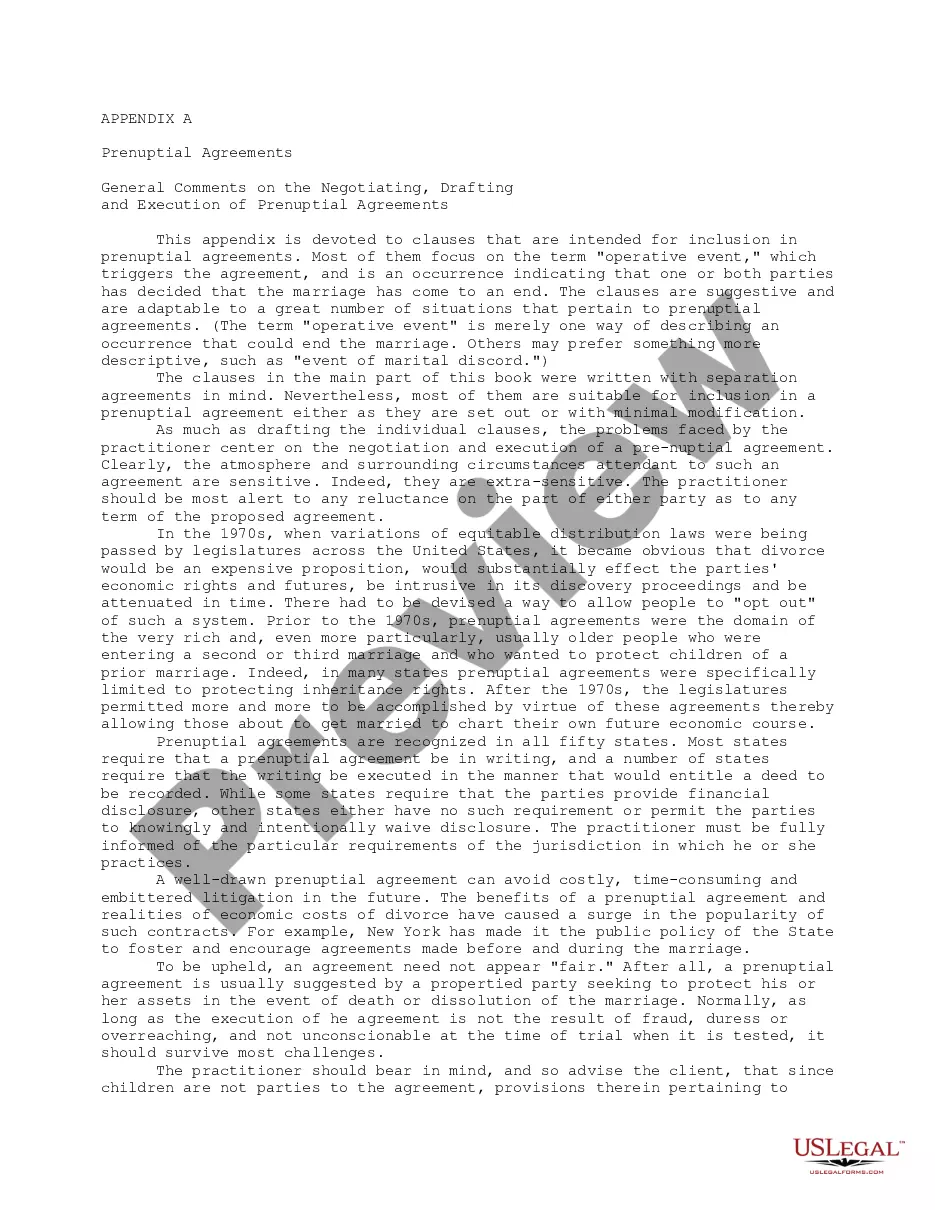
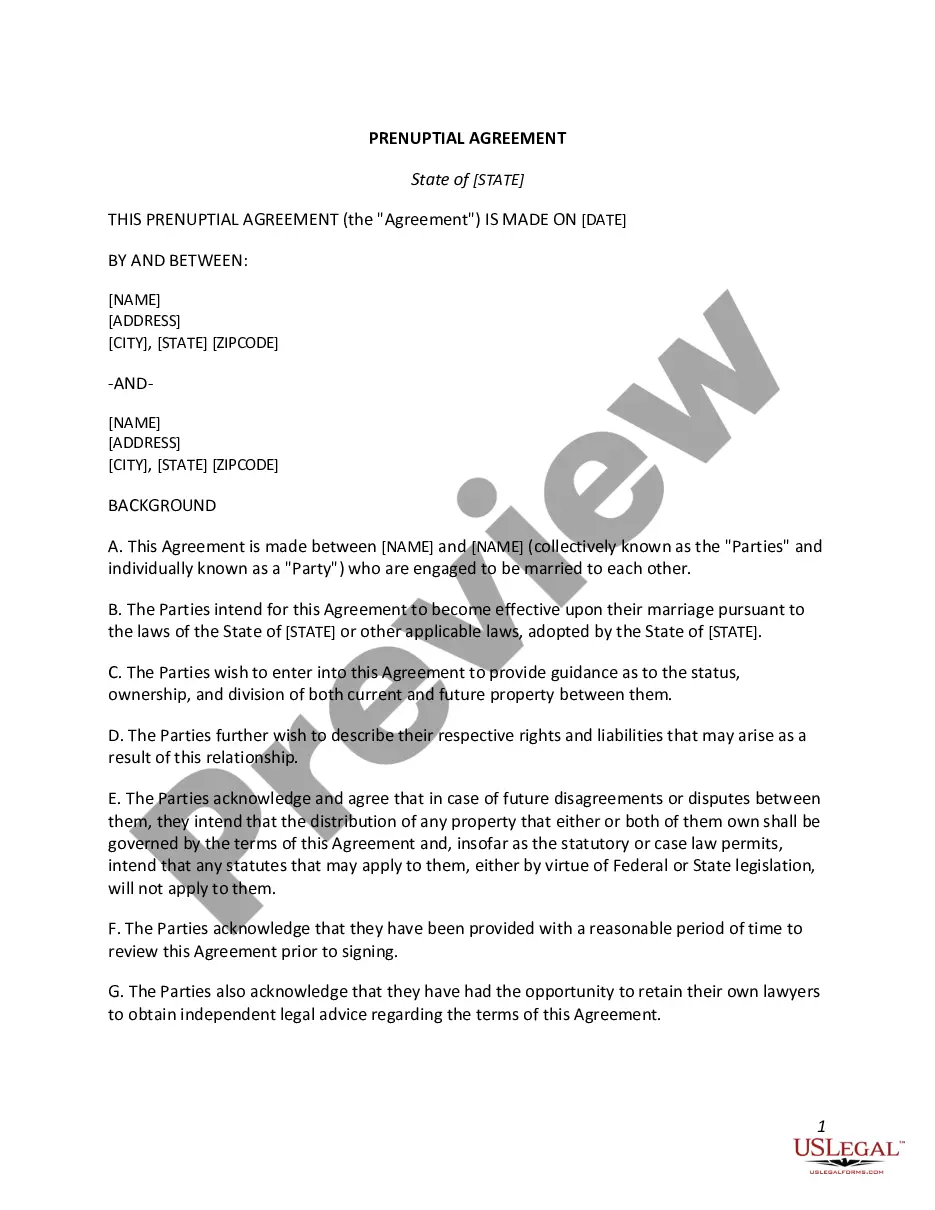
- Review the document preview and descriptions to confirm that you have located the form you are looking for.
Form popularity
FAQ
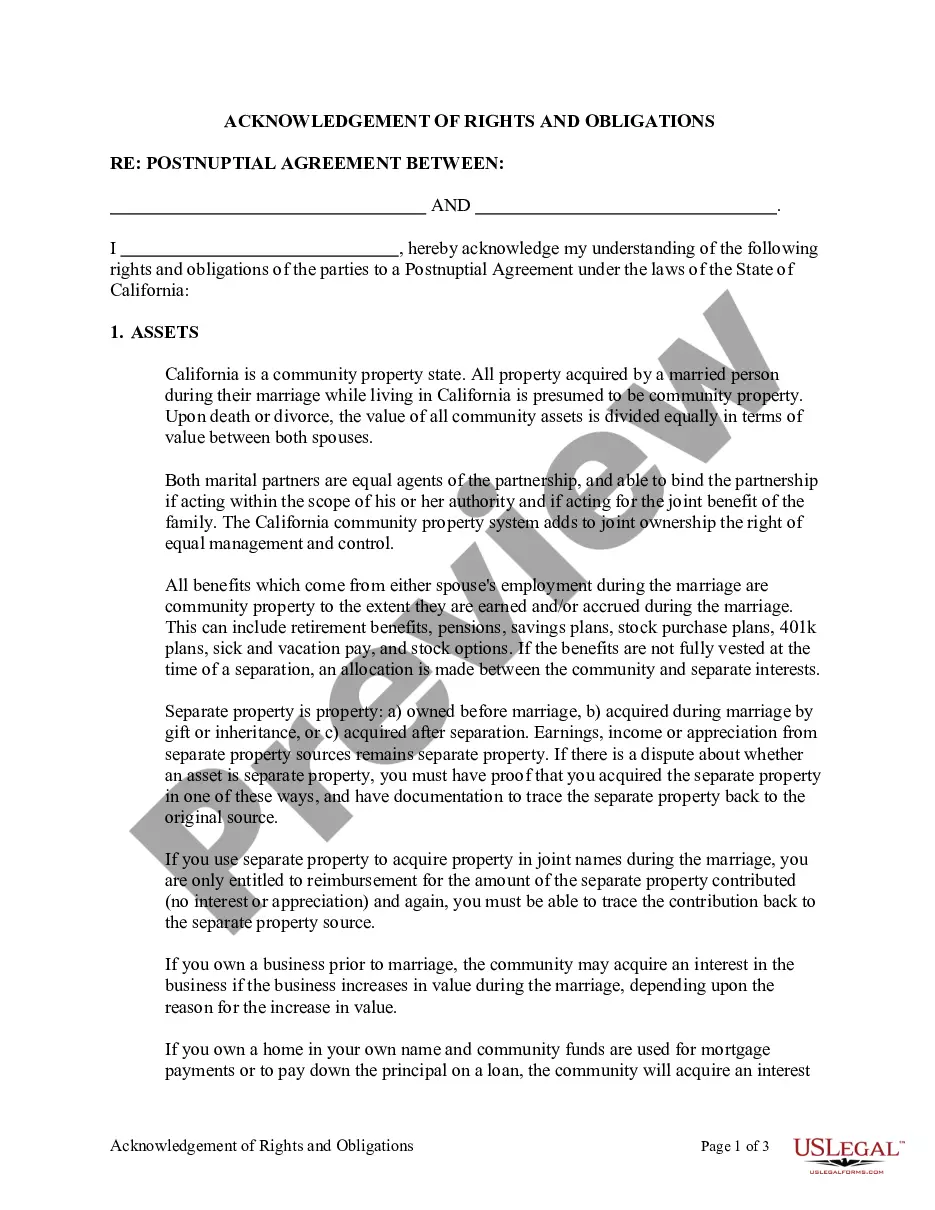
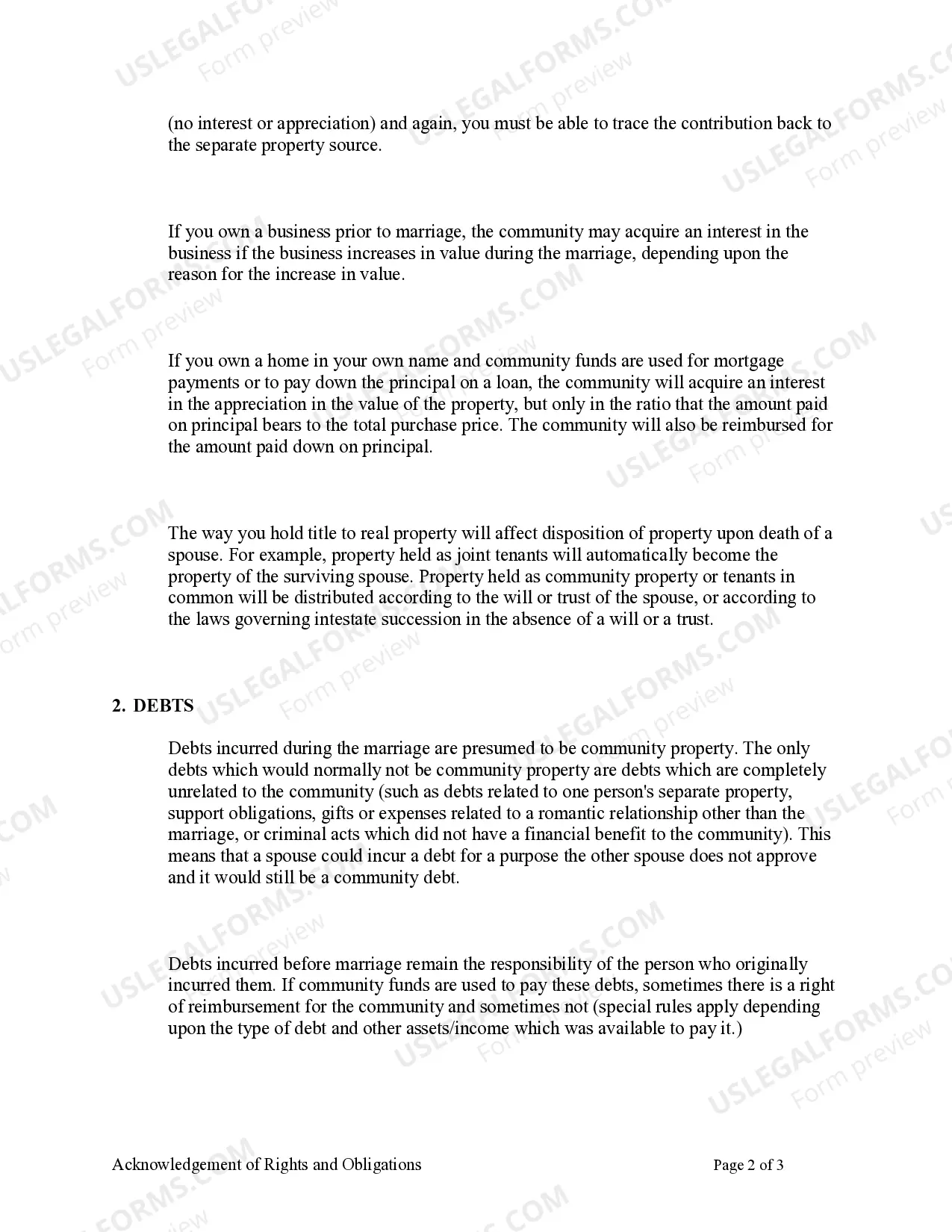
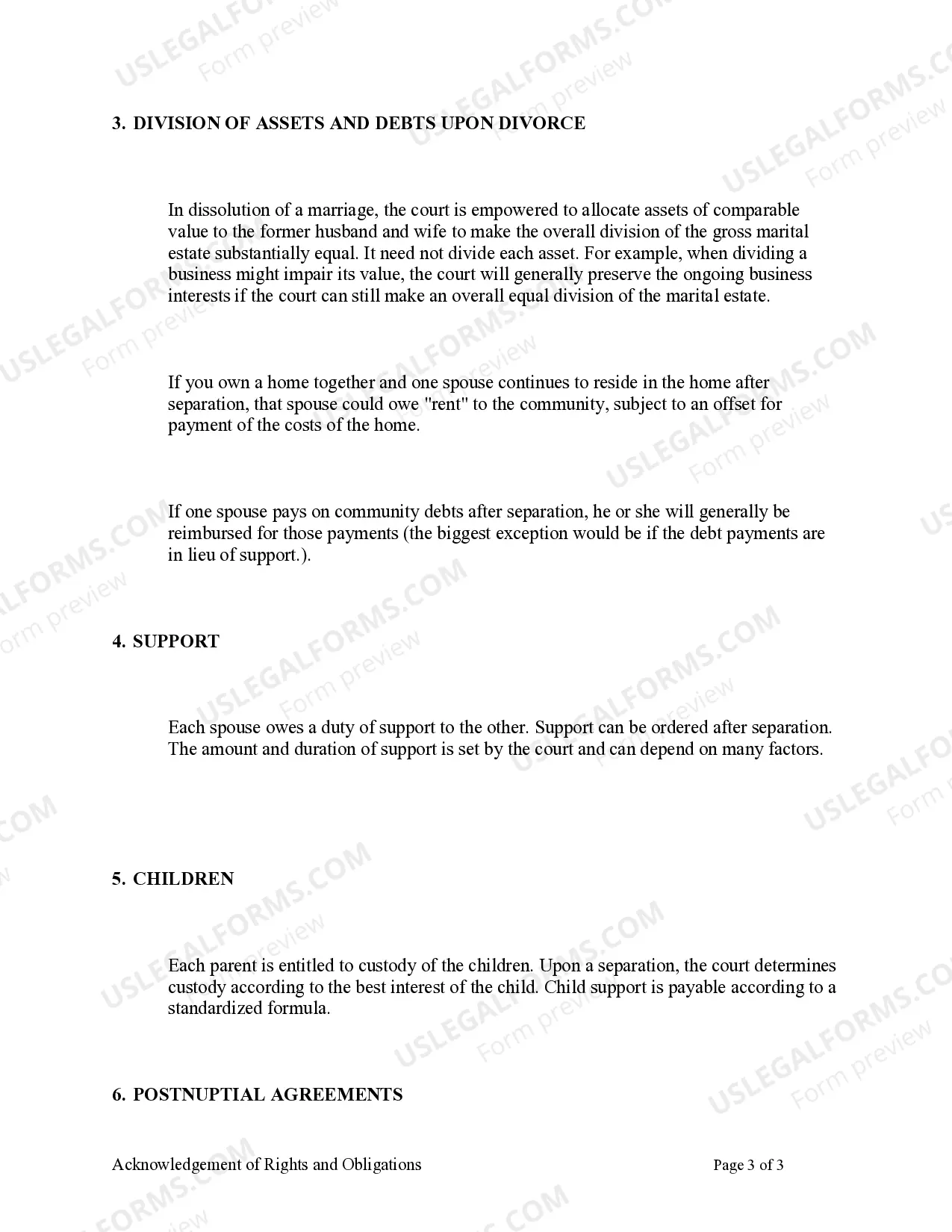
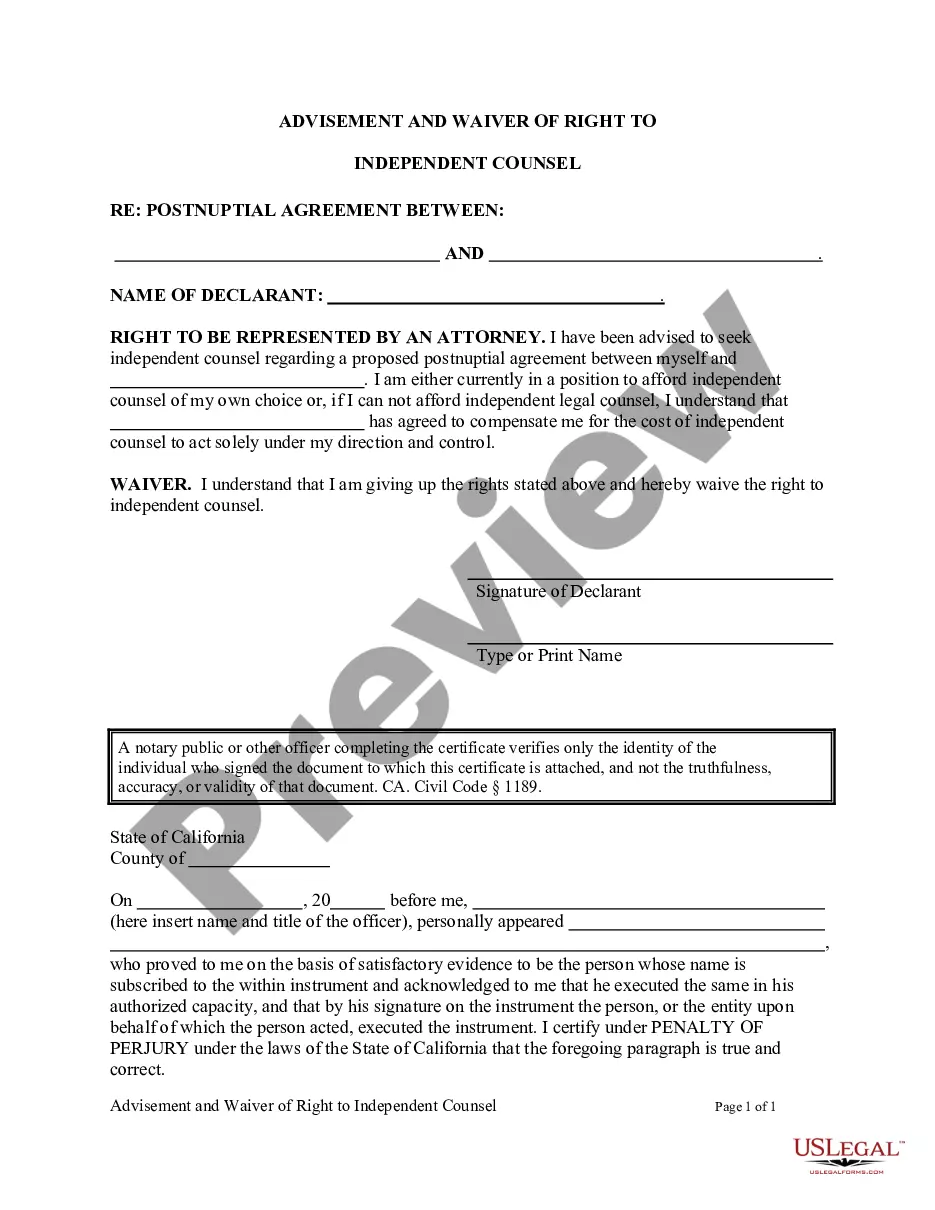
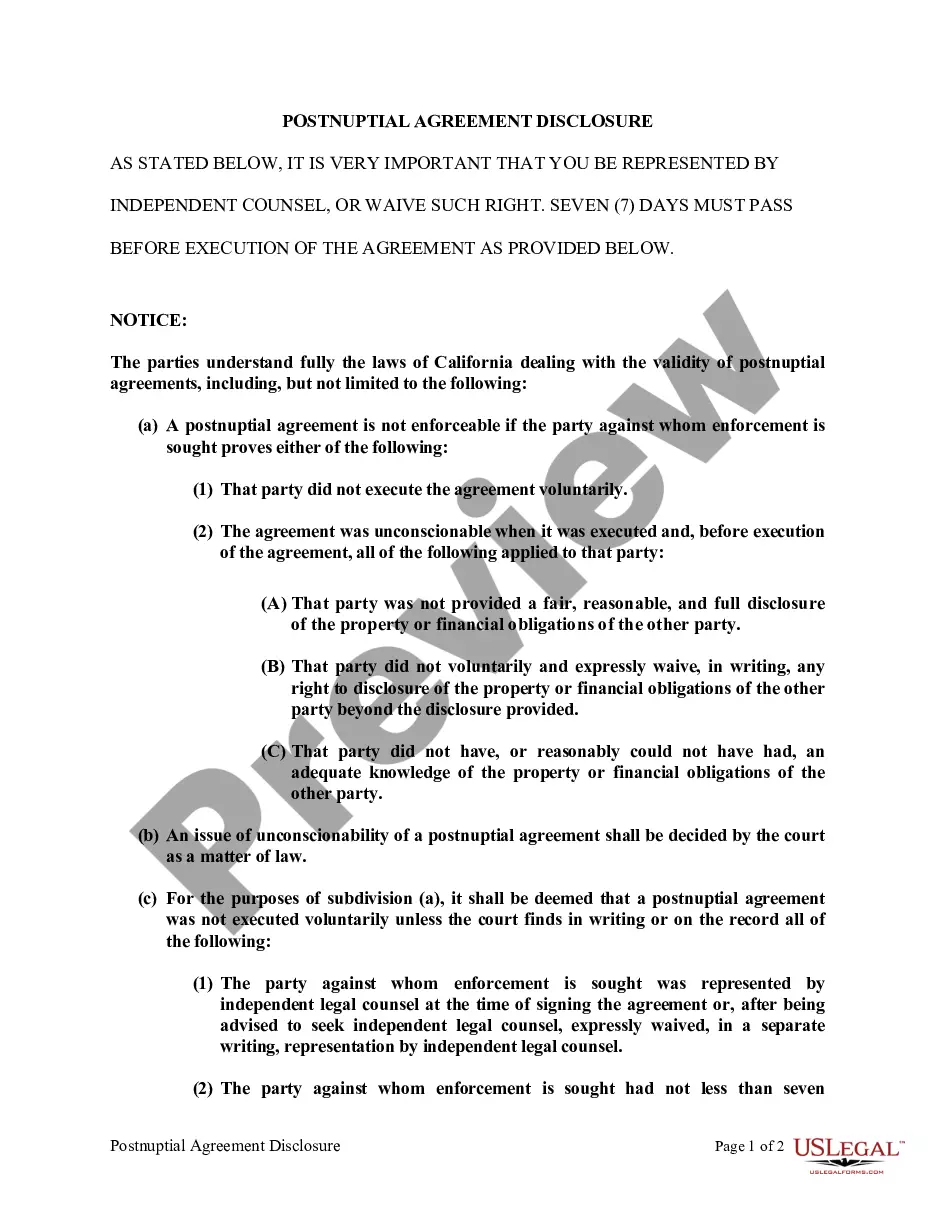
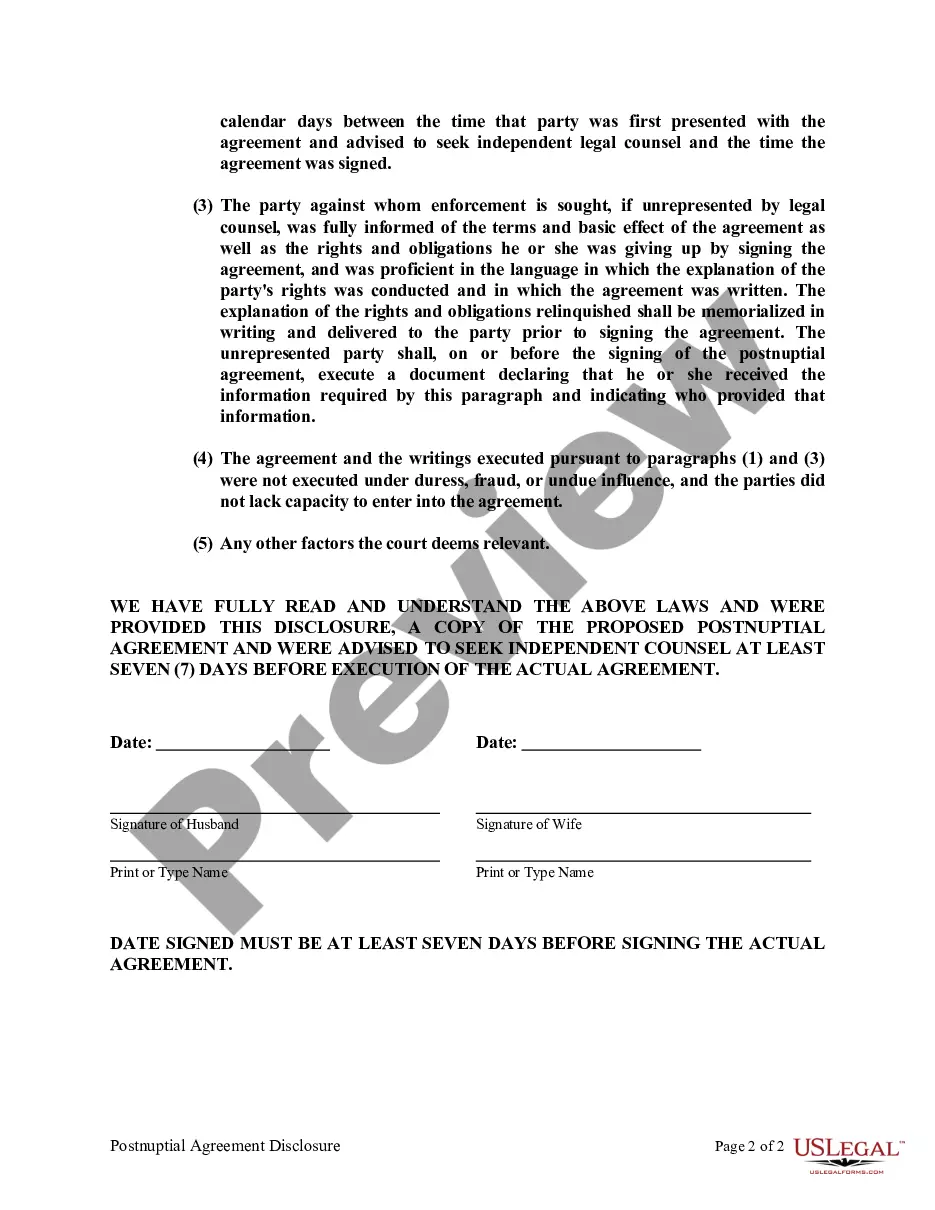
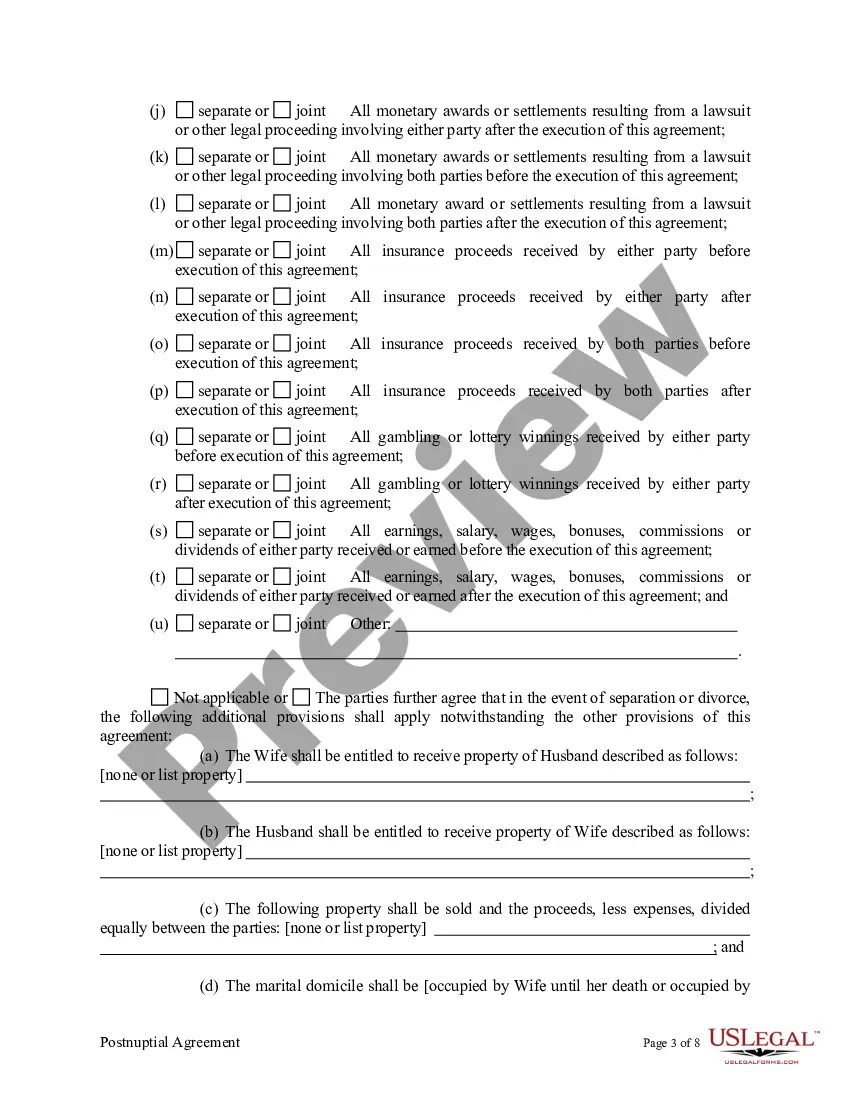
To get a postnuptial agreement in California, begin by openly discussing your financial goals and intentions with your spouse. Next, it is advisable to consult an attorney who specializes in family law to draft and review the agreement, ensuring it meets all California postnuptial agreement requirements. You can also use platforms like USLegalForms to simplify the process of obtaining legally binding documents tailored to your specific needs. Finally, both spouses should sign the agreement in the presence of witnesses for it to be enforceable.
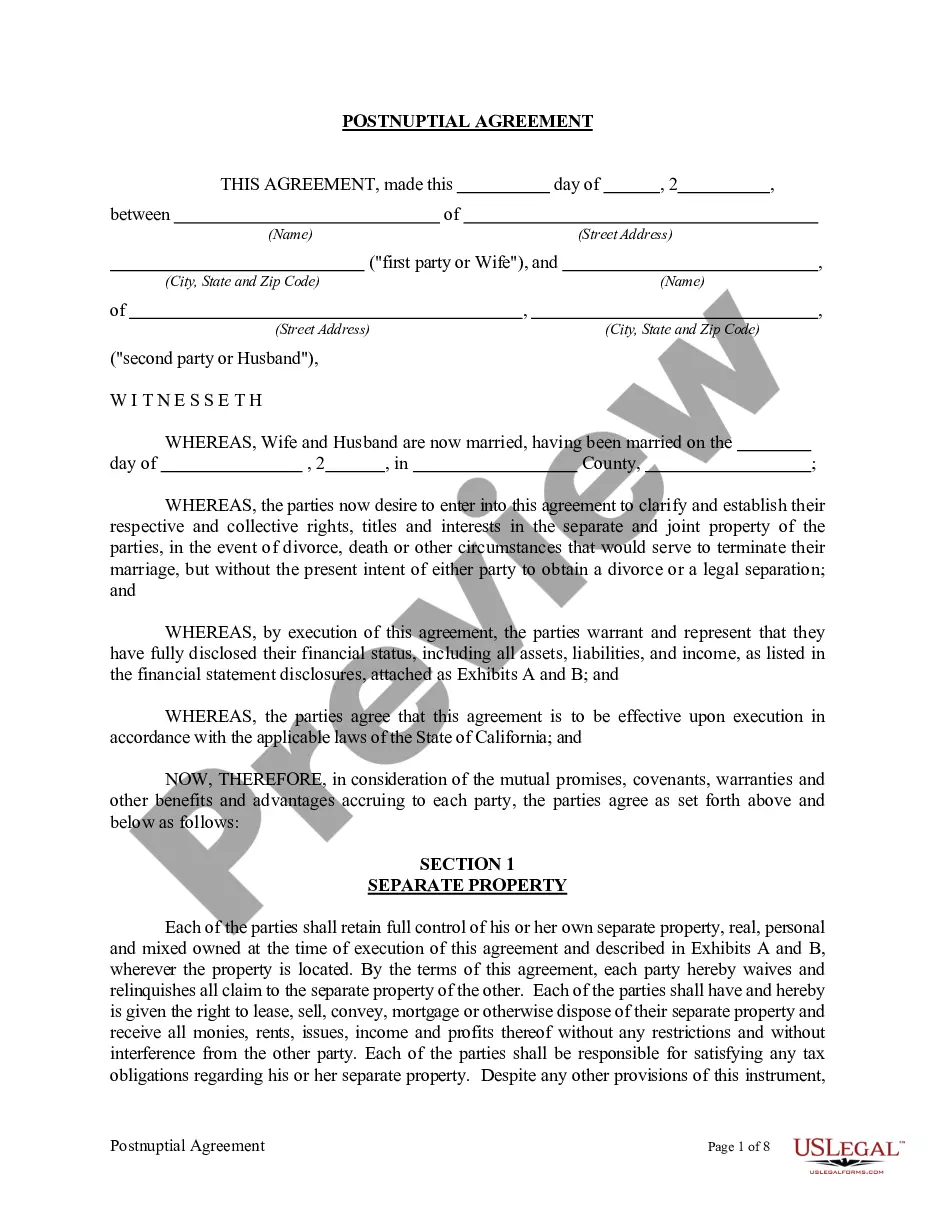
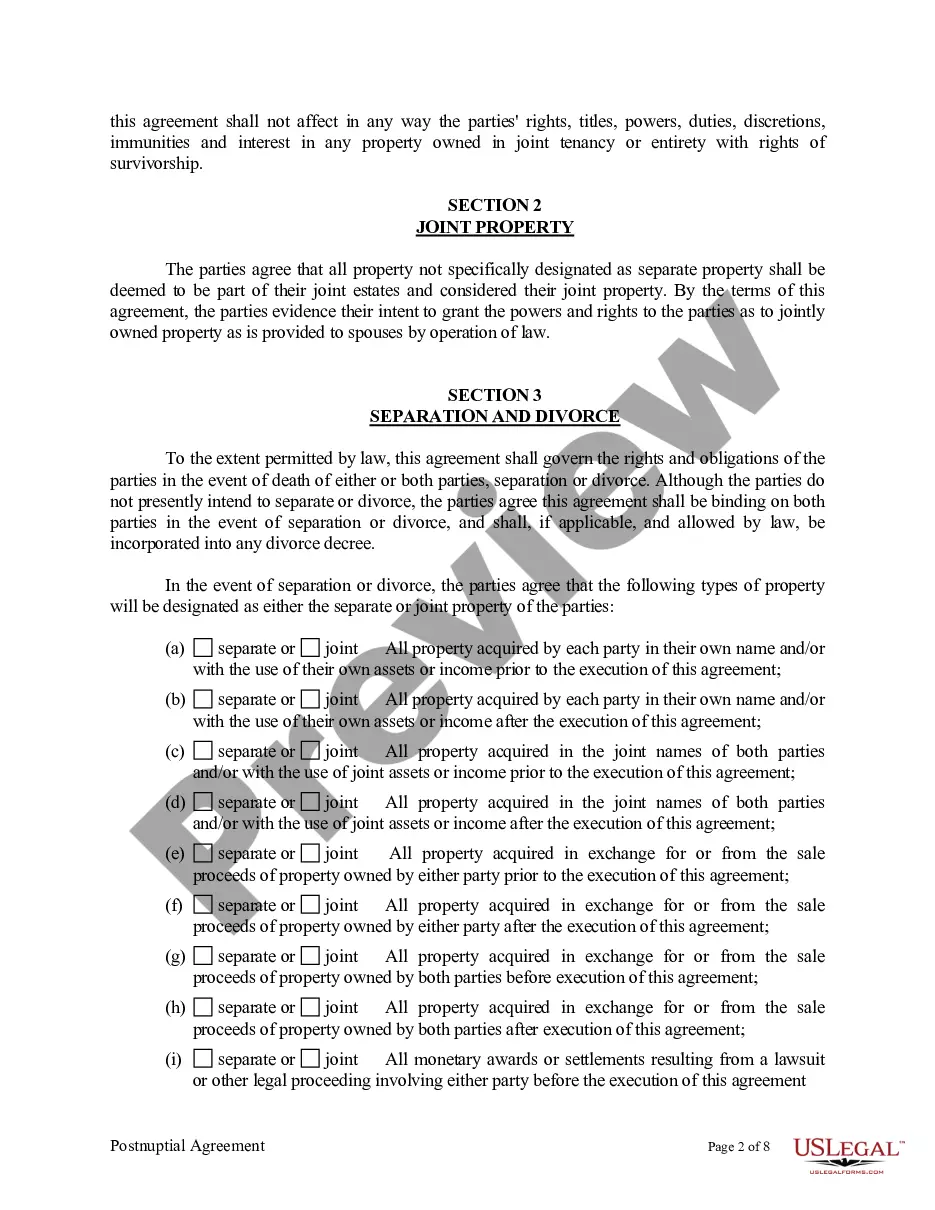
A postnuptial agreement should include a clear outline of the assets and debts that each spouse brings into the marriage, as well as how future earnings will be handled. It's important to specify the distribution of property in case of divorce, separation, or death. Additionally, addressing spousal support and any other relevant financial matters will help meet California postnuptial agreement requirements. Consulting with a legal expert can ensure all necessary components are included.
Abuse includes involuntary seclusion, intimidation, humiliation, harassment, threats of punishment, deprivation, hitting, slapping, pinching, kicking, any type of corporal punishment, sexual assault, sexual coercion, sexual harassment, verbal abuse, or any oral, written, or gestured language that includes disparaging ...
Having your parents' financial information is crucial to getting timely, efficient, and affordable care. Seniors applying for certain benefits must demonstrate their financial needs and provide comprehensive documentation of their past and present finances. One example is Medicaid.
When old age, the onset of dementia or Alzheimer's, a serious injury or an illness impairs that person's ability to make wise choices, adults children often need to step up to the plate. While there is no legal obligation for children to provide care for their parents in Texas, many do.
Rights of the Elderly / Elder Abuse Texas law provides additional rights for citizens age 60 and over to protect them against abuse, neglect and exploitation.
Overview. In Texas, there are both state and federal programs that pay family members to care for a loved one. However, both the caregiver and care recipient must meet the eligibility criteria.
What Other Programs Can Help Me? Medicaid. Medical Transportation Program. Medicare. Social Security. Supplemental Security Income. Texas Simplified Application Project.
In addition to the protections enjoyed by all Texans, state law provides special rights and protections for elderly individuals, including anyone 60 and over. Section 102.003 of the Texas Human Resources Code explains these rights.
Ing to the World Health Organization, aging is commonly measured by chronological age. As a convention, a person over age 65 is often referred to as elderly. This is also the age when most people retire and start receiving a pension.