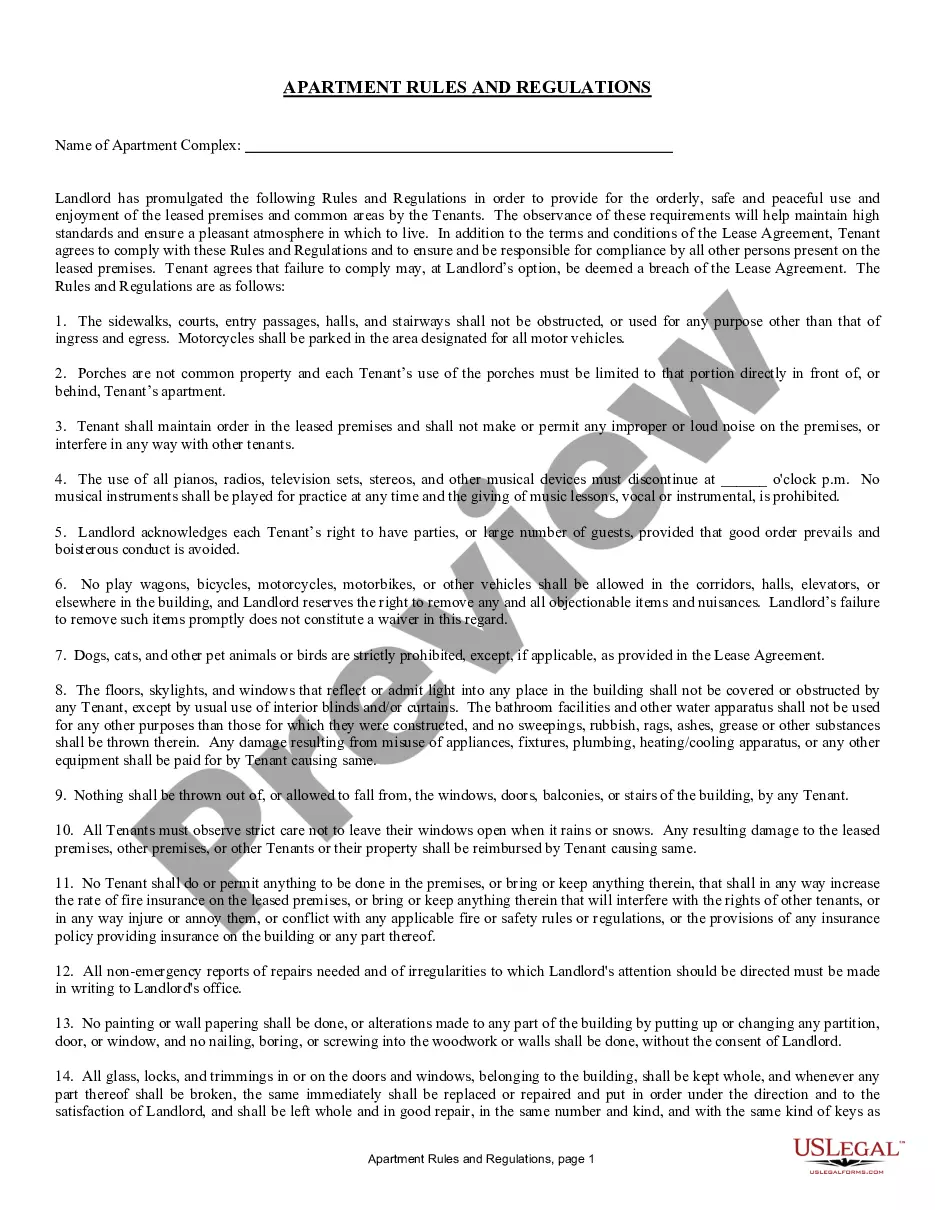
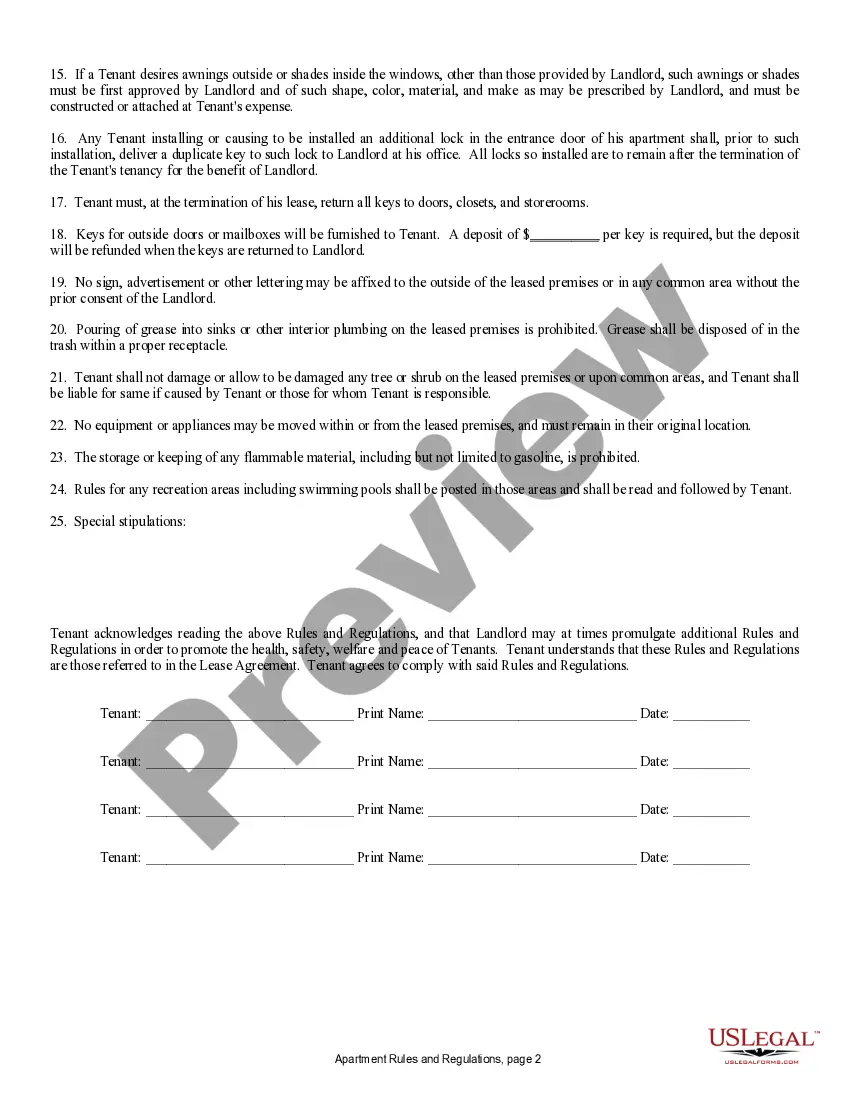
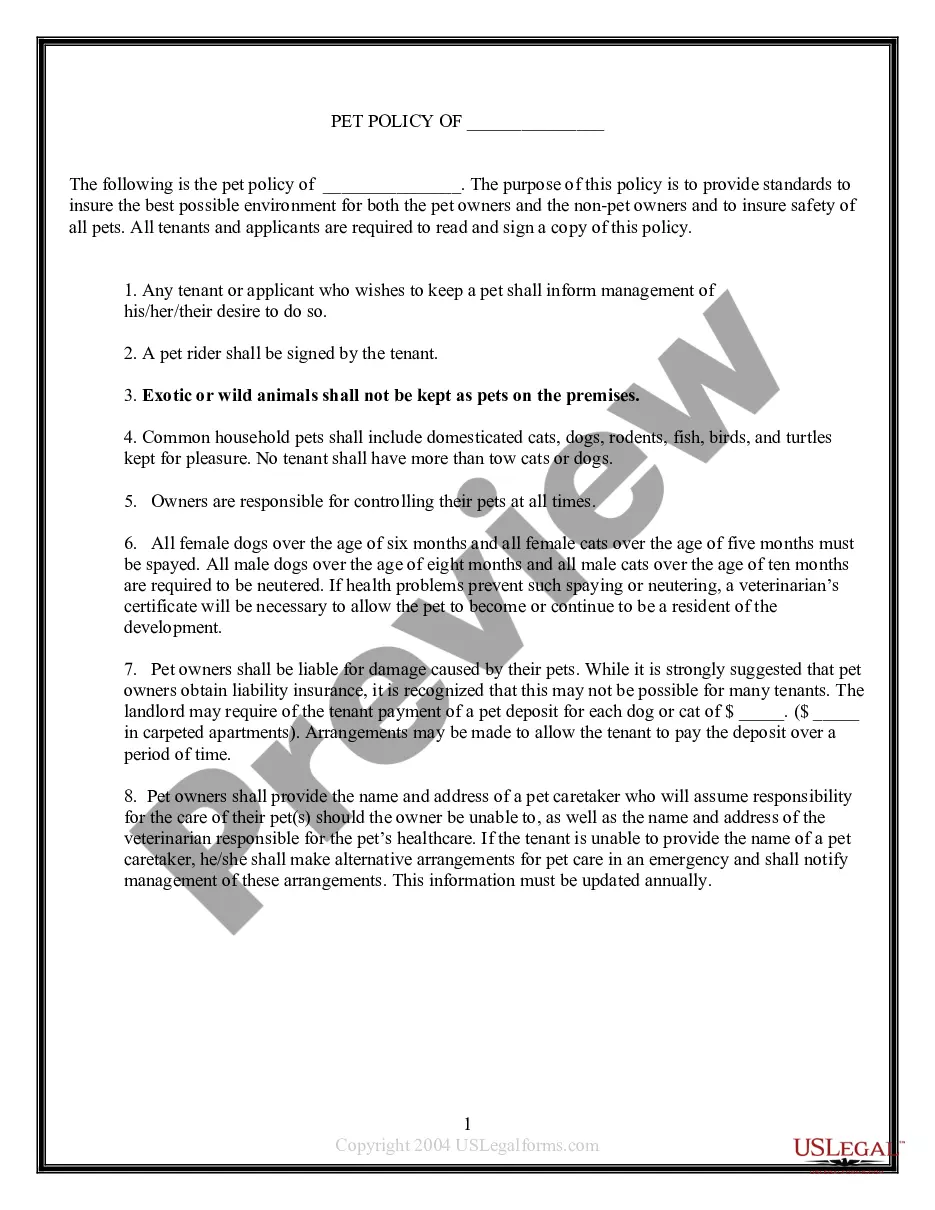
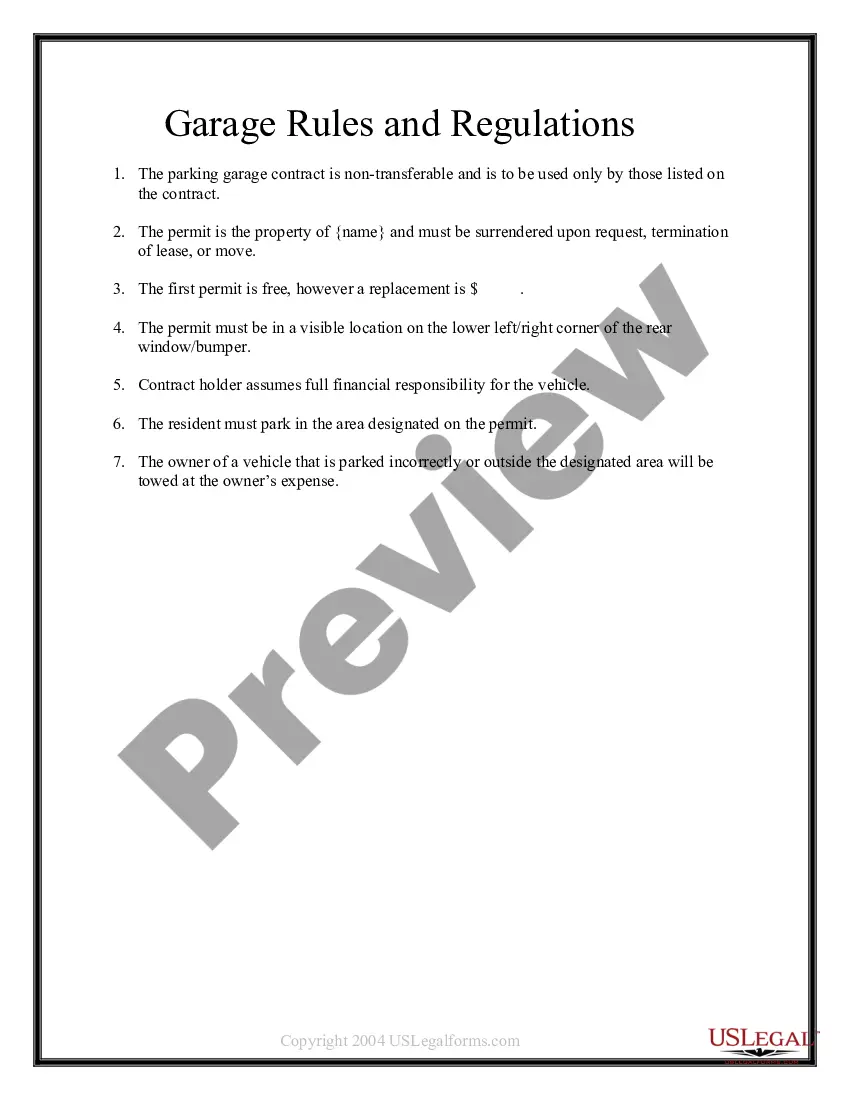
House Rules And Regulations For Tenants
Description
Get your form ready online
Our built-in tools help you complete, sign, share, and store your documents in one place.
Make edits, fill in missing information, and update formatting in US Legal Forms—just like you would in MS Word.
Download a copy, print it, send it by email, or mail it via USPS—whatever works best for your next step.
Sign and collect signatures with our SignNow integration. Send to multiple recipients, set reminders, and more. Go Premium to unlock E-Sign.
If this form requires notarization, complete it online through a secure video call—no need to meet a notary in person or wait for an appointment.
We protect your documents and personal data by following strict security and privacy standards.

Make edits, fill in missing information, and update formatting in US Legal Forms—just like you would in MS Word.

Download a copy, print it, send it by email, or mail it via USPS—whatever works best for your next step.

Sign and collect signatures with our SignNow integration. Send to multiple recipients, set reminders, and more. Go Premium to unlock E-Sign.

If this form requires notarization, complete it online through a secure video call—no need to meet a notary in person or wait for an appointment.

We protect your documents and personal data by following strict security and privacy standards.
Looking for another form?



Form popularity
FAQ
Renters in Colorado have several rights, including the right to a habitable living space and protection from unjust eviction. House rules and regulations for tenants also guarantee rights such as privacy and reasonable notice before repairs or inspections. Understanding these rights empowers tenants to hold landlords accountable and ensures fair treatment. Utilizing platforms like USLegalForms can provide valuable insights and resources to further support your rights as a tenant.
Landlord retaliation occurs when a landlord punishes a tenant for exercising their rights, such as reporting code violations or joining a tenants' union. In Colorado, this type of retaliation is illegal and can manifest as increased rent or eviction threats. If you believe your landlord is retaliating against you, it is vital to document all communications and seek legal advice. Knowledge of house rules and regulations for tenants can help protect you from such actions.
In Colorado, landlords cannot engage in illegal eviction practices, such as changing locks or shutting off utilities. They also cannot discriminate against tenants based on race, religion, or other protected categories. Understanding the house rules and regulations for tenants is essential to assert these rights and create a safe living environment. Familiarize yourself with local laws to ensure that your landlord complies.
Tenants in Colorado may withhold rent if their landlord fails to maintain a habitable living environment as defined by house rules and regulations for tenants. Common reasons include lack of hot water, heating, or essential repairs that affect safety. Before withholding rent, tenants should typically provide written notice of the issues and give the landlord a chance to fix them. Consulting resources like USLegalForms can guide you through the process and protect your rights.
In Colorado, landlords must address repair requests within a reasonable timeframe, which typically means within one to two weeks. This timeline may vary based on the severity of the issue; emergencies like plumbing leaks require faster action. Tenants should understand their house rules and regulations for tenants to assert their right to timely repairs. If a landlord fails to fix critical issues, tenants may have grounds for legal action.
If you break Airbnb house rules, several consequences may occur depending on the severity of the violation. Host may decide to keep your security deposit to cover damages or extra cleaning costs. In some cases, they may issue a formal complaint to Airbnb, leading to potential penalties or even bans from using the platform. To prevent these outcomes, always review and adhere to the house rules and regulations for tenants.
House rules are generally legally binding if they are included in the lease agreement or rental contract. These rules become part of the tenant's responsibilities while residing in the property. Tenants should understand that violation of these rules may lead to legal actions, including eviction, depending on the severity of the breach. Familiarizing yourself with these regulations ensures a better rental experience.
Airbnb house rules are considered legally binding as part of the rental agreement. When you agree to book a property, you also agree to abide by these rules, which are designed to protect both guests and hosts. If you violate these rules, the host may impose penalties such as losing your security deposit or facing other repercussions. Therefore, always read and understand the house rules and regulations for tenants before your stay.
Yes, a landlord can establish house rules and regulations for tenants as long as they comply with state and local laws. However, it is vital that these rules are reasonable, transparent, and communicated clearly to the tenants. The goal of these regulations is to enhance safety and community standards within the rental property. Ensure that any new rules are documented properly to avoid confusion.
House rules and regulations for tenants help create a harmonious living environment. They set clear expectations for conduct, which benefits both landlords and tenants. Without these rules, misunderstandings may arise, leading to conflicts. By implementing house rules, everyone understands their rights and responsibilities.