Contrato Contratos With Mexico In Oakland
Description

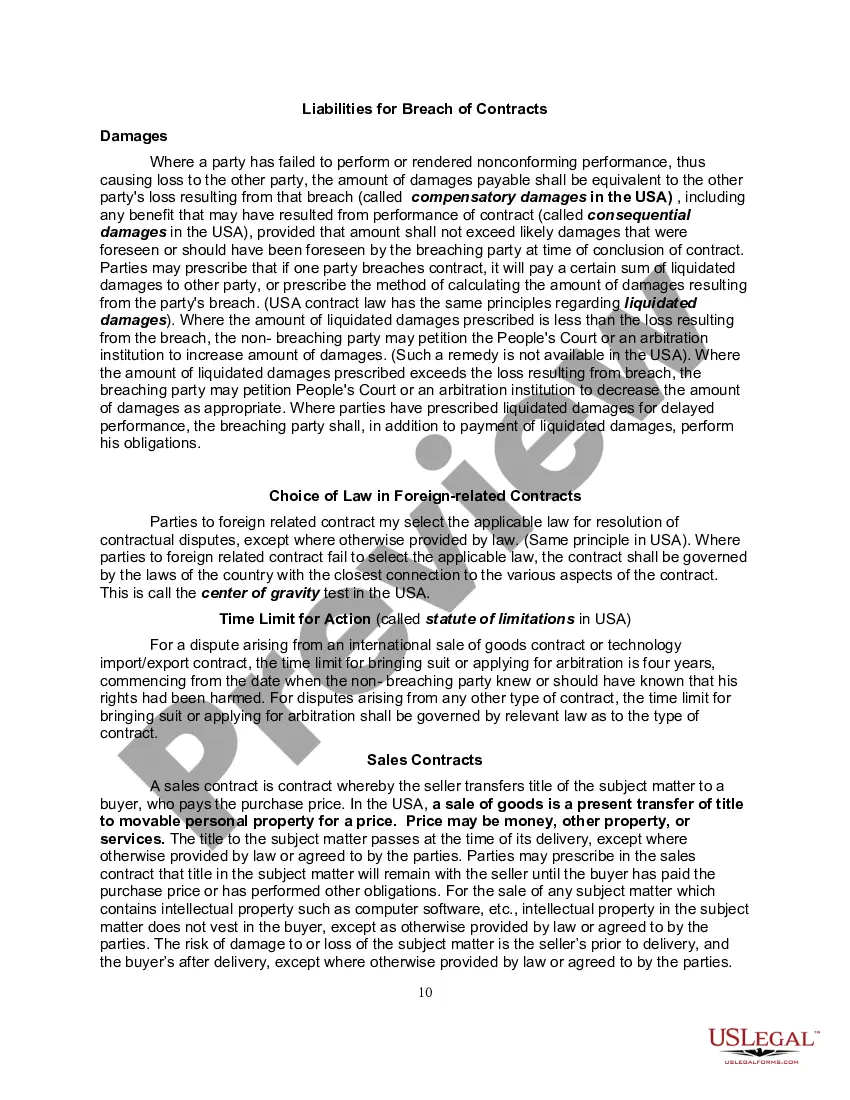


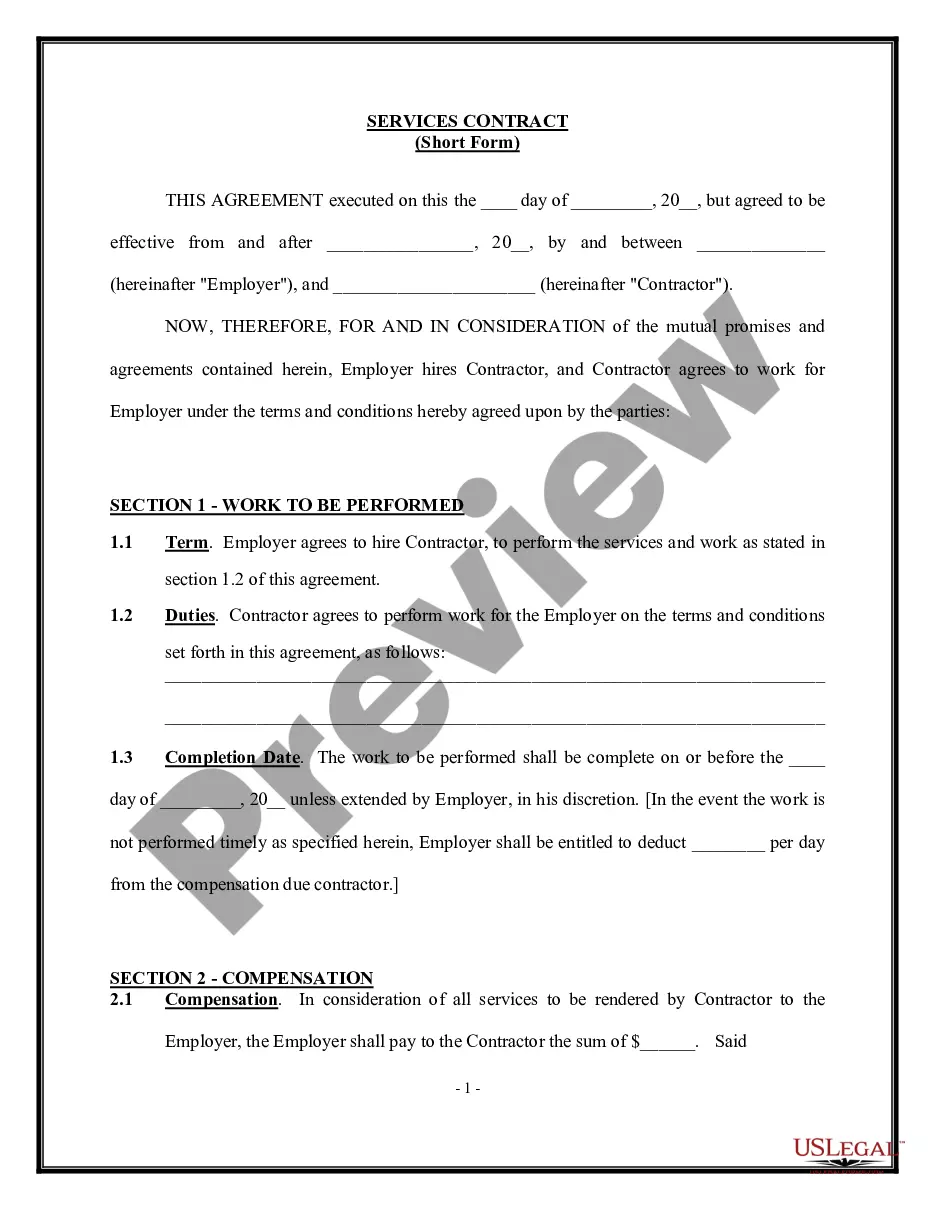
Get your form ready online
Our built-in tools help you complete, sign, share, and store your documents in one place.
Make edits, fill in missing information, and update formatting in US Legal Forms—just like you would in MS Word.
Download a copy, print it, send it by email, or mail it via USPS—whatever works best for your next step.
Sign and collect signatures with our SignNow integration. Send to multiple recipients, set reminders, and more. Go Premium to unlock E-Sign.
If this form requires notarization, complete it online through a secure video call—no need to meet a notary in person or wait for an appointment.
We protect your documents and personal data by following strict security and privacy standards.

Make edits, fill in missing information, and update formatting in US Legal Forms—just like you would in MS Word.

Download a copy, print it, send it by email, or mail it via USPS—whatever works best for your next step.

Sign and collect signatures with our SignNow integration. Send to multiple recipients, set reminders, and more. Go Premium to unlock E-Sign.

If this form requires notarization, complete it online through a secure video call—no need to meet a notary in person or wait for an appointment.

We protect your documents and personal data by following strict security and privacy standards.
Looking for another form?







Form popularity
FAQ
Lack of jurisdiction refers to a court's inability to act in a particular way or provide certain types of relief. This can occur when a court lacks the authority over a person or the subject matter of a lawsuit, or when the prerequisites for its jurisdiction have not been met.
"If a court has no jurisdiction of the subject of an ac- tion, a judgment rendered therein does not adjudicate anything. It does not bind the parties, nor can it there- after be made the foundation of any right. It is a mere nullity without life or vigor.
Jurisdiction can be defined as: Power of a court to adjudicate cases and issue orders; or. Territory within which a court or government agency may properly exercise its power.
The most common way to have personal jurisdiction over a person, a business or an organization is by suing where that person lives, or, for a business or organization, where they do business.
Non-jurisdictional content is content that is not associated with a specific jurisdiction. For example, a general treatise on contract law that is relevant to an attorney in any state is non-jurisdictional content.
For a court to hear a particular case, it must have subject matter jurisdiction over the issue or issues that you are asking the court to decide on. Some courts, called courts of general jurisdiction, will have subject matter jurisdiction over many different kinds of cases.
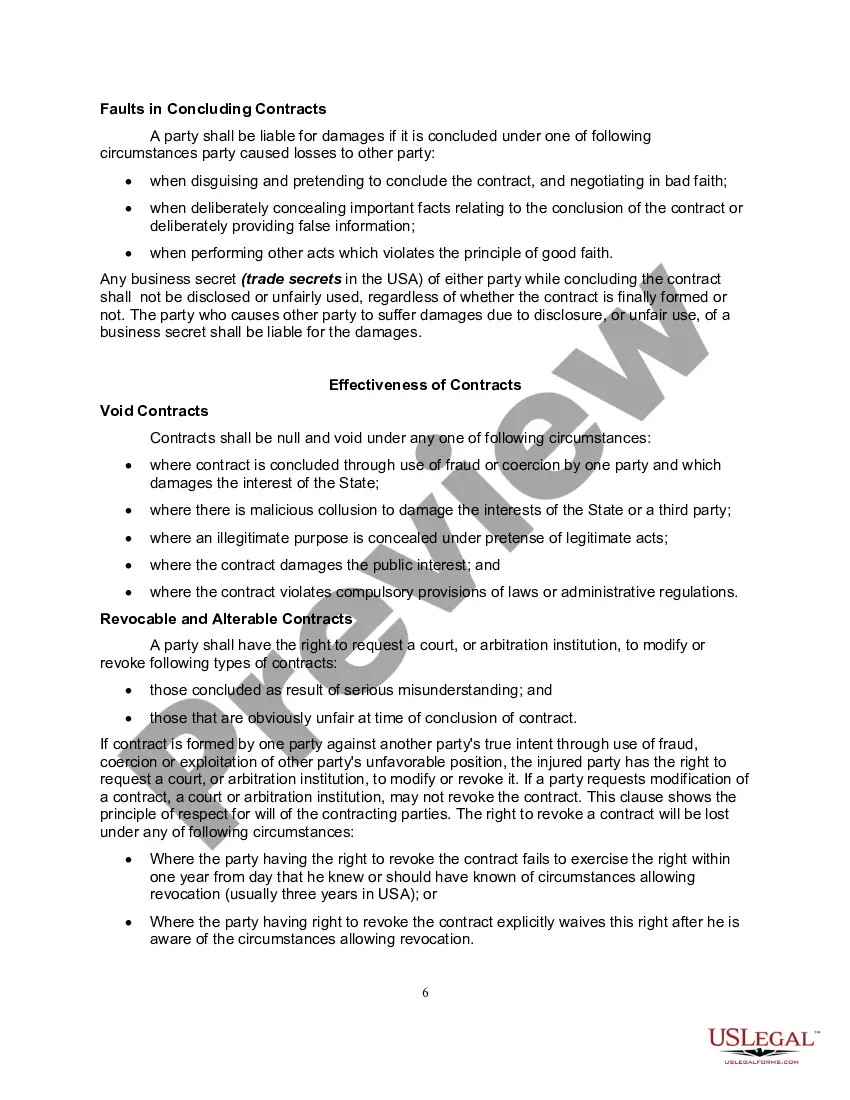
The agreement must be in writing if the contract is for goods with a value over $500. Also, California state law dictates requirements for certain types of agreements.
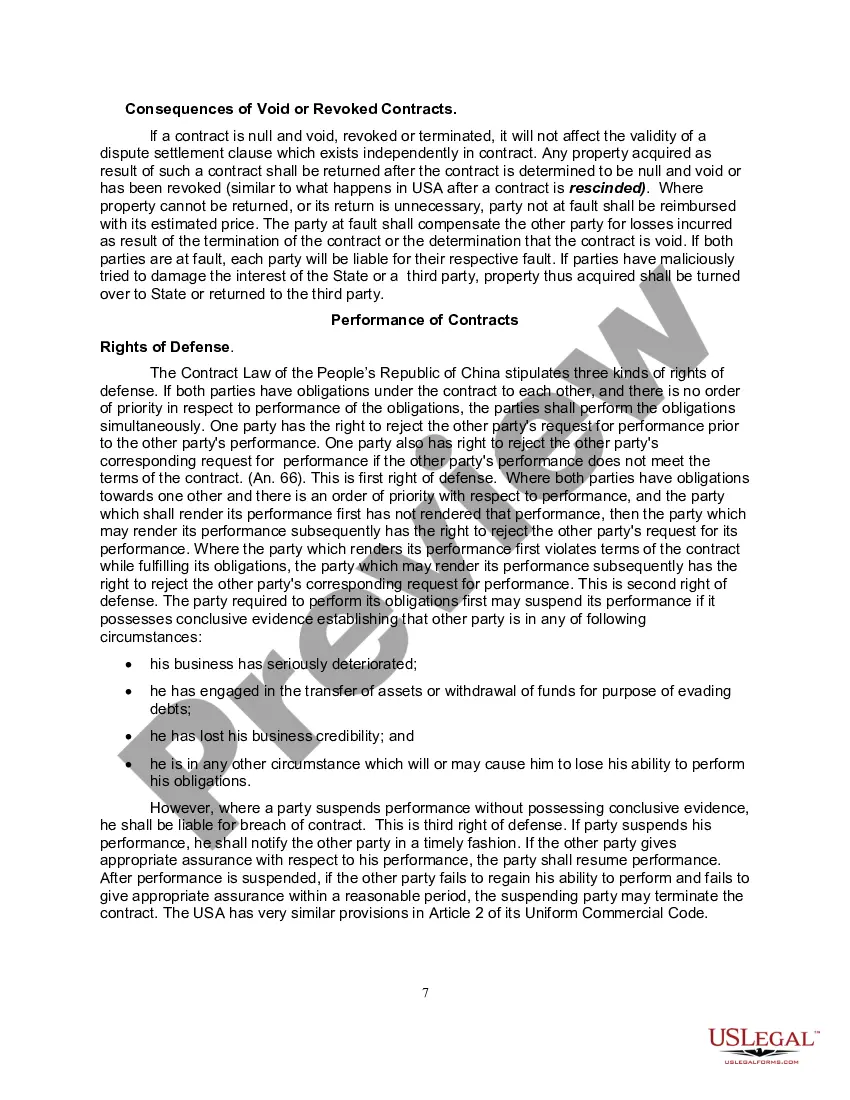
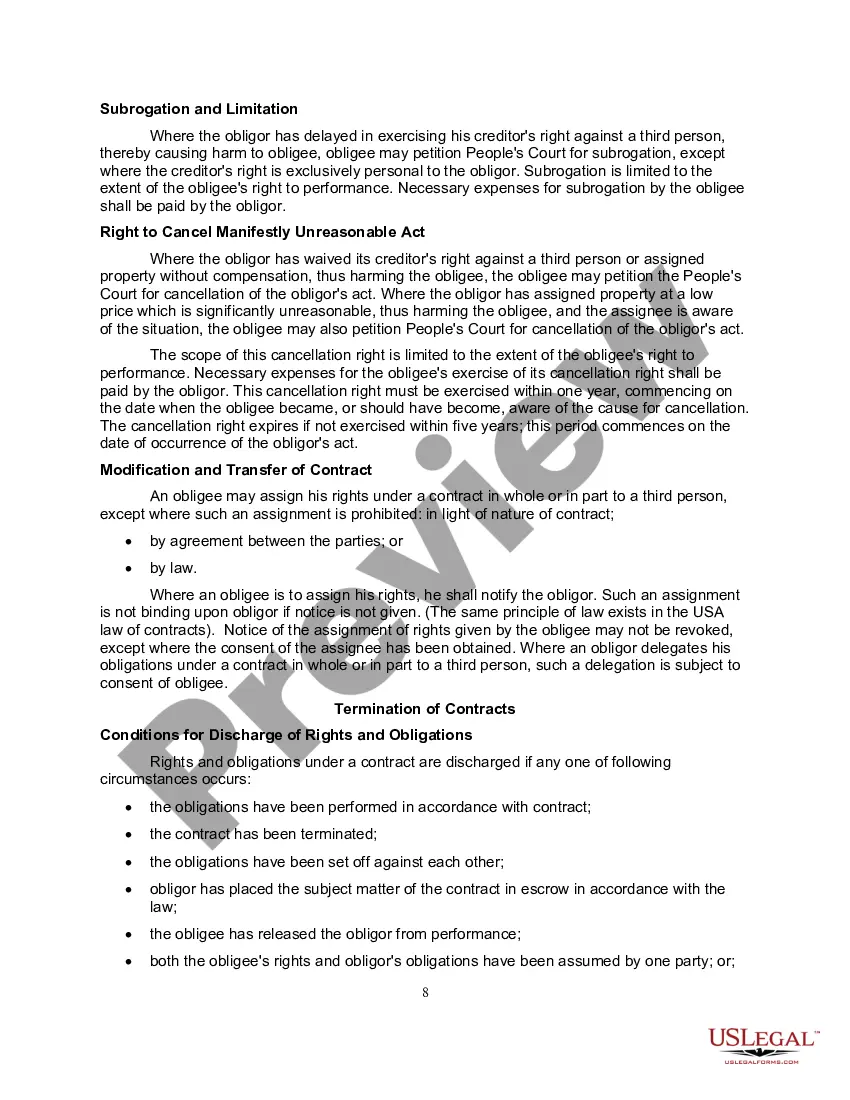
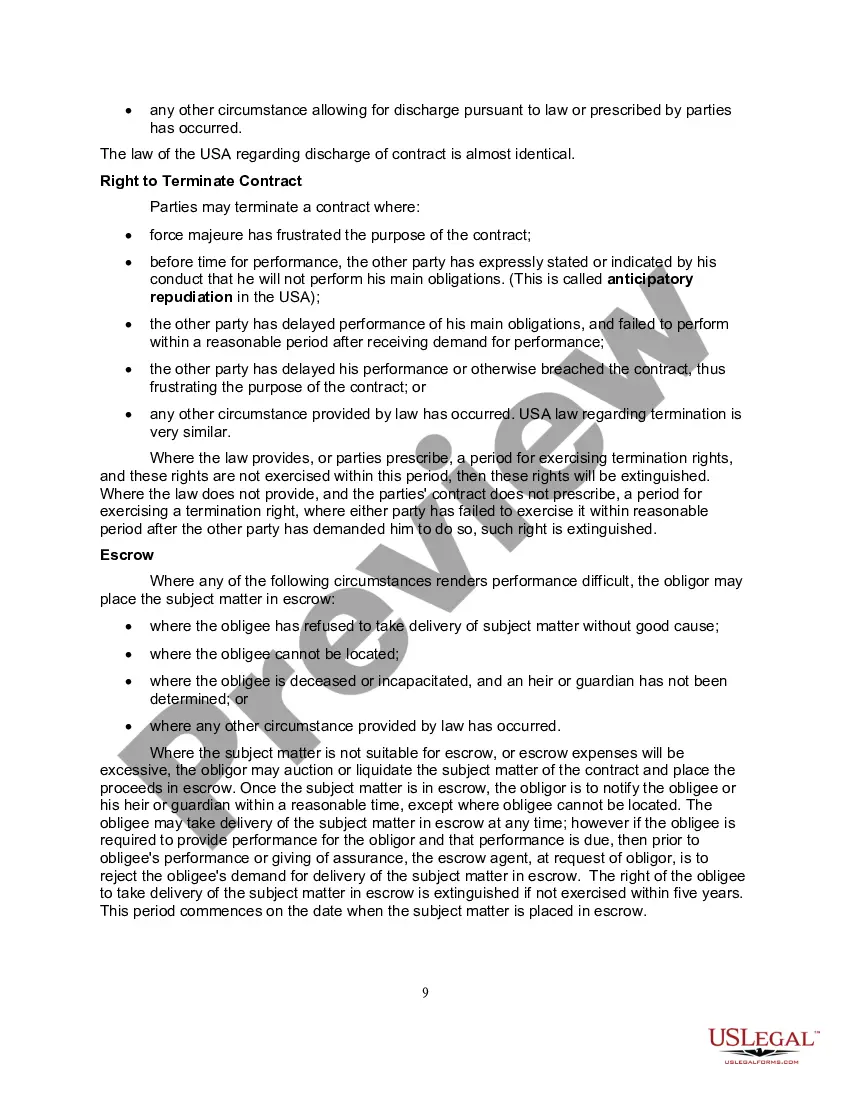
In the Mexican legal system, contract law is regarded as only one branch of in personam obligations. Obligations are viewed as stemming not only from contracts voluntarily entered into, but also from one's status and from negligent or intentional misconduct, including violations of criminal law.
Notice period in Mexico. If an employee is being terminated for misconduct, the employer must: Provide the employee with a written notice within 30 days of discovering the misconduct. Clearly state the reasons for dismissal in the written notice, detailing the actions that justify termination.
Now that we know the elements that must be included let's look at the different types of employment contracts in Mexico. Indefinite Period. Determined Period. Fixed-Term Work. Seasonal Contract. Initial Training.
