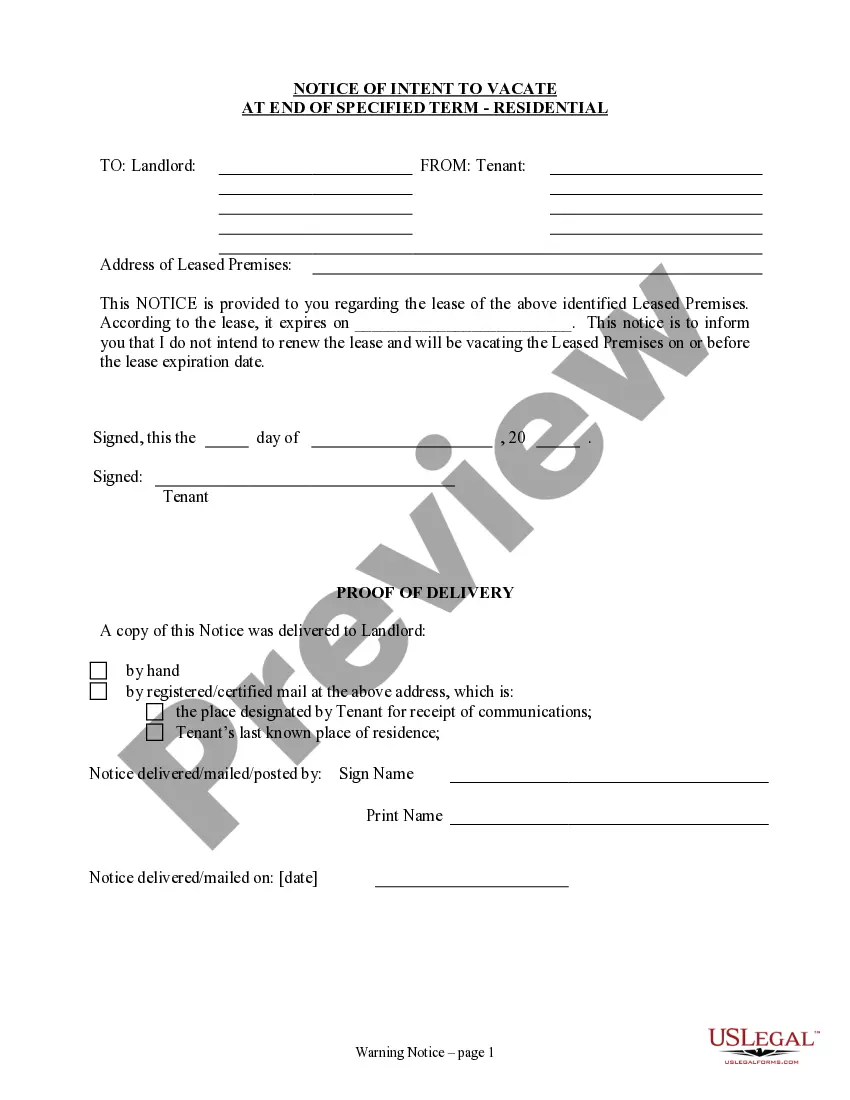
Notice Vacate Property With The Tenant
Description

Get your form ready online
Our built-in tools help you complete, sign, share, and store your documents in one place.
Make edits, fill in missing information, and update formatting in US Legal Forms—just like you would in MS Word.
Download a copy, print it, send it by email, or mail it via USPS—whatever works best for your next step.
Sign and collect signatures with our SignNow integration. Send to multiple recipients, set reminders, and more. Go Premium to unlock E-Sign.
If this form requires notarization, complete it online through a secure video call—no need to meet a notary in person or wait for an appointment.
We protect your documents and personal data by following strict security and privacy standards.

Make edits, fill in missing information, and update formatting in US Legal Forms—just like you would in MS Word.

Download a copy, print it, send it by email, or mail it via USPS—whatever works best for your next step.

Sign and collect signatures with our SignNow integration. Send to multiple recipients, set reminders, and more. Go Premium to unlock E-Sign.

If this form requires notarization, complete it online through a secure video call—no need to meet a notary in person or wait for an appointment.

We protect your documents and personal data by following strict security and privacy standards.
Looking for another form?








How to fill out Arizona Notice Of Intent To Vacate At End Of Specified Lease Term From Tenant To Landlord For Residential Property?
- If you're a returning user, log into your US Legal Forms account and select the desired template for downloading.
- For first-time users, start by checking the Preview mode and read the description to ensure it matches your requirements and complies with local laws.
- If adjustments are needed, use the Search tab to locate a different template that fits your criteria.
- Proceed to purchase your document by clicking the Buy Now button and select a subscription plan that suits you.
- Complete your purchase by entering your payment information via credit card or PayPal.
- Finally, download your completed form to your device and access it later through the My Forms section of your profile.
Following these steps allows landlords to efficiently create a legally sound notice to vacate. US Legal Forms stands out with its extensive library of over 85,000 templates and resources.
Start using US Legal Forms today to ensure you have easy access to high-quality legal documents for all your needs.
Form popularity
FAQ
In Texas, a notice to vacate does not require notarization to be valid. The critical aspect is that the notice is delivered properly and meets the legal criteria set out by local laws. However, keeping a record of the delivery method and date can be beneficial if disputes arise later. Using a platform like US Legal Forms can simplify this process, ensuring you comply with all necessary requirements.
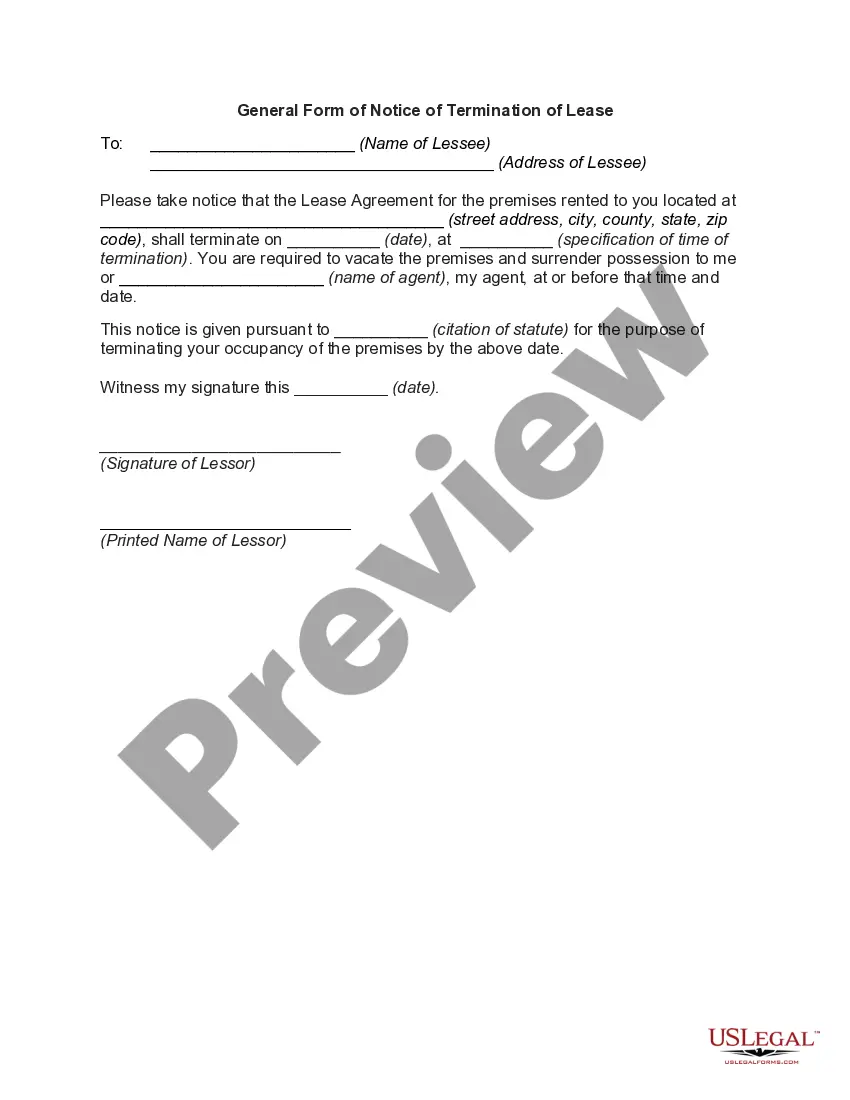
A valid notice to vacate in Texas must include certain essential elements. It should clearly state the intention for the tenant to vacate, the date by which they need to leave, and the address of the rental property. Including specific language about the lease terms and the consequences of non-compliance can further strengthen the notice. Utilizing resources from US Legal Forms can help you craft a compliant notice to vacate property with the tenant.
Texas law stipulates several key rules regarding the notice to vacate property with the tenant. For instance, the notice period generally varies based on how long the tenant has resided in the property. A tenant who has lived in a property for less than a year typically receives a three-day notice, while tenants in longer leases may have a 30-day requirement. Following these rules is essential to ensure a smooth and legal process.
In Texas, a written notice to vacate typically must be delivered in a specific format as outlined in the law. While an email can serve as a quick means of communication, it may not fulfill the legal requirements for a written notice to vacate property with the tenant. It is best to deliver the notice via certified mail or hand delivery to ensure compliance with Texas statutes. Always verify local laws or consult with a legal expert for guidance on effective notice delivery.
A notice to vacate is a formal communication from a landlord to a tenant, requesting them to leave the rented property. In contrast, eviction is a legal process initiated when a tenant fails to comply with the notice or lease terms. While the notice to vacate serves as a preliminary step, eviction requires court involvement to enforce the removal of the tenant. Understanding these distinctions is important when addressing issues related to notice vacate property with the tenant.
No, a notice to vacate property with the tenant and an eviction are not the same. The notice is a request for the tenant to leave, while an eviction is an enforced legal action if the tenant does not comply. Understanding this difference can significantly impact how you manage your rental property and the relationships with your tenants.
In Arkansas, the eviction process typically begins after serving a notice to vacate property with the tenant. If the tenant fails to leave, the landlord can file an eviction lawsuit in court. The court will then schedule a hearing, and if the landlord prevails, they can obtain a judgment to remove the tenant forcibly if necessary.
A notice to vacate property with the tenant is a formal communication informing them to leave by a certain date, while eviction is the legal process to remove them if they don't comply. The notice typically serves as a preliminary step before an eviction takes place. Understanding this difference can help you manage your rental agreements more effectively.
Yes, you may take back your notice to vacate property with the tenant, but it depends on various factors. First, consider any agreements you've made with your tenant. If both parties agree, you can retract the notice. However, be aware that some states have specific laws regarding this process, so it's wise to check local regulations.
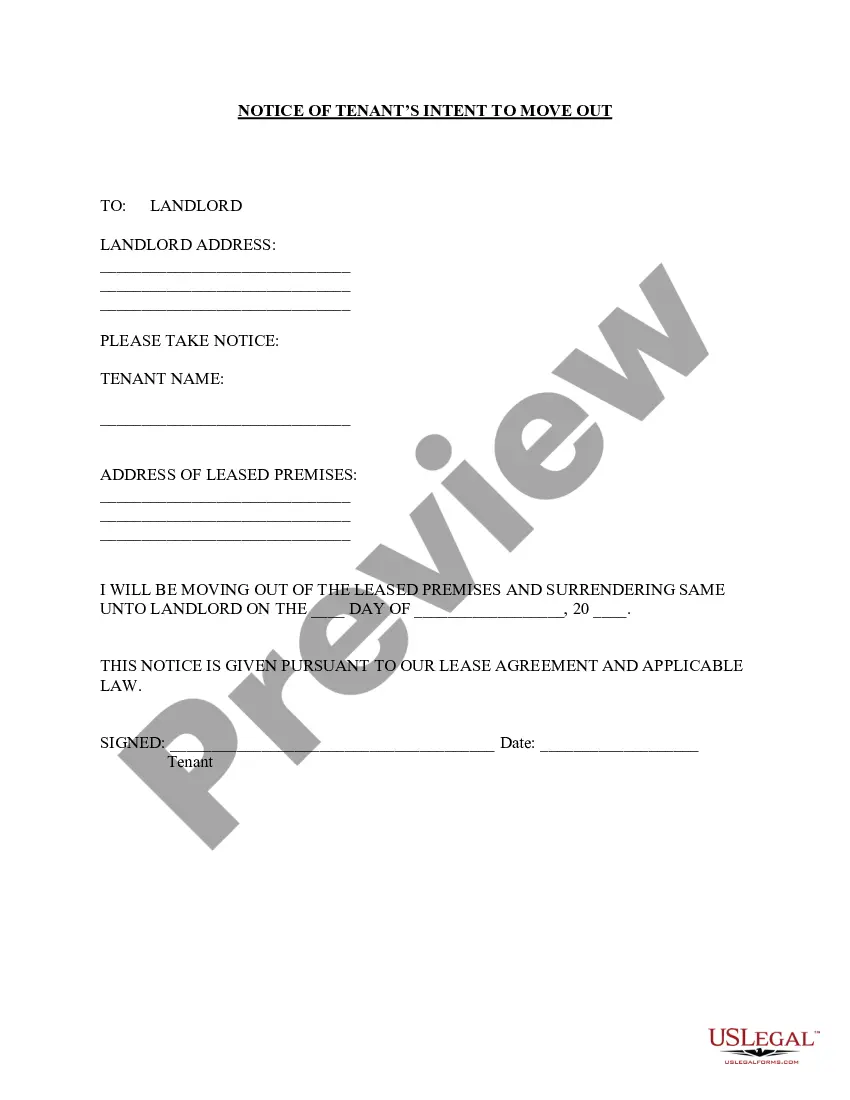
Writing a notice to vacate as a tenant requires clear communication. Include the date, your current address, and the intended move-out date. This helps to ensure that both you and your landlord understand the timeline. If you need assistance, consider templates available through uslegalforms to ensure you meet all requirements.