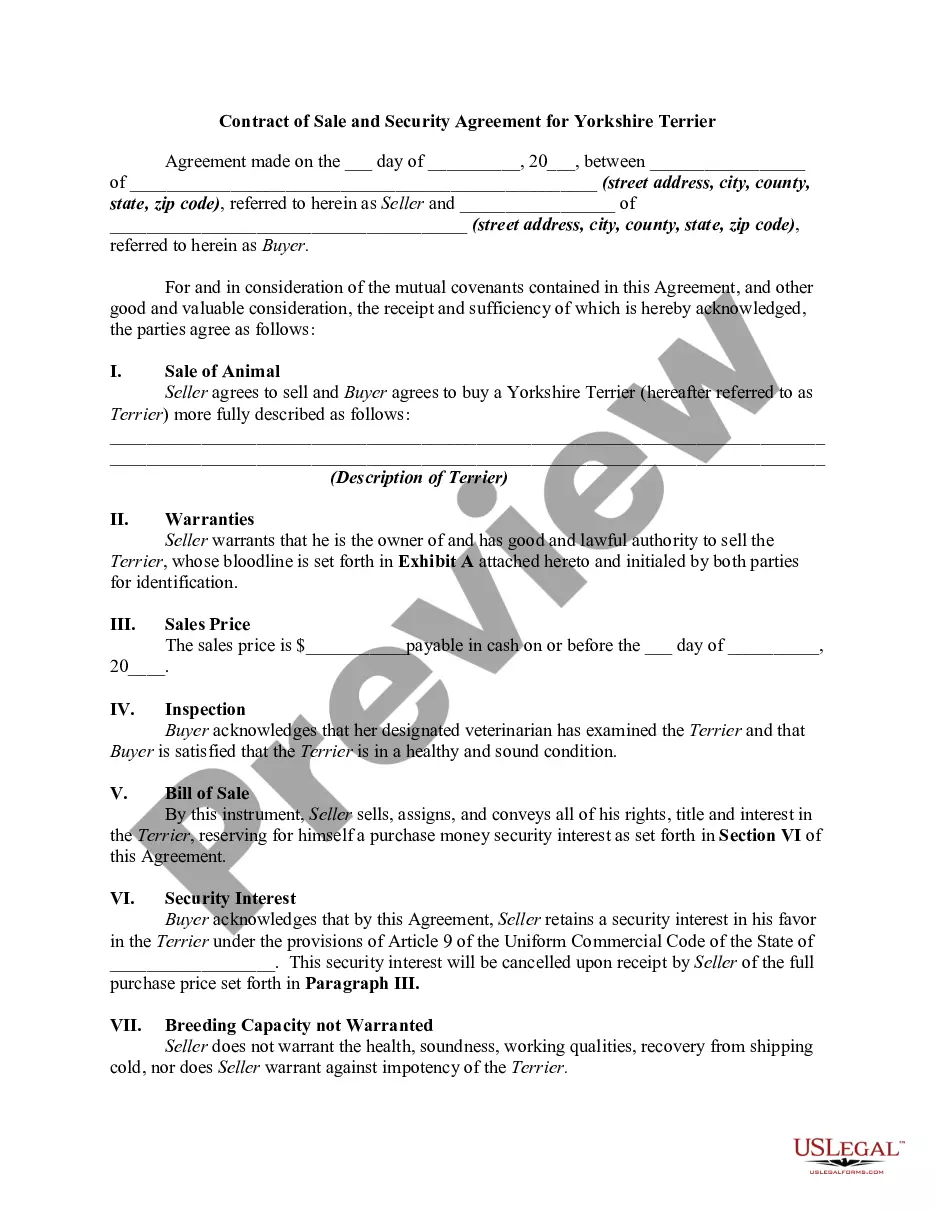
Limited Power Attorney With Dementia
Description
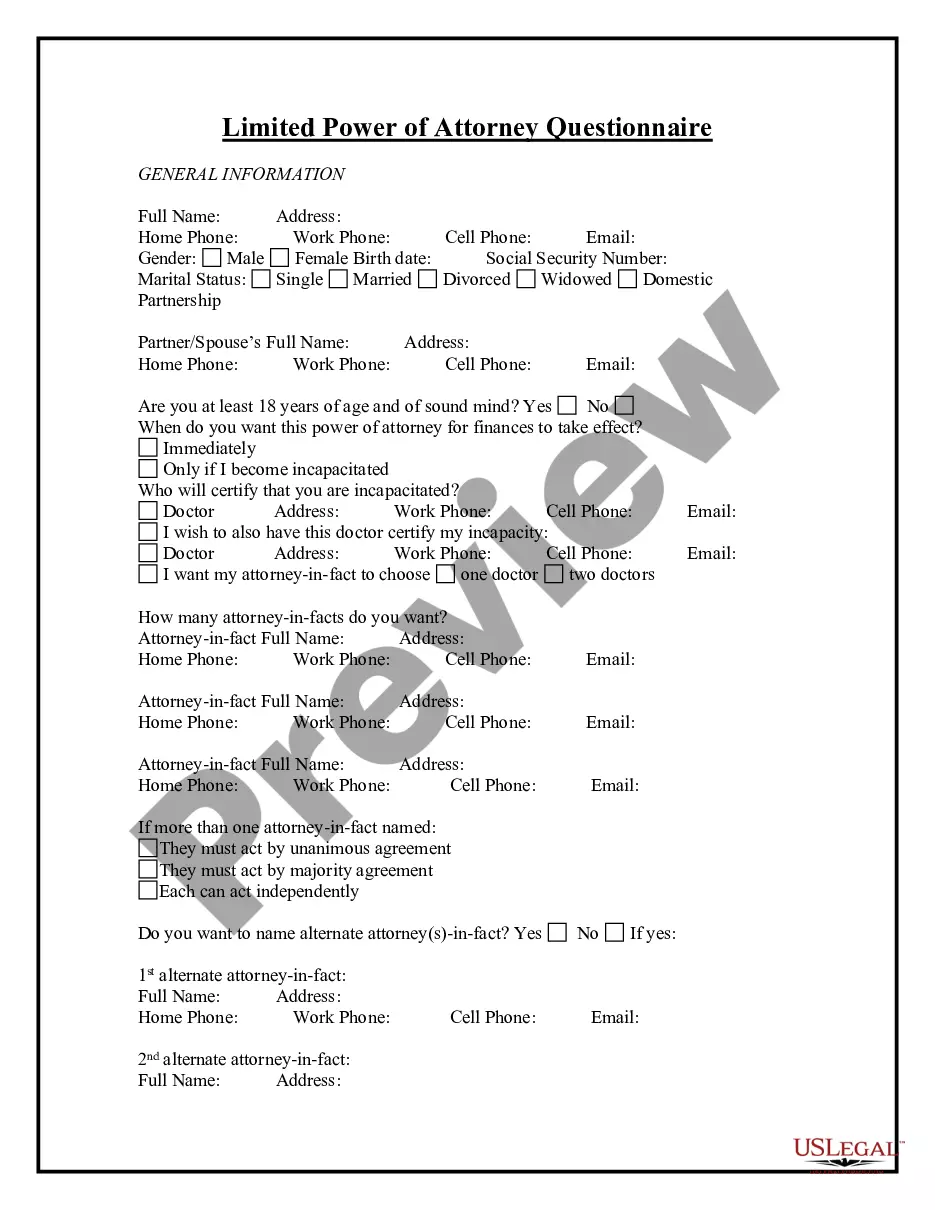
Get your form ready online
Our built-in tools help you complete, sign, share, and store your documents in one place.
Make edits, fill in missing information, and update formatting in US Legal Forms—just like you would in MS Word.
Download a copy, print it, send it by email, or mail it via USPS—whatever works best for your next step.
Sign and collect signatures with our SignNow integration. Send to multiple recipients, set reminders, and more. Go Premium to unlock E-Sign.
If this form requires notarization, complete it online through a secure video call—no need to meet a notary in person or wait for an appointment.
We protect your documents and personal data by following strict security and privacy standards.

Make edits, fill in missing information, and update formatting in US Legal Forms—just like you would in MS Word.

Download a copy, print it, send it by email, or mail it via USPS—whatever works best for your next step.

Sign and collect signatures with our SignNow integration. Send to multiple recipients, set reminders, and more. Go Premium to unlock E-Sign.

If this form requires notarization, complete it online through a secure video call—no need to meet a notary in person or wait for an appointment.

We protect your documents and personal data by following strict security and privacy standards.
Looking for another form?
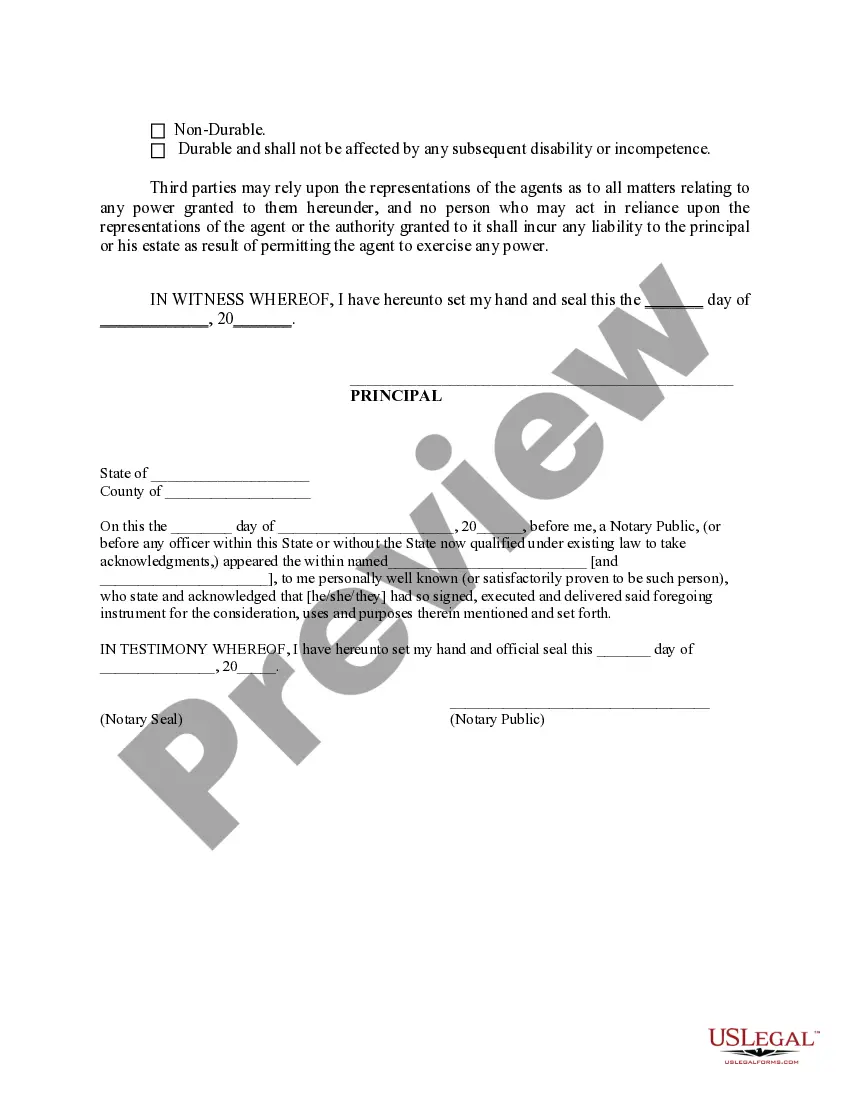
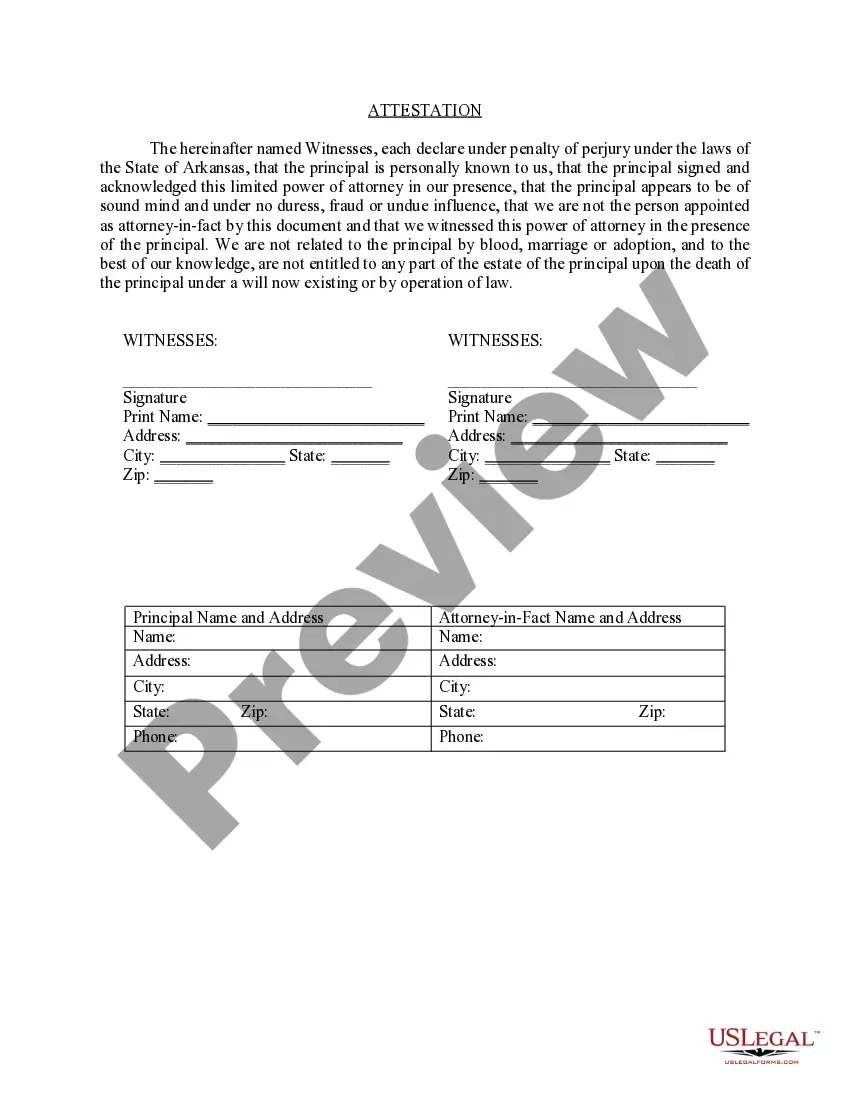
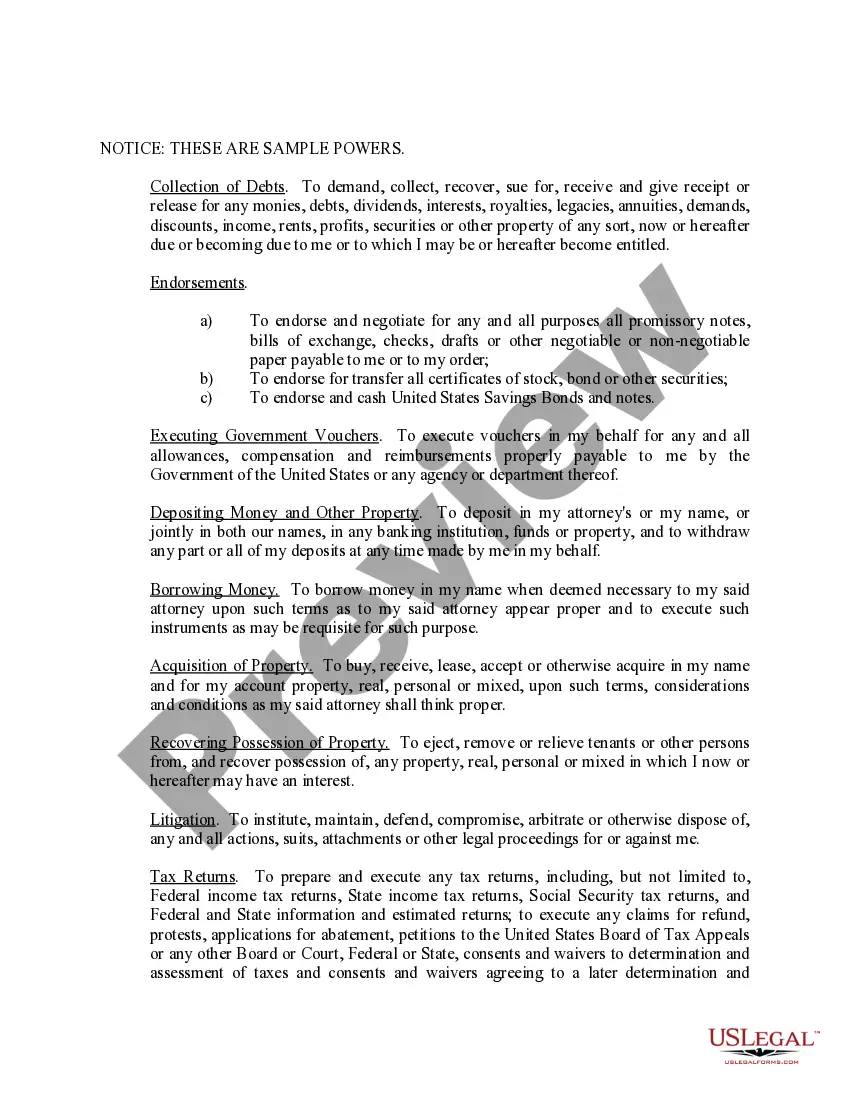
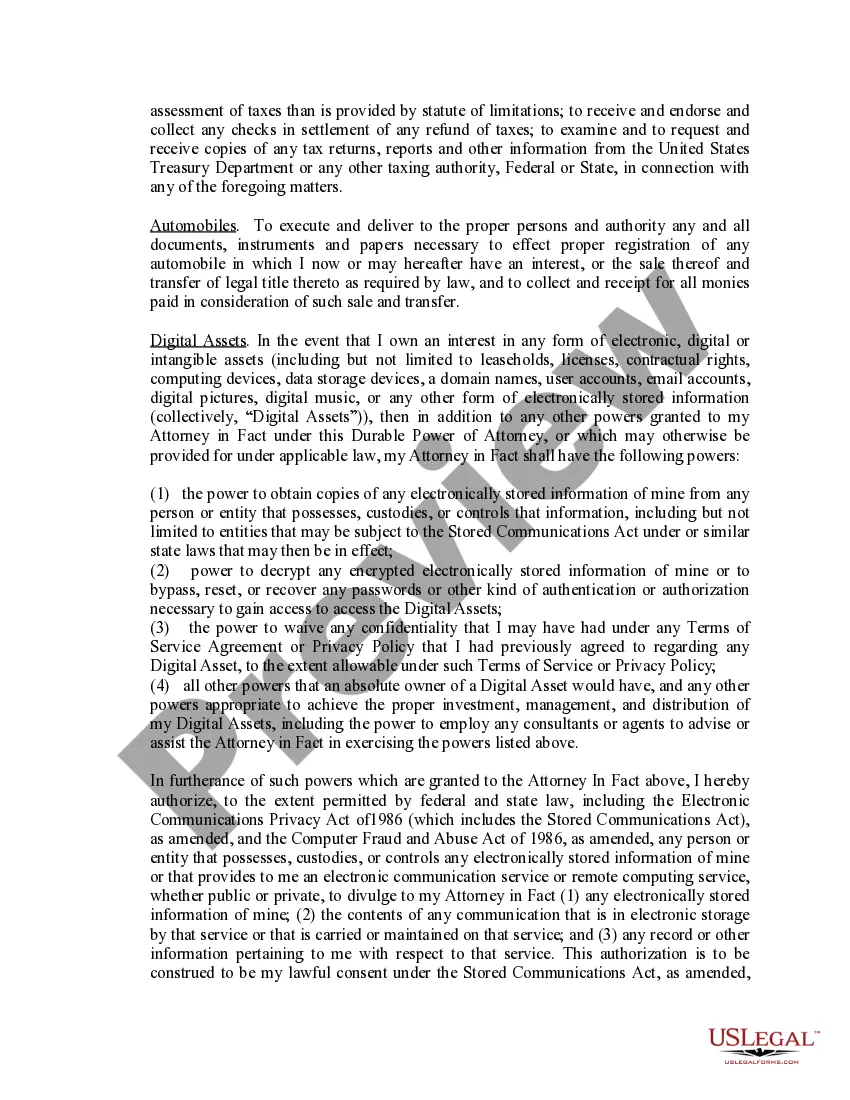
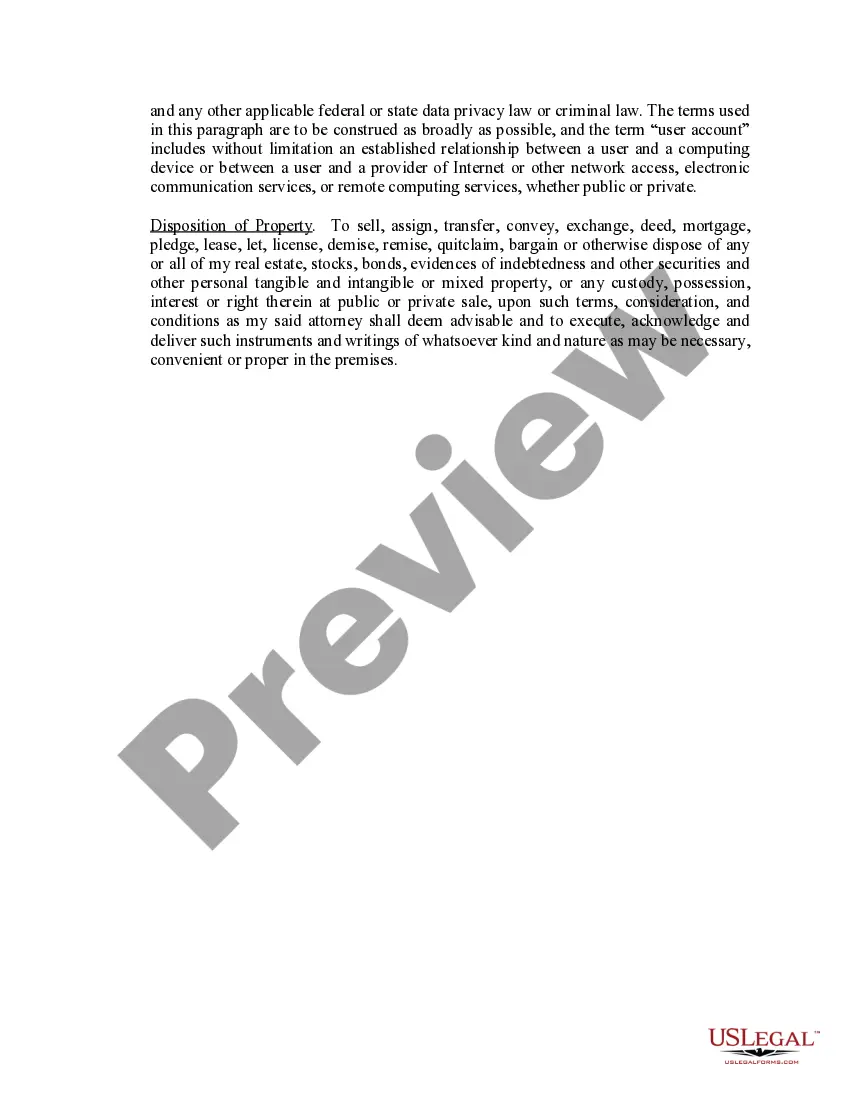
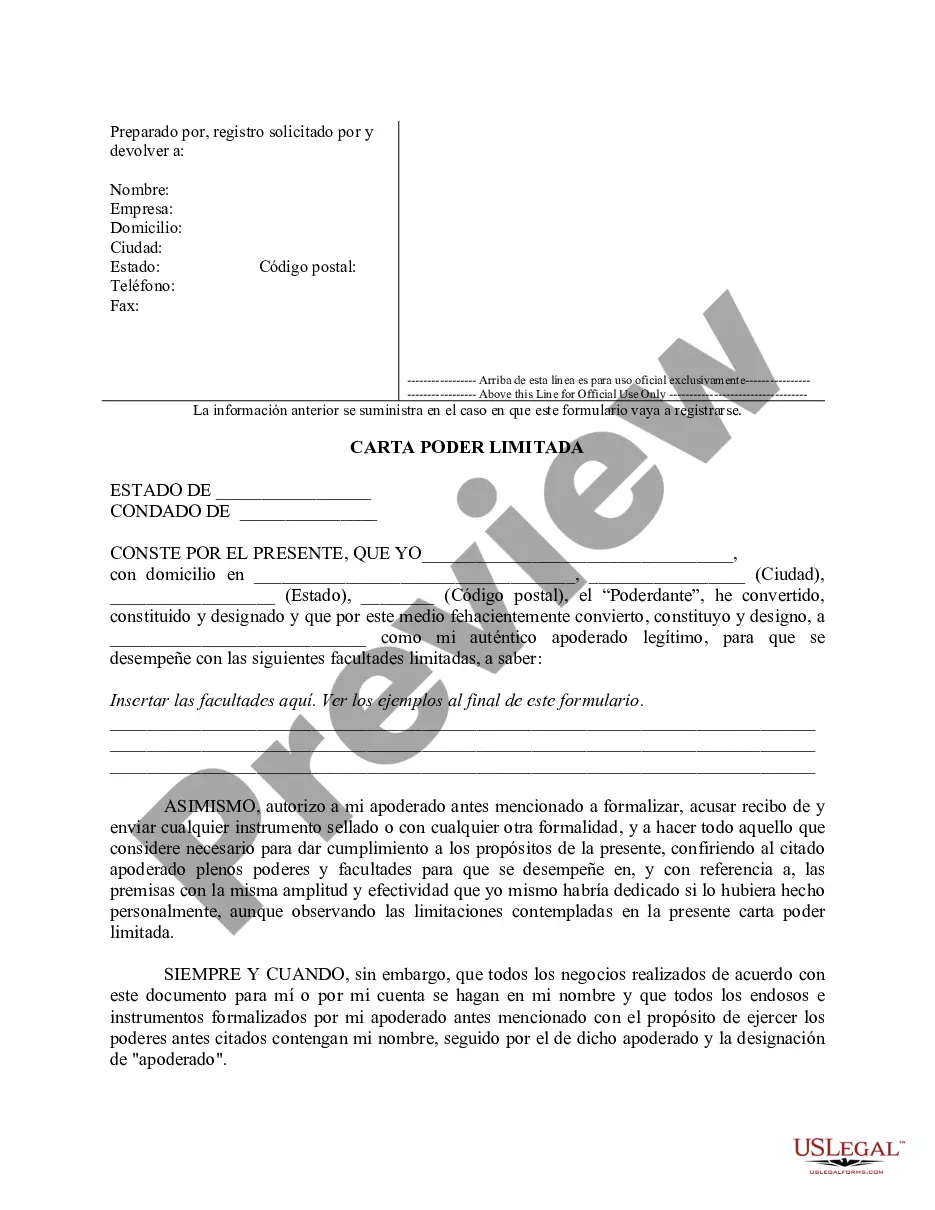
How to fill out Arkansas Limited Power Of Attorney Where You Specify Powers With Sample Powers Included?
What is the most reliable service to obtain the Limited Power Attorney With Dementia and other current versions of legal documents.
US Legal Forms is the answer! It has the largest collection of legal documents for any situation.
If you don't yet have an account with us, here are the steps you need to follow to create one.
- Every template is professionally crafted and verified for adherence to federal and local laws.
- They are categorized by industry and state of application, making it effortless to find what you need.
- Experienced users of the platform just need to Log In, ensure their subscription is valid, and click the Download button next to the Limited Power Attorney With Dementia to retrieve it.
- Once saved, the document remains accessible for further use within the My documents section of your profile.
Form popularity
FAQ
One way to protect your marital assets is to have your spouse create a durable power of attorney for finance. A power of attorney allows the individual to designate someone to make financial decisions for them should he or she become incapacitated. In the case of a married couple, this is usually the person's spouse.
A dementia diagnosis doesn't necessarily mean you're unable to make important decisions at that point in time. But as symptoms of dementia get worse over time, you may no longer be able to make decisions about things like your finances, health or welfare. This is sometimes referred to as lacking mental capacity.
In most cases, if a person living with dementia is able to understand the meaning and importance of a given legal document, he or she likely has the legal capacity (the ability to understand the consequences of his or her actions) to execute (to carry out by signing it).
Typically, as long as dementia is minor or nonexistent, a person in the beginning stages of a dementia-causing disorder will be deemed mentally competent in the eyes of the law.
The person living with dementia maintains the right to make his or her own decisions as long as he or she has legal capacity. Power of attorney does not give the agent the authority to override the principal's decision-making until the person with dementia no longer has legal capacity.