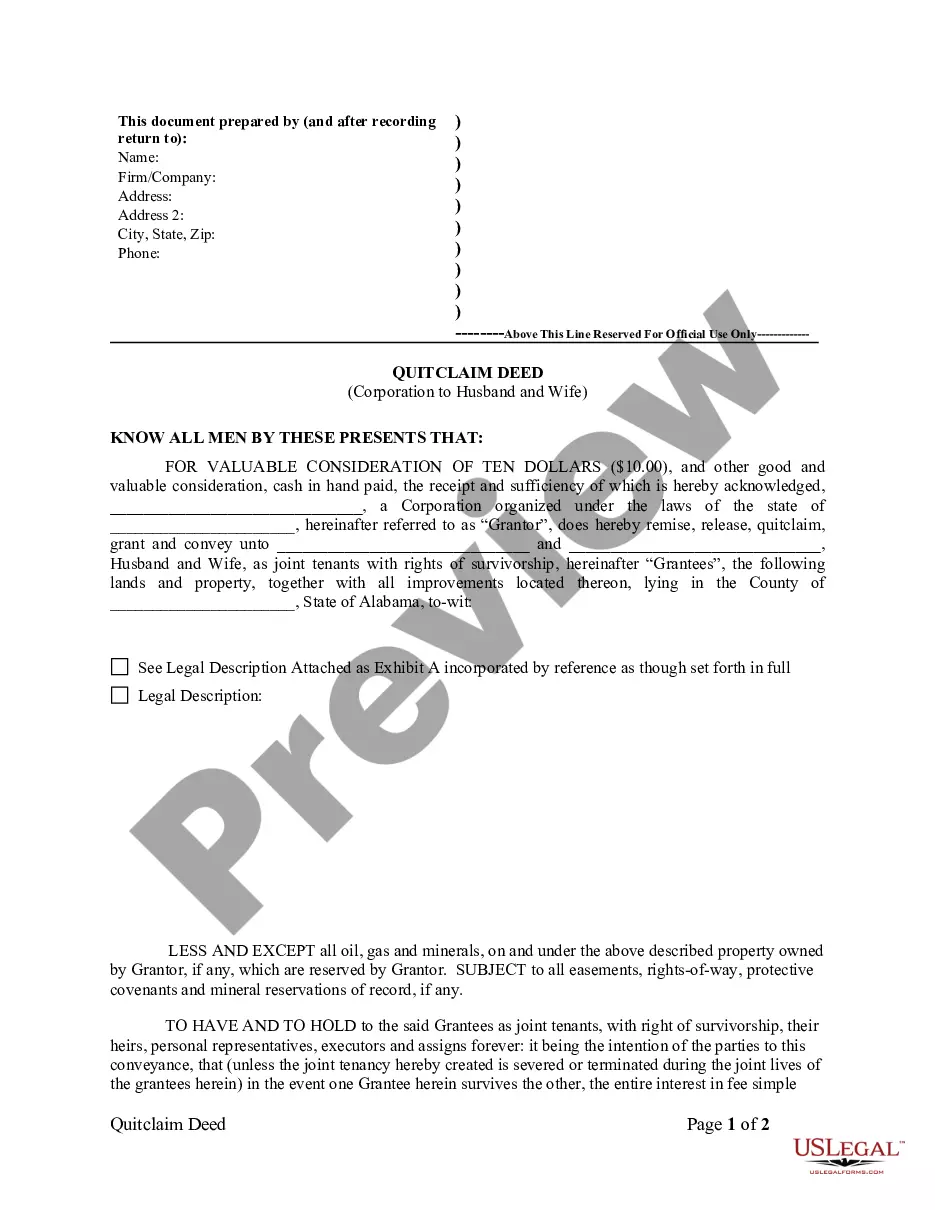
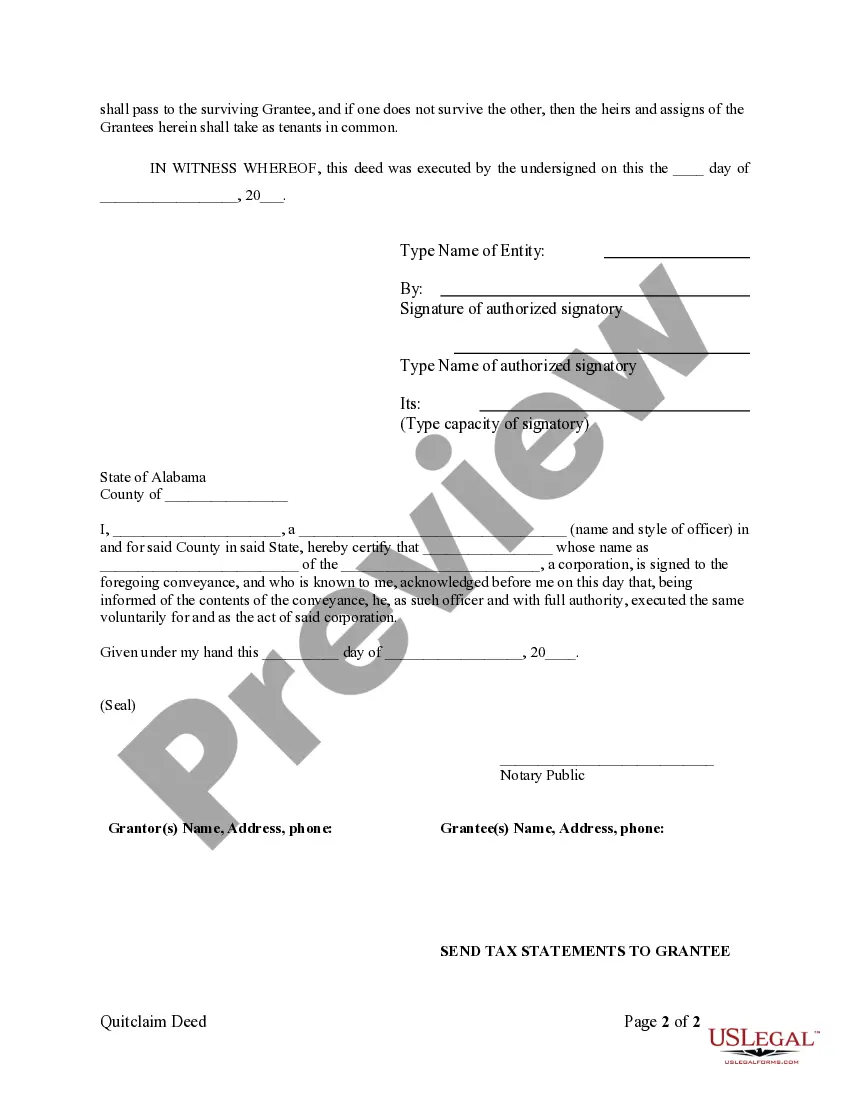
Quitclaim Deed Husband With His Wife
Description


Get your form ready online
Our built-in tools help you complete, sign, share, and store your documents in one place.
Make edits, fill in missing information, and update formatting in US Legal Forms—just like you would in MS Word.
Download a copy, print it, send it by email, or mail it via USPS—whatever works best for your next step.
Sign and collect signatures with our SignNow integration. Send to multiple recipients, set reminders, and more. Go Premium to unlock E-Sign.
If this form requires notarization, complete it online through a secure video call—no need to meet a notary in person or wait for an appointment.
We protect your documents and personal data by following strict security and privacy standards.

Make edits, fill in missing information, and update formatting in US Legal Forms—just like you would in MS Word.

Download a copy, print it, send it by email, or mail it via USPS—whatever works best for your next step.

Sign and collect signatures with our SignNow integration. Send to multiple recipients, set reminders, and more. Go Premium to unlock E-Sign.

If this form requires notarization, complete it online through a secure video call—no need to meet a notary in person or wait for an appointment.

We protect your documents and personal data by following strict security and privacy standards.
Looking for another form?
How to fill out Alabama Quitclaim Deed From Corporation To Husband And Wife?
- Log in to your US Legal Forms account if you're an existing user. Verify your subscription is active. If it’s not, renew it according to your payment plan.
- For first-time users, start by browsing through our comprehensive form library. Make sure to preview the quitclaim deed template to ensure it fits your requirements.
- If you don’t find the right form, utilize the search feature to locate an appropriate template that meets your local jurisdiction needs.
- Once you've found your quitclaim deed, click on the 'Buy Now' button to select your preferred subscription plan and create an account to gain access.
- Complete your purchase using your credit card or PayPal. This will allow you access to the form library.
- Download your quitclaim deed form to your device. You can also access it later through the 'My Forms' section of your profile.
By using US Legal Forms, you ensure that your legal documents are not only accessible but also tailored to meet your precise needs.
Don't wait; start your journey today with US Legal Forms and simplify your legal documentation process!
Form popularity
FAQ
Putting your spouse on the deed can offer legal protections and shared ownership benefits. It strengthens your spouse’s claim to the property, particularly in legal situations. Utilizing a quitclaim deed husband with his wife can simplify this process and clearly define property rights.
Yes, both spouses should ideally be on the deed to ensure equal ownership rights. This can help avoid confusion and legal issues down the line. Using a quitclaim deed can streamline the process of adding your spouse, promoting joint ownership.
To fill out a quitclaim deed, start by listing the grantor, usually the current owner, and the grantee, the person receiving the property. Include a clear description of the property, such as its address and parcel number. Following proper procedures ensures that the quitclaim deed husband with his wife is valid and enforceable.
Yes, having both names on the deed can promote transparency and security in property ownership. It also ensures both spouses are legally protected in the event of disputes. A quitclaim deed allows a husband to add his wife to the title, reinforcing their shared ownership of the property.
If your wife is not on the deed, it may limit her legal rights to the property. A quitclaim deed can help you transfer your interest in the property to her, providing her with clear ownership. Using a quitclaim deed between a husband and his wife can simplify property ownership and ensure both spouses have legal rights.
Yes, a divorce decree can supersede a deed, especially if it includes provisions regarding property division. If the decree indicates that one spouse receives exclusive ownership, a quitclaim deed husband with his wife may still be necessary to formalize this transfer. Always review your divorce settlement carefully, and consider seeking legal advice to ensure compliance with all requirements.
To get your husband’s name off the deed, consider executing a quitclaim deed husband with his wife. This deed needs to be filled out accurately and signed by both parties. After signing, it must be filed with the local county recorder’s office to make the change official. This process helps ensure that the property reflects the current ownership status.
A spouse may choose to do a quitclaim deed to transfer property interests clearly and effectively. This process can simplify ownership changes during life events such as marriage, divorce, or estate planning. By using a quitclaim deed husband with his wife, couples can streamline property transfers and clarify ownership, which can be beneficial for financial planning.
To remove your husband's name from the house, you can initiate a quitclaim deed husband with his wife. This allows you to transfer his share of the property legally. Ensure that you obtain an agreement and have both signatures if required. Consulting an attorney can help you navigate this process smoothly.
Removing someone from a deed without their consent typically requires a legal process. You generally need to file a quitclaim deed husband with his wife or a similar document, which effectively transfers ownership interests. However, since consent is paramount in property ownership, involving legal counsel can help ensure you follow the correct procedure and mitigate risks of disputes.