Florida Last Will and Testament for Married person with Adult Children
What this document covers
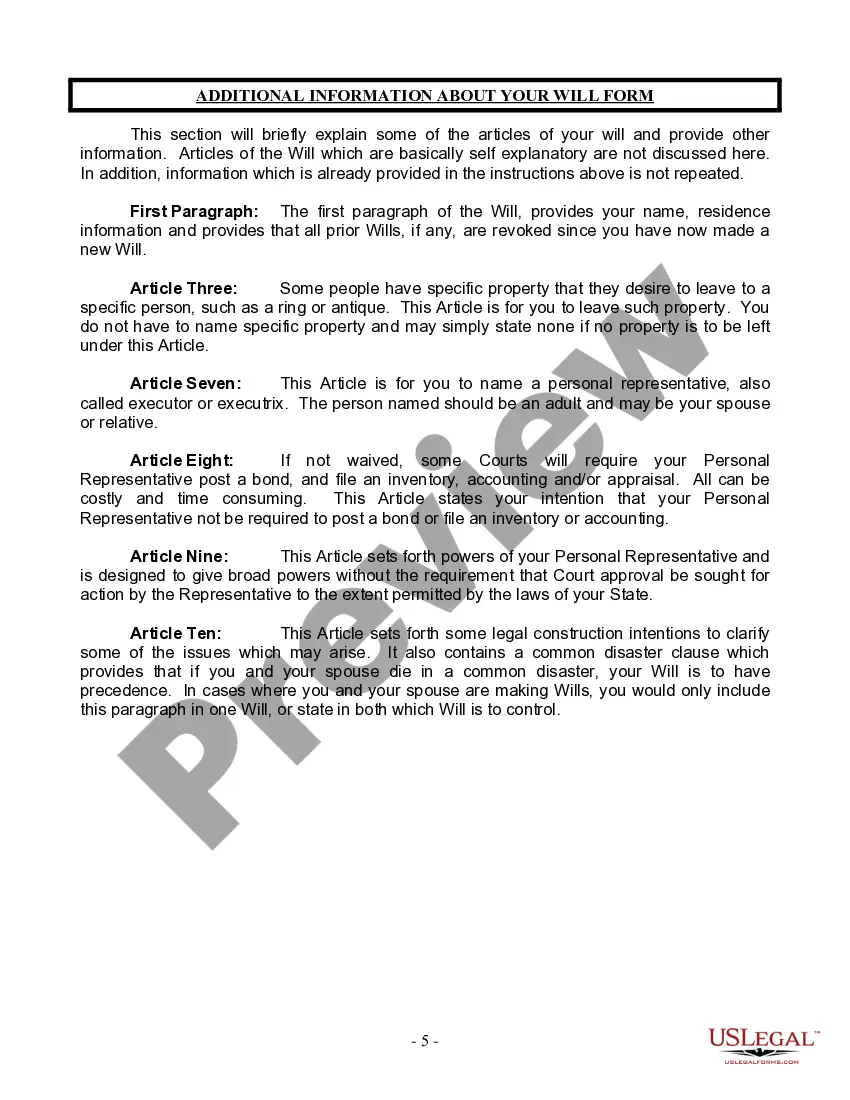
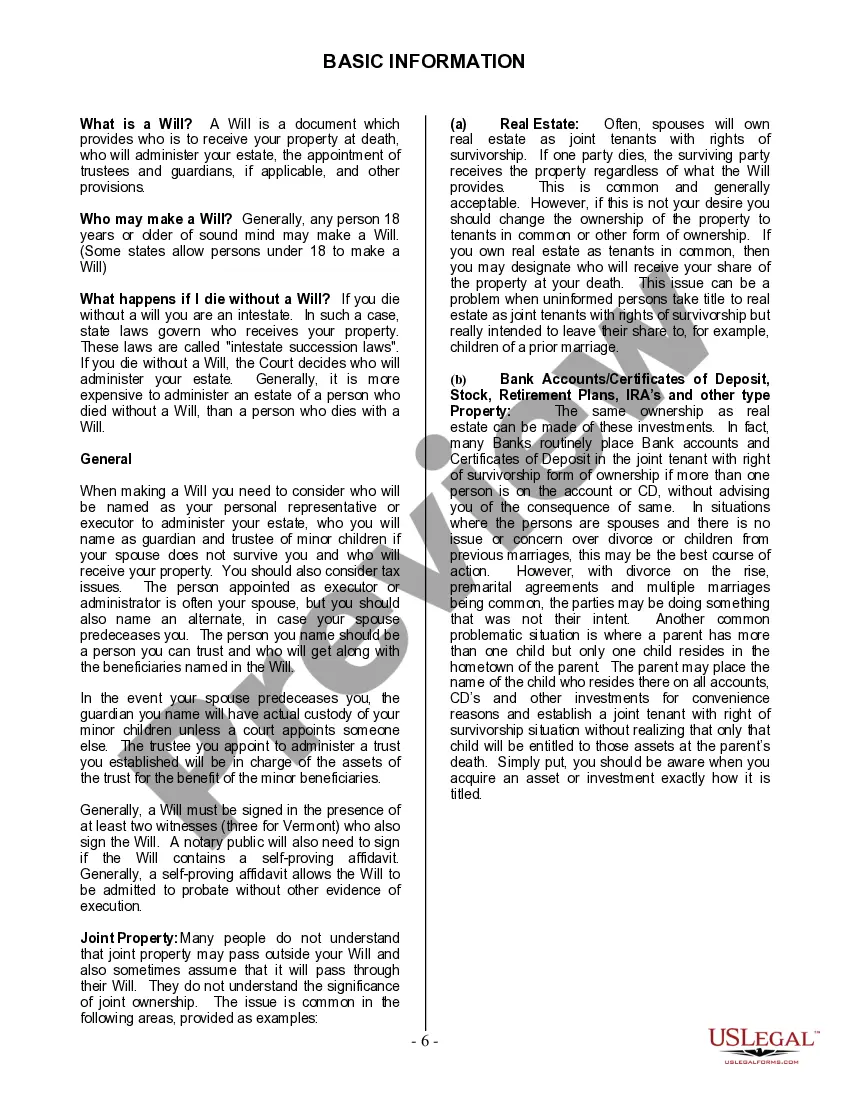
This Last Will and Testament for a married person with adult children is a legal document that outlines how your assets will be distributed upon your death. It specifically addresses the needs of married individuals who have adult children, ensuring that both your spouse and children are provided for according to your wishes. This will includes provisions for appointing a personal representative and designating beneficiaries, distinguishing it from other types of wills that may not cater specifically to the family structure of married individuals with grown children.
Main sections of this form
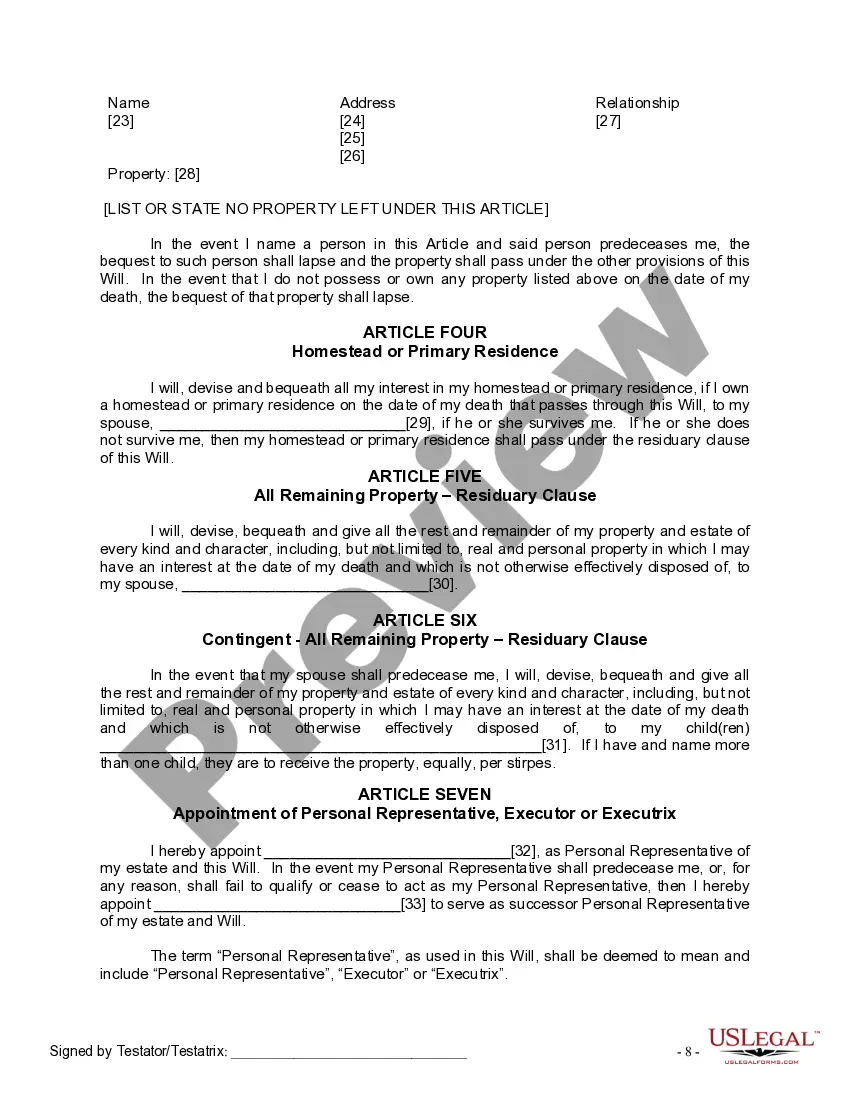
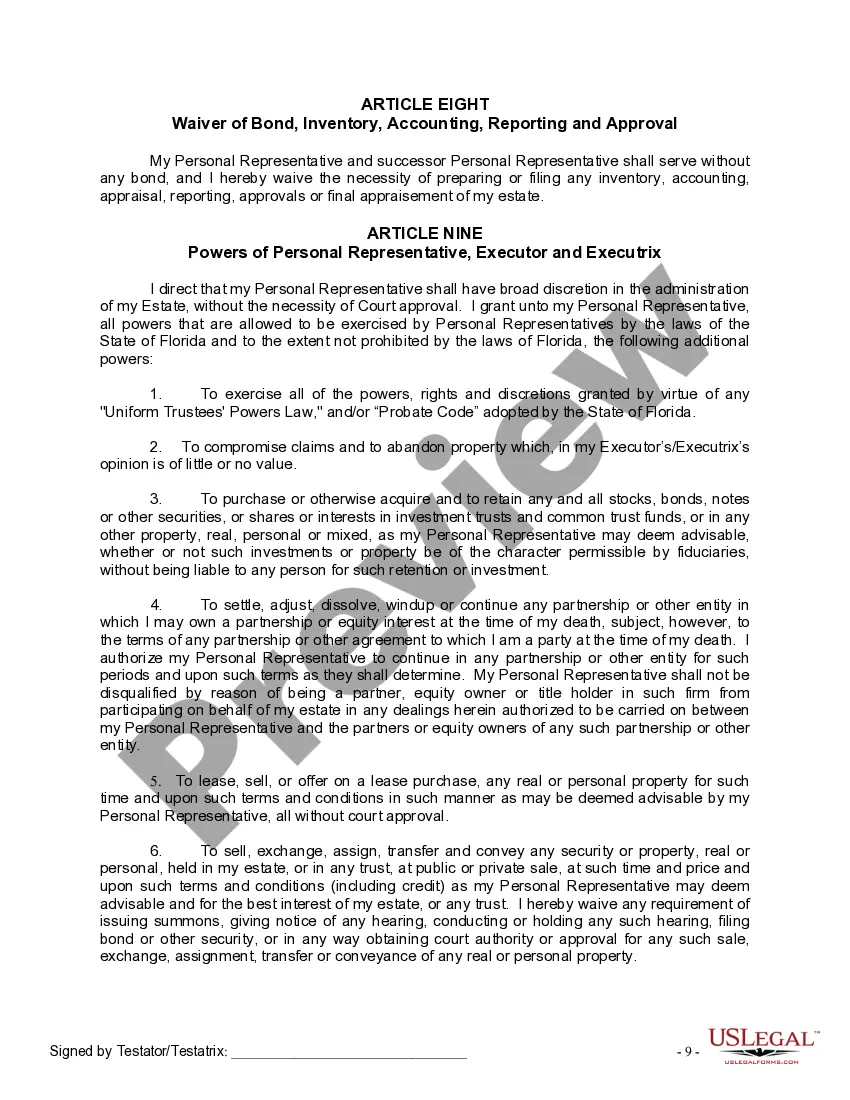
- Personal representative appointment - designates who will carry out your wishes.
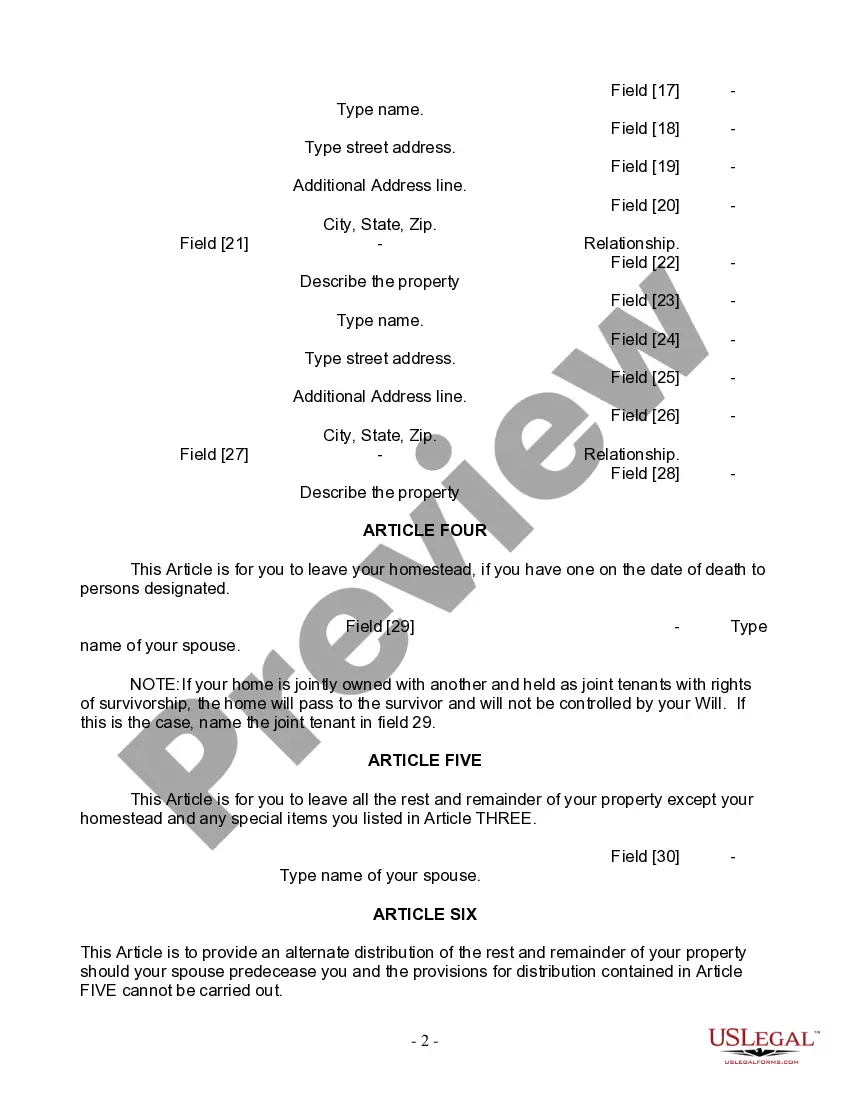
- Specific bequests - allows you to designate specific assets to certain individuals.
- Homestead provisions - outlines what happens to your primary residence.
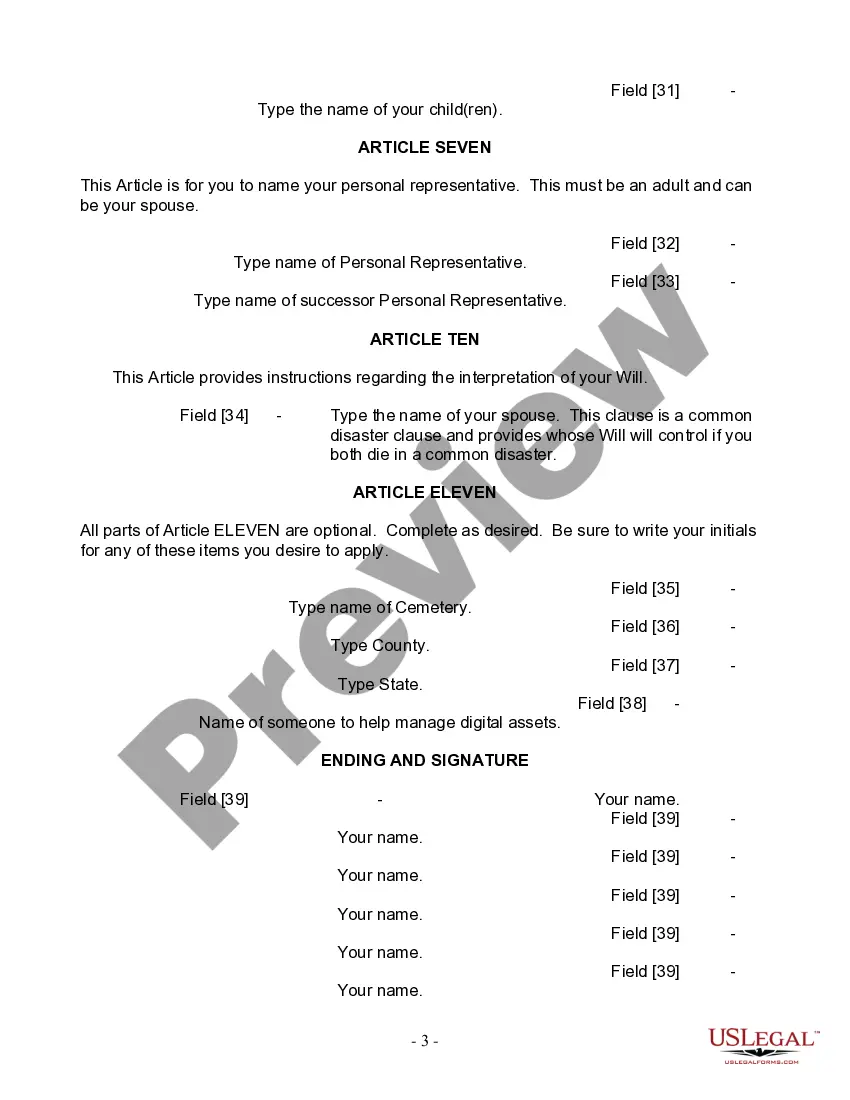
- Residuary clause - details how remaining assets are distributed after specific gifts.
- Witness and notarization instructions - ensures that the will is legally executed.





Situations where this form applies
This form should be used when you want to formalize your wishes regarding the distribution of your assets upon your death, especially if you are married and have adult children. It is particularly important in situations where you want to ensure that your spouse and adult children are taken care of, and to avoid intestacy laws that may govern your estate without a will.
Intended users of this form
- Married individuals with adult children.
- Individuals seeking to specify how their assets should be divided after their death.
- People looking to appoint a personal representative to manage their estate.
- Anyone who wants to avoid the complexities of dying intestate (without a will).
Instructions for completing this form
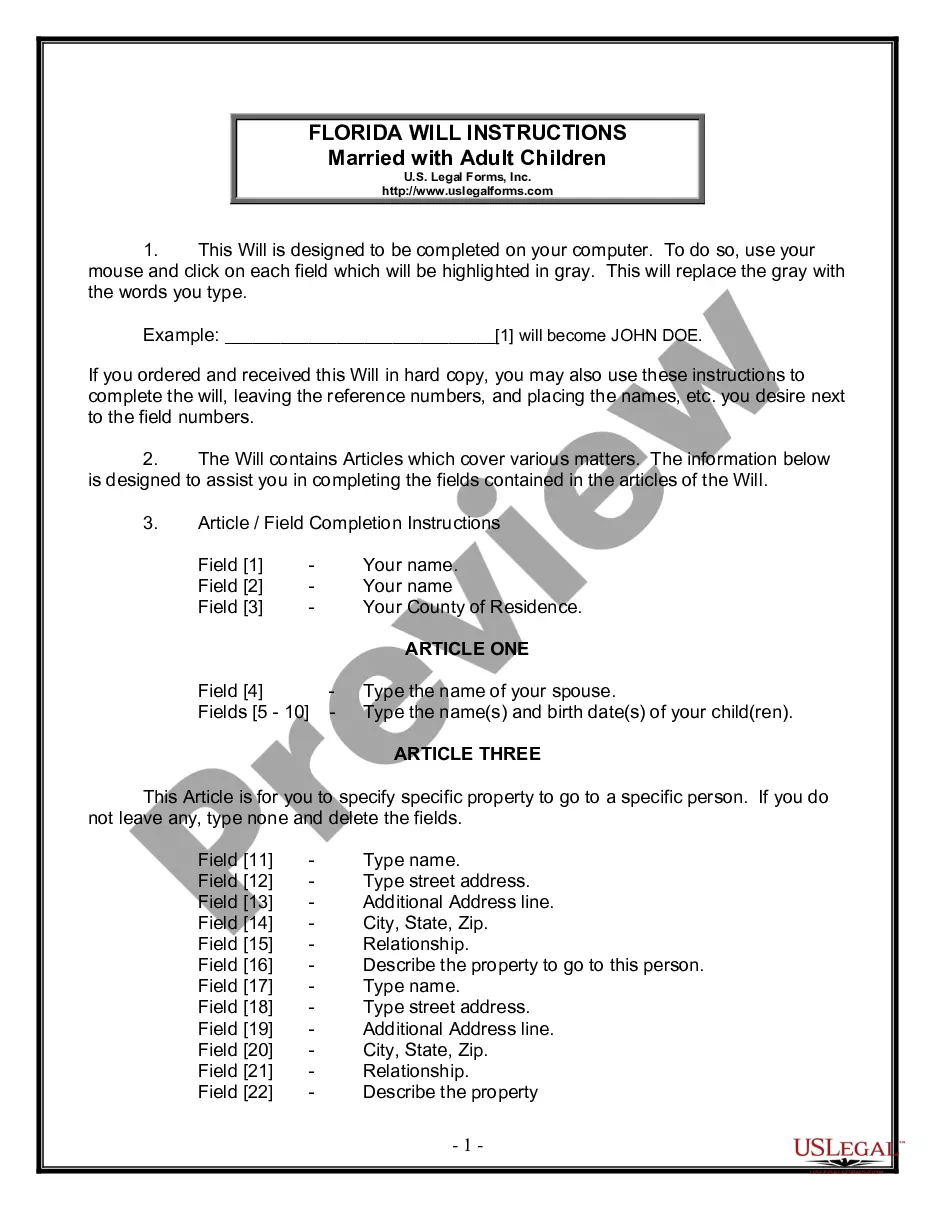
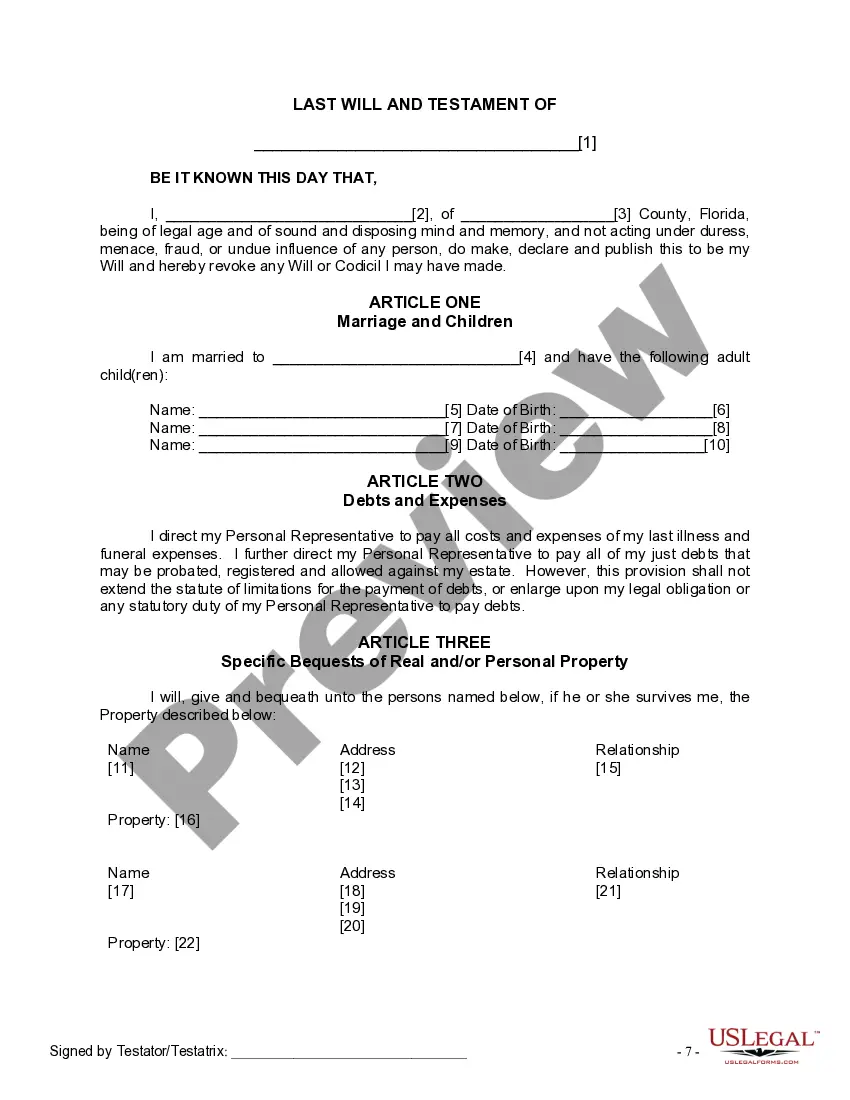
- Fill in your full name and county of residence.
- List the name of your spouse and add details of your adult children.
- Specify any particular assets you wish to bequeath to individuals.
- Designate your personal representative and backup representative.
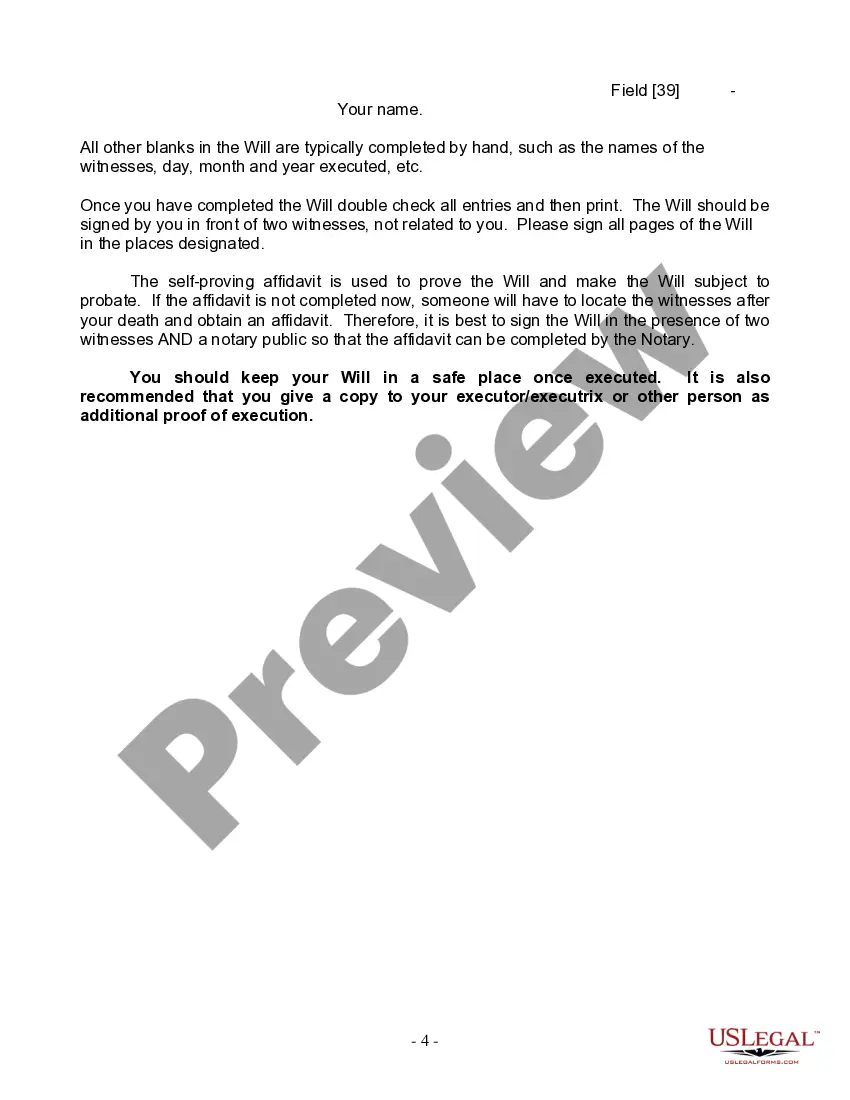
- Sign the will in the presence of two witnesses, who must also sign.
- If applicable, complete the self-proving affidavit for easier probate.
Notarization requirements for this form
To make this form legally binding, it must be notarized. Our online notarization service, powered by Notarize, lets you verify and sign documents remotely through an encrypted video session.
Get your form ready online
Our built-in tools help you complete, sign, share, and store your documents in one place.
Make edits, fill in missing information, and update formatting in US Legal Forms—just like you would in MS Word.
Download a copy, print it, send it by email, or mail it via USPS—whatever works best for your next step.
Sign and collect signatures with our SignNow integration. Send to multiple recipients, set reminders, and more. Go Premium to unlock E-Sign.
If this form requires notarization, complete it online through a secure video call—no need to meet a notary in person or wait for an appointment.
We protect your documents and personal data by following strict security and privacy standards.

Make edits, fill in missing information, and update formatting in US Legal Forms—just like you would in MS Word.

Download a copy, print it, send it by email, or mail it via USPS—whatever works best for your next step.

Sign and collect signatures with our SignNow integration. Send to multiple recipients, set reminders, and more. Go Premium to unlock E-Sign.

If this form requires notarization, complete it online through a secure video call—no need to meet a notary in person or wait for an appointment.

We protect your documents and personal data by following strict security and privacy standards.
Avoid these common issues
- Not signing the will in front of the required number of witnesses.
- Failing to appoint an alternate personal representative.
- Leaving out important information about assets or beneficiaries.
- Not considering state-specific requirements that may affect the validity of the will.
Why complete this form online
- Convenience of completing the form from home, at your own pace.
- Editability allows you to make changes easily before finalizing.
- Reliability of using legal forms drafted by qualified attorneys.
Key takeaways
- The Will ensures your estate is distributed according to your wishes after your death.
- It is essential to have the document properly signed and witnessed to avoid potential disputes.
- Utilizing an online platform for form completion makes the process more accessible and efficient.
- Updating your Will regularly is crucial, especially after significant life events.
Looking for another form?

Form popularity
FAQ
In Florida, a living will does not require notarization, but it must be signed by two witnesses who are not related to you and not beneficiaries of your estate. This ensures that your wishes regarding medical treatment are respected. However, having a notarized living will can add an extra layer of credibility. UsLegalForms offers templates that help simplify the process, ensuring you meet all necessary requirements while creating your Florida Last Will and Testament for a married person with adult children.
To create a valid Florida Last Will and Testament for a married person with adult children, the will must be in writing and signed by the testator, which is the person making the will. Additionally, the signature must be witnessed by at least two individuals who are not beneficiaries of the will. It's essential that the testator is of sound mind when signing, ensuring their intentions are clear. For more guidance, you might consider using resources from UsLegalForms, which provide templates specifically designed for Florida wills.
In Florida, a wife is not automatically entitled to her husband's personal inheritance unless stated in a will or trust. However, any marital assets are considered joint property, which she may claim after his death. A Florida Last Will and Testament for Married person with Adult Children can clarify her rights to inherited assets, ensuring that both spouses' wishes are respected and upheld.
Florida's spousal inheritance law provides that a surviving spouse is entitled to an elective share of the deceased spouse's estate. This law ensures that the surviving spouse receives a fair portion, typically half of the estate, especially when children are involved. Having a Florida Last Will and Testament for Married person with Adult Children is crucial, as it outlines these rights clearly, allowing for a smooth transfer of assets.
After the husband's death, the wife has specific rights that protect her interests. Under Florida law, she may claim various forms of property and financial support, particularly if her husband had a Florida Last Will and Testament for Married person with Adult Children. These rights typically include a share of the estate, use of the marital home, and any assets specifically designated for her in the will. The law helps ensure she is financially secure after her spouse passes away.
Yes, in Florida, all wills must be filed with the court after the death of the testator. This is essential for the probate process to begin, especially for a Florida Last Will and Testament for Married person with Adult Children. Filing the will ensures that the estate is administered according to the testator's wishes and allows beneficiaries to claim their rightful inheritance.
No, a surviving spouse does not automatically inherit everything in Florida. The distribution depends on whether the deceased spouse had a Florida Last Will and Testament for Married person with Adult Children. If there are surviving children from the marriage, the spouse will inherit half of the estate, while the adult children inherit the remainder. However, if there are no children, the spouse may inherit the entire estate.
In Florida, a surviving spouse has significant rights under the law, especially concerning the estate of the deceased spouse. This includes the right to claim a share of the estate, even if the deceased had a Florida Last Will and Testament for Married person with Adult Children that favors other beneficiaries. Additionally, the surviving spouse has the right to continue living in the marital home and may receive certain assets outside the will due to Florida's elective share statute.
In Florida, a last will and testament does not override a marriage. Upon marriage, spouses have legal rights to each other's properties, which may supersede the directives in an existing will. It's vital to consult legal resources like USLegalForms to clarify how your will interacts with marriage and to ensure your intentions are honored.
Marriage can affect a will in Florida. If you create a last will and testament before marriage, your spouse may have rights to your estate that override provisions made in that will. Therefore, it is essential for married individuals with adult children to update their wills after getting married to ensure their wishes are clearly documented.