Florida Residential Rental Lease Agreement
What is this form?
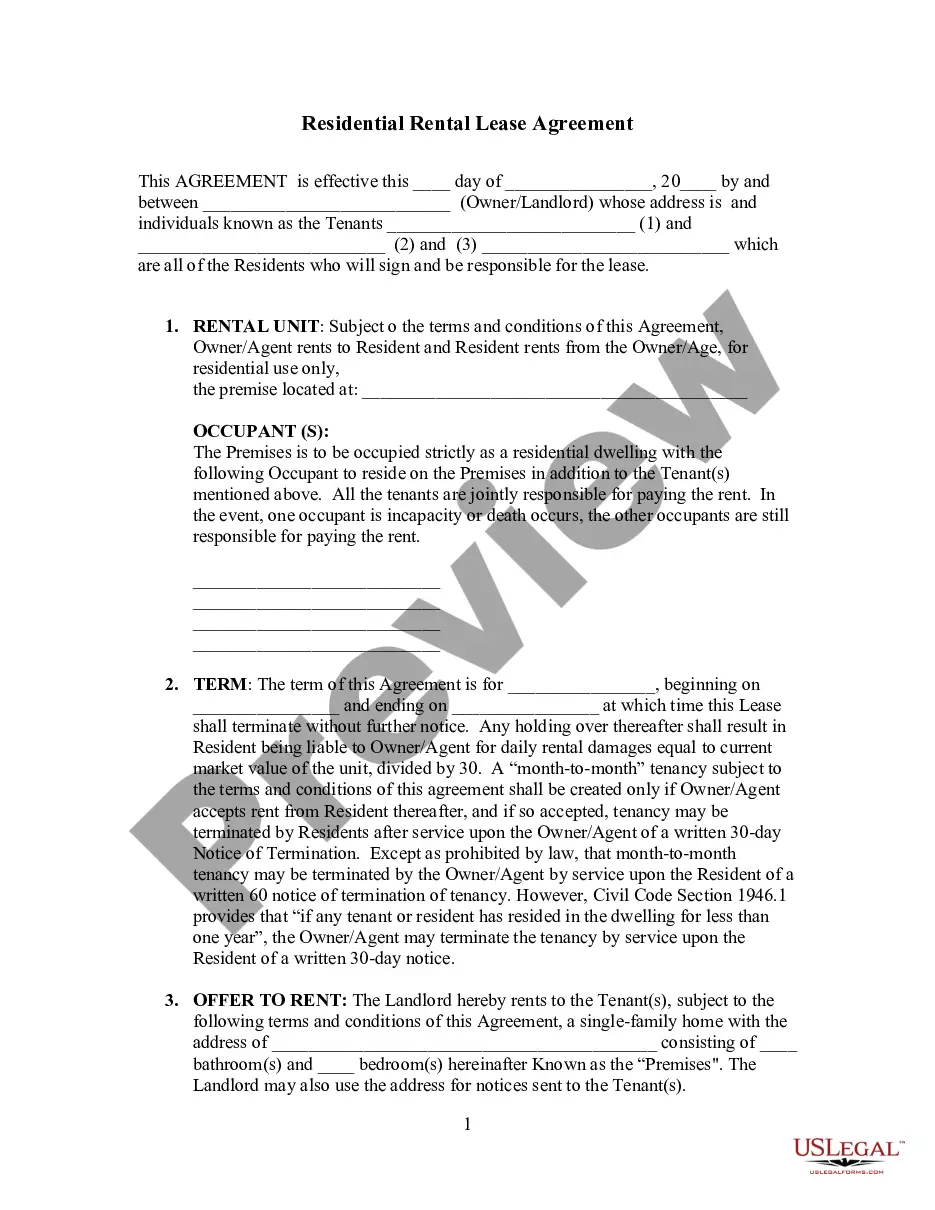
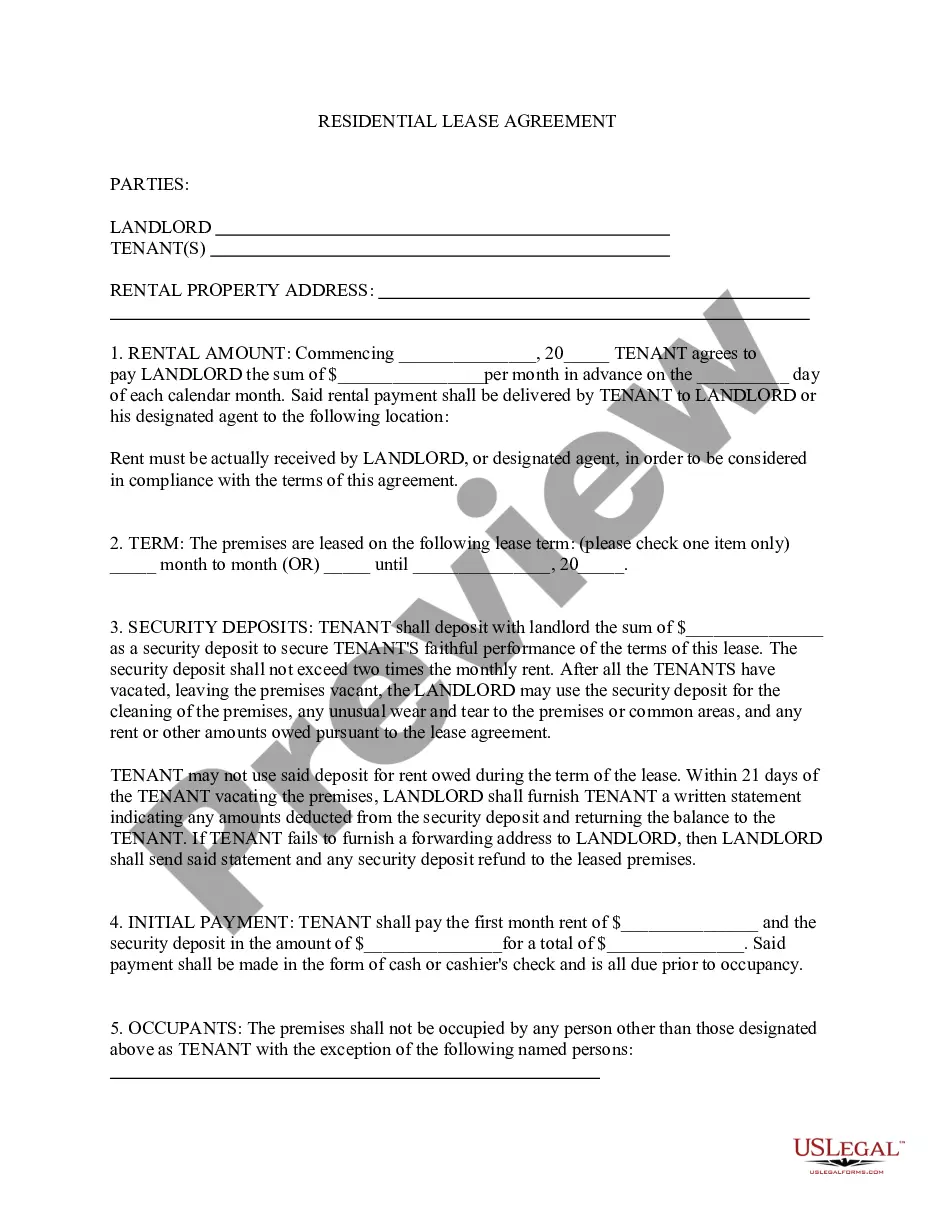
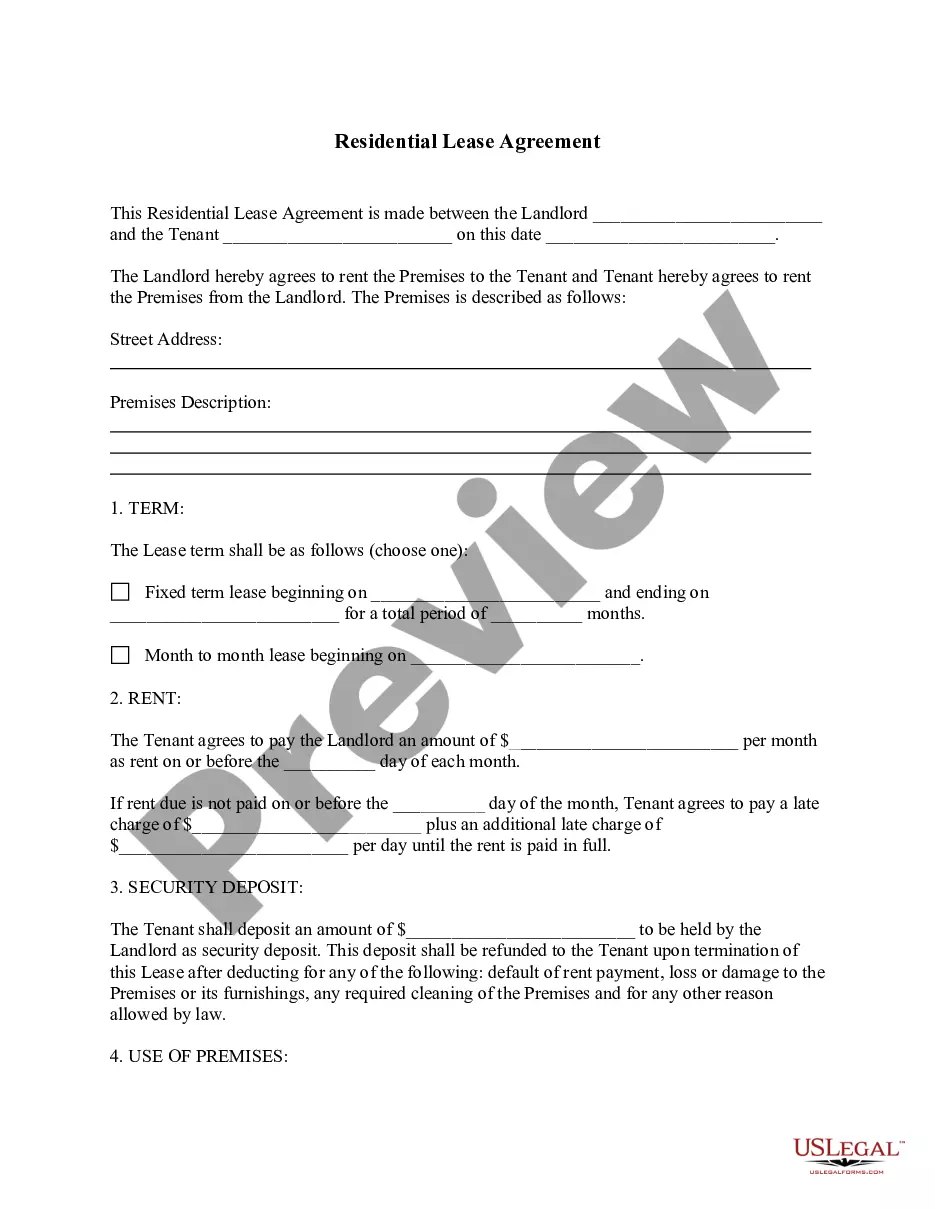
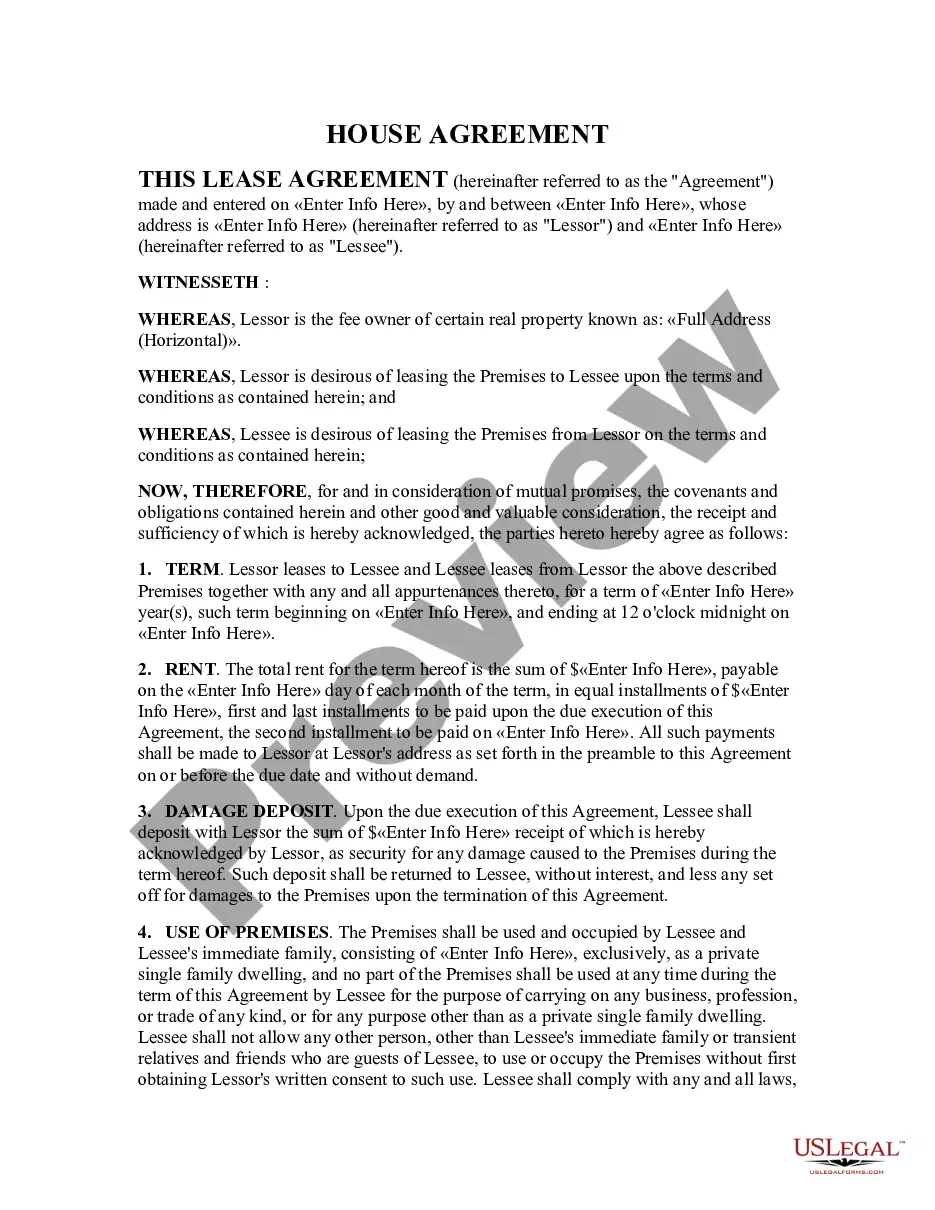
The Residential Rental Lease Agreement is a legally binding contract between a landlord and a tenant for the rental of a residential property for a specific term, such as one year or six months. This agreement establishes the responsibilities of both parties during the lease period and is distinct from a month-to-month lease, which allows either party to terminate the agreement with less notice. The Residential Lease Agreement ensures that tenants cannot be evicted without cause during the lease term, providing them stability and security in their living arrangement.
Key parts of this document
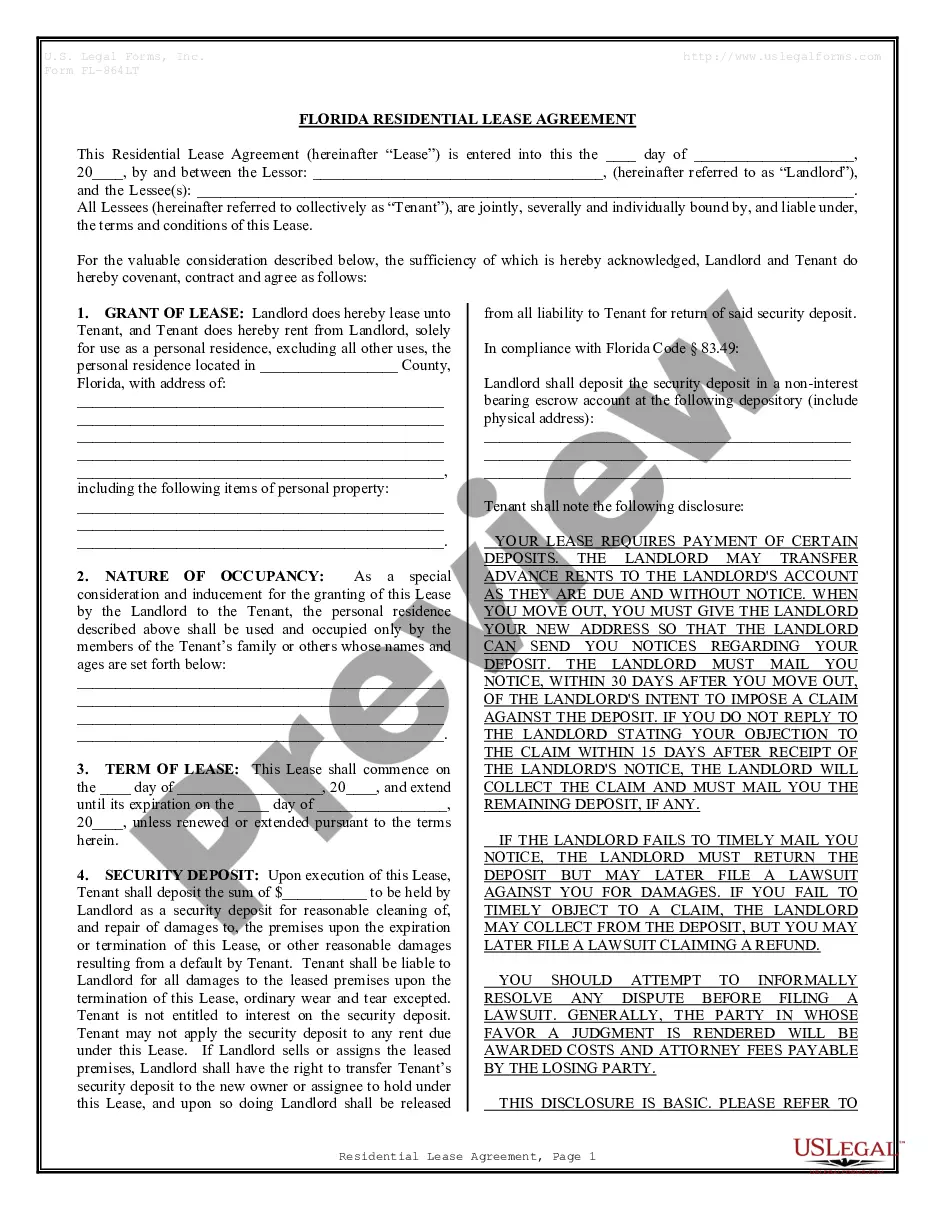
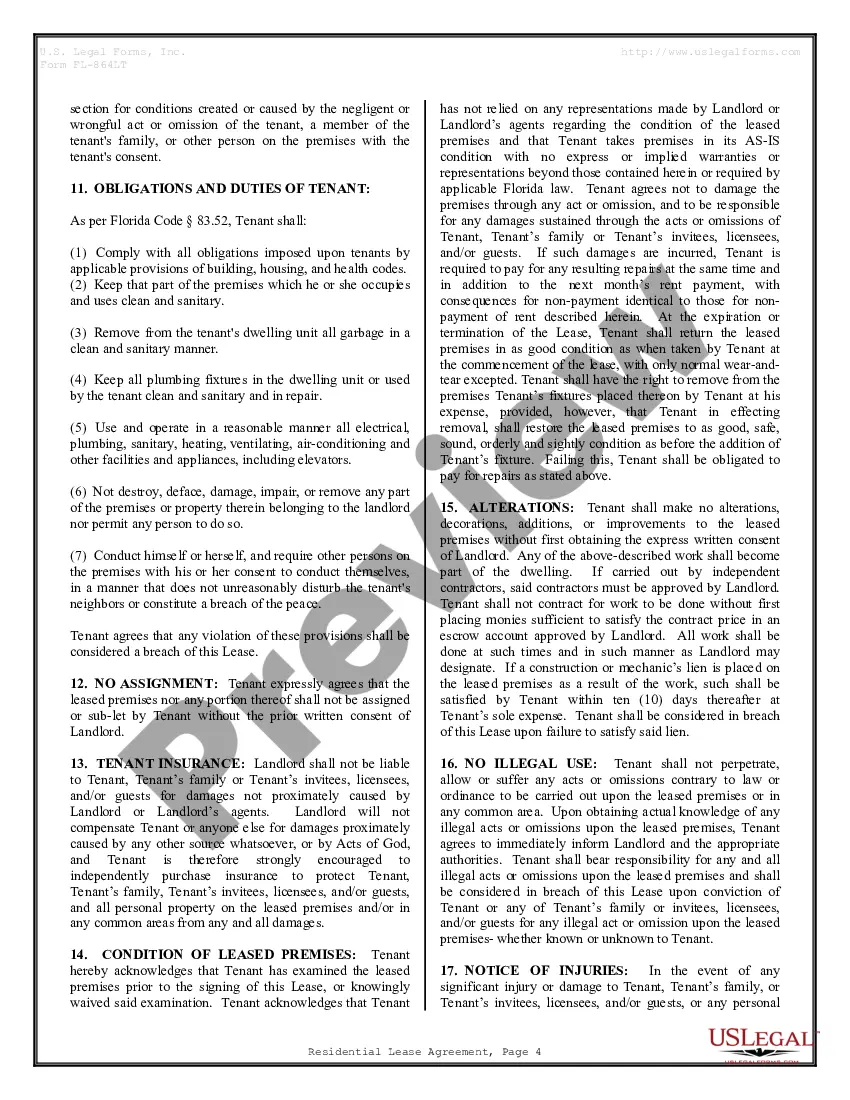
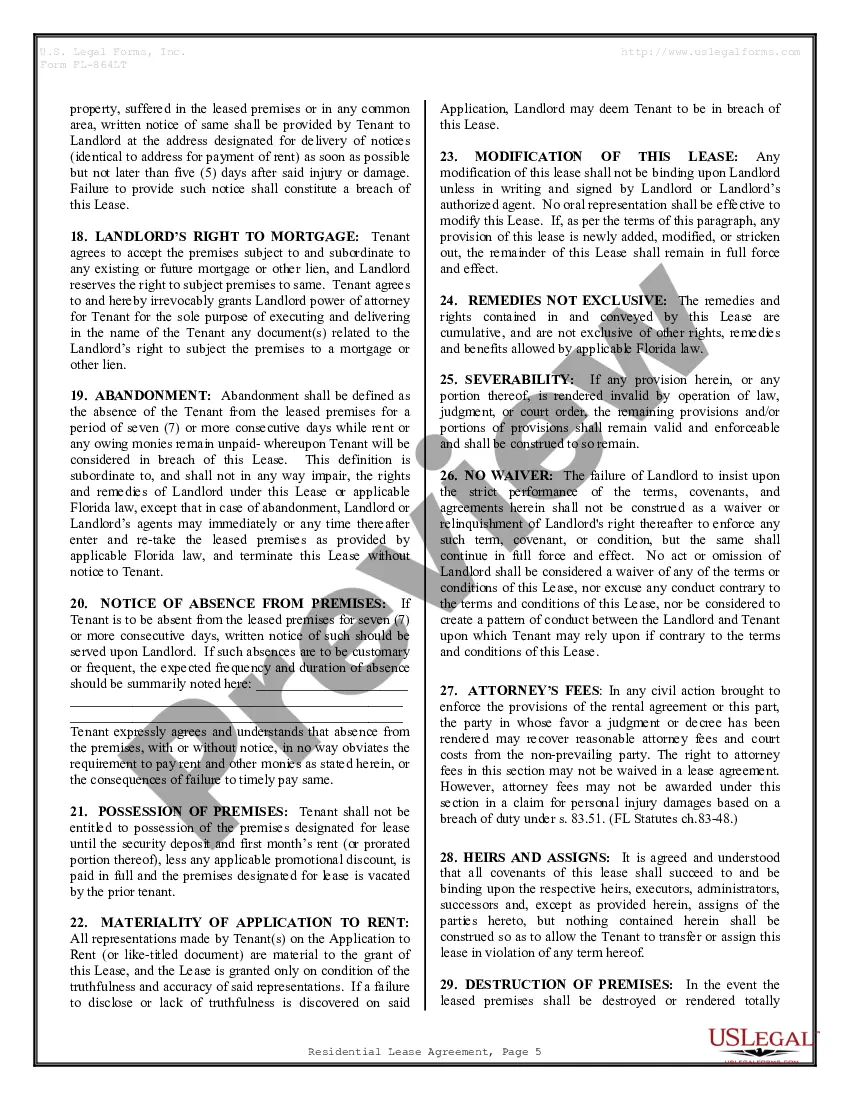
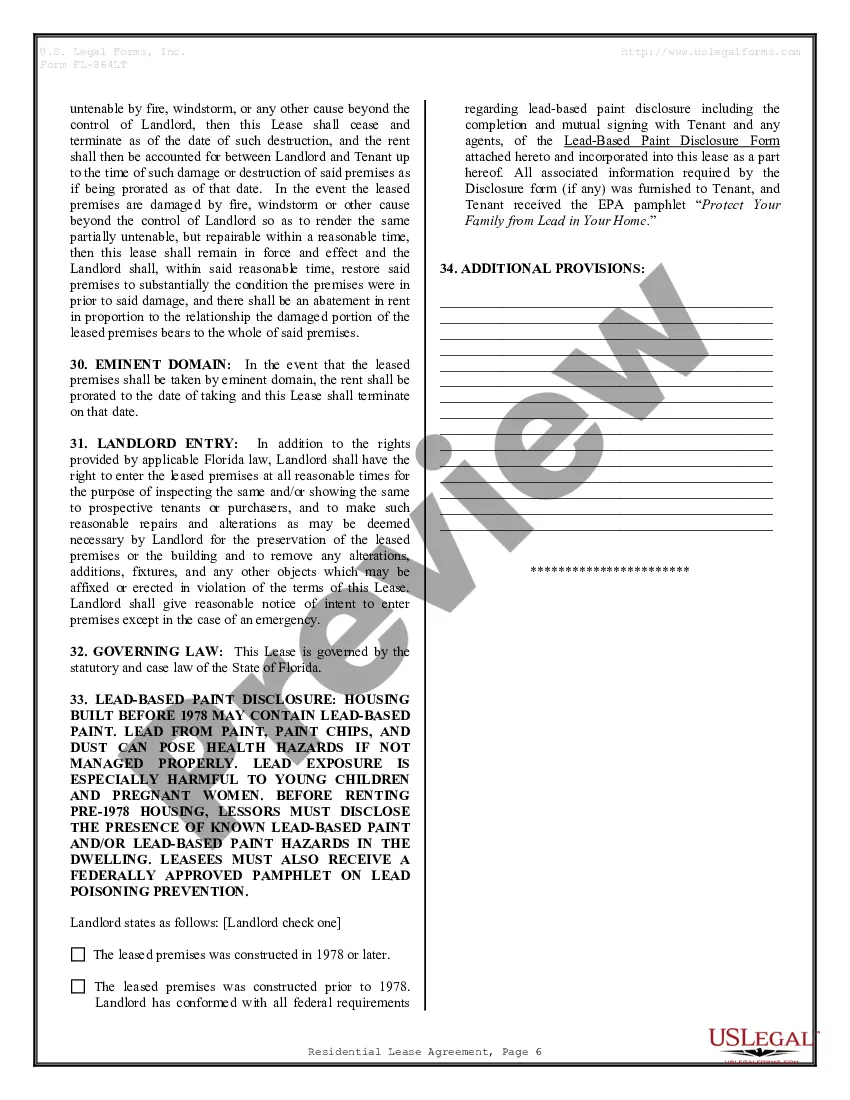
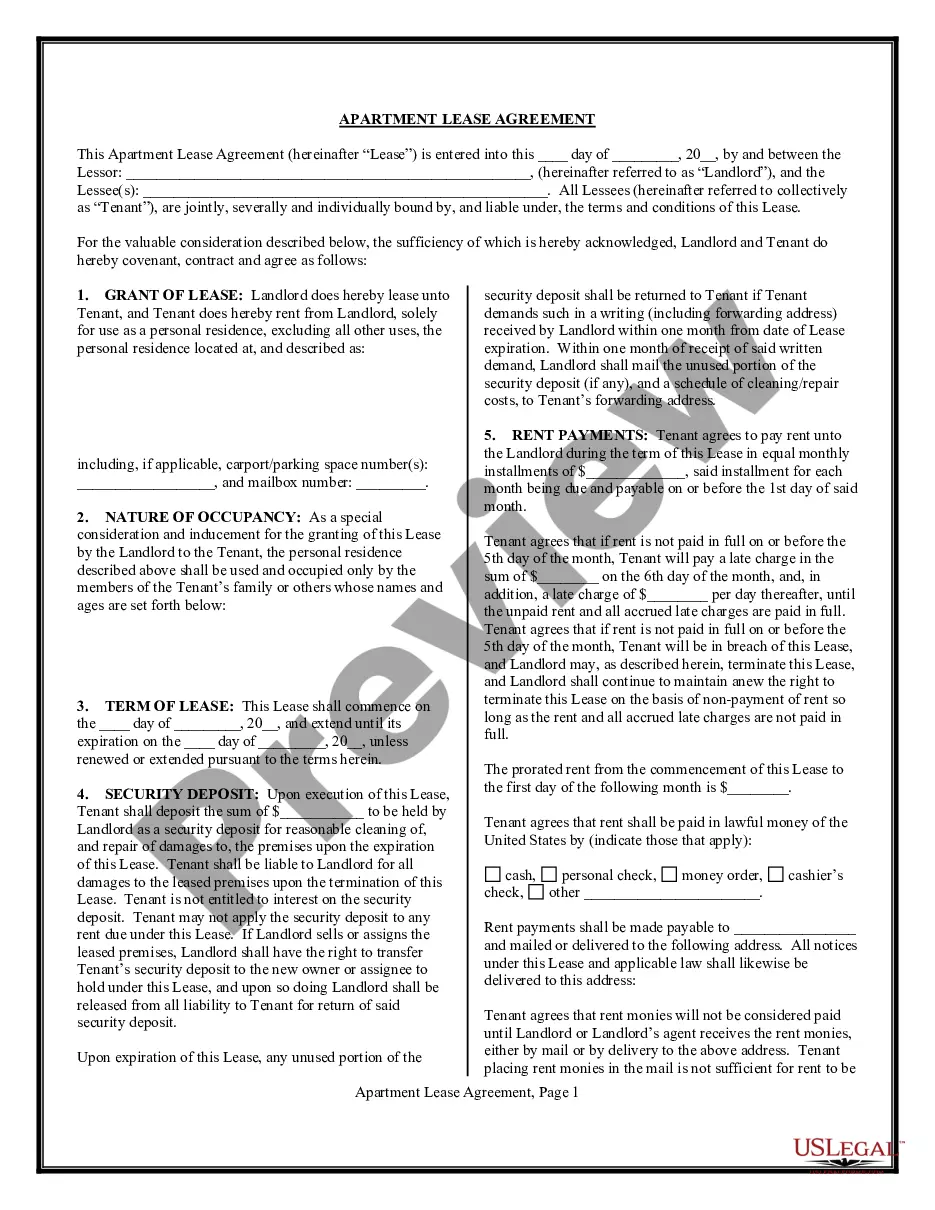
- Grant of Lease: Details the premises being rented and the intended use.
- Security Deposit: Outlines the amount required and conditions for its return.
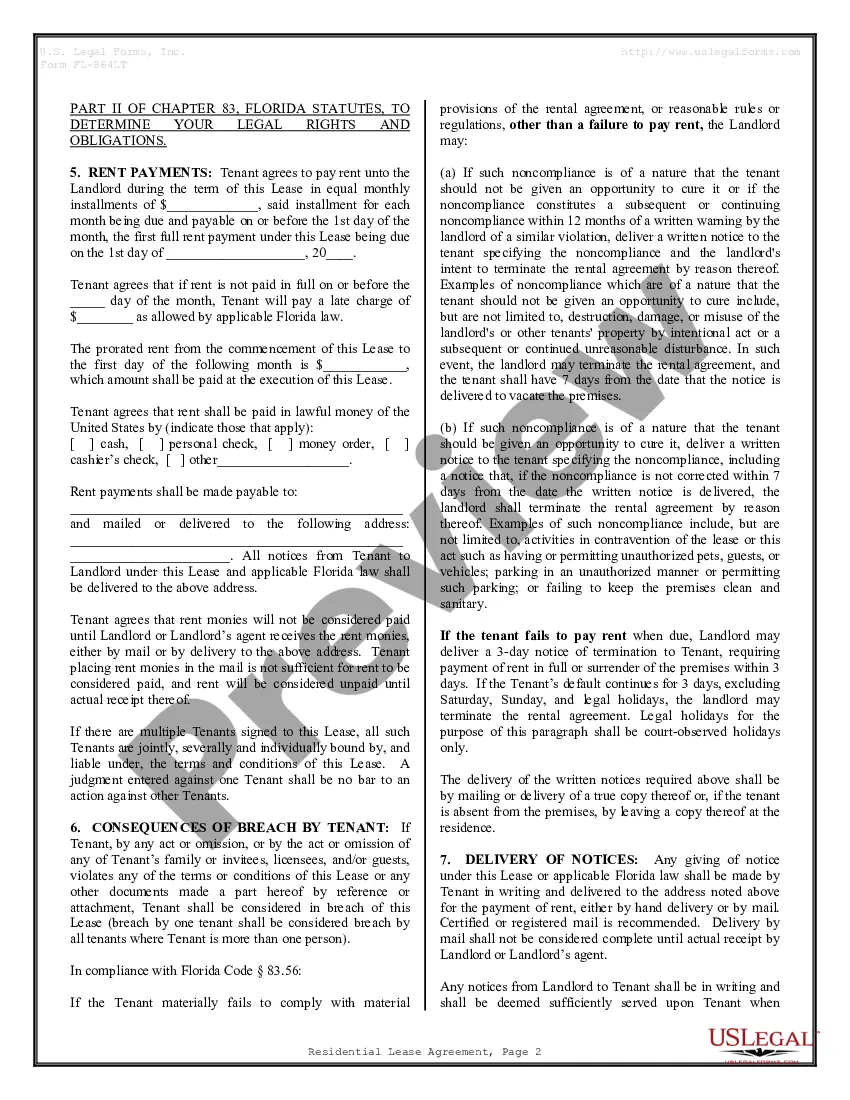
- Rent Payments: Specifies the rent amount, due dates, and penalties for late payment.
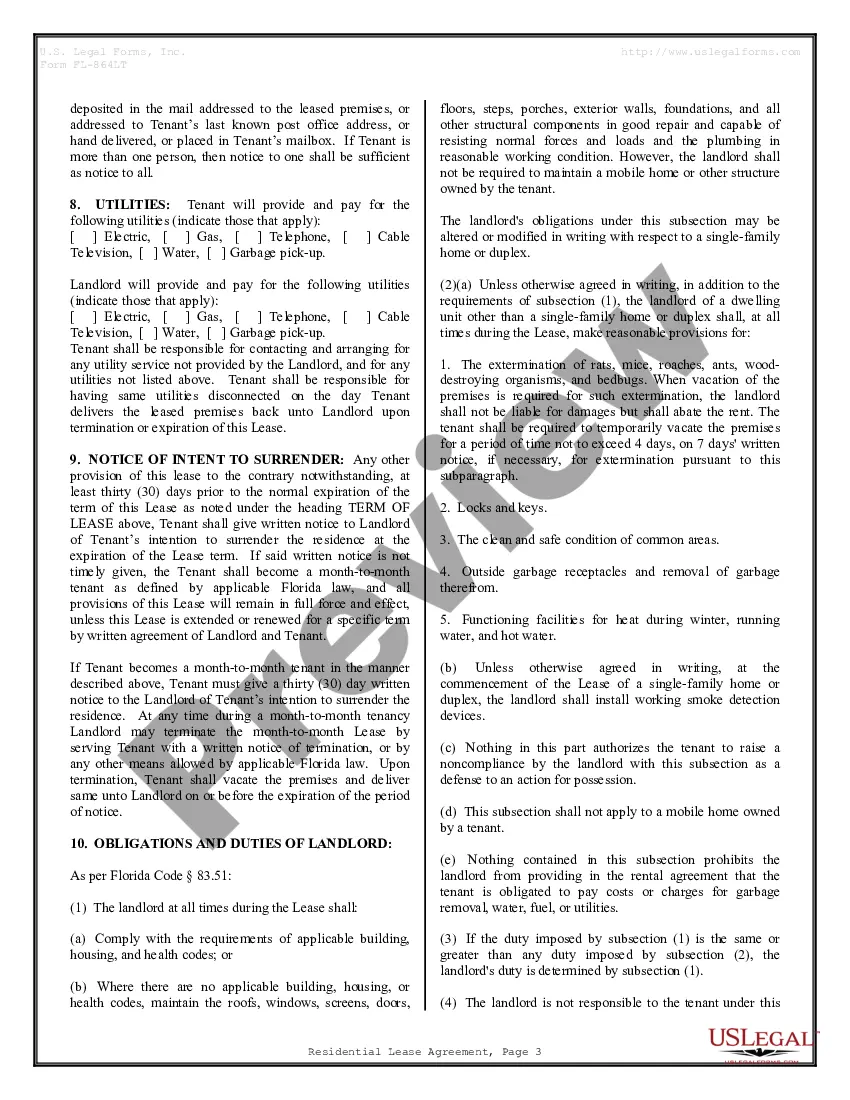
- Tenant Obligations: Lists responsibilities of the tenant, including maintaining cleanliness and not causing disturbances.
- Landlord Entry Rights: Describes the conditions under which the landlord can enter the property.
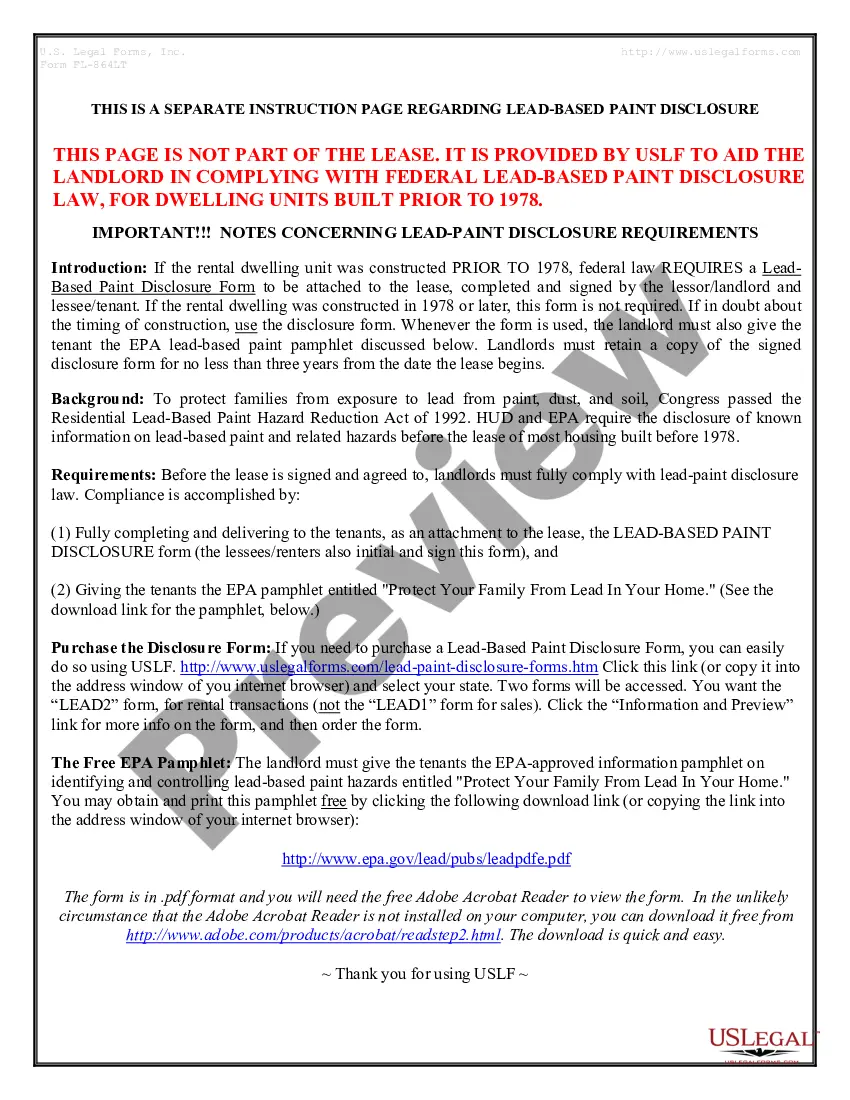
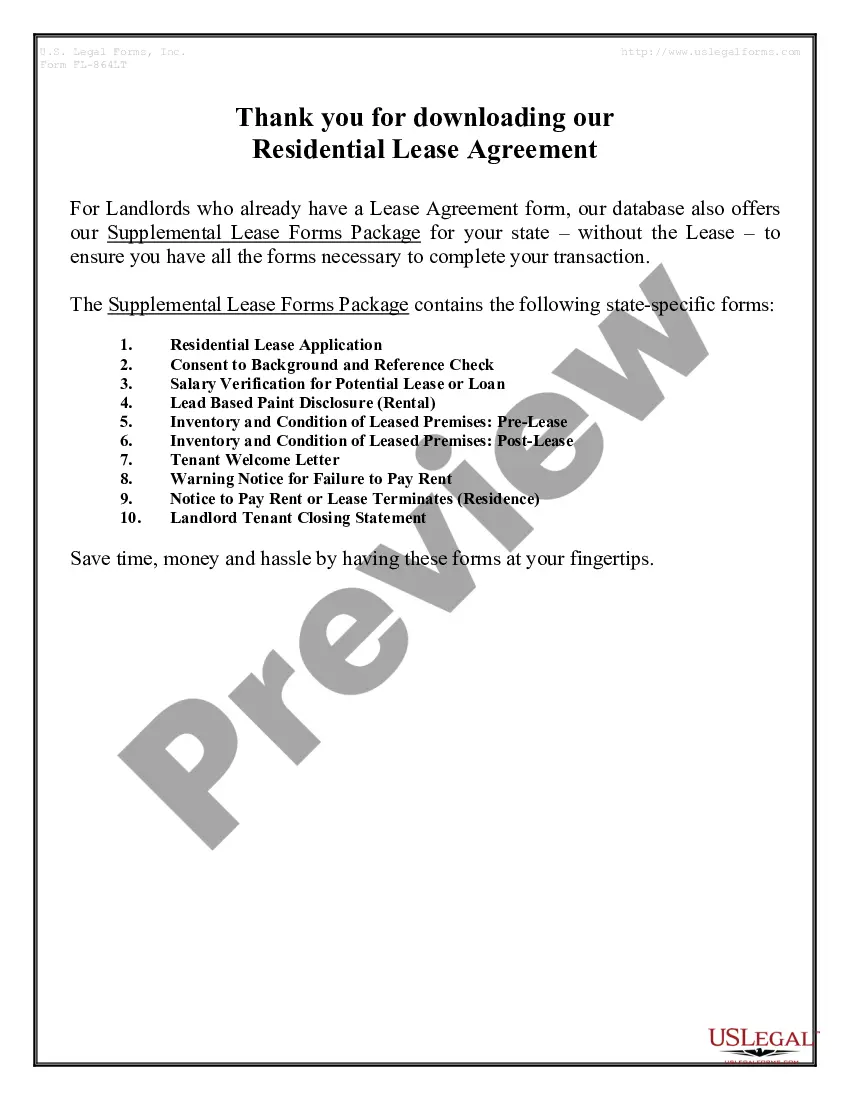
When to use this document
This form should be used when a landlord wants to rent a residential property for a fixed term. It is most appropriate for situations where the landlord and tenant agree to a longer commitment, defining the terms of occupancy and addressing issues such as rent, maintenance, and tenant rights. A Residential Lease Agreement is useful for situations where both parties desire a clear framework to avoid potential disputes over tenancy terms.
Who needs this form
- Landlords renting out residential properties.
- Tenants seeking to secure a long-term rental agreement.
- Individuals who want to clarify their rights and responsibilities regarding rental properties.
How to complete this form
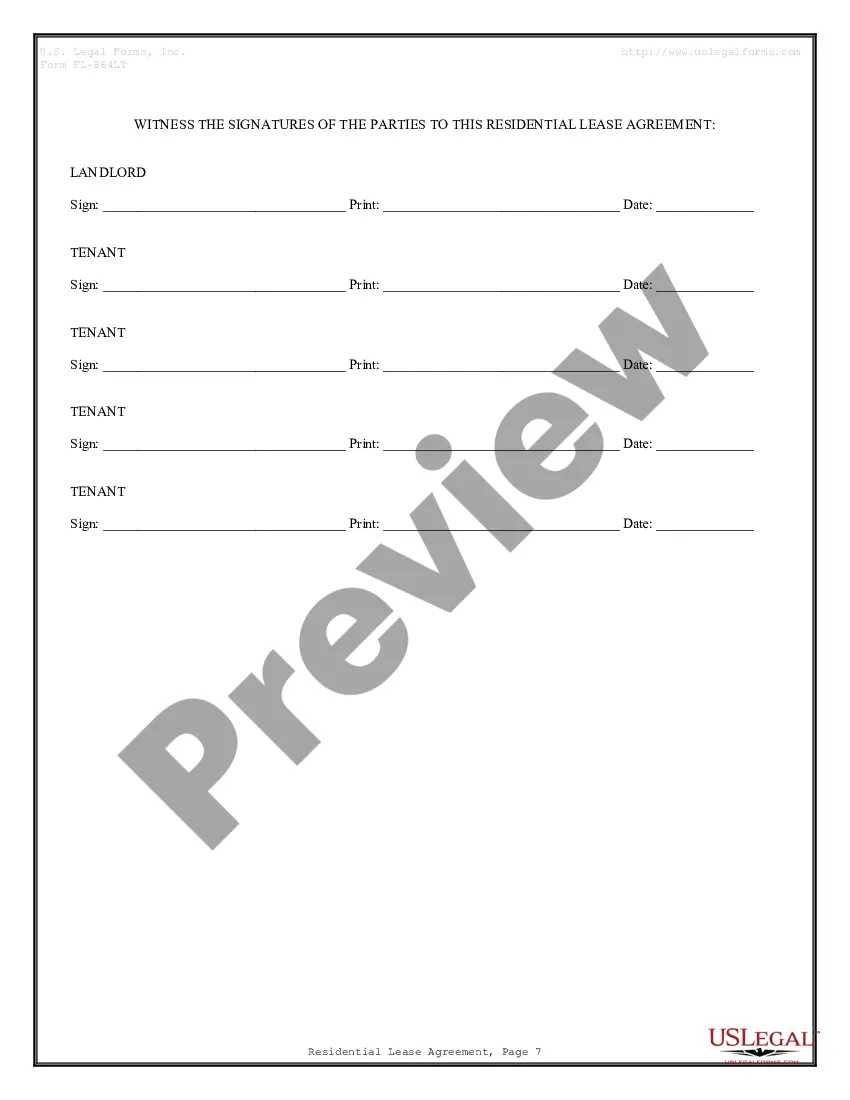
- Identify the parties involved: Fill in the names and addresses of both the landlord and tenant.
- Specify the property: Enter the complete address of the residential property being leased.
- Determine the lease term: Indicate the start and end dates of the lease agreement.
- Document the security deposit: State the amount of the security deposit and where it will be held.
- Outline monthly rent: Specify the monthly rent amount and the payment method.
Notarization requirements for this form
Notarization is generally not required for this form. However, certain states or situations might demand it. You can complete notarization online through US Legal Forms, powered by Notarize, using a verified video call available anytime.
Get your form ready online
Our built-in tools help you complete, sign, share, and store your documents in one place.
Make edits, fill in missing information, and update formatting in US Legal Forms—just like you would in MS Word.
Download a copy, print it, send it by email, or mail it via USPS—whatever works best for your next step.
Sign and collect signatures with our SignNow integration. Send to multiple recipients, set reminders, and more. Go Premium to unlock E-Sign.
If this form requires notarization, complete it online through a secure video call—no need to meet a notary in person or wait for an appointment.
We protect your documents and personal data by following strict security and privacy standards.

Make edits, fill in missing information, and update formatting in US Legal Forms—just like you would in MS Word.

Download a copy, print it, send it by email, or mail it via USPS—whatever works best for your next step.

Sign and collect signatures with our SignNow integration. Send to multiple recipients, set reminders, and more. Go Premium to unlock E-Sign.

If this form requires notarization, complete it online through a secure video call—no need to meet a notary in person or wait for an appointment.

We protect your documents and personal data by following strict security and privacy standards.
Mistakes to watch out for
- Failing to sign the lease by both parties, making it unenforceable.
- Not clearly specifying the lease term, leading to misunderstandings.
- Omitting details about maintenance responsibilities and utilities, which can cause disputes later.
- Neglecting to discuss the payment methods in advance, which may complicate rent collection.
Benefits of completing this form online
- Convenience: Easily downloadable and can be filled out at your own pace.
- Editability: You can customize the agreement based on specific needs.
- Reliability: Form templates are drafted by licensed attorneys, ensuring legal compliance.
- The Residential Rental Lease Agreement is legally binding and enforceable upon signing by all parties.
- Failure to comply with the terms outlined may lead to eviction or legal action.
- This agreement serves as evidence of the rental arrangement should disputes arise.
Main things to remember
- The Residential Rental Lease Agreement outlines the rental terms between a landlord and tenant.
- This form requires clear identification of all parties involved and the property leased.
- Both parties should be aware of their rights and obligations detailed in the lease.
- It is crucial for the lease to be signed by all tenants to avoid any future disputes.
Looking for another form?
Form popularity
FAQ
Yes, there is a standard lease agreement in Florida that landlords and tenants commonly use. This standard Florida Residential Rental Lease Agreement outlines essential terms, including rent, duration, and maintenance obligations. Although variations exist, this standard form provides a solid foundation for most residential rental agreements. Utilizing such a standardized document ensures both parties are clear on their rights and responsibilities.
Florida has recently implemented new regulations aimed at enhancing tenant rights and protections. The updated law addresses issues such as security deposits, notice requirements, and eviction processes. As a result, renters can now better understand their rights under the Florida Residential Rental Lease Agreement. Staying informed about these changes can help you navigate rental agreements with confidence.
Yes, you can write your own residential lease agreement in Florida. However, it is crucial to ensure that your agreement complies with state regulations and covers all necessary terms, such as rent and security deposit details. To simplify the process, consider using resources from US Legal Forms, where you can find customizable templates designed to meet legal standards.
To create a Florida Residential Rental Lease Agreement, start by including the names of the landlord and tenant, property address, and rental terms. Specify the rent amount, payment due date, and duration of the lease. Additionally, make sure to outline responsibilities for maintenance and repairs. You can also utilize online platforms like US Legal Forms to access templates and ensure compliance with Florida laws.
Filling out a residential agreement requires attention to specific details about the rental arrangement. Begin with the names of the landlord and tenant, and clearly state the rental property address and lease duration. Be sure to include payment terms and clarify any responsibilities related to maintenance or repairs. For a comprehensive approach, consider using platforms like US Legal Forms to access templates for a Florida Residential Rental Lease Agreement.
Filling out a contract to lease in Florida involves accurately detailing the rental property's essential information. Start with the names of the parties involved and describe the property. Next, outline the rental terms, payment provisions, and any agreed-upon rules. These elements create a well-structured Florida Residential Rental Lease Agreement, which helps clarify expectations.
To fill out a Florida Residential Rental Lease Agreement, start by entering the names of the landlord and tenant, as well as the rental property address. Then, specify the lease term, monthly rent, and any additional provisions such as pet policies or maintenance responsibilities. Ensure that you review and customize the agreement according to your specific situation to protect your rights.
Yes, you can create your own lease agreement, but it is important to ensure it includes all necessary terms and details. A Florida Residential Rental Lease Agreement should address rent amount, payment due dates, security deposits, and property maintenance responsibilities. You might want to consult legal resources or templates for guidance, as this can help avoid potential disputes later.
Yes, a handwritten lease agreement can be legally binding in Florida, provided it meets the necessary legal requirements. It's crucial that the agreement includes all essential details, such as rent amount, terms, and signatures. A well-crafted Florida Residential Rental Lease Agreement helps ensure that both parties honor the terms laid out, no matter the format.
You can write a lease to yourself, but this practice may not be necessary since it typically serves to protect both parties involved. A Florida Residential Rental Lease Agreement is more effective when it includes another party as the tenant or landlord. If you are renting a property to yourself, consider whether a formal lease is truly needed.