Florida Agreement for Delayed or Partial Rent Payments
What is this form?
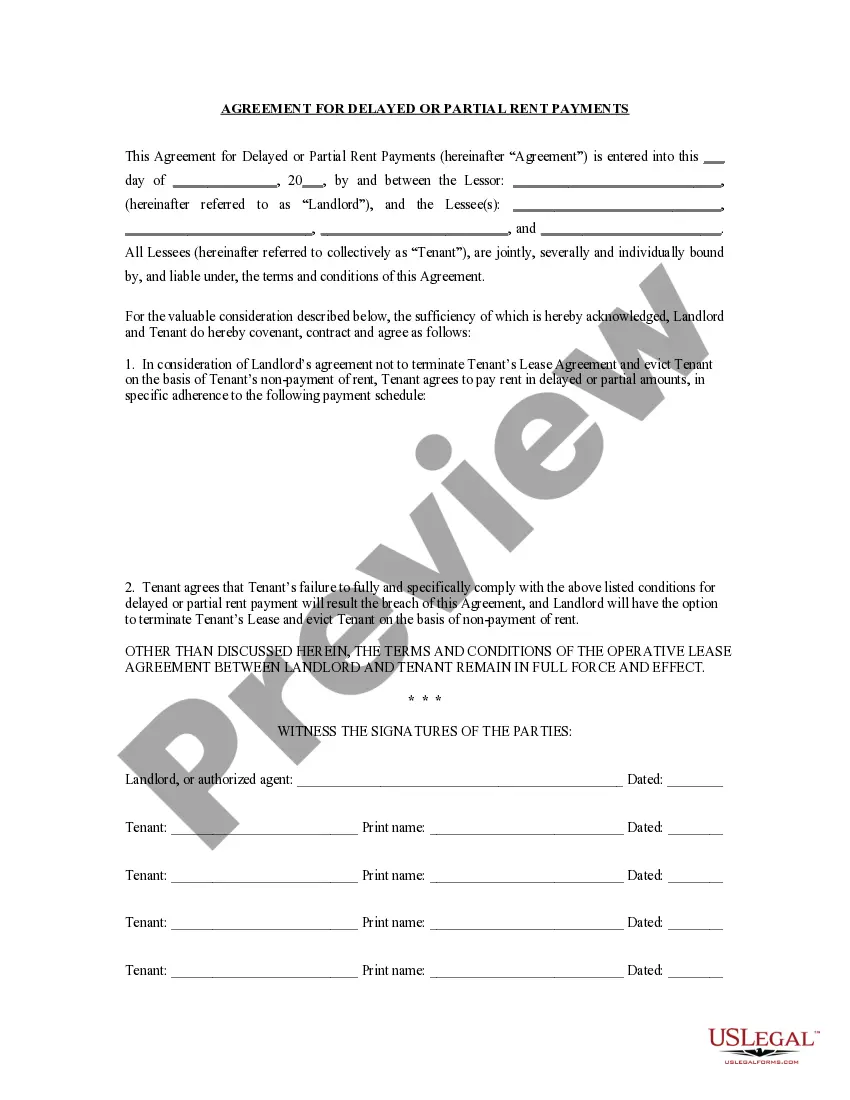
The Agreement for Delayed or Partial Rent Payments is a legal document designed to formalize an understanding between a landlord and tenant regarding late or reduced rental payments. This agreement outlines the specific terms, conditions, and timelines for the tenant to pay rent, ensuring that the tenant is not evicted due to temporary financial issues. It differs from a standard lease in that it specifically addresses situations where a tenant cannot meet their full rent payment on time, providing a safeguard for both parties involved.
What’s included in this form
- Identification of parties: Names and roles of the landlord and tenant(s).
- Terms of payment: Specific deadlines and conditions for partial or delayed payments.
- Acknowledgment of lease: Clarifies that the original lease agreement remains in effect.
- Signatures: Spaces for both landlord and tenant signatures to acknowledge agreement.

Situations where this form applies
This form should be used when a tenant anticipates difficulty making full rent payments on time, whether due to job loss, medical emergencies, or other financial struggles. It is a proactive measure to avoid eviction and formalize an alternative payment schedule that accommodates both parties' needs.
Who this form is for
- Landlords seeking to provide leniency to tenants during financial hardship.
- Tenants who are struggling to pay their rent and wish to maintain their residence while negotiating a new payment plan.
- Real estate professionals assisting landlords and tenants to manage rental agreements effectively.
How to complete this form
- Identify the parties: Fill in the names of the landlord and tenant(s) at the top of the agreement.
- Specify the payment terms: Clearly detail the amount and schedule for delayed or partial payments.
- Enter relevant dates: Indicate the date the agreement is entered into and when payments are due.
- Gather signatures: Ensure all parties sign and date the agreement to confirm mutual consent.
- Keep a copy: Make sure both the landlord and tenant retain signed copies for their records.
Is notarization required?
This form does not typically require notarization unless specified by local law. However, it is a good practice to have signatures witnessed to enhance the agreement's enforceability.
Get your form ready online
Our built-in tools help you complete, sign, share, and store your documents in one place.
Make edits, fill in missing information, and update formatting in US Legal Forms—just like you would in MS Word.
Download a copy, print it, send it by email, or mail it via USPS—whatever works best for your next step.
Sign and collect signatures with our SignNow integration. Send to multiple recipients, set reminders, and more. Go Premium to unlock E-Sign.
If this form requires notarization, complete it online through a secure video call—no need to meet a notary in person or wait for an appointment.
We protect your documents and personal data by following strict security and privacy standards.

Make edits, fill in missing information, and update formatting in US Legal Forms—just like you would in MS Word.

Download a copy, print it, send it by email, or mail it via USPS—whatever works best for your next step.

Sign and collect signatures with our SignNow integration. Send to multiple recipients, set reminders, and more. Go Premium to unlock E-Sign.

If this form requires notarization, complete it online through a secure video call—no need to meet a notary in person or wait for an appointment.

We protect your documents and personal data by following strict security and privacy standards.
Typical mistakes to avoid
- Failing to specify exact payment dates and amounts.
- Not having all tenants sign the agreement if multiple tenants are involved.
- Neglecting to acknowledge that the original lease remains in effect.
- Forgetting to retain copies for all parties after signing.
Benefits of completing this form online
- Convenience of accessing and completing the form from anywhere, at any time.
- Editability allows users to tailor the agreement to their specific situation.
- Accuracy and reliability of templates drafted by licensed attorneys.
Looking for another form?




Form popularity
FAQ
In Florida, tenants can be late on rent for a few days without facing severe penalties. Typically, a grace period is offered, but it often lasts from 3 to 5 days after the rent due date. However, each lease agreement may vary, so it's essential to review the specific terms in your Florida Agreement for Delayed or Partial Rent Payments. Always communicate with your landlord to ensure clarity on expectations.
Negotiating late rent payments starts with a proactive conversation with your landlord. Express your situation clearly and propose specific terms for repayment, which can be documented in a Florida Agreement for Delayed or Partial Rent Payments. This agreement creates a mutual understanding and can help maintain a positive relationship with your landlord while addressing your financial needs.
When explaining a late rent payment, honesty is the best policy. Life events such as job loss or unexpected medical expenses are valid reasons. To formalize your situation, consider a Florida Agreement for Delayed or Partial Rent Payments, which provides a structured way to discuss your circumstances with your landlord and propose a payment plan.
The timeframe for being late on rent typically depends on your lease agreement and state laws. In Florida, a landlord can start the eviction process the day after the rent is due, if it's unpaid. However, it is critical to communicate with your landlord and consider utilizing a Florida Agreement for Delayed or Partial Rent Payments to outline terms and prevent misunderstandings.
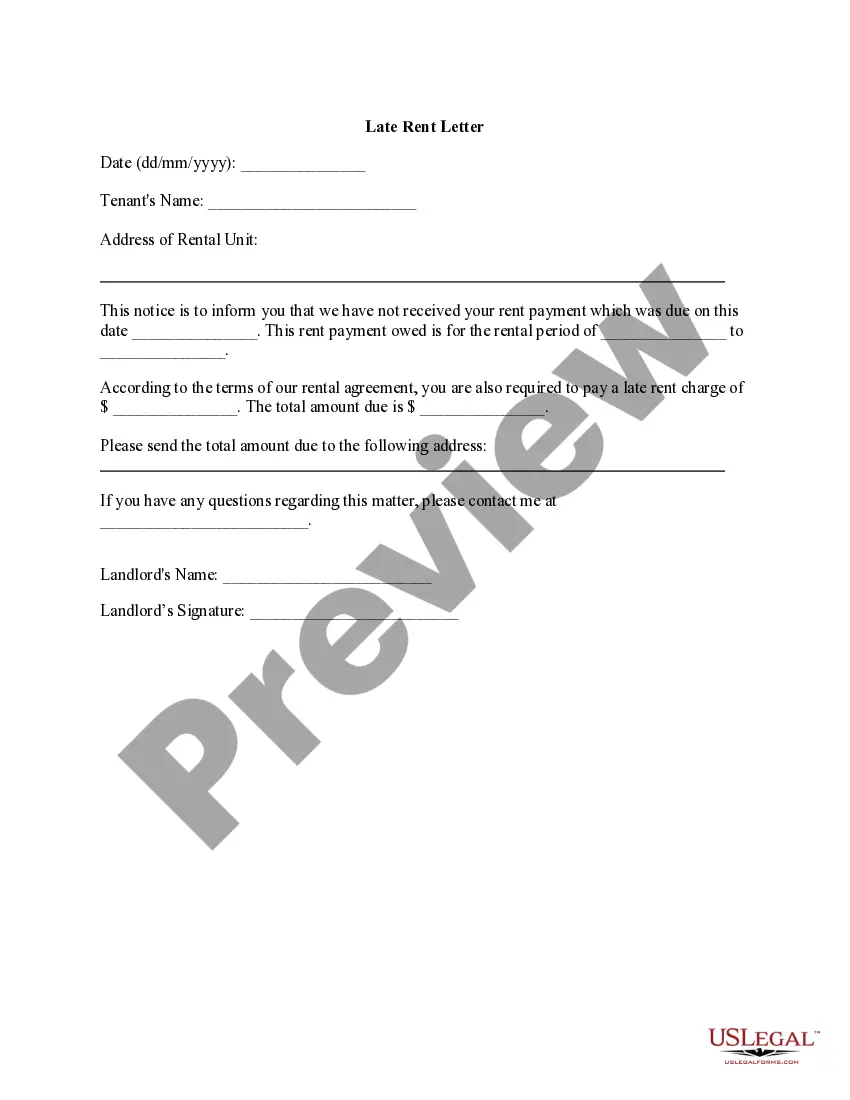
When writing a letter for late rent payment, be concise and clear about the outstanding amount and due date. Reference the Florida Agreement for Delayed or Partial Rent Payments to outline any terms that are relevant to the situation. Provide options for payment arrangements, and encourage communication to resolve the issue amicably while reinforcing the importance of adhering to the lease terms.
To negotiate late rent payments, start by having a clear and open conversation with your tenant. Discuss the situation and explore potential solutions that align with the Florida Agreement for Delayed or Partial Rent Payments. It’s essential to be open to flexible arrangements while establishing clear terms to ensure that both parties understand their obligations moving forward.
If a landlord accepts a partial payment in Florida, it can affect their rights regarding eviction. According to the Florida Agreement for Delayed or Partial Rent Payments, accepting such payments may imply an agreement to alter the terms of the lease. This could limit the landlord's ability to pursue a full eviction, so it's important for landlords to understand the implications before accepting any payment.
Many landlords avoid accepting partial payments due to uncertainty in their legal standing. Accepting a partial payment can create complications, particularly under the Florida Agreement for Delayed or Partial Rent Payments. It may signal to tenants that the landlord is willing to extend leniency, which can complicate eviction processes and recovery efforts.
The greatest risk for landlords accepting partial rent payments lies in the potential legal implications. If a landlord accepts a partial payment, they may inadvertently forfeit their right to evict the tenant for non-payment under the Florida Agreement for Delayed or Partial Rent Payments. This may lead to extended delays in receiving the full amount owed and complicate future actions for recovery.
The new law for eviction in Florida aims to streamline the eviction process while providing additional protections for tenants. This includes the incorporation of the Florida Agreement for Delayed or Partial Rent Payments, which helps tenants manage their rent obligations more effectively. Under this law, landlords must follow specific procedures, ensuring that tenants have the opportunity to address payment issues before eviction processes begin. Familiarizing yourself with these laws can empower you to navigate rental challenges successfully.