Florida Final Notice of Default for Past Due Payments in connection with Contract for Deed
What is this form?
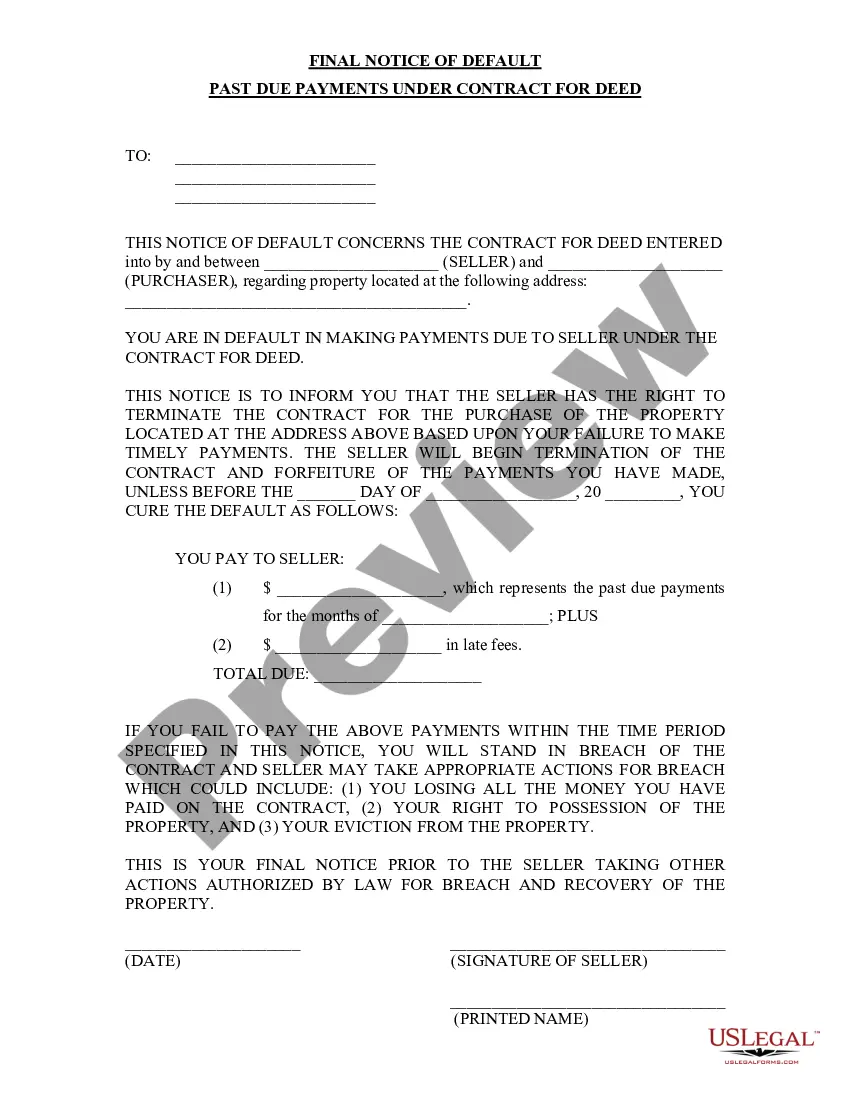
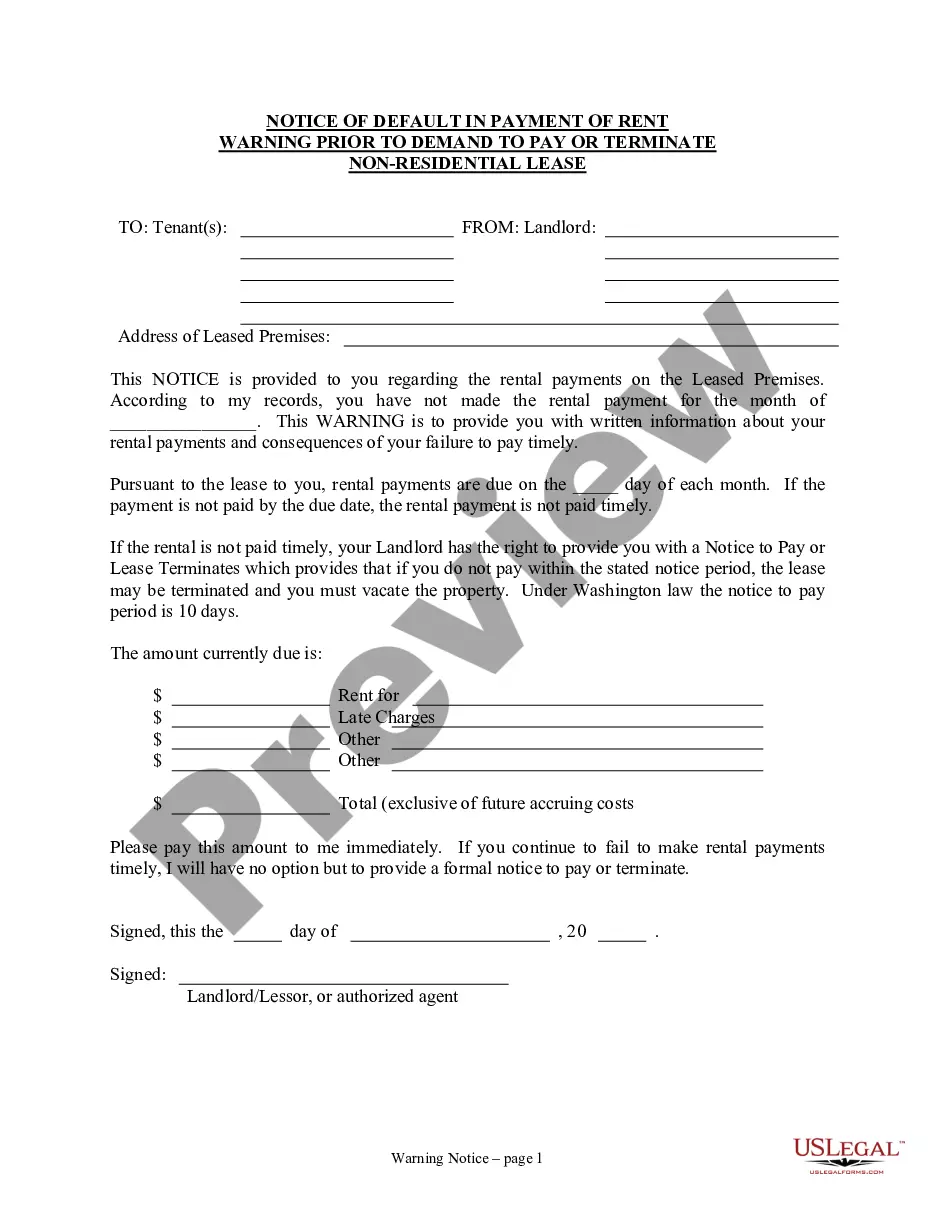
The Final Notice of Default for Past Due Payments in connection with Contract for Deed serves as a formal alert to a purchaser regarding overdue payments on a property. This document informs the buyer that failure to make the required payment by a specified date will result in the contract being deemed in default. This notice is crucial as it signifies the last opportunity for the purchaser to remedy the situation before the seller may take further legal action, distinguishing it from earlier notices of default that may have communicated similar issues but lacked the urgency of a final notice.
Form components explained
- Parties involved: Clearly identifies the seller and purchaser.
- Property details: Specifies the address of the property under the contract.
- Payment details: States the amount due, including any late fees.
- Deadline for payment: Indicates the final date by which the purchaser must make the payment to avoid default.
- Consequences of non-payment: Outlines potential legal actions that could follow non-compliance, such as eviction or loss of payments made.
When to use this document
This form is used when a buyer has failed to make the scheduled payments due under a Contract for Deed. Use this final notice after previous reminders or notices of default have been issued and when the seller intends to formally inform the purchaser of their default status. It is essential for a seller to document this communication to protect their legal rights and facilitate potential future actions regarding the contract.
Intended users of this form
- Property sellers who have entered into a Contract for Deed with a buyer.
- Purchasers who are in default on their payment obligations under a Contract for Deed.
- Attorneys representing clients in real estate transactions involving Contracts for Deed.
Instructions for completing this form
- Identify the parties: Enter the names of the seller and purchaser involved in the contract.
- Specify the property: Clearly state the address of the property in question.
- Enter payment details: Include the total amount due and any applicable late fees.
- Set the deadline: Specify the date by which payment must be made to avoid default.
- Add signatures: Ensure the seller signs and prints their name and date the notice.
Does this form need to be notarized?
This form must be notarized to be legally valid. US Legal Forms provides secure online notarization powered by Notarize, allowing you to complete the process through a verified video call.
Get your form ready online
Our built-in tools help you complete, sign, share, and store your documents in one place.
Make edits, fill in missing information, and update formatting in US Legal Forms—just like you would in MS Word.
Download a copy, print it, send it by email, or mail it via USPS—whatever works best for your next step.
Sign and collect signatures with our SignNow integration. Send to multiple recipients, set reminders, and more. Go Premium to unlock E-Sign.
If this form requires notarization, complete it online through a secure video call—no need to meet a notary in person or wait for an appointment.
We protect your documents and personal data by following strict security and privacy standards.

Make edits, fill in missing information, and update formatting in US Legal Forms—just like you would in MS Word.

Download a copy, print it, send it by email, or mail it via USPS—whatever works best for your next step.

Sign and collect signatures with our SignNow integration. Send to multiple recipients, set reminders, and more. Go Premium to unlock E-Sign.

If this form requires notarization, complete it online through a secure video call—no need to meet a notary in person or wait for an appointment.

We protect your documents and personal data by following strict security and privacy standards.
Mistakes to watch out for
- Failing to specify the correct property address.
- Not including all necessary payment details, such as amounts and deadlines.
- Omitting the seller's signature or date, making the notice invalid.
- Sending the notice without verifying state requirements for validity.
Why use this form online
- Convenient access to downloadable legal templates from licensed attorneys.
- Editable format allows for customization to fit specific situations.
- Instant availability, ensuring timely action when dealing with defaults.
Key takeaways
- The Final Notice of Default is the final step for sellers before taking legal action against a purchaser.
- Accurate completion of this form is essential to protect legal rights and ensure compliance with any applicable laws.
- It serves as a critical warning to purchasers regarding their obligations under the Contract for Deed.
Looking for another form?
Form popularity
FAQ
To obtain a default judgment in Florida, you must first file a complaint in the appropriate court. Once you file your complaint, you should serve the defendant a Florida Final Notice of Default for Past Due Payments in connection with Contract for Deed, informing them of their obligations. If the defendant fails to respond within the designated time frame, you can request the court to grant a default judgment. Utilizing a platform like uslegalforms can help you navigate this process and ensure that all necessary documents are properly prepared and submitted.
Contract termination refers to the legal end of an agreement between parties, which can occur for various reasons. In the context of a Florida Final Notice of Default for Past Due Payments in connection with Contract for Deed, this often happens when obligations are unmet, leading to potential eviction. It's essential to understand the reasons for termination to protect your rights. Legal help from services like US Legal Forms can guide you through these complex situations.
When a contractor defaults, it means they have not completed their duties as promised in the contract. For those dealing with a Florida Final Notice of Default for Past Due Payments in connection with Contract for Deed, this can lead to serious financial implications and legal disputes. It’s important to respond promptly to address any owed payments or to renegotiate the terms. Seeking advice from experts, such as those at US Legal Forms, may provide clarity and solutions.
Contract termination for default occurs when one party fails to fulfill their obligations, leading the other party to legally end the agreement. In scenarios involving a Florida Final Notice of Default for Past Due Payments in connection with Contract for Deed, the consequences can be significant, including loss of property. You should carefully review your obligations and consider professional assistance for a smooth transition. Utilizing platforms like US Legal Forms can help manage this process.
When you find your contract in default, it typically means that either party has failed to meet the agreed terms. In the case of a Florida Final Notice of Default for Past Due Payments in connection with Contract for Deed, the lender will usually issue a notice to inform you of the overdue amount. It is crucial to address the default promptly to avoid further legal actions or risks to your property. Consider consulting resources like US Legal Forms to navigate this situation effectively.
A contract for deed can be a strategic option for sellers looking to facilitate a smooth sale while retaining some control over the property. By accepting payments over time, sellers benefit from the potential for steady income. However, they should be aware of the risks associated with buyer defaults and the implications of a Florida Final Notice of Default for Past Due Payments in connection with Contract for Deed. Properly drafted contracts and legal advice can mitigate these risks effectively.
A notice of termination of contract for deed is a legal document that informs the buyer that the seller has canceled the contract due to non-compliance, often related to payment issues. This notification typically follows a Florida Final Notice of Default for Past Due Payments in connection with Contract for Deed, giving buyers an opportunity to rectify payment before the contract is terminated. It’s crucial to understand this process to ensure fairness and proper communication between parties.
In Florida, a contract for deed allows the buyer to make payments directly to the seller for the property over time, with ownership transferring upon final payment. This arrangement provides sellers with a greater chance of receiving timely payments, as specified in the contract. Should payments fall behind, the seller may issue a Florida Final Notice of Default for Past Due Payments in connection with Contract for Deed, initiating the termination process if necessary. Clarifying the steps in your contract will benefit all parties involved.
To create a valid contract for deed in Florida, you must have a legal agreement that specifies all terms, including payment schedule and property details. It should also comply with state laws. Sellers should ensure that the document is notarized and recorded to protect their interests. Consulting resources like US Legal Forms can help you prepare the necessary documentation efficiently.
In a contract for deed, the buyer typically pays property taxes, as they possess equitable title to the property. However, the specific terms of the agreement may impose this responsibility on the seller. It’s essential to clearly outline tax responsibilities in your contract to avoid disputes. Understanding the implications of the Florida Final Notice of Default for Past Due Payments in connection with Contract for Deed helps both parties manage their obligations.