Virginia Warranty Deed for Correction
About this form
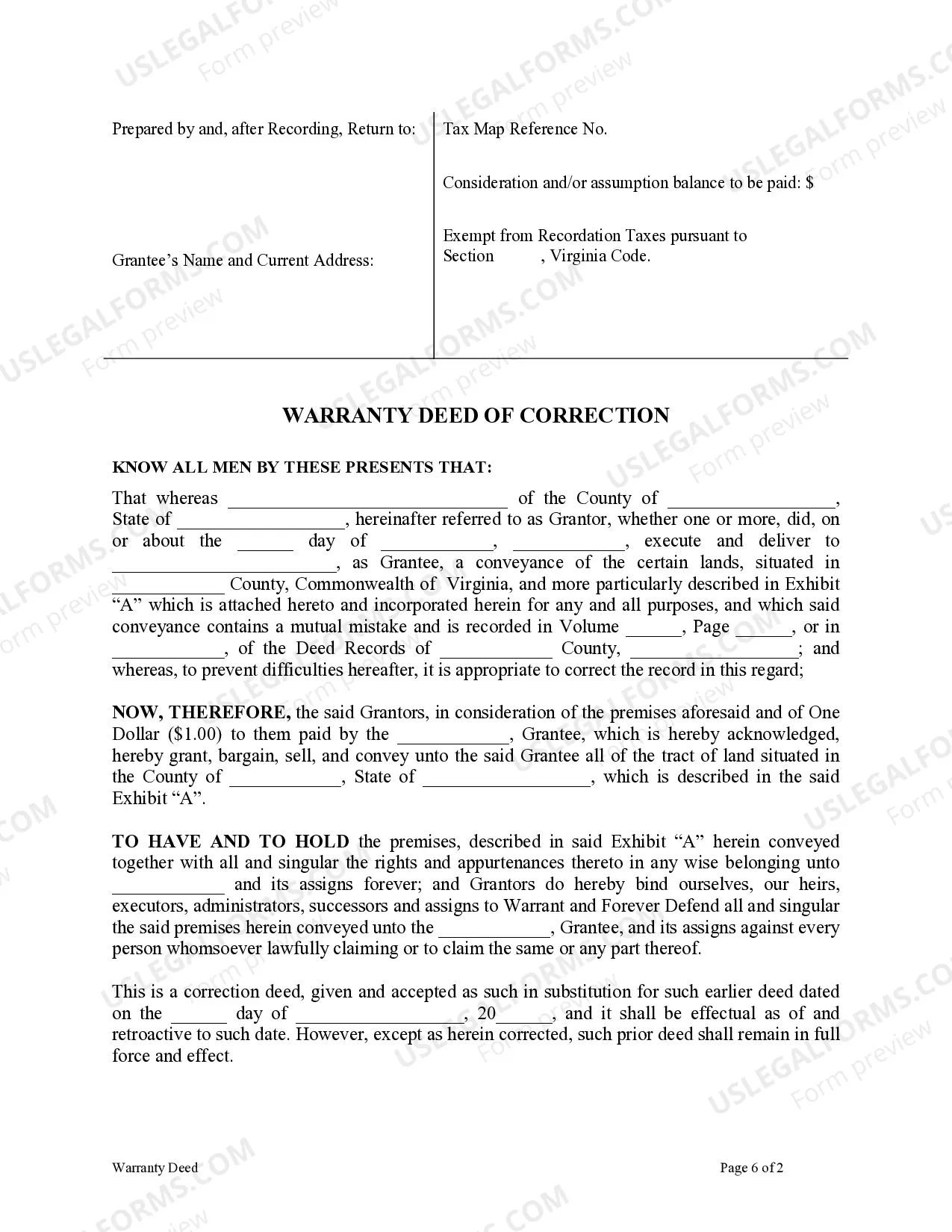
The Warranty Deed for Correction is a legal document specifically designed for use in the State of Virginia. It serves the purpose of rectifying mutual mistakes found in the original deed, ensuring that the property transfer accurately reflects the intentions of the parties involved. This form is crucial for property owners seeking to amend errors without having to redraft entirely new deeds.
Form components explained
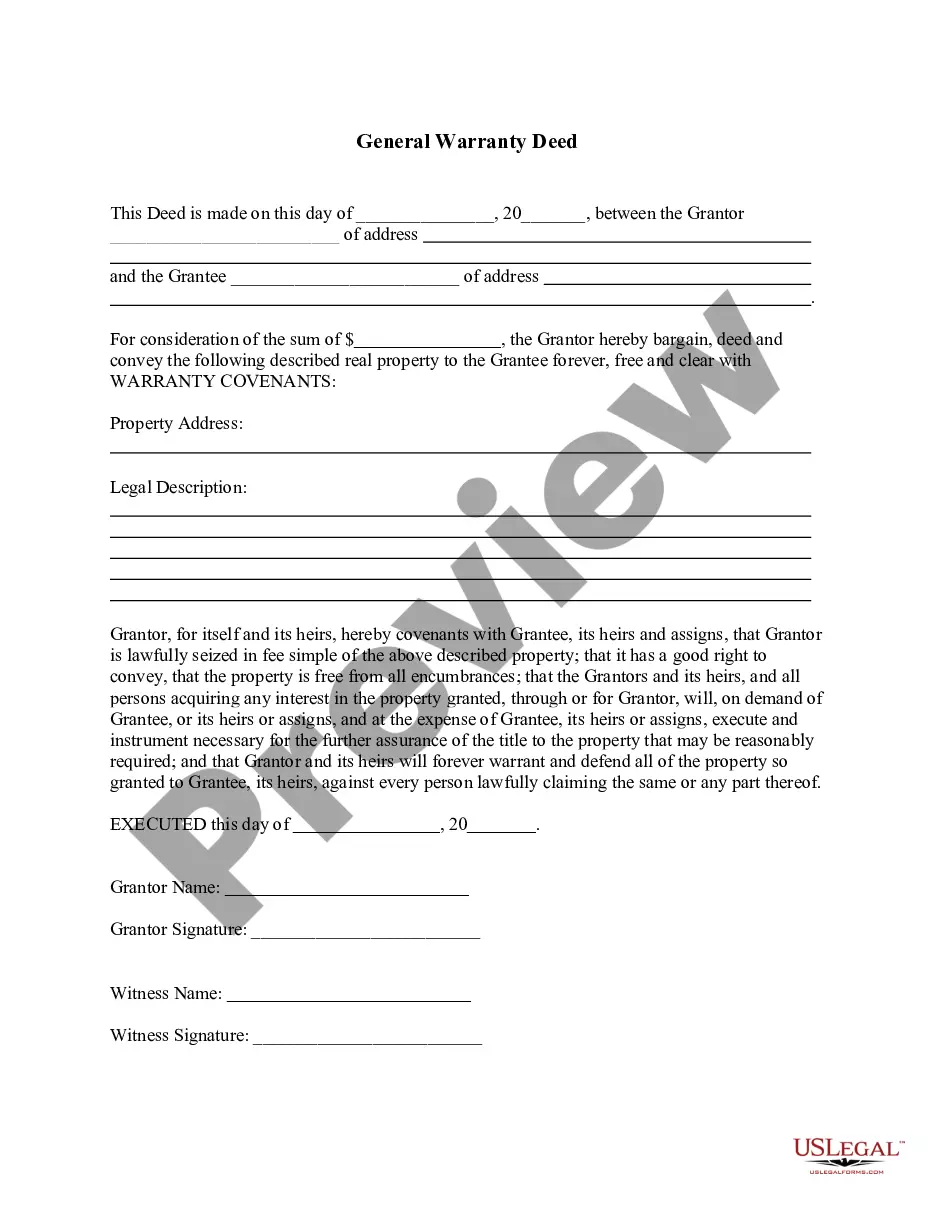
- Property description: Includes specific details about the property being corrected.
- Grantor and grantee information: Identifies the original parties involved in the deed.
- Correction clause: Clearly states the nature of the corrections being made to the original deed.
- Date of execution: Indicates the date the correction deed is signed and becomes effective.
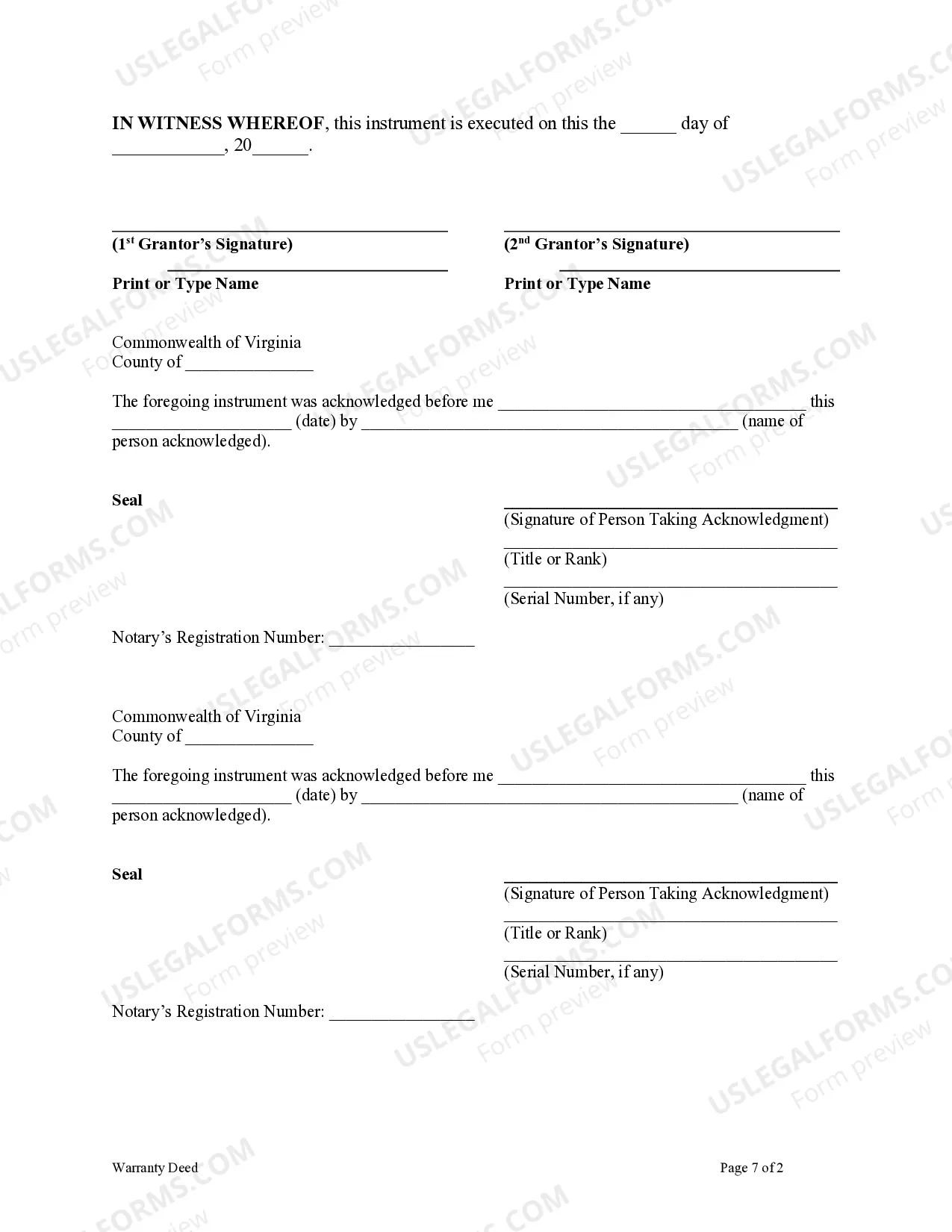
- Signatures: Requires signatures from the grantors, validating the correction made.

Situations where this form applies
This form should be used when there is a mutual mistake in an existing warranty deed that needs correction. Common scenarios include clerical errors in property descriptions, spelling errors in names, or incorrect details about the property boundaries. By completing this form, parties can ensure that their legal records accurately represent the transaction made.
Who needs this form
- Property owners who have identified errors in their current warranty deed.
- Buyers and sellers involved in property transactions that require deed corrections.
- Real estate professionals managing client property records.
- Attorneys representing clients in real estate matters.
Completing this form step by step
- Identify the correct parties: Make sure the grantors and grantees are clearly identified.
- Specify the property: Provide a detailed description of the property as it appears in the original deed.
- State the corrections: Clearly articulate what mistakes are being corrected in the original deed.
- Include the effective date: Enter the date on which the correction is recognized as effective.
- Sign the document: Ensure all grantors sign the form to validate the corrections made.
Is notarization required?
Notarization is required for this form to take effect. Our online notarization service, powered by Notarize, lets you verify and sign documents remotely through an encrypted video session, available 24/7.
Get your form ready online
Our built-in tools help you complete, sign, share, and store your documents in one place.
Make edits, fill in missing information, and update formatting in US Legal Forms—just like you would in MS Word.
Download a copy, print it, send it by email, or mail it via USPS—whatever works best for your next step.
Sign and collect signatures with our SignNow integration. Send to multiple recipients, set reminders, and more. Go Premium to unlock E-Sign.
If this form requires notarization, complete it online through a secure video call—no need to meet a notary in person or wait for an appointment.
We protect your documents and personal data by following strict security and privacy standards.
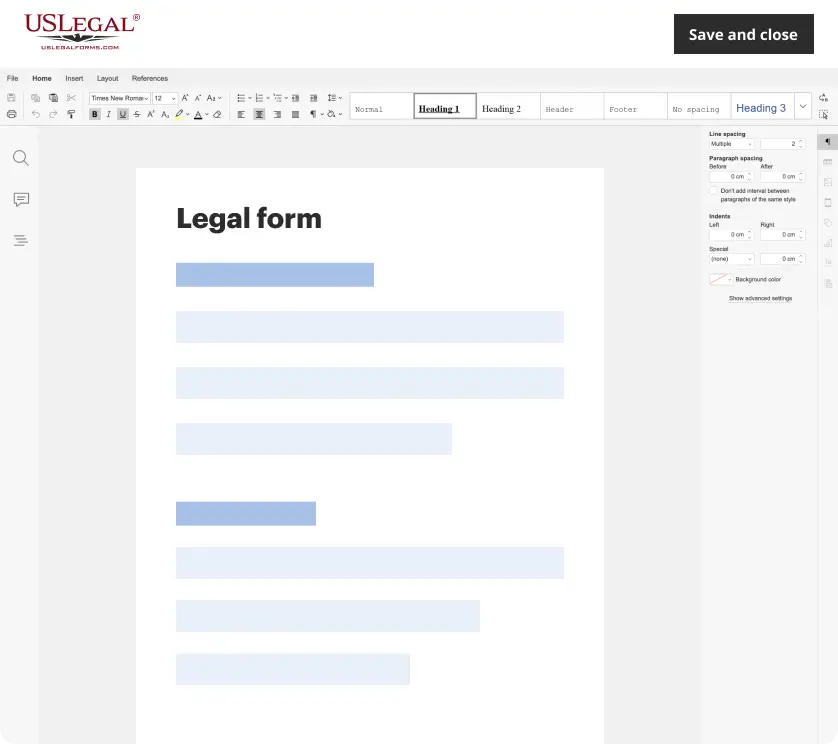
Make edits, fill in missing information, and update formatting in US Legal Forms—just like you would in MS Word.
Download a copy, print it, send it by email, or mail it via USPS—whatever works best for your next step.
Sign and collect signatures with our SignNow integration. Send to multiple recipients, set reminders, and more. Go Premium to unlock E-Sign.

If this form requires notarization, complete it online through a secure video call—no need to meet a notary in person or wait for an appointment.
We protect your documents and personal data by following strict security and privacy standards.
Typical mistakes to avoid
- Failing to include complete and accurate property descriptions.
- Not having all required signatures from grantors.
- Omitting the date of execution, which can impact its effectiveness.
- Using incorrect legal terminology that may invalidate the form.
Why use this form online
- Easy access: Download the form anytime and anywhere.
- Editability: Modify the form to suit your specific needs before printing.
- Time-saving: Quickly fill out the form without delays associated with traditional paperwork.
- Reliability: Forms are drafted and reviewed by licensed attorneys to ensure legal compliance.
Looking for another form?





Form popularity
FAQ
Typically, the lender will provide you with a copy of the deed of trust after the closing. The original warranty deeds are often mailed to the grantee after they are recorded. These are your original copies and should be kept in a safe place, such as a fireproof lockbox or a safe deposit box at a financial institution.
Determine if the error is harmless or fatal to the transfer of title. Decide what instrument is best suited to the error. Draft a corrective deed, affidavit, or new deed. Original Grantor(s) signature(s) obtained. Deed is re-executed. Re-acknowledgment before a notary.
The only way to change a recorded deed is to have a new deed prepared and recorded in the Clerk's Land Records Office. The deed on record cannot be changed. Once a document is recorded, it cannot be changed.
Draw line through entry (thin pen line). Make sure that the inaccurate information is still legible. Initial and date the entry. State the reason for the error (i.e. in the margin or above the note if room). Document the correct information.
In order to make the Warranty Deed legally binding, the Seller needs to sign it front of a notary public. Then signed and notarized deed must be filed at the city or county office for recording property documents. Before filing with this office all previously billed property taxes must be paid in full.
It's important to note that a warranty deed does not actually prove the grantor has ownership (a title search is the best way to prove that), but it is a promise by the grantor that they are transferring ownership and if it turns out they don't actually own the property, the grantor will be responsible for compensating
A warranty deed guarantees that: The grantor is the rightful owner of the property and has the legal right to transfer the title.The title would withstand third-party claims to ownership of the property. The grantor will do anything to ensure the grantee's title to the property.
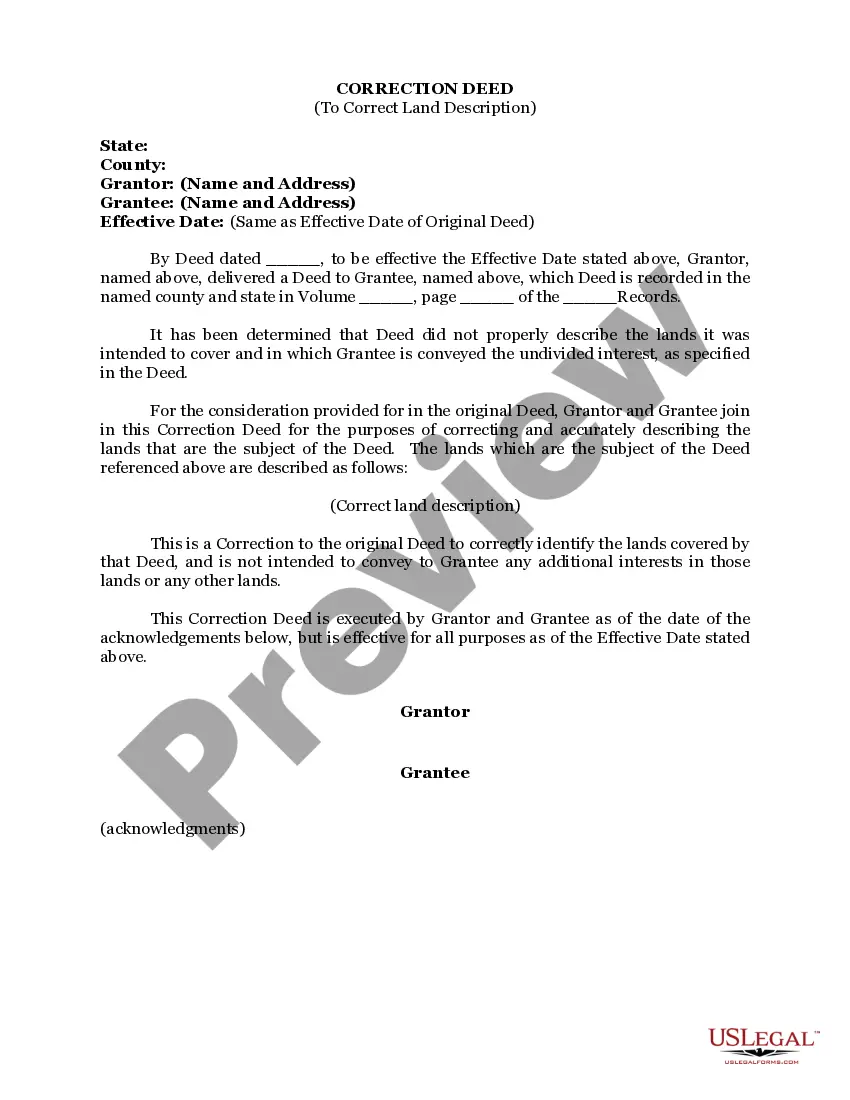
Re-recording of the original document. With corrections made in the body of the original document. A cover sheet detailing the changes. Must be re-signed and re-acknowledged. Correction Deed. A new deed reflecting the corrections/changes. Must meet all recording requirements of a deed.
Let's start with the definition of a deed: DEED: A written instrument by which one party, the Grantor, conveys the title of ownership in property to another party, the Grantee. A Warranty Deed contains promises, called covenants, that the Grantor makes to the Grantee.