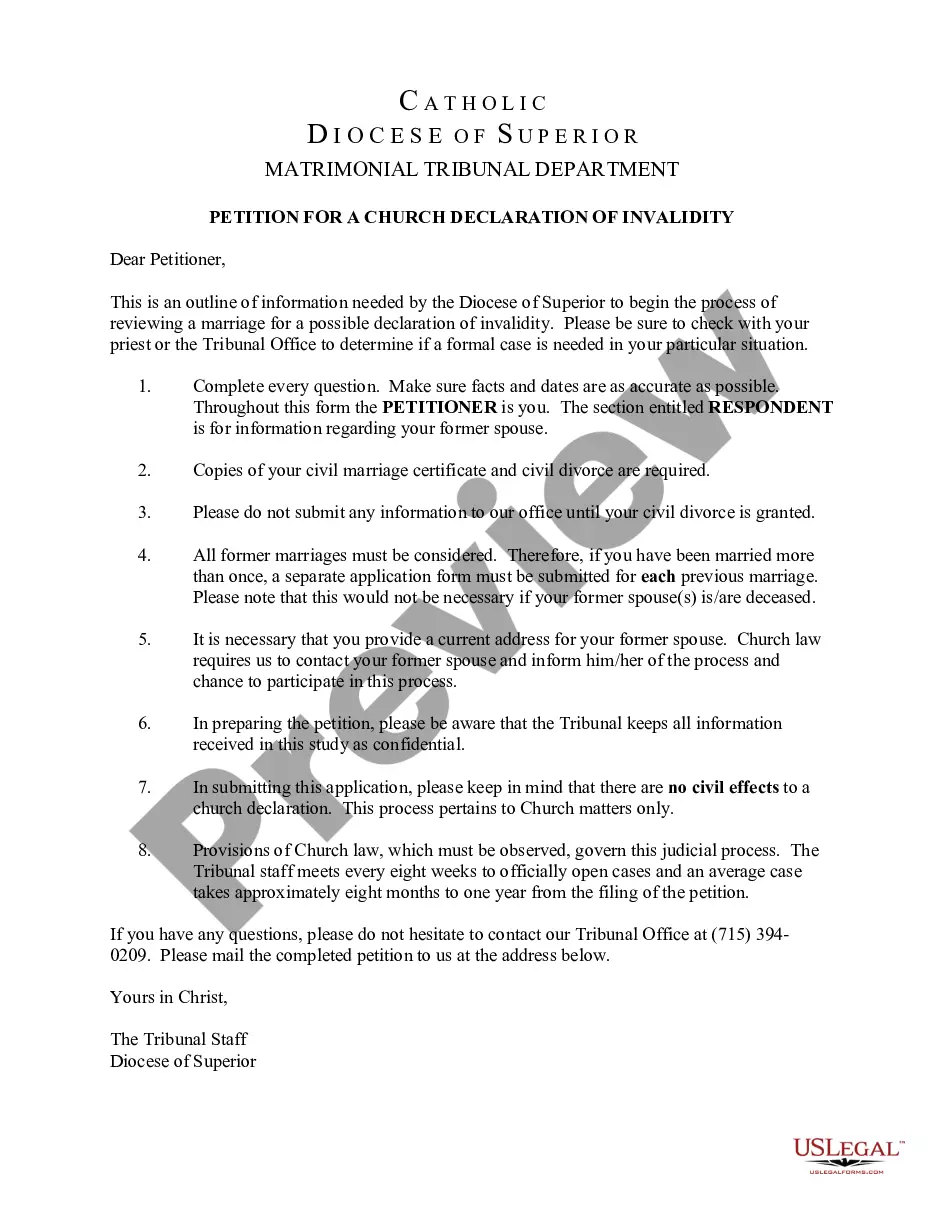
Petition for a Church Declaration of Invalidity
What this document covers
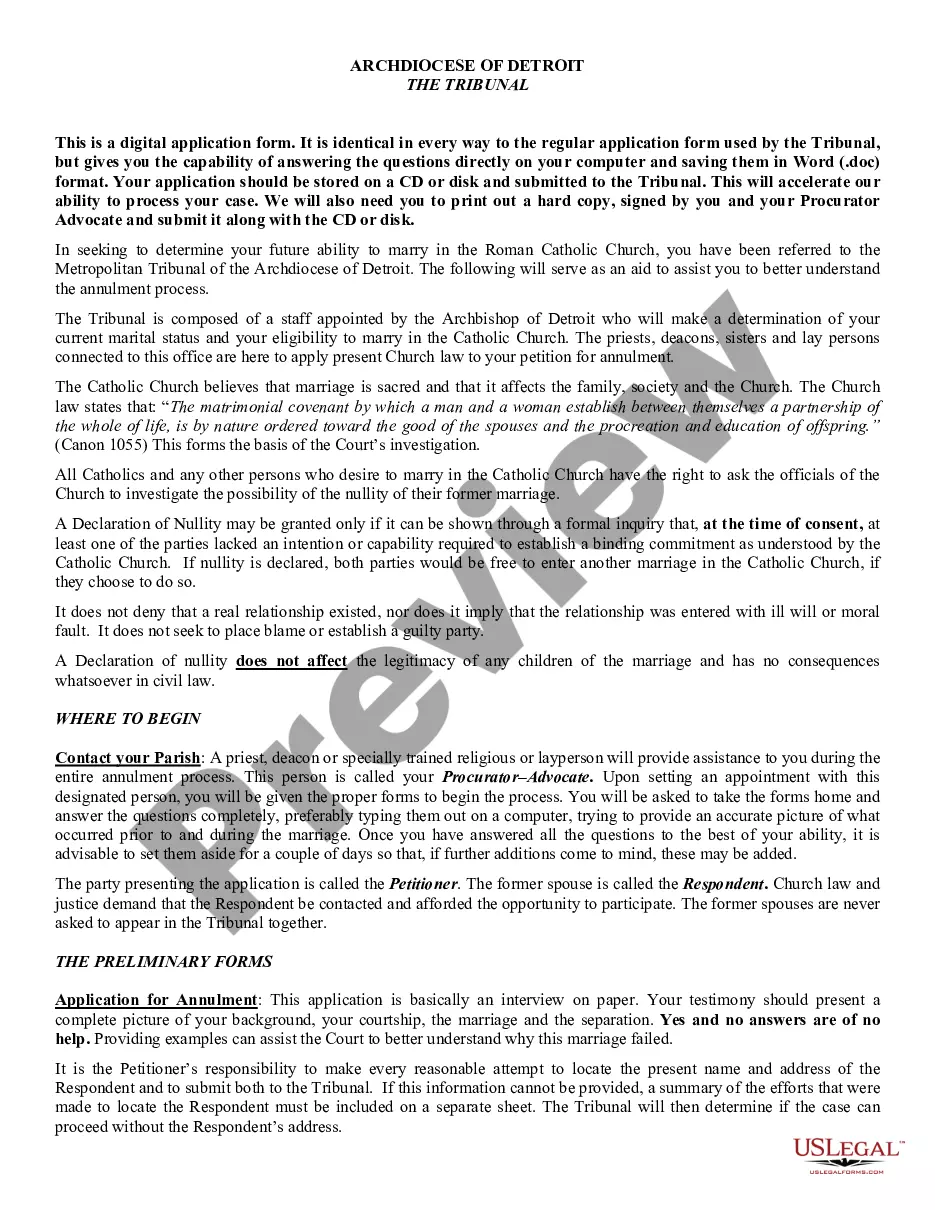
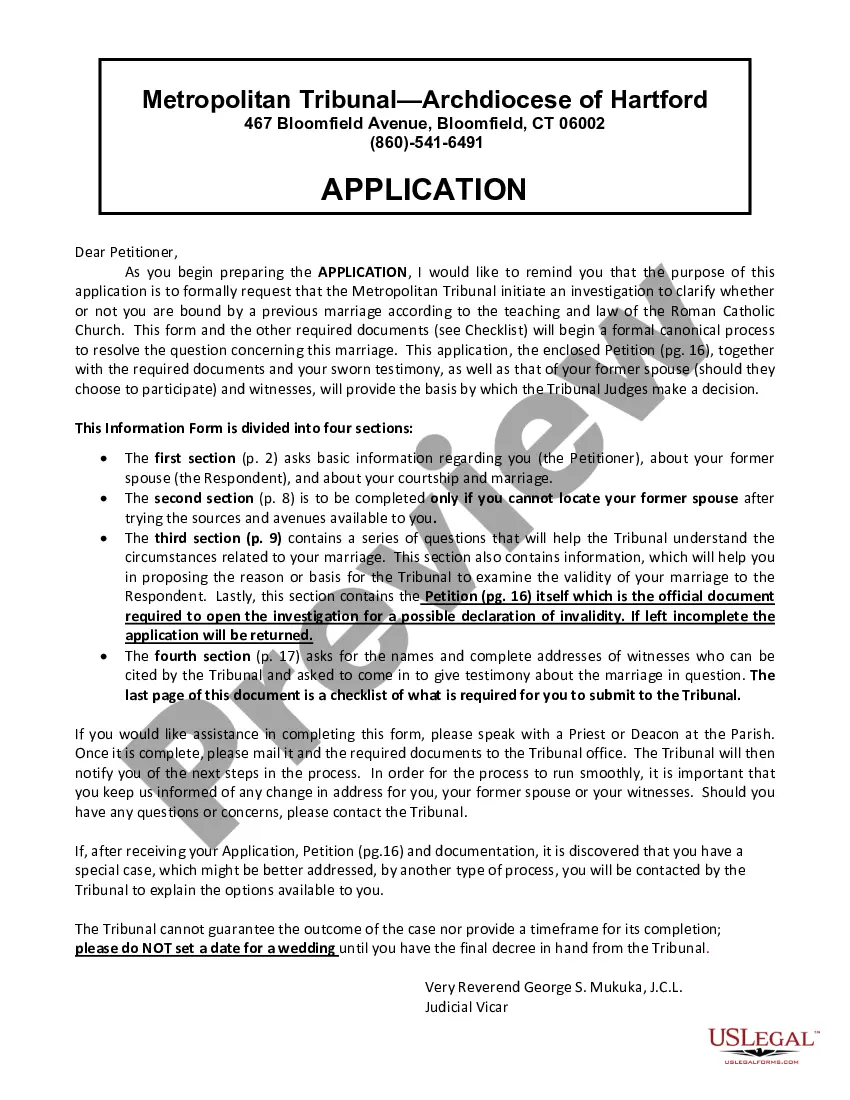
The Petition for a Church Declaration of Invalidity is a document used by individuals wishing to have their previous marriage reviewed by the Diocese of Superior for a possible annulment. This form is specifically designed to collect necessary information for the Church Tribunal's evaluation of the validity of a marriage, distinguishing it from civil divorce proceedings, which do not address the sacramental nature of marriage.
What’s included in this form
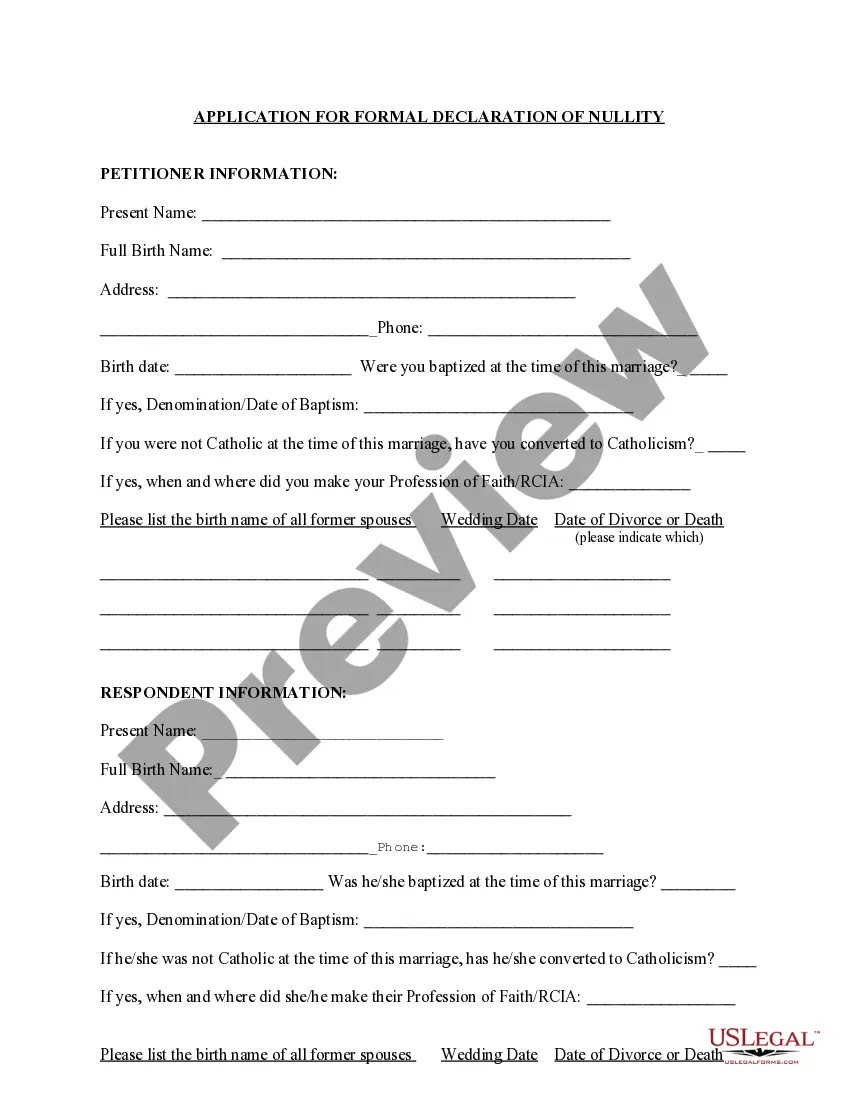
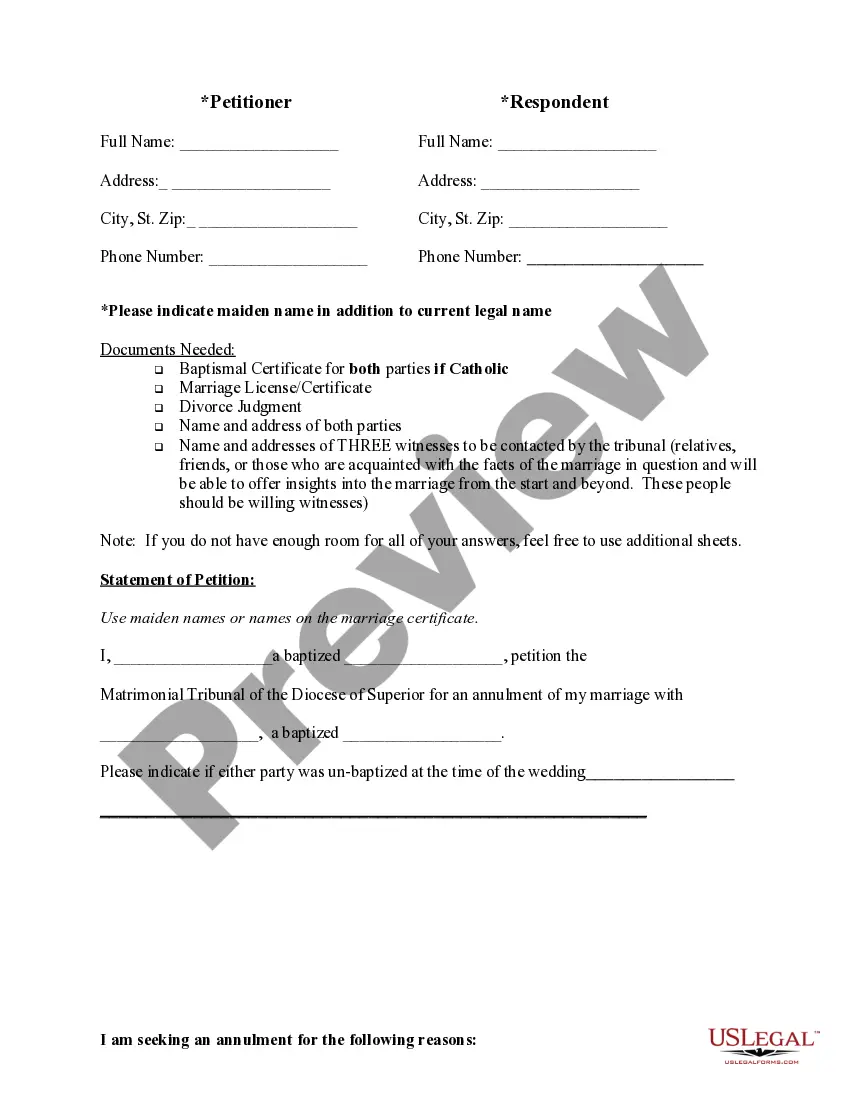
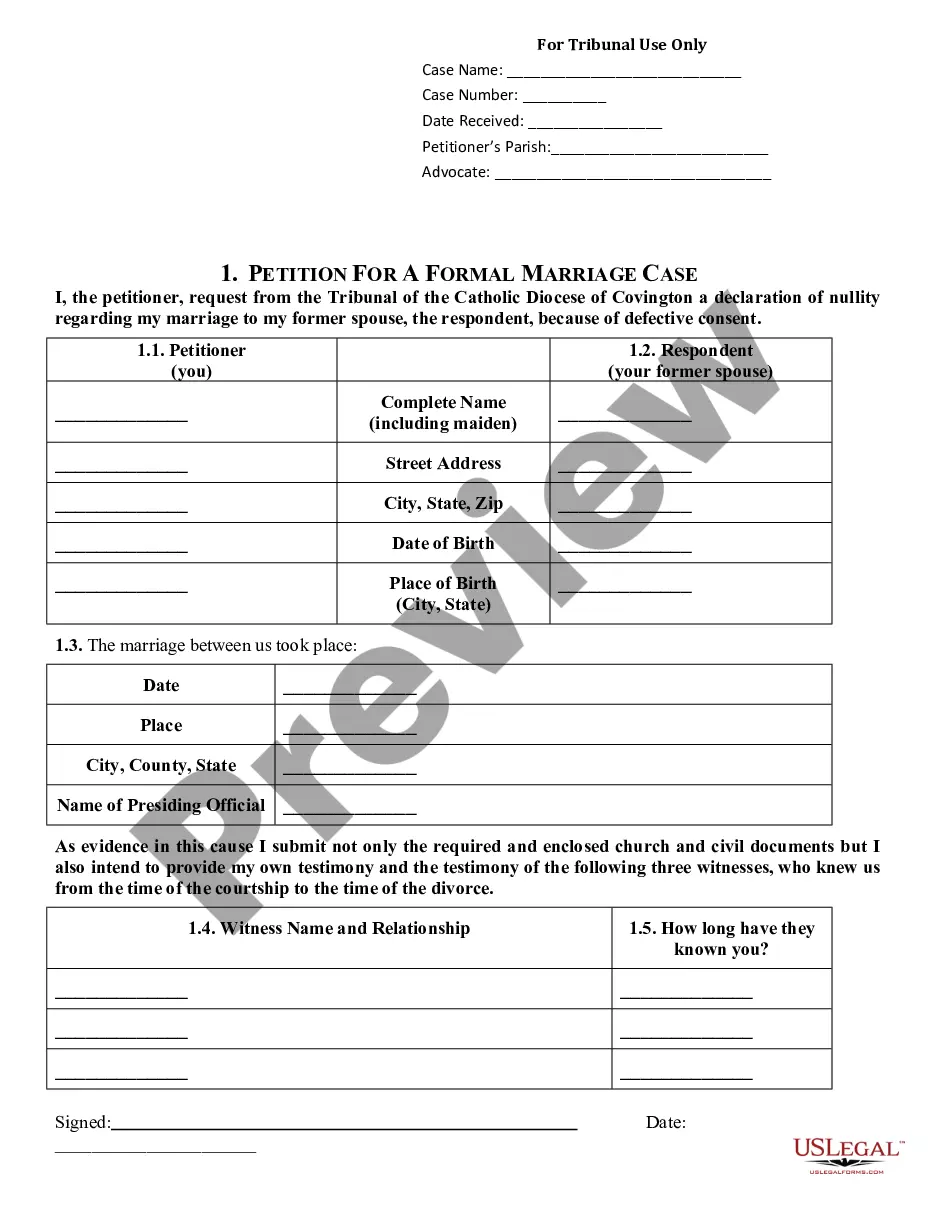
- Petitioner and Respondent Information - collects personal details of both parties, including names, addresses, and baptismal information.
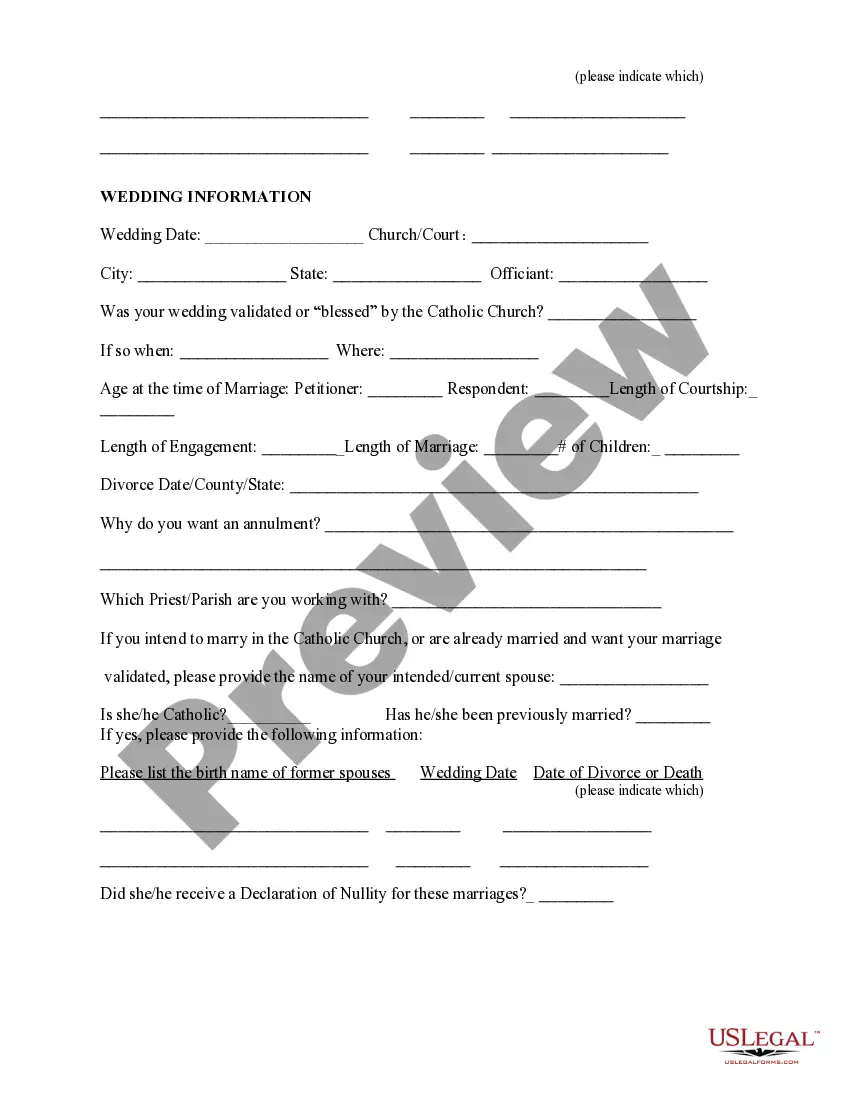
- Wedding Information - requires details about the initial wedding, including date, location, and officiant.
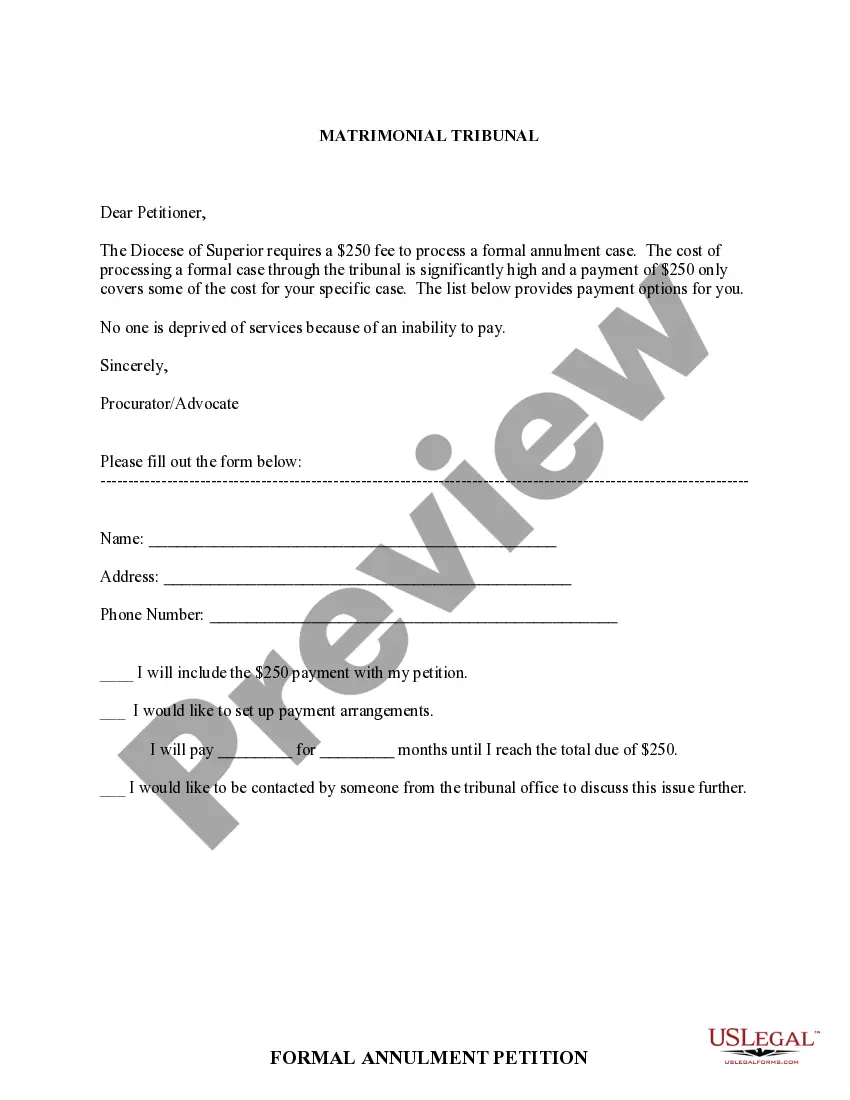
- Matrimonial Tribunal Fee - outlines the fee required for processing the declaration and offers payment options.
- Witness Information - asks for contact information of witnesses familiar with the marriage's details.
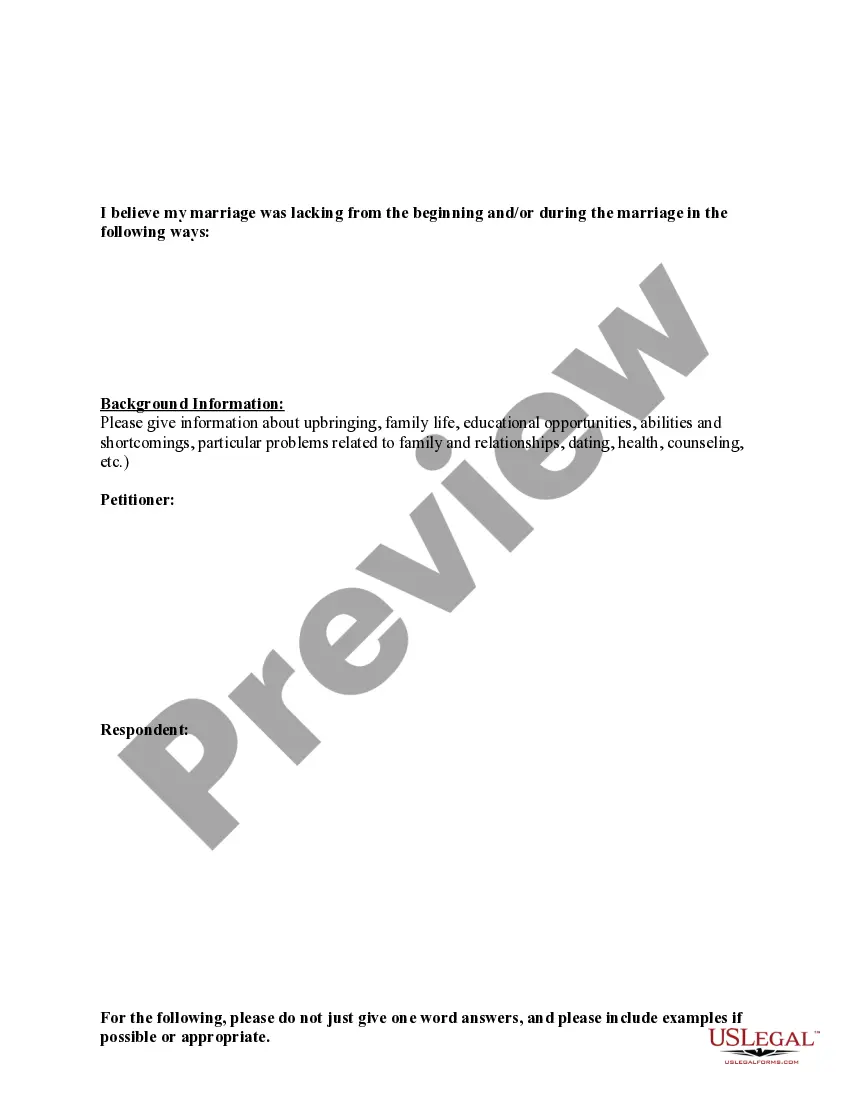
- Statement of Petition - provides space for the petitioner to articulate reasons for seeking annulment.
- Oath - confirms that the information provided is truthful and accurate.

When to use this document
This form should be used when you have experienced a civil divorce and believe your marriage lacks essential elements necessary for a valid marriage in the eyes of the Church. You may consider this petition when you seek to marry in the Catholic Church, as it is a prerequisite for obtaining a Church annulment.
Who this form is for
- Individuals who have been divorced and wish to have their marriage evaluated for annulment.
- Those looking to remarry in the Catholic Church and need a formal declaration of nullity.
- People who have previously married more than once, as separate petitions are required for each marriage.
How to prepare this document
- Provide your personal details in the Petitioner Information section, including your full name and contact information.
- Fill in the Respondent Information with the details of your former spouse, ensuring all information is accurate.
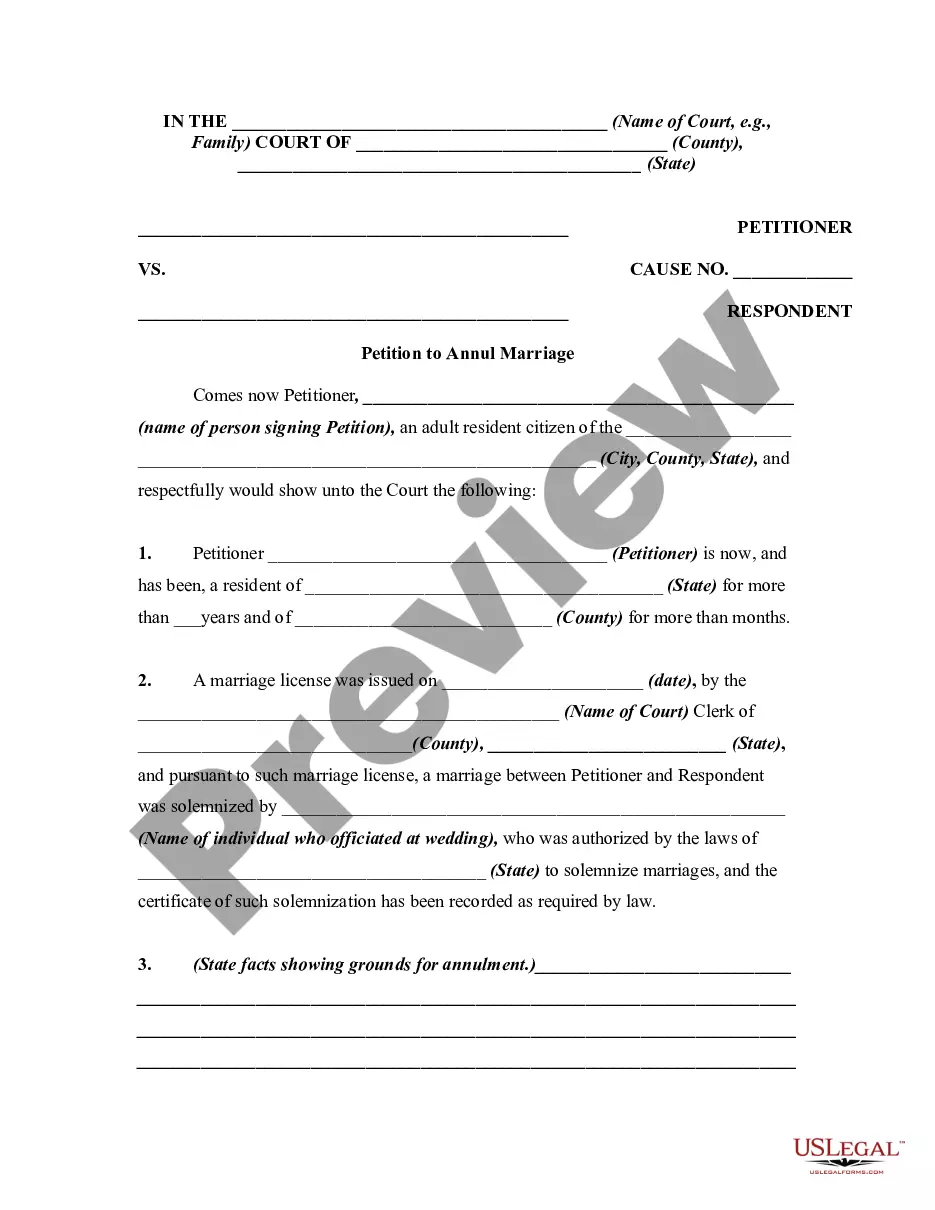
- Complete the Wedding Information section, providing dates, locations, and the officiant's details of your marriage.
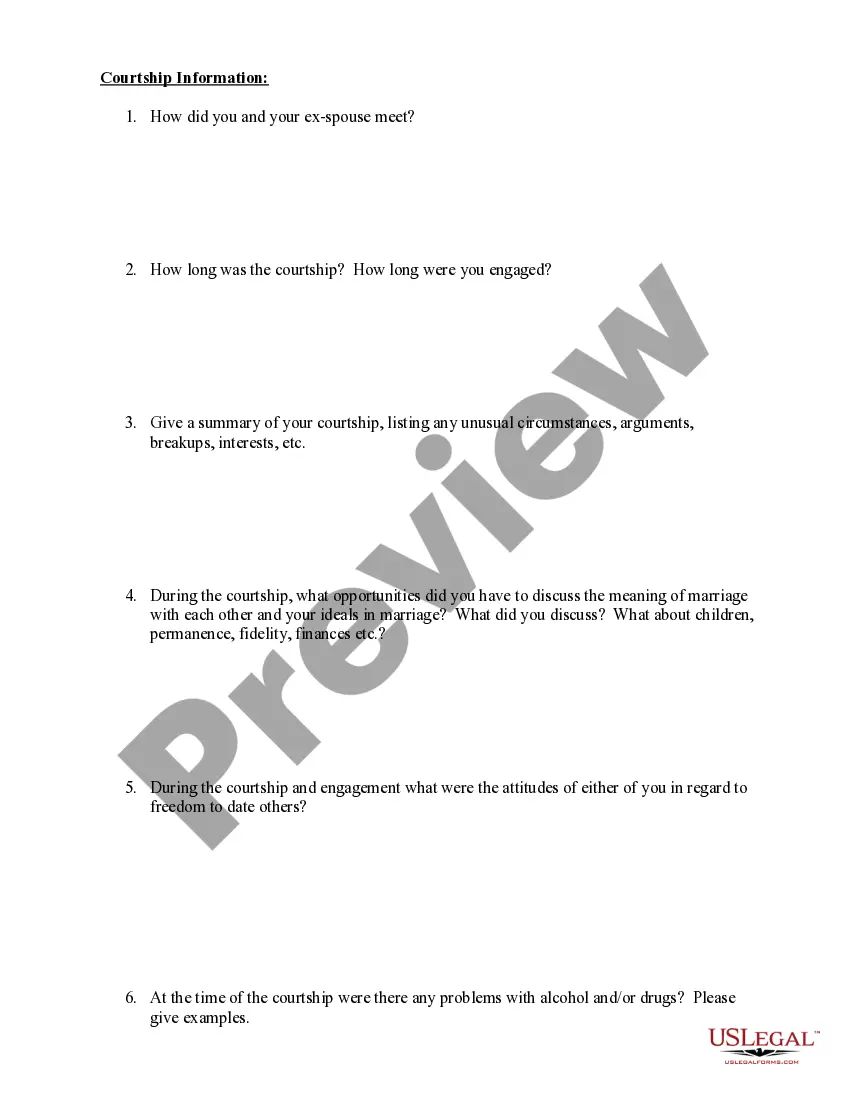
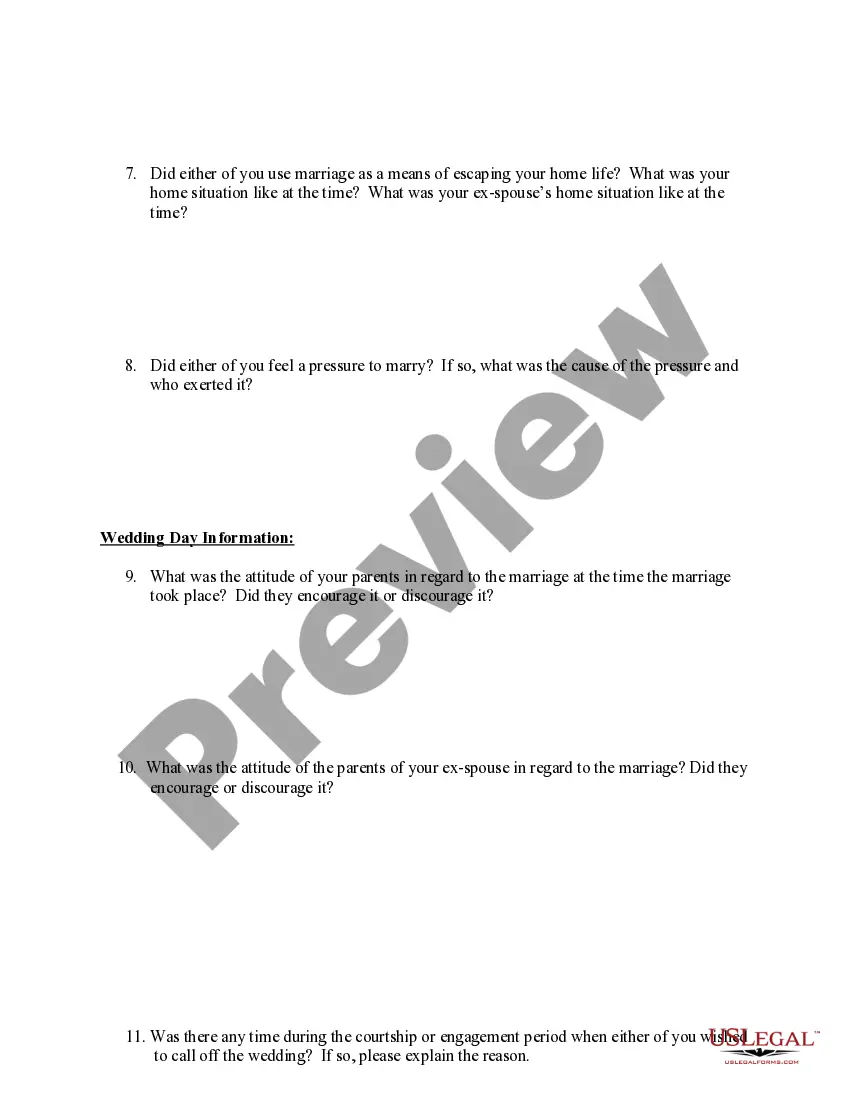
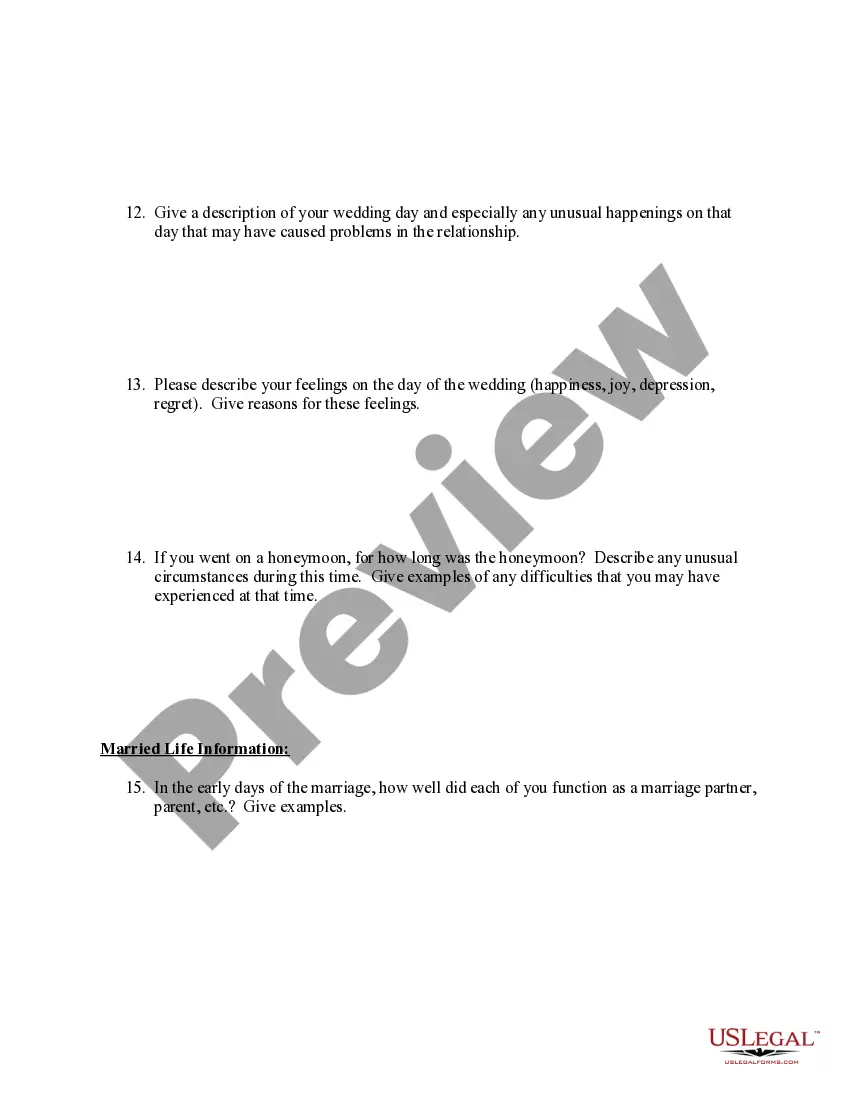
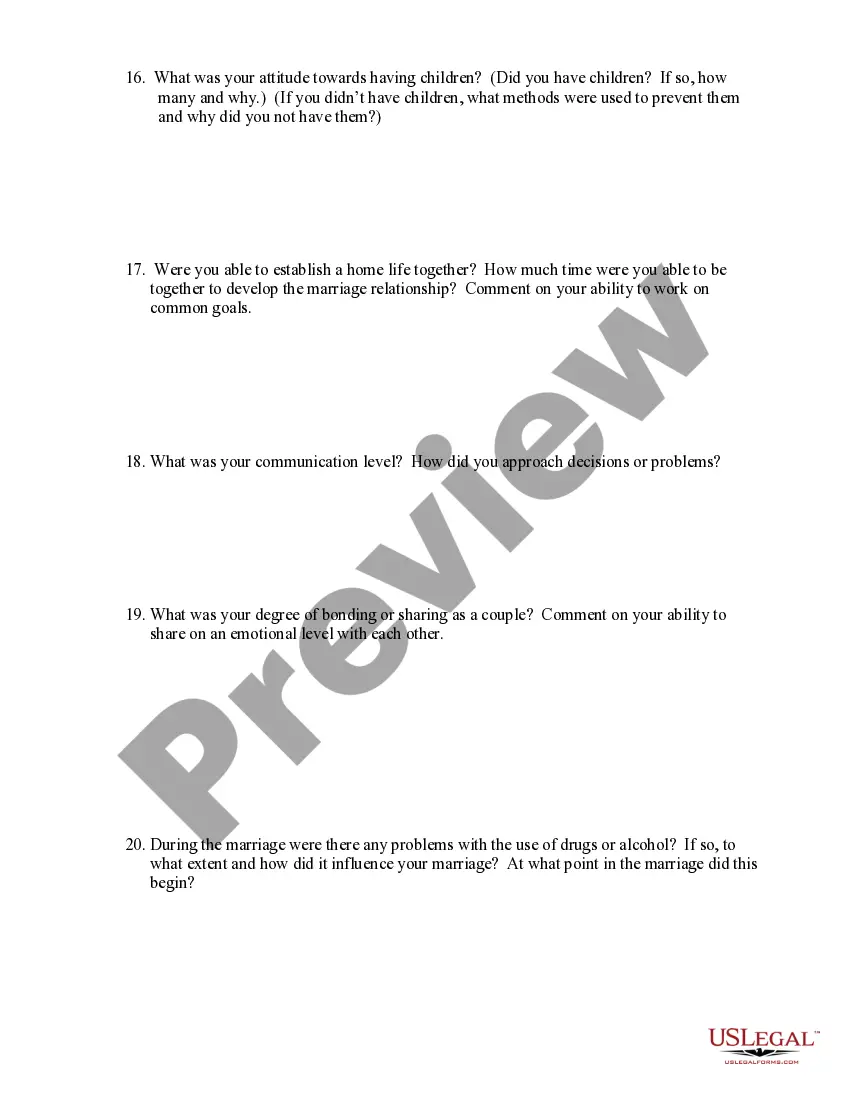
- Outline the reasons you are seeking a declaration of nullity and provide necessary background information about your marriage.
- List names and contact information of three witnesses who can offer insights regarding your marriage.
- Sign and date the form, confirming that all information provided is true to the best of your knowledge.
Notarization requirements for this form
This form does not typically require notarization to be legally valid. However, some jurisdictions or document types may still require it. US Legal Forms provides secure online notarization powered by Notarize, available 24/7 for added convenience.
Get your form ready online
Our built-in tools help you complete, sign, share, and store your documents in one place.
Make edits, fill in missing information, and update formatting in US Legal Forms—just like you would in MS Word.
Download a copy, print it, send it by email, or mail it via USPS—whatever works best for your next step.
Sign and collect signatures with our SignNow integration. Send to multiple recipients, set reminders, and more. Go Premium to unlock E-Sign.
If this form requires notarization, complete it online through a secure video call—no need to meet a notary in person or wait for an appointment.
We protect your documents and personal data by following strict security and privacy standards.

Make edits, fill in missing information, and update formatting in US Legal Forms—just like you would in MS Word.

Download a copy, print it, send it by email, or mail it via USPS—whatever works best for your next step.

Sign and collect signatures with our SignNow integration. Send to multiple recipients, set reminders, and more. Go Premium to unlock E-Sign.

If this form requires notarization, complete it online through a secure video call—no need to meet a notary in person or wait for an appointment.

We protect your documents and personal data by following strict security and privacy standards.
Common mistakes
- Failing to provide accurate and complete information, which could delay processing.
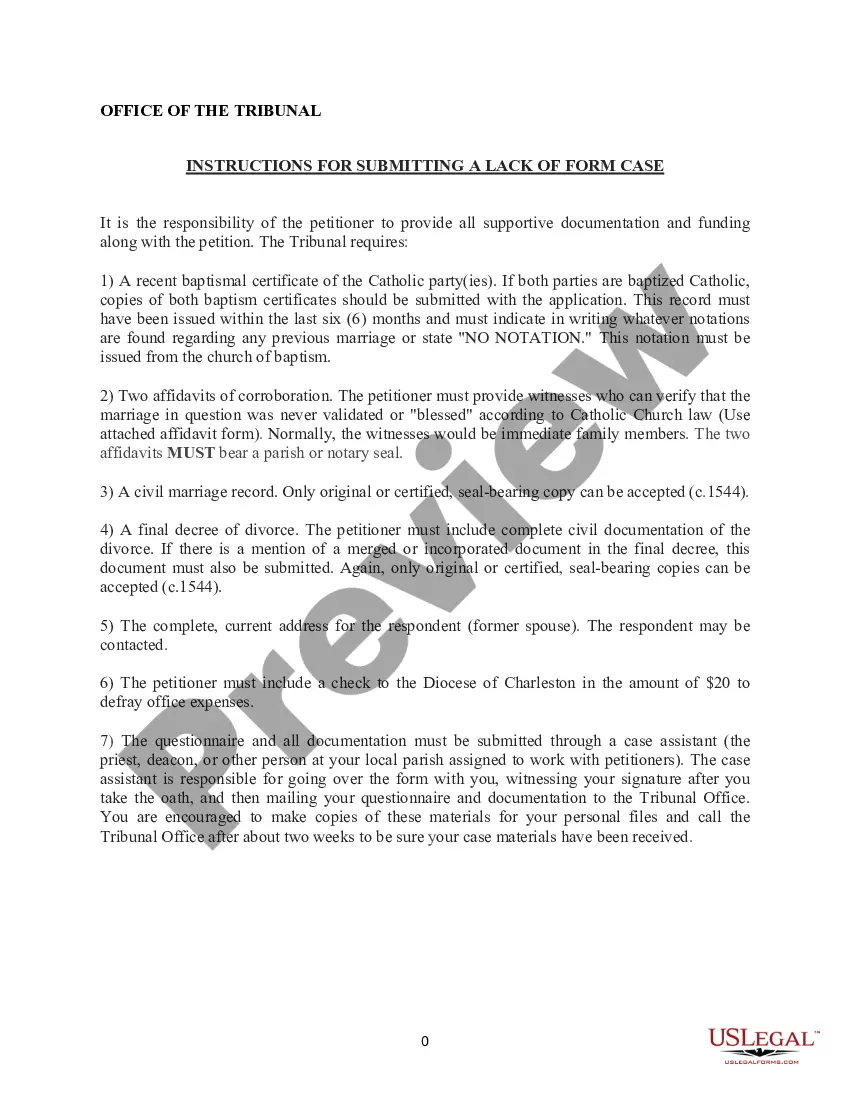
- Not including required documents, such as civil marriage or divorce certificates.
- Omitting witness information required by the tribunal.
- Submitting the petition before the civil divorce is finalized.
Why complete this form online
- Convenient access to a legal form drafted by licensed attorneys.
- Ability to download and complete the form at your own pace.
- Ensures that you have all necessary requirements in one place for easy reference.
Looking for another form?



Form popularity
FAQ
A declaration of nullity is a decision that is made by the Church, which acknowledges that a couple never established the sacred bond of marriage. This "declaration" can only be made after one of the parties in a former marriage requests it, and only after a detailed study of the marriage has been carried out.
Annulment basics One of the spouses is married to another person (bigamy) You got married when you were under 18 and it wasn't legal to do so. Your spouse tricked you to get you to agree to marry them.
A decree of nullity is a declaration by a court that your marriage never existed in the eyes of the law. It means that no valid marriage exists between you and your partner. Nullity (or annulment) is not the same as divorce. Divorce is a declaration ending a valid marriage.
A declaration of nullity is a decision that is made by the Church, which acknowledges that a couple never established the sacred bond of marriage. This "declaration" can only be made after one of the parties in a former marriage requests it, and only after a detailed study of the marriage has been carried out.
An annulment, formally called ?a declaration of nullity,? is an official declaration by the Roman Catholic Church that a marriage did not meet the requirements for validity. Validity means that the desired outcome (in this case, marriage) has actually taken place as recognized by the Church.
When might the Church issue a Declaration of nullity, called an annulment, and what does this declaration mean? The Church might issue a Declaration of nullity when a marriage is strained or did not have full consent. It means a true marriage bond never really existed.
A "declaration of nullify," or "annulment" permitted by the Church, states that a marriage: Was not a "sacramental" marriage by the Church standards.
Church law recognizes twelve specific impediments to marriage. They include things like coercion, being too young, already being married, blood or in-law relations, having received holy orders, being under vows of chastity, or being impotent (permanently unable to engage in sexual intercourse).