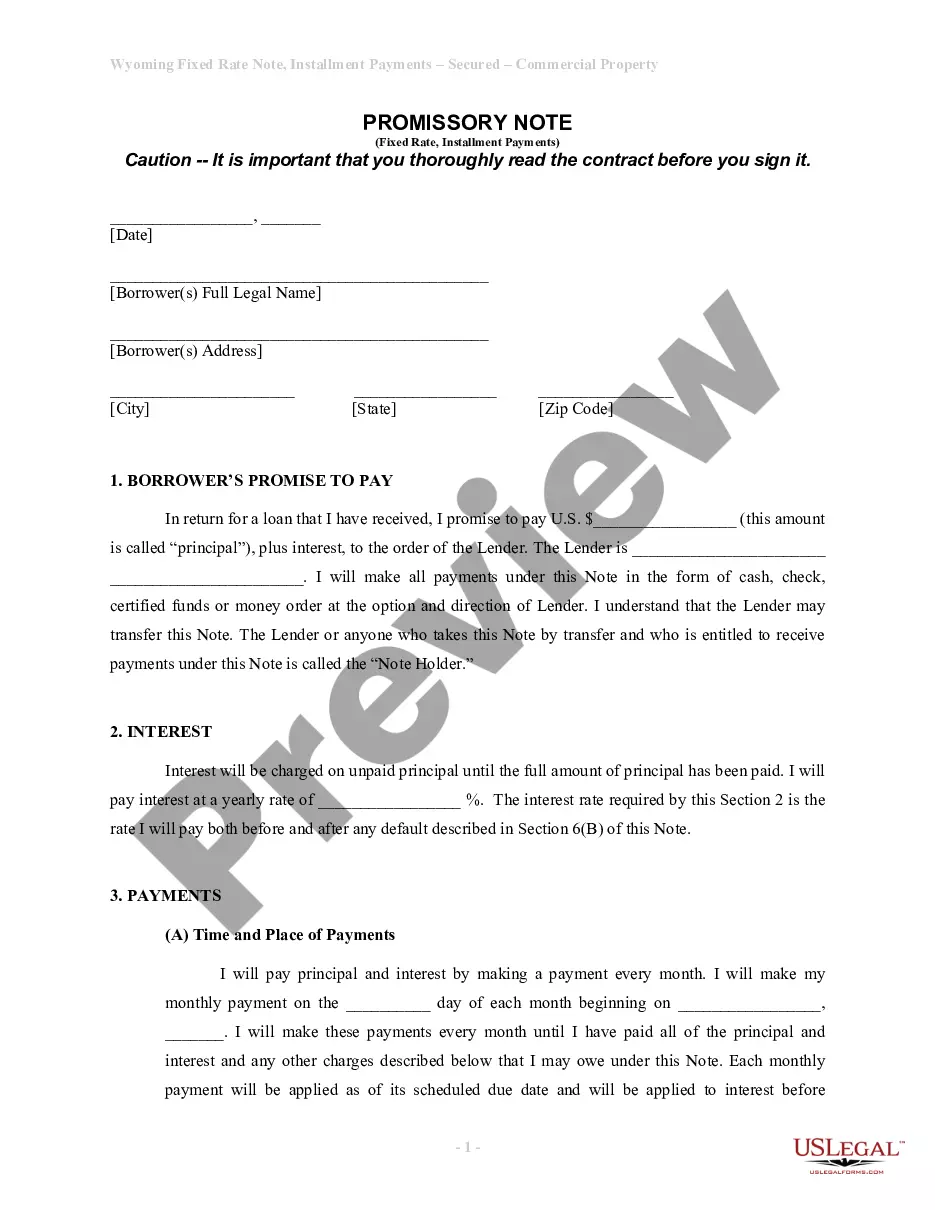
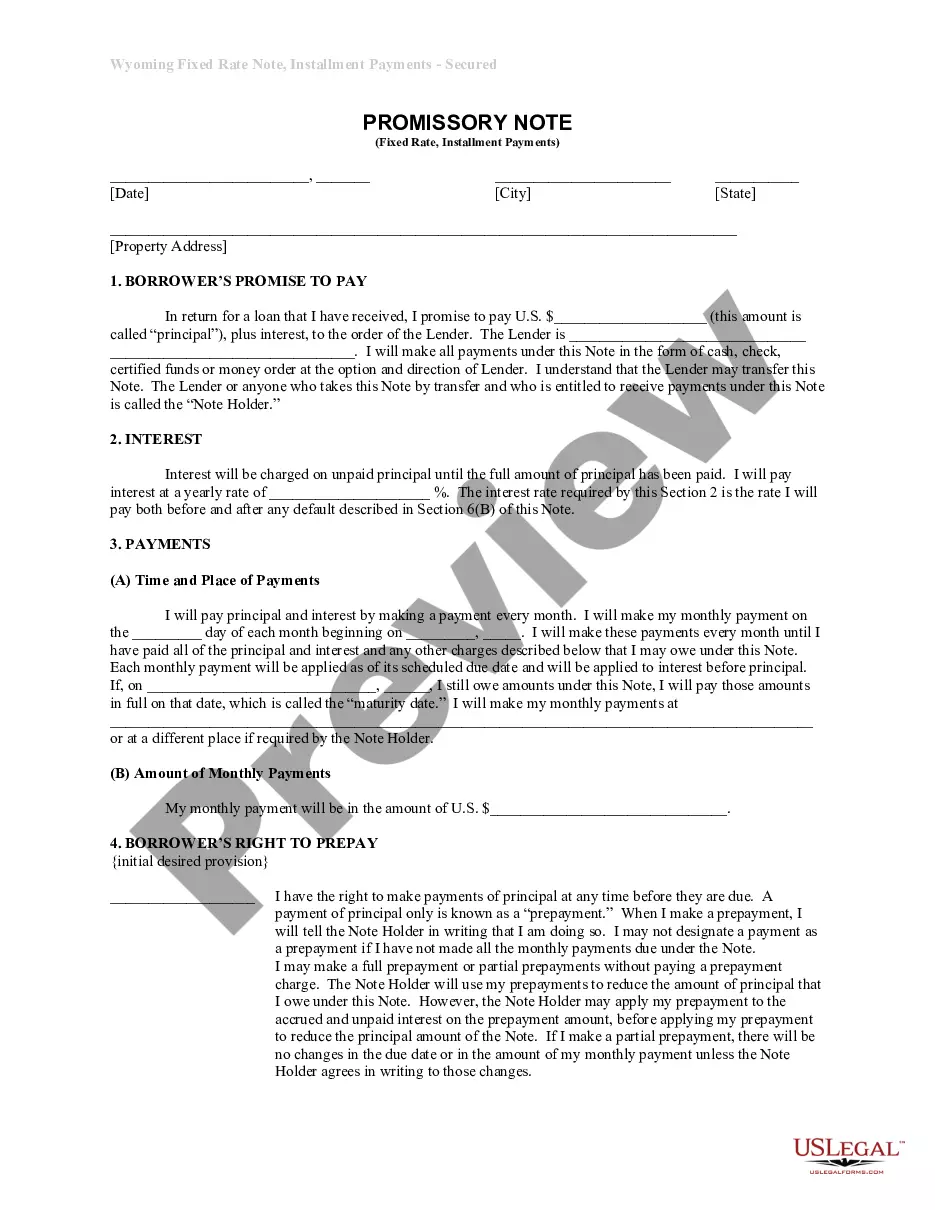
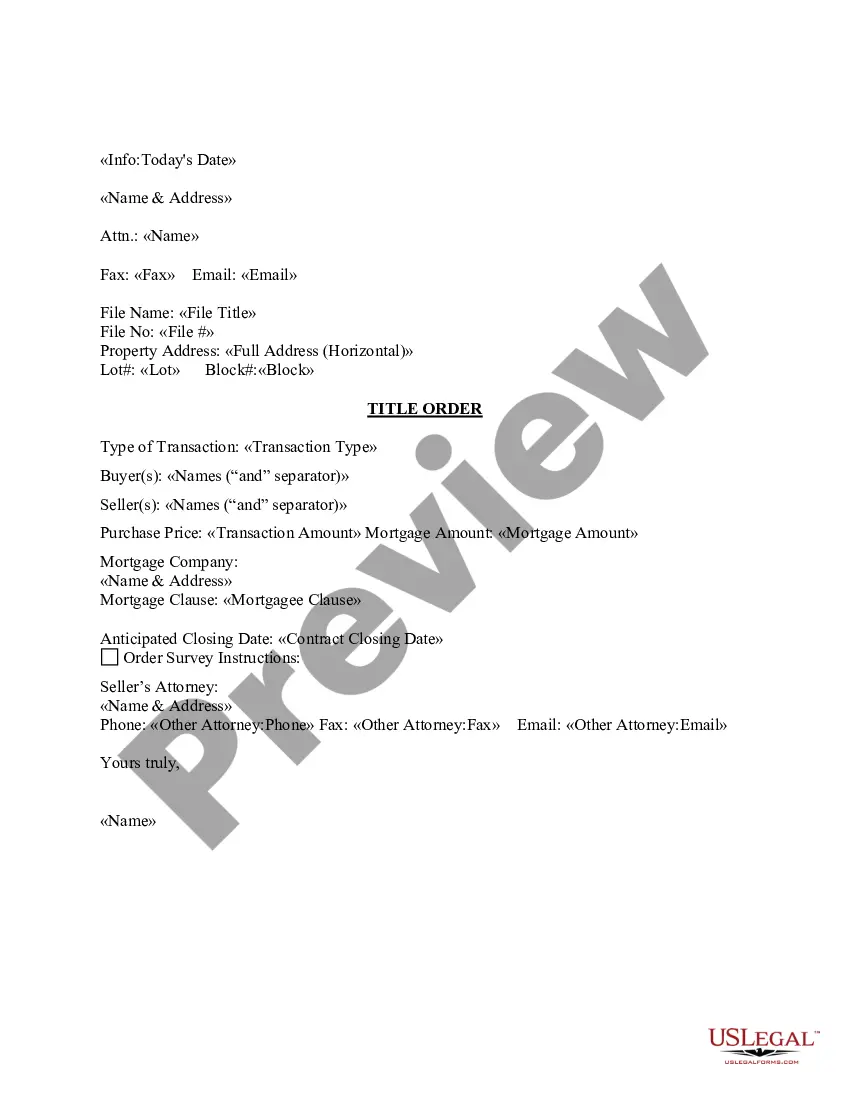
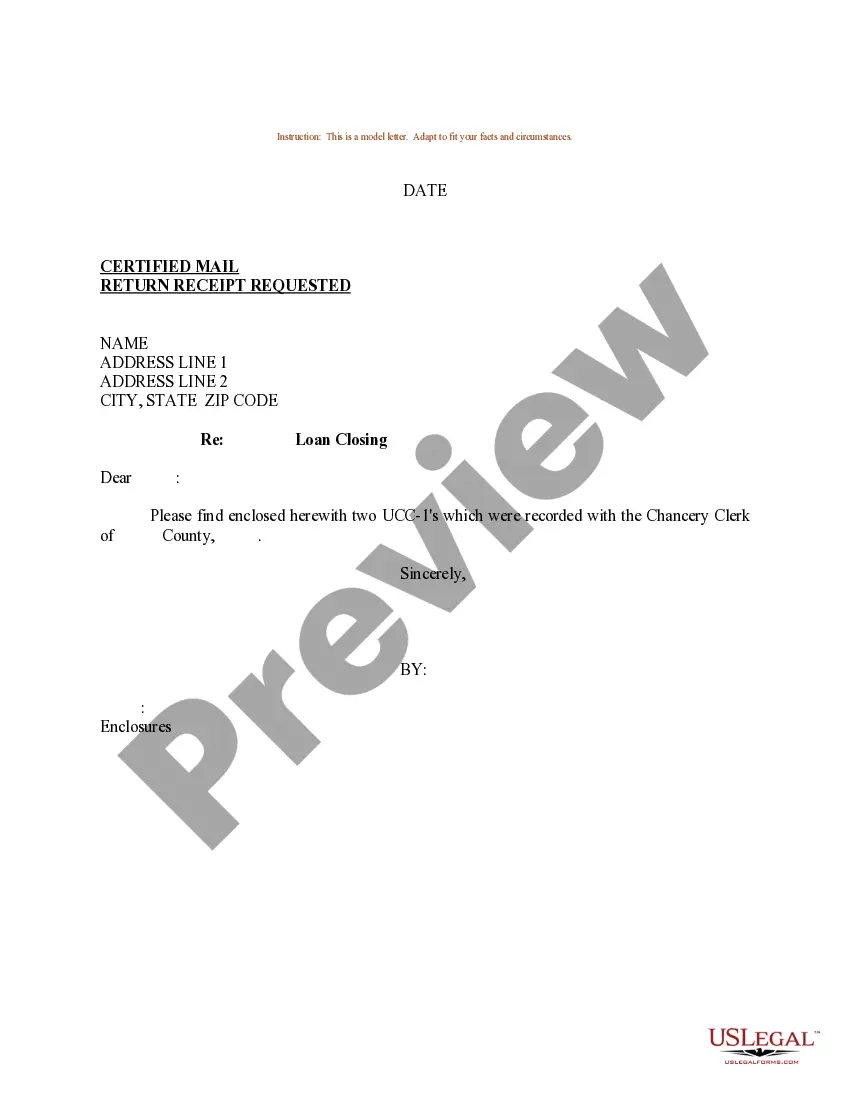
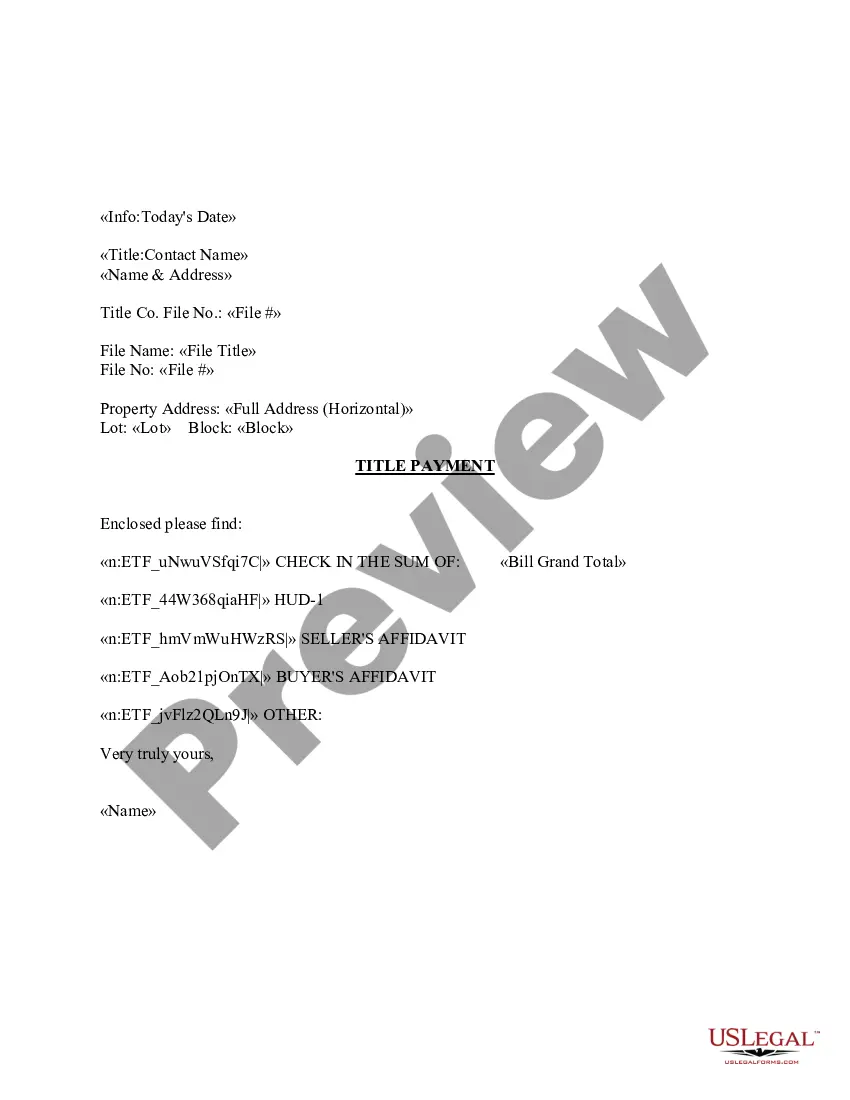
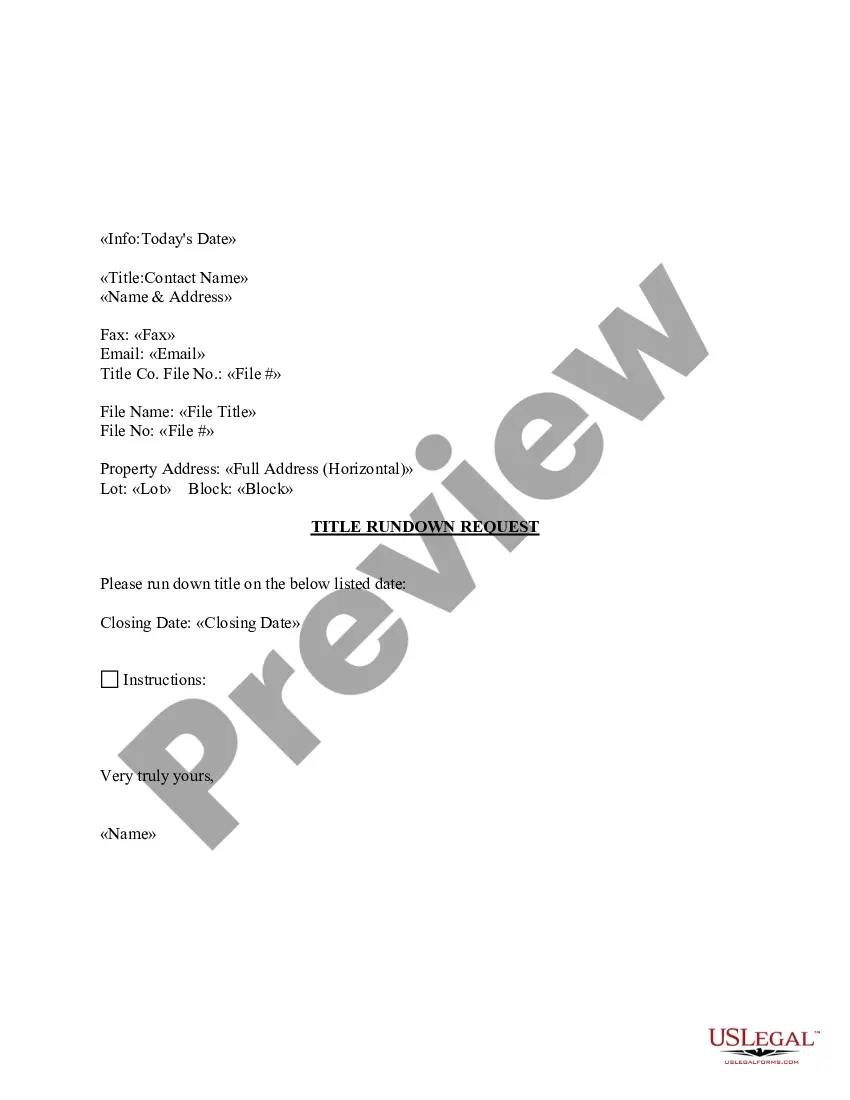
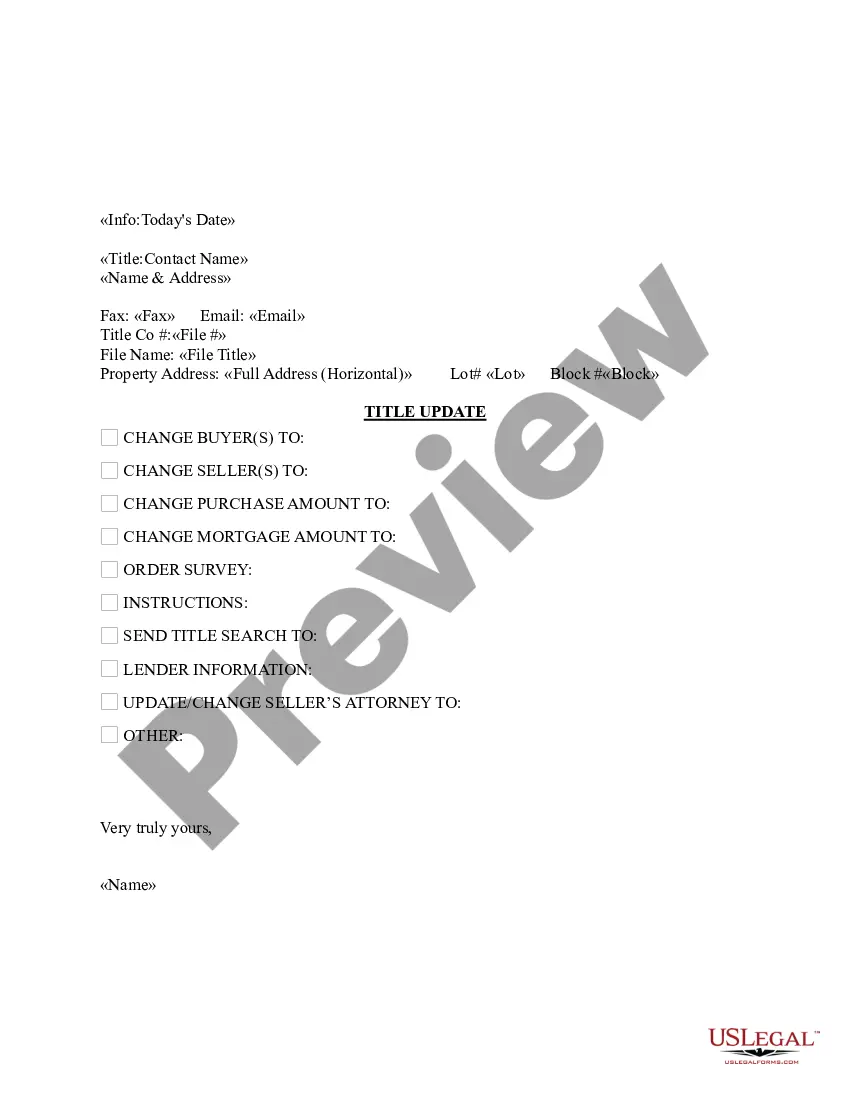
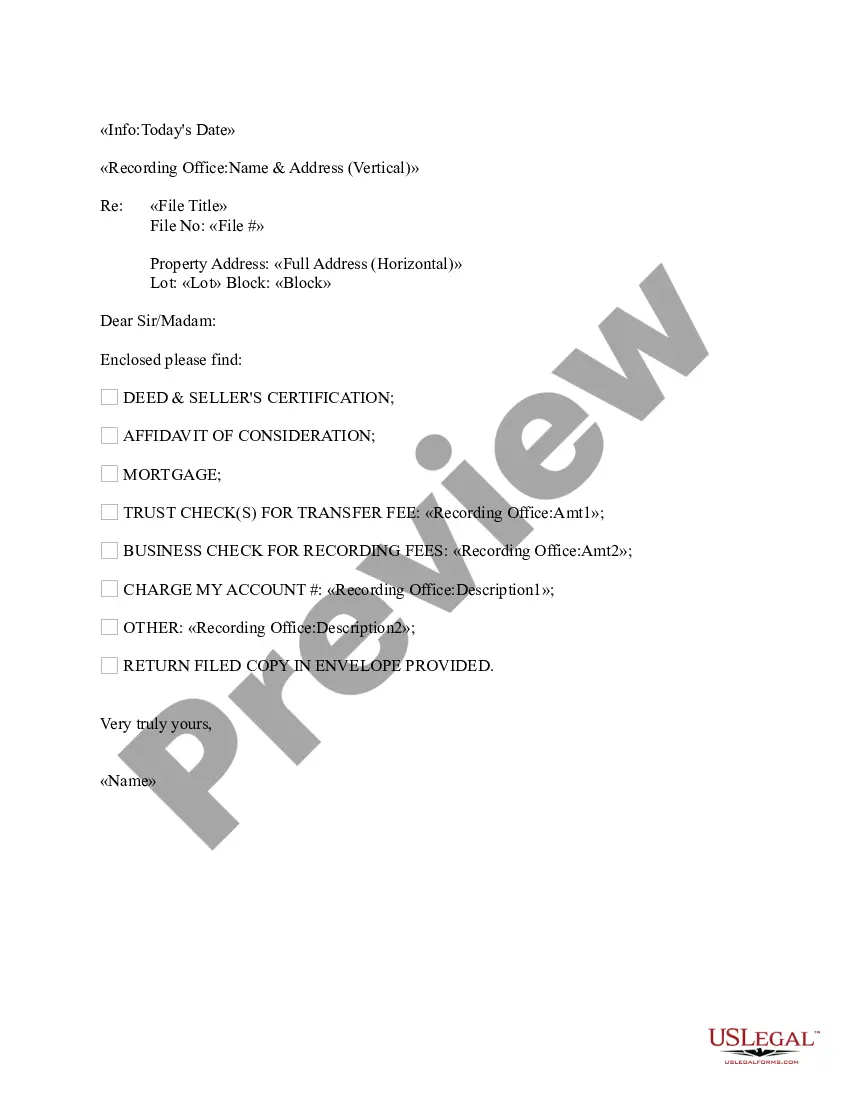
Letter: Title Order
Notarization guidance
This form usually doesn’t need to be notarized. However, local laws or specific transactions may require it. Our online notarization service, powered by Notarize, lets you complete it remotely through a secure video session, available 24/7.
Get your form ready online
Our built-in tools help you complete, sign, share, and store your documents in one place.
Make edits, fill in missing information, and update formatting in US Legal Forms—just like you would in MS Word.
Download a copy, print it, send it by email, or mail it via USPS—whatever works best for your next step.
Sign and collect signatures with our SignNow integration. Send to multiple recipients, set reminders, and more. Go Premium to unlock E-Sign.
If this form requires notarization, complete it online through a secure video call—no need to meet a notary in person or wait for an appointment.
We protect your documents and personal data by following strict security and privacy standards.

Make edits, fill in missing information, and update formatting in US Legal Forms—just like you would in MS Word.

Download a copy, print it, send it by email, or mail it via USPS—whatever works best for your next step.

Sign and collect signatures with our SignNow integration. Send to multiple recipients, set reminders, and more. Go Premium to unlock E-Sign.

If this form requires notarization, complete it online through a secure video call—no need to meet a notary in person or wait for an appointment.

We protect your documents and personal data by following strict security and privacy standards.
Looking for another form?






Form popularity
FAQ
You should almost always use a title when addressing a person in a business letter. For example, when typing out the inside address, write "Mrs. Ann Smith" instead of "Ann Smith." The exception to this is if the person has honorary initials, such as Ph. D.
You should almost always use a title when addressing a person in a business letter. For example, when typing out the inside address, write "Mrs. Ann Smith" instead of "Ann Smith." The exception to this is if the person has honorary initials, such as Ph. D.
Five Major Parts of a Business Letter Heading and Inside Address. The heading reveals the identity of the sender, and the inside address tells the reader to whom the letter is addressed.Greeting. The greeting introduces your letter's professional tone.Body.Closing.Signature.
The standard professional greeting is ?Dear,? but many people also use the recipient's name alone. Either way, follow the person's name with a colon. If you do not know the specific name of the person you are sending your letter to, you can use their title instead.
The salutation (or greeting) in a business letter is always formal. It often begins with ?Dear {Person's name}.? Once again, be sure to include the person's title if you know it (such as Ms., Mrs., Mr., or Dr). If you're unsure about the person's title or gender then just use their first name.
Below the date, skip one line and include their full name and professional title ? not job title ? or degree if applicable. For example, "John Doe, Ph. D." Below the recipient's name, include their company name on a second line.
Choose a traditional business letter greeting for example: ?Dear Sir or Madam? ?Dear Mr. or Mrs? ?Hello Name? (if you know the person) ?Hi Name? (if you know the person)